
Fireplaces provide warmth, ambiance, and a focal point in many homes, but they require proper care to function safely. Both wood-burning and gas fireplaces have unique maintenance needs that homeowners should understand. Proper wood vs. gas fireplace maintenance ensures safety, efficiency, and long-lasting performance.
Neglecting fireplace maintenance can lead to fire hazards, gas leaks, poor airflow, and higher energy bills. By knowing the differences and following a structured maintenance routine, homeowners can keep their fireplace reliable and safe. This guide outlines comprehensive steps, tips, and comparisons to simplify fireplace upkeep.
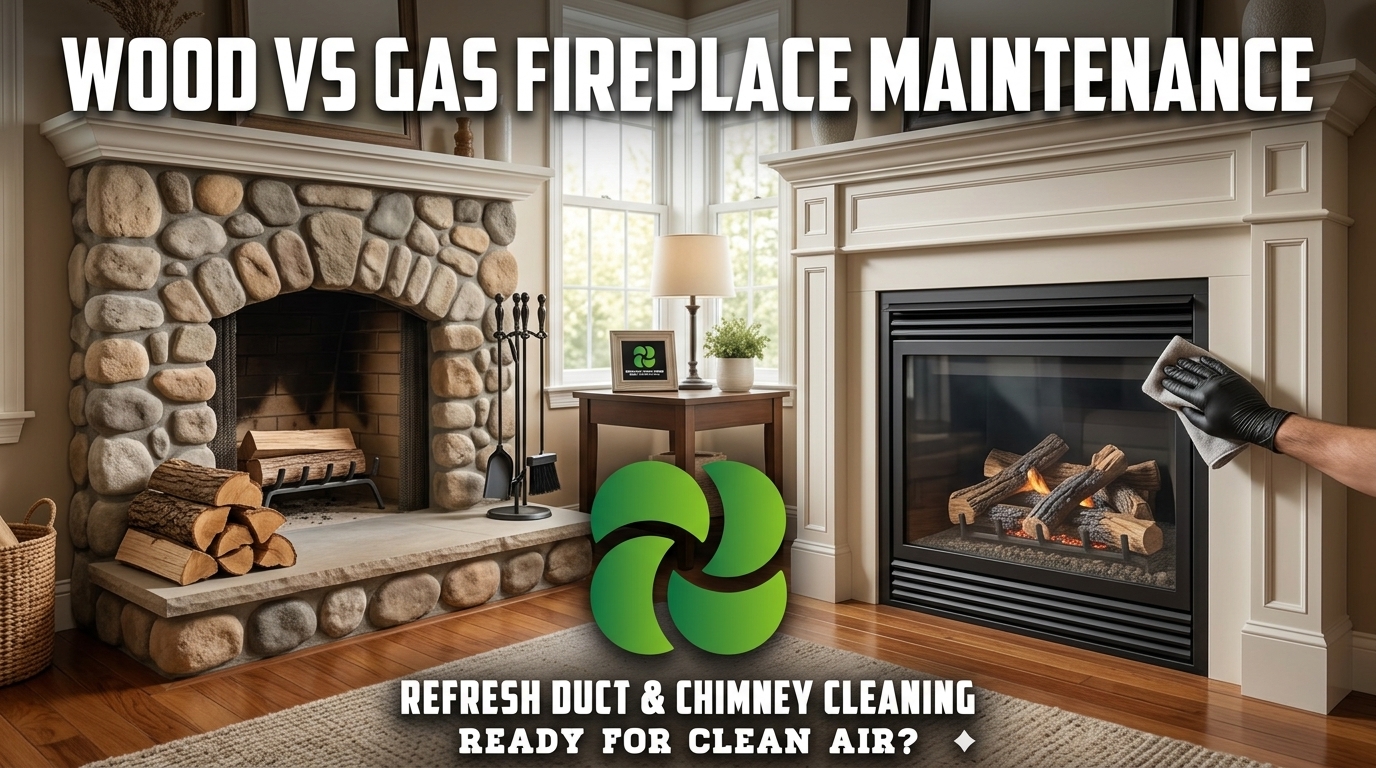
Understanding the Basics of Wood vs Gas Fireplaces
Wood fireplaces rely on burning logs to produce heat and create a traditional flame experience. Gas fireplaces, on the other hand, use natural gas or propane and offer a cleaner, more controlled burn. Both systems provide warmth but differ significantly in operation and maintenance requirements.
The main difference lies in fuel type and combustion process. Wood fireplaces produce ash, soot, and creosote, while gas fireplaces burn cleaner but still require periodic inspections and servicing.
Key Differences in Fuel and Operation
Wood fireplaces require manual effort for fuel collection and fire starting. They produce real flames and crackling sounds, creating a traditional ambiance.
Gas fireplaces operate with a switch or remote, offering convenience and instant heat. They are designed for efficiency and cleaner combustion.
Maintenance Complexity Comparison
Wood fireplaces demand frequent cleaning due to ash buildup and chimney deposits. This makes maintenance more time-consuming.
Gas fireplaces require less frequent cleaning but need professional inspections for gas lines and components.
What is Wood vs Gas Fireplace Maintenance?
Wood vs Gas Fireplace Maintenance involves cleaning, inspection, and upkeep tailored to the fuel type. Wood fireplaces require ash removal, creosote management, and chimney inspections, while gas fireplaces focus on burner care, gas line checks, and vent inspection.
Proper maintenance protects your home from fire hazards, improves heat efficiency, and ensures longevity. For wood fireplaces, regular cleaning prevents dangerous creosote buildup, and for gas fireplaces, routine checks prevent leaks and carbon monoxide hazards.
When Should Fireplace Maintenance Be Performed?
Fireplace maintenance should be scheduled seasonally and before heavy use. Wood fireplaces need pre-winter cleaning and chimney inspections, while gas fireplaces benefit from annual checks of gas lines and burners.
Regular maintenance prevents small issues from becoming costly repairs. Performing checks before the heating season ensures safe, efficient operation throughout winter.
How to Perform Wood Fireplace Maintenance
Wood fireplaces are high-maintenance but can be kept safe with routine care.
Chimney Cleaning
Creosote buildup in chimneys is the leading cause of fireplace fires. Professionals should sweep the chimney at least once a year, and homeowners can remove loose ash between cleanings to improve airflow. Regular chimney inspection prevents blockages and structural damage.
Firebox and Ash Management
Empty the firebox regularly to prevent ash accumulation, which reduces heat efficiency. Always allow ashes to cool completely before disposal, and use a metal container for storage. Proper firebox care keeps the fireplace clean and safe.
Wood Storage
Store firewood in a dry, ventilated space to avoid mold and insect infestations. Keep wood off the ground and away from walls to reduce moisture absorption. Properly seasoned wood burns efficiently and produces less creosote.
How to Perform Gas Fireplace Maintenance
Gas fireplaces are easier to maintain but require attention to mechanical components.
Burner and Pilot Light Inspection
Check the burner for dirt, dust, or blockage, and ensure the pilot light burns steadily. Irregular flames may indicate a gas line or burner issue, which must be addressed promptly.
Glass and Vent Cleaning
Clean glass doors regularly using manufacturer-recommended solutions to maintain clarity. Inspect vents to ensure unobstructed airflow and prevent dangerous gas buildup.
Gas Line Safety
Check connections for leaks using a safe method such as soapy water. Any detected leaks require immediate attention from a certified technician.
Understanding the Two Fireplace Types
- Wood-burning and gas fireplaces both provide warmth and ambiance, but they require very different maintenance routines.
- Wood fireplaces involve burning real logs, which creates more residue and requires hands-on cleaning.
- Gas fireplaces, on the other hand, use natural gas or propane and produce much cleaner combustion with fewer byproducts.
- Understanding these differences helps homeowners choose the right maintenance schedule and keep their fireplace safe and efficient for years.
Wood Fireplace Maintenance
Wood fireplaces demand regular attention due to creosote buildup, ash accumulation, and soot. The chimney and flue must be inspected and cleaned annually to prevent fire hazards. Homeowners should remove ashes frequently, check the firebox for cracks, and ensure the damper works properly.
Burning only seasoned hardwood reduces creosote formation. While wood fireplaces offer traditional charm and high heat output, neglecting maintenance can lead to dangerous chimney fires and costly repairs.
Gas Fireplace Maintenance
Gas fireplaces are significantly easier to maintain. They produce very little soot or creosote, so chimney sweeping is rarely needed. The main tasks include annual professional inspection of gas lines, burners, and pilot lights, plus cleaning the glass doors and logs.
Replacing batteries in the ignition system and checking for proper venting are also important. Gas units offer convenience, consistent heat, and lower maintenance costs, making them popular in modern homes.
Key Comparison and Recommendations
Both types benefit from professional inspections, but wood fireplaces require far more frequent and intensive care. Choosing between them often depends on your lifestyle, preference for ambiance, and willingness to perform regular upkeep. Regardless of type, proper maintenance improves safety, efficiency, and lifespan while preventing potential hazards like carbon monoxide leaks.
Wood vs Gas Fireplace Maintenance Comparison
| Aspect | Wood Fireplace Maintenance | Gas Fireplace Maintenance | Frequency Recommendation | Why It Matters / Tips |
|---|---|---|---|---|
| Chimney Cleaning | Required due to creosote buildup | Rarely needed | Wood: Annually Gas: Every 2-3 years | Prevents chimney fires |
| Ash & Soot Removal | Frequent ash cleanup after each use | Minimal to none | Wood: After every few uses Gas: As needed | Keeps firebox clean and improves airflow |
| Creosote Management | High risk – must be monitored and removed | Very low risk | Wood: Before each season | Major fire hazard if ignored |
| Glass Door Cleaning | Heavy soot buildup | Light dust or film | Wood: Weekly during use Gas: Monthly | Maintains clear view and efficiency |
| Burner / Log Inspection | Check firebox and grate for damage | Inspect gas burners and artificial logs | Annually (both) | Ensures safe and efficient burning |
| Damper & Airflow Check | Critical for proper drafting | Venting system inspection | Annually | Prevents smoke backup and CO risks |
| Professional Inspection | Highly recommended | Still important for gas safety | Once per year | Early detection of hidden issues |
| Fuel-Related Maintenance | Store and use only seasoned wood | Check gas lines and connections for leaks | Wood: Ongoing Gas: Annually | Safety and performance |
| Cost of Maintenance | Higher due to frequent cleaning | Significantly lower | Wood: $200–$500/year Gas: $100–$250 | Long-term budget planning |
| Time & Effort Required | High – hands-on and labor intensive | Low – mostly visual checks | Varies by usage | Convenience factor |
| Safety Risks | Higher risk of chimney fires and CO | Lower overall risk | Regular checks for both | Protects family and home |
| Efficiency & Heat Output | High heat but lower efficiency if dirty | Consistent and efficient | Maintain regularly | Better performance when clean |
| Lifespan Impact | Shortened significantly without maintenance | Longer lifespan with basic care | Annual service | Protects your investment |
| Environmental Impact | More smoke and particulates | Cleaner burning | Use proper fuel/techniques | Eco-friendly operation |
| Overall Recommendation | Best for traditional feel with commitment to upkeep | Ideal for low-maintenance convenience | Choose based on lifestyle | Balance enjoyment with safety |
This comparison guide helps homeowners understand the maintenance differences between wood and gas fireplaces. Regular care for either type ensures safe, efficient, and enjoyable operation for many years.
Why Is Fireplace Maintenance Important?
Regular fireplace maintenance prevents fires, gas leaks, and carbon monoxide hazards. Wood fireplaces accumulate creosote, while gas fireplaces may have line leaks if improperly maintained.
Maintenance also enhances efficiency and heat output. A well-maintained fireplace reduces repair costs, improves indoor air quality, and increases home safety.
Key Factors in Fireplace Maintenance
Several factors influence how you maintain your fireplace.
Usage Patterns
Homes with heavy fireplace usage require more frequent cleaning and inspection. Wood-burning fireplaces need more attention due to ash and creosote accumulation. Gas fireplaces need checks on burners and pilot lights to maintain performance.
Fuel Type
Wood fireplaces produce ash and smoke, while gas fireplaces produce minimal residue. Maintenance tasks vary to ensure optimal function and safety.
Safety Equipment
Smoke and carbon monoxide detectors, along with fire screens, enhance safety. Regularly testing and maintaining these devices is part of comprehensive fireplace upkeep.
Can Neglecting Fireplace Maintenance Cause Hazards?
Yes. Ignoring maintenance can lead to dangerous fires, gas leaks, or carbon monoxide poisoning. Blocked chimneys, malfunctioning burners, and creosote accumulation are major risks.
Routine maintenance prevents small issues from escalating into life-threatening hazards. Homeowners should always follow seasonal inspections and cleaning schedules.
Does Fireplace Maintenance Affect Efficiency?
Absolutely. A clean wood fireplace produces more heat, while proper gas fireplace care ensures consistent flame performance. Ash buildup, dirty burners, or blocked vents reduce efficiency and energy output.
Maintaining your fireplace improves comfort while reducing energy costs. Proper upkeep extends the life of the fireplace and prevents unnecessary wear on components.
Differences Between Wood and Gas Fireplace Maintenance
The main differences between wood and gas fireplaces lie in cleaning requirements, safety risks, and inspection frequency. Wood fireplaces demand more frequent cleaning due to ash and creosote, while gas fireplaces require more technical inspections of gas lines and burners.
| Feature | Wood Fireplace | Gas Fireplace |
| Fuel Byproduct | Ash, creosote, soot | Minimal residue |
| Chimney Cleaning | Annual professional sweep + ash removal | Vent inspection, usually annual |
| Firebox Cleaning | Frequent ash removal | Occasional dusting |
| Safety Risks | Creosote fire, sparks | Gas leaks, carbon monoxide |
| Inspection Frequency | Annual professional + self-checks | Annual professional, occasional self-checks |
| Operational Prep | Seasoned wood, proper storage | Check pilot, burner, and gas lines |
| Efficiency | Requires a clean flue and firebox | Maintain burners and venting |
| Maintenance Effort | High | Moderate |
| Cost of Maintenance | Moderate–High | Low–Moderate |
Pros and Cons of Wood vs Gas Fireplace Maintenance
Wood fireplaces offer authenticity but require more maintenance. Gas fireplaces offer convenience but may require professional servicing.
Both options have strengths and weaknesses.
Key Pros and Cons
- Wood fireplaces provide a natural ambiance
- Gas fireplaces are easier to maintain
- Wood requires frequent cleaning
- Gas requires technical servicing
- Wood is less efficient
- Gas is more energy-efficient
Quick Tips for Fireplace Maintenance
- Always use seasoned wood in wood-burning fireplaces.
- Store firewood in dry, ventilated spaces.
- Test carbon monoxide and smoke detectors near fireplaces.
- Clean gas burners, vents, and glass doors regularly.
- Schedule annual professional inspections for both fireplace types.
Safety Considerations in Wood vs Gas Fireplace Maintenance
Safety is a major concern when comparing these two types of fireplaces. Wood fireplaces carry risks of chimney fires and indoor air pollution.
Gas fireplaces, although safer, can pose risks related to gas leaks or improper ventilation.
Fire Hazards and Prevention
Wood fireplaces require constant monitoring to prevent fire hazards. Sparks and embers can escape if not controlled. Gas fireplaces minimize open flames but still need safety checks.
Air Quality and Health Concerns
Wood burning produces smoke and pollutants. This can affect indoor air quality. Gas fireplaces burn cleaner and are better for indoor environments.
Ventilation Requirements
Proper ventilation is essential for both types. Poor ventilation can lead to dangerous conditions. Gas systems especially rely on efficient exhaust systems.
Conclusion
Proper wood vs. gas fireplace maintenance ensures safety, efficiency, and reliable performance. Wood fireplaces require frequent cleaning, ash removal, and chimney inspections, while gas fireplaces need attention to burners, gas lines, and vents.
Routine care minimizes hazards, enhances heat output, and prolongs the lifespan of your fireplace. Homeowners who follow seasonal maintenance schedules and safety checks can enjoy warmth, comfort, and peace of mind throughout the year.
FAQs
1. How often should a wood fireplace be professionally cleaned?
At least once per year, or more with frequent use, to remove creosote.
2. Can gas fireplace maintenance be done by homeowners?
Glass cleaning and surface maintenance can be DIY, but gas line inspection requires a professional.
3. What is the main risk of neglecting wood fireplace maintenance?
Creosote buildup, which can ignite and cause chimney fires.
4. Can gas fireplaces produce carbon monoxide?
Yes, if vents or burners malfunction. Proper inspections and detectors prevent risks.
5. How do I store wood safely?
Keep it dry, ventilated, and off the ground to prevent mold and pests.
6. Do gas fireplaces need a chimney?
Direct-vent types use vents, while ventless models require good room ventilation.
7. How often should gas fireplace burners be cleaned?
At least once per year or as needed to remove dust and debris.
8. Does maintenance increase fireplace lifespan?
Yes, regular inspections, cleaning, and proper fuel use ensure long-term performance.