
A dryer relies on proper ventilation to remove hot air, moisture, and lint during every drying cycle. When the vent system is not working correctly, the dryer may struggle to perform efficiently. Poor venting can lead to longer drying times, increased energy use, and excessive heat buildup. Many homeowners notice that clothes remain damp even after a full drying cycle.
In some cases, poor ventilation can also increase wear on the appliance and create safety concerns. Understanding the reasons behind ventilation problems can help prevent costly repairs and improve dryer performance. Regular inspection and maintenance play an important role in keeping the vent system functioning properly. Learning how dryer ventilation works is the first step toward identifying and solving common venting issues.
Why Is My Dryer Not Venting Properly?
A dryer may not vent properly for several reasons, including lint buildup, blocked vent paths, or damaged vent components. When airflow is restricted, hot air and moisture cannot escape efficiently. This causes the dryer to work harder and may result in poor drying performance. Ventilation problems can also increase internal temperatures and reduce energy efficiency.
Learning how dryer ventilation works is the first step toward identifying and solving common venting issues. Identifying the source of the restriction is important for restoring proper airflow, and dryer vent cleaning Los Angeles plays a key role in removing lint and debris that can obstruct the exhaust system. Regular maintenance helps prevent many common venting issues, improves dryer efficiency, and keeps the system operating safely.
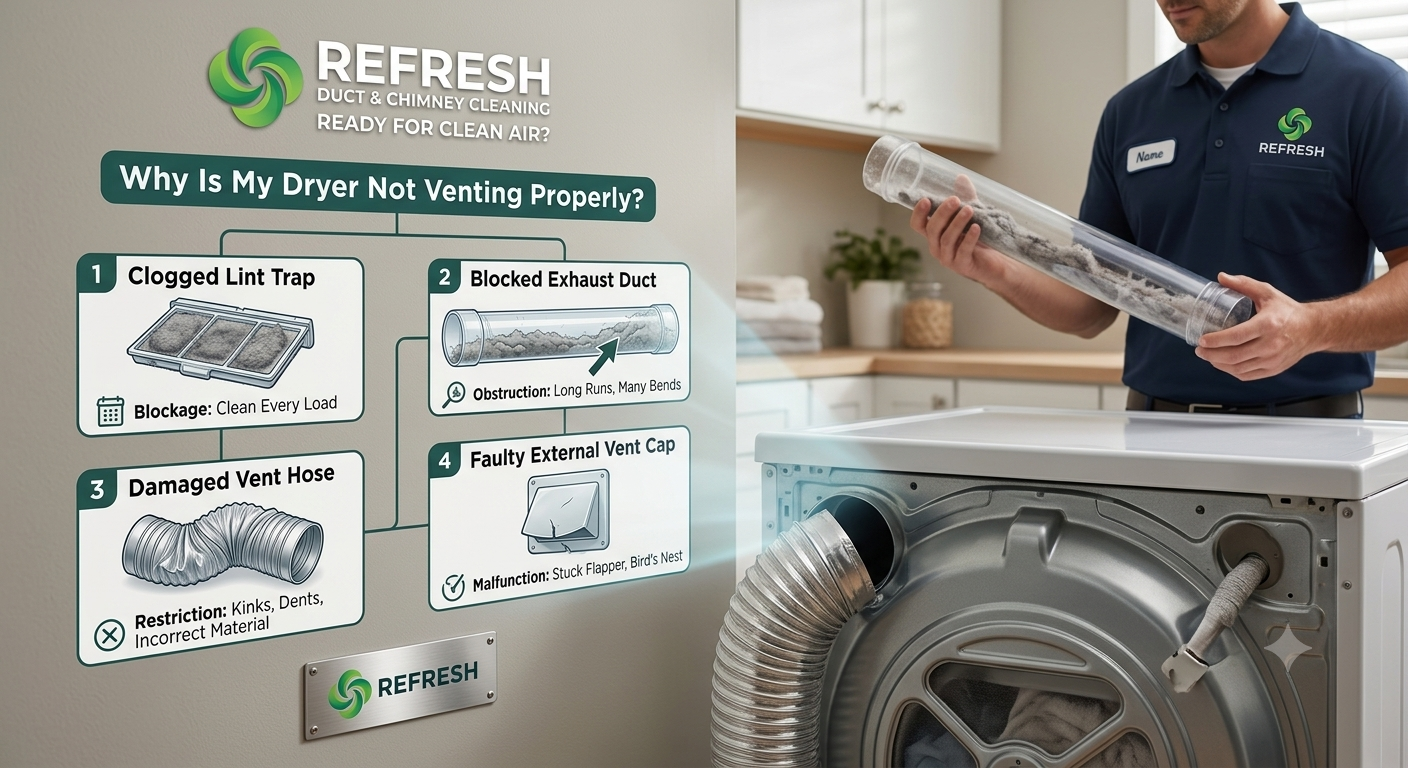
Common Causes of Poor Dryer Ventilation
- One of the most common causes of poor dryer ventilation is lint accumulation inside the vent system.
- Over time, lint can collect along the vent walls and restrict airflow.
- Crushed or damaged vent hoses may also prevent air from moving properly through the system.
- External vent openings can become blocked by dust, debris, or other obstructions.
- Improper vent installation may further reduce airflow and efficiency.
- Understanding these common causes helps make troubleshooting easier and more effective.
- When airflow is restricted, hot air and moisture cannot escape efficiently.
- This causes the dryer to work harder and may result in poor drying performance.
- Ventilation problems can also increase internal temperatures and reduce energy efficiency.
How Restricted Airflow Affects Dryer Performance
Restricted airflow can have a significant impact on dryer performance and efficiency. When hot air cannot escape, moisture remains trapped inside the dryer for longer periods. This can increase drying times and force the appliance to use more energy. Poor venting can lead to longer drying times, increased energy use, and excessive heat buildup.
Many homeowners notice that clothes remain damp even after a full drying cycle. Excessive heat buildup may also place additional strain on internal components. Over time, restricted airflow can contribute to wear and tear on the dryer. Maintaining proper airflow is essential for efficient and reliable operation.
The Importance of Proper Dryer Vent Maintenance
Regular dryer vent maintenance helps prevent airflow restrictions and improves overall performance. Cleaning the vent removes lint and debris that may interfere with ventilation. Routine inspections can identify damaged components before they become major problems.
A clean vent system allows moisture and heat to escape more efficiently. Proper maintenance can also reduce energy consumption and improve safety. Consistent care helps extend the life of the appliance and maintain reliable operation.
Clean the Dryer Vent Regularly
Lint naturally accumulates inside the vent system over time. Regular cleaning removes these blockages and improves airflow. A clean vent allows heat and moisture to exit the dryer efficiently. This simple maintenance step supports better performance and safety.
Inspect the Exterior Vent Opening
The exterior vent opening should be checked frequently for obstructions. Debris, dust, and lint can block airflow and reduce efficiency. Keeping the opening clear helps maintain proper ventilation. Regular inspections prevent small issues from becoming larger problems.
Check for Damaged Vent Hoses
Damaged or crushed vent hoses can restrict airflow significantly. These problems may reduce drying performance and increase heat buildup. Inspecting the hose regularly helps identify wear and damage early. Replacing damaged hoses improves ventilation and efficiency.
Avoid Overloading the Dryer
Overloading the dryer can reduce airflow inside the drum. Clothes may not tumble properly, making it harder for moisture to escape. This increases drying times and puts extra strain on the appliance. Following recommended load sizes helps support proper ventilation.
Monitor Drying Times
Longer drying cycles often indicate a ventilation issue. If clothes remain damp after a normal cycle, airflow may be restricted. Monitoring drying performance helps identify problems early. Quick action can prevent further complications.
Schedule Routine Vent Inspections
Routine inspections help detect hidden blockages and airflow issues. Professional evaluations can identify problems that are difficult to see. Regular inspections improve efficiency and support long-term performance. Preventive maintenance helps avoid unexpected breakdowns.
Warning Signs of Dryer Ventilation Problems
- Several warning signs may indicate that a dryer is not venting properly. Clothes taking longer than normal to dry is one of the most common symptoms.
- Excessive heat around the dryer can also suggest restricted airflow.
- High humidity levels near the appliance may indicate poor moisture removal.
- Weak airflow from the exterior vent opening is another common warning sign. Recognizing these symptoms early can help prevent more serious issues.
- Poor venting can lead to longer drying times, increased energy use, and excessive heat buildup.
- Many homeowners notice that clothes remain damp even after a full drying cycle.
Dryer Vent Troubleshooting Checklist
| Inspection Area | What to Check | Possible Issue | Recommended Action |
| Lint Filter | Excess lint buildup | Reduced airflow | Clean after every load |
| Vent Hose | Cracks or damage | Air leakage | Replace damaged hose |
| Exterior Vent | Debris blockage | Restricted airflow | Remove obstruction |
| Dryer Drum | Excess lint | Poor circulation | Clean thoroughly |
| Airflow Strength | Weak airflow | Vent blockage | Inspect vent system |
| Drying Time | Longer cycles | Poor ventilation | Check airflow path |
| Vent Material | Wear or damage | Reduced efficiency | Upgrade if needed |
| Vent Connection | Loose fitting | Air leakage | Secure connection |
| Moisture Levels | Excess humidity | Poor venting | Improve ventilation |
| Dryer Temperature | Excessive heat | Overheating | Remove restrictions |
| Vent Length | Too long | Reduced airflow | Optimize vent route |
| Maintenance History | Missed cleanings | Lint buildup | Schedule cleaning |
| Exterior Hood | Stuck flap | Air restriction | Clean and repair |
| Internal Components | Dust accumulation | Reduced efficiency | Inspect and clean |
| Overall System | Poor performance | Multiple issues | Complete inspection |
Best Practices for Maintaining Proper Dryer Ventilation
Maintaining proper dryer ventilation requires consistent care and attention. Simple maintenance habits can prevent many common airflow problems. Keeping the vent system clean helps improve drying performance and efficiency. Poor venting can lead to longer drying times, increased energy use, and excessive heat buildup.
Many homeowners notice that clothes remain damp even after a full drying cycle. Routine inspections allow hidden issues to be discovered before they become serious. Good operating habits also support better airflow and system reliability. Following best practices helps maintain a safe and effective dryer system.
Keep the Area Around the Dryer Clean
Dust and lint can collect around the dryer over time. Keeping the area clean reduces the chance of debris entering the vent system. A clean environment also supports better airflow. Regular cleaning contributes to improved safety and efficiency.
Replace Worn Vent Components
Old vent hoses and connectors may become damaged with use. Replacing worn components helps maintain proper airflow. New parts improve ventilation and reduce restrictions. Regular inspections make damage easier to identify.
Ensure Proper Vent Installation
A properly installed vent system allows air to move efficiently. Poor installation can create unnecessary airflow restrictions. Checking the vent layout helps improve performance. Proper installation supports long-term reliability.
Monitor Appliance Performance
Changes in performance often indicate underlying ventilation issues. Paying attention to drying times and airflow helps detect problems early. Early action can prevent more serious complications. Monitoring performance supports efficient operation.
Remove Blockages Promptly
Any obstruction within the vent system should be removed as soon as possible. Even small blockages can affect airflow and efficiency. Prompt removal helps restore proper ventilation. This reduces strain on the dryer.
Stay Consistent With Maintenance
Regular maintenance is essential for long-term dryer performance. Consistent cleaning prevents lint buildup and airflow restrictions. Routine inspections help identify hidden problems. A maintenance schedule supports reliable operation.
Creating a Dryer Vent Maintenance Routine
- Developing a maintenance routine helps keep the dryer vent system in good condition.
- Regular lint removal improves airflow and reduces moisture buildup.
- Scheduled inspections help identify potential issues before they worsen.
- Poor venting can lead to longer drying times, increased energy use, and excessive heat buildup.
- Many homeowners notice that clothes remain damp even after a full drying cycle.
- Cleaning the vent path periodically prevents restrictions and improves efficiency.
- Keeping maintenance records can help track service dates and cleaning schedules.
- A structured routine supports better dryer performance and long-term reliability.
Conclusion
Poor dryer ventilation can affect efficiency, performance, and safety. Common causes include lint buildup, blocked vents, damaged hoses, and improper installation. Restricted airflow makes it harder for the dryer to remove heat and moisture effectively. Regular cleaning and inspections help prevent many of these problems. Recognizing warning signs early allows issues to be corrected before they become serious. Proper maintenance improves airflow, reduces drying times, and supports safe operation.
Poor venting can lead to longer drying times, increased energy use, and excessive heat buildup. Many homeowners notice that clothes remain damp even after a full drying cycle. A well-maintained vent system also helps extend the life of the appliance. Understanding why a dryer is not venting properly is the first step toward restoring reliable performance.
FAQs
1. Why is my dryer taking longer to dry clothes?
Long drying times are often caused by restricted airflow within the vent system. Lint buildup or blockages may prevent moisture from escaping efficiently. Understanding why a dryer is not venting properly is the first step toward restoring reliable performance. This forces the dryer to work harder and longer. Cleaning the vent can often improve performance.
2. Can a clogged vent affect dryer efficiency?
Yes, a clogged vent reduces airflow and forces the dryer to use more energy. Poor ventilation increases drying times and operating costs. Maintaining a clean vent improves efficiency. Understanding why a dryer is not venting properly is the first step toward restoring reliable performance. Regular maintenance helps prevent this issue.
3. What are the signs of poor dryer ventilation?
Common signs include longer drying cycles, weak airflow, excessive heat, and increased humidity. These symptoms often indicate restricted airflow. Prompt inspection helps identify the cause. Understanding why a dryer is not venting properly is the first step toward restoring reliable performance. Early action prevents further problems.
4. How often should dryer vents be cleaned?
Dryer vents should be inspected and cleaned regularly. The exact frequency depends on usage levels and vent design. Consistent cleaning prevents lint buildup. Understanding why a dryer is not venting properly is the first step toward restoring reliable performance. Routine maintenance supports safe and efficient operation.
5. Can damaged vent hoses cause ventilation problems?
Yes, damaged or crushed hoses can restrict airflow and reduce performance. Air may leak through damaged sections instead of exiting properly. Replacing worn hoses improves ventilation. Regular inspections help identify damage early.
6. Why is there moisture around my dryer?
Excess moisture often indicates poor ventilation or restricted airflow. Moisture may not be leaving the system efficiently. Inspecting the vent can help identify blockages. Proper airflow helps eliminate excess humidity.
7. Does overloading affect ventilation?
Overloading reduces airflow inside the dryer drum and makes moisture removal more difficult. This can increase drying times and strain the appliance. Using appropriate load sizes improves performance. Proper loading supports efficient airflow.
8. What should I do if airflow seems weak?
Weak airflow may indicate a blockage somewhere in the vent system. Inspect the lint filter, vent hose, and exterior vent opening. Removing obstructions often restores airflow. Regular maintenance helps prevent recurring issues.
9. Can poor ventilation damage a dryer?
Yes, restricted airflow can cause overheating and increase wear on internal components. Over time, this may reduce the lifespan of the appliance. Proper maintenance helps prevent damage. Good airflow supports long-term reliability.
10. How can I prevent dryer vent problems?
Regular cleaning and inspections are the best preventive measures. Keep the lint filter clean and monitor dryer performance. Remove blockages as soon as they are discovered. Understanding why a dryer is not venting properly is the first step toward restoring reliable performance. Consistent maintenance helps maintain proper ventilation.