
A clothes dryer is supposed to be a highly efficient household helper that makes laundry routines smooth, quick, and completely hassle-free. However, pulling out a load of laundry only to discover that your garments are still noticeably wet, cold, or damp can be an incredibly frustrating experience. This common appliance issue disrupts your busy daily schedule, wastes valuable time, and forces you to run multiple energy-consuming drying cycles repeatedly.
Beyond the immediate inconvenience, persistent moisture trapped inside clothing fibers can lead to unpleasant musty odors, mildew growth, and permanent fabric deterioration if left unresolved. When a dryer fails to extract moisture effectively, it usually indicates an underlying imbalance in airflow, mechanical heating components, or basic user operational habits.
Why Are Clothes Still Damp After Drying?
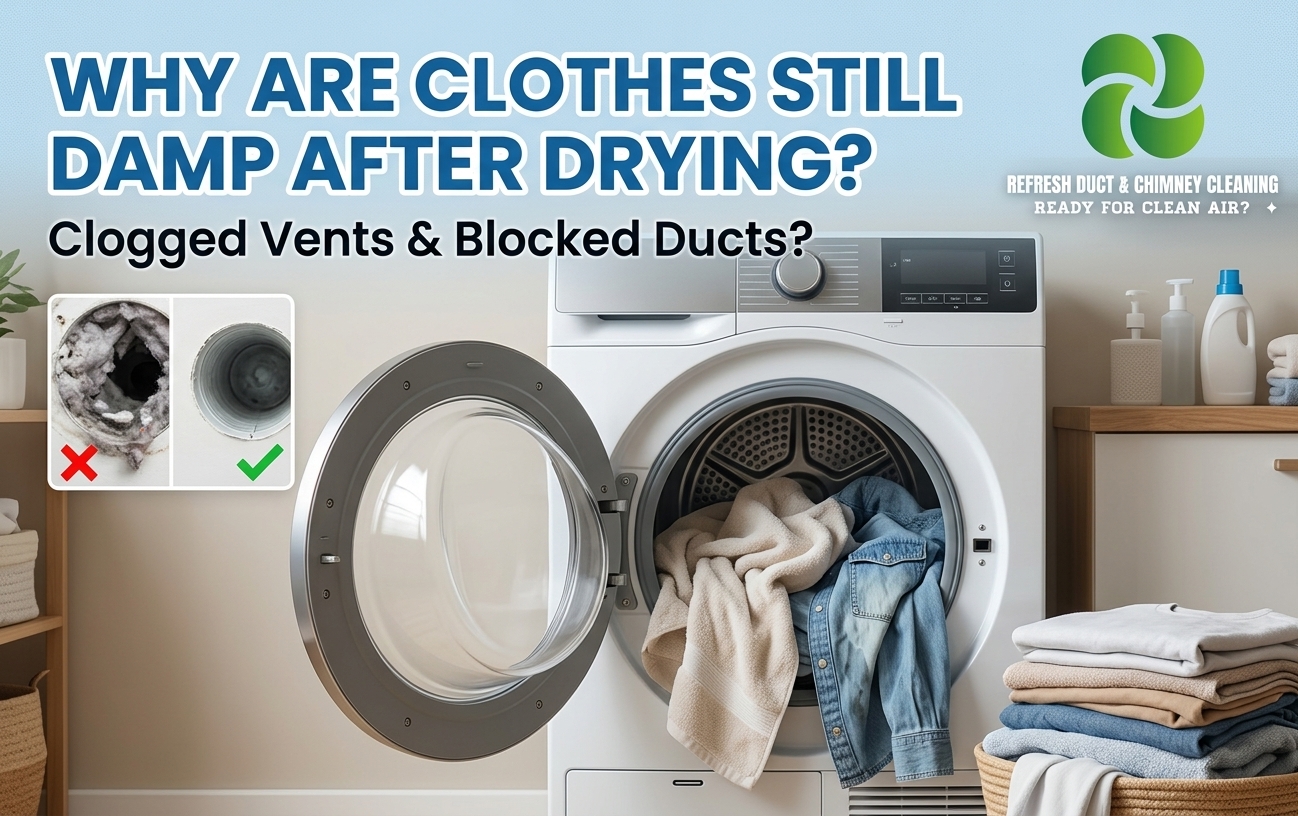
When you notice your clothes are still damp after drying, the problem often stems from a fundamental breakdown in heat or air circulation. A dryer requires a precise balance of consistent thermal energy and high-speed air movement to lift moisture completely away from tumbling fabrics. If airflow is restricted by lint buildup, dryer vent cleaning Los Angeles can help restore proper ventilation, improve drying performance, and reduce the time it takes for clothes to dry completely.
If the heated air cannot circulate freely through the drum or escape through the exhaust lines, the moisture simply trapped inside settles back onto your garments. This means that even if the machine feels hot to the touch, your clothes will remain damp, heavy, and improperly dried.
The Negative Impact of Overloading the Dryer Drum
One of the most frequent reasons for wet laundry at the end of a cycle is simply putting too many items inside. When you overload the rotating metal drum with a massive, compacted pile of heavy clothing, you leave zero room for proper air distribution.
The hot air generated by the heating element needs to flow easily between every individual garment as it tumbles around inside. Without adequate open space, the clothes tightly pack together, causing the moisture to remain trapped in the center of the dense fabric mass.
Severely Clogged Lint Filters and Secondary Airflow Blocks
- The primary lint filter screen is the first line of defense inside your appliance, catching loose clothing fibers during operation.
- If you forget to clean this fine mesh screen before every single load, a thick layer of lint forms a solid barrier.
- This barrier completely suffocates the internal air current, making it impossible for the machine to pull moist air out of the tumbling drum.
- When air cannot move continuously, the humidity stays locked inside the appliance chamber, turning your dryer into a warm, damp sauna box.
- Even if your heating element is working perfectly, your clothes will never dry completely without a clean, clear path for air movement.
- Washing the filter screen regularly with warm soap and water is also necessary to remove invisible, waxy fabric softener residue buildup.
Compromised Exterior Exhaust Vent Piping Layouts
The long ventilation pipe that routes the hot, moist exhaust air from the back of your appliance to the outside world is critical. Over several months of continuous operation, fine lint particles pass through the filter and settle inside the ridges of this hidden piping layout.
If this pipe becomes heavily clogged, physically crushed against the wall, or severely kinked, the exhaust velocity drops down to near zero. The moisture-filled air has nowhere to go, so it backs up directly into the machine, soaking your clothes over and over again.
Defective Internal Heating Element Components
In electric drying machines, a heavy metal heating element coil glows red-hot to produce the thermal energy required for moisture evaporation. If this delicate coil burns out, breaks apart, or suffers a partial electrical failure, it will fail to generate sufficient heat.
Broken Moisture Sensor Bar Technology
Modern appliances feature small, metallic moisture sensor bars located inside the drum that detect how wet your clothing items are. As wet clothes touch these sensors, a signal tells the control board to keep running until the moisture drops down to zero.
Failed High-Limit Thermal Safety Thermostats
Your appliance contains multiple thermal safety devices designed to monitor internal temperatures and protect the system from dangerous overheating events. If a high-limit thermostat becomes uncalibrated or breaks down, it may cut off power to the heating element far too early in the cycle.
Stretched or Slipping Internal Drive Belts
A long rubber drive belt wraps tightly around the large metal drum to spin it continuously during the designated drying cycle. If this belt becomes old, stretched out, or starts slipping on the motor pulley, the drum will spin too slowly or stop completely.
Damaged Internal Blower Fan Assemblies
The internal plastic blower fan wheel is driven by the main motor to actively pull air through the system and push it out. If the blades of this fan wheel crack, break, or become blocked by a stray clothing item, air velocity drops completely.
Faulty Main Electronic Control Boards
The main electronic control board acts as the central brain of your laundry appliance, managing timings, heat levels, and sensor readouts. If an internal relay or circuit component on this board burns out, it may fail to send electrical power to the heater.
How Wet Clothes Coming from the Washer Cause Issues
- Sometimes, the true reason your clothes are still damp after a drying cycle actually traces back to your washing machine.
- A washing machine relies on a fast, high-speed spin cycle at the very end to extract the bulk of water from fabrics.
- If the washer’s spin cycle malfunctions, drains slowly, or becomes unbalanced due to heavy blankets, the clothes come out dripping wet.
- A standard dryer is only designed to evaporate dampness, not to remove massive amounts of heavy, sloshing water from soaked garments.
- Putting overly saturated clothes into the dryer completely overloads its operational capacity and leaves the entire load damp when the timer ends.
- Always make sure your clothes are properly spun out and damp-dry before moving them over to the dryer.
Comprehensive Performance and Troubleshooting Moisture Matrix
The following informational table breaks down the various factors that lead to damp clothes, explaining their direct effects and how to solve them.
| Issue Classification | Root Component | Severity Level | Direct Effect on Clothes | Required Action & Solution |
| User Operation | Excessive Drum Overloading | Medium | Creates a packed mass that blocks internal air path, leaving inner items wet. | Reduce load size to fill only half of the drum volume. |
| Airflow Restriction | Packed Lint Filter Screen | High | Traps heavy humidity inside the tumbling drum, creating a sauna effect. | Clean the mesh filter screen thoroughly before every single load. |
| Airflow Restriction | Blocked Wall Vent Piping | Critical | Forces moisture-laden air backward into the machine chamber repeatedly. | Disconnect the vent line and clear all deep lint blockages completely. |
| Mechanical Failure | Broken Heating Element Coil | Critical | Eliminates all thermal energy production, leaving clothes cold and wet. | Use a multimeter to test electrical continuity and replace the element. |
| Electrical Failure | Coated Moisture Sensors | Medium | Signals the control board to shut off the appliance way too early. | Wipe down the metal sensor bars with rubbing alcohol to clean residue. |
| Mechanical Failure | Damaged Blower Fan Wheel | High | Stops the active movement of air, preventing moisture extraction from drum. | Inspect the blower housing for loose debris or broken plastic blades. |
| Washer Issue | Poor Washer Spin Cycle | High | Delivers dripping wet clothes to the dryer, exceeding its design capacity. | Check washer drainage filters and re-run the high-speed spin cycle. |
| User Operation | Incorrect Cycle Selection | Low | Uses low heat or short time limits on thick, heavy denim or towel fabrics. | Match the appliance cycle setting to the specific fabric thickness. |
| Mechanical Failure | Faulty Cycling Thermostat | High | Cycles the heat off prematurely before the moisture is fully evaporated. | Test internal thermostats for proper temperature calibration points. |
Selecting the Right Drying Cycle for Different Fabrics
Using the wrong cycle setting on your appliance panel can easily leave your finished laundry loads feeling damp and unpleasant. Modern machines feature specialized settings like “Eco-Mode,” “Delicates,” or “Timed Dry” which utilize entirely different temperature profiles and run times.
For instance, heavy fabrics like thick cotton towels, denim jeans, and winter blankets require a high-heat setting to drive moisture out. If you run these heavy items on a delicate or low-heat cycle, the time will expire long before the core fibers dry.
Sorting Laundry by Fabric Weight
Grouping light synthetic t-shirts together with heavy, thick cotton bath towels in a single load is a major mistake. The thin shirts dry very quickly and hit the moisture sensors, telling the machine that the entire load is completely finished.
Understanding Sensor Dry vs. Timed Dry
Sensor drying settings monitor active humidity levels inside the drum, while timed dry simply runs for a fixed number of minutes. If your moisture sensors are dirty, using sensor dry will consistently shut the machine down while clothes are still damp.
The Problem with Waxy Residue Sheets
Disposable fabric softener sheets are great for reducing static, but they release a thin layer of clear wax when heated. This invisible chemical wax coats the internal metal sensor strips over time, blinding them from detecting actual moisture levels accurately.
Checking the External Vent Hood Flap
The outdoor vent cap features a lightweight swinging flap that keeps wind, rain, cold air, and wild pests out of your home. When the dryer turns on, the force of the escaping exhaust air should push this flap completely open.
Verifying Proper Electrical Power Voltage
Electric drying appliances require a dedicated heavy-duty electrical line that provides a full measure of high-voltage power to run effectively. If the machine is plugged into a faulty outlet or experiencing a partial circuit breaker trip, it might only receive partial power.
Managing Bulky Items and Bedding
Large comforters, sleeping bags, and bulky bed sheets tend to roll themselves up into a tight, ball-like shape while tumbling. The outside of the ball gets dry, but the inner core stays completely wet because air cannot penetrate the layers.
Long-Term Hazards of Operating a Failing Drying System
- Continuously running your laundry through multiple extra cycles to combat dampness creates severe long-term complications for your household environment.
- Overworking your appliance strains the internal mechanical bearings, overheats the motor windings, and causes the electrical components to break down prematurely.
- This habit also causes your monthly utility bills to skyrocket because dryers are among the most energy-heavy appliances in a home.
- Furthermore, leaving damp clothes sitting inside a closed, warm drum creates a perfect breeding ground for mold spores within hours.
- Taking immediate action to diagnose and repair airflow or heating deficiencies saves money, protects your health, and extends equipment life.
Conclusion
In conclusion, finding your clothes still damp after a full drying cycle is a clear warning sign that should never be ignored. Whether the root cause is a simple user error like overloading or a mechanical issue like a clogged vent pipe, it requires prompt attention. Maintaining a strict habit of cleaning filters, checking exhaust paths, and sorting clothes correctly will instantly improve performance outcomes.
Ensuring that your appliance can breathe freely and heat consistently will save you hours of frustration every laundry day. Ultimately, a properly functioning dryer protects your wardrobe investments, lowers your household energy footprints, and provides reliable, dry results every time.
FAQs
Q1: Why are my clothes still damp after running a full automatic sensor dry cycle?
This issue usually happens because the internal metallic moisture sensor bars are dirty or coated with an invisible film of fabric softener chemicals. The film insulates the sensors, making them falsely think the clothes are already dry, which causes the machine to shut off way too early. Cleaning the sensors with rubbing alcohol fixes this.
Q2: How does an overloaded drum leave my laundry feeling damp and cold?
When you stuff too many clothes into the machine, they cannot tumble freely and instead spin around in a solid, compacted mass. The hot air cannot reach the middle of this tight clothing ball, trapping the moisture completely inside the inner layers. Reducing the load size allows proper air to circulate between garments.
Q3: Can a slow-draining washing machine cause my dryer to leave clothes wet?
Yes, if your washing machine has a faulty spin cycle or a clogged drain pump, it cannot extract the initial heavy water from fabrics. The clothes enter the dryer dripping wet instead of being damp-dry, which completely exceeds the dryer’s normal evaporation capabilities. You must fix the washer’s spin performance first.
Q4: What happens to my dryer’s performance if the external vent pipe is crushed?
A crushed or kinked vent pipe behind the machine completely chokes the exhaust airflow, preventing hot, moist air from escaping outside. The trapped humidity has nowhere to go, so it stays inside the drum and condenses back onto your clothes as they spin. Straightening or replacing the pipe restores proper drying speeds.
Q5: Why do my heavy towels stay damp when dried together with thin t-shirts?
Thin synthetic shirts dry much faster than thick cotton towels and will hit the moisture sensors first during an automatic cycle. The sensors detect that the shirts are dry and instantly shut down the machine, leaving your heavy towels damp. You should always sort and dry heavy and light fabrics separately.
Q6: Is it possible for a dryer to spin normally but produce absolutely no heat?
Yes, if the internal heating element coil burns out or breaks, the drum will still spin and tumble your clothes via the drive belt. However, without thermal energy, the air stays cold, and the machine cannot evaporate the moisture from the wet fabrics. The element needs to be tested and replaced.
Q7: How can I tell if my dryer’s blower fan wheel is broken or malfunctioning?
If your dryer is getting very hot but you do not feel any air blowing out of the external exhaust hood outside, the fan is likely broken. A damaged or jammed blower fan cannot push the moist air out of the drum chamber. This lack of air movement leaves clothes damp and causes the machine to overheat.
Q8: Why does invisible fabric softener residue cause drying efficiency to drop?
Fabric softeners leave a clear, waxy chemical residue that clogs the fine holes of your primary lint filter mesh screen over time. This invisible blockage restricts the system’s ability to breathe, trapping moisture inside the machine even if you clean out the regular lint. Washing the screen with soapy water removes it.
Q9: What should I do if a large comforter balls up and stays wet in the middle?
Large bedding items naturally roll into a tight ball during the tumbling process, shielding the inner layers from heat and airflow. To solve this, you should pause the machine every twenty minutes, manually reach inside to unroll the blanket, fluff it up, and restart the cycle.
Q10: Can a failing high-limit safety thermostat cause clothes to remain damp?
Yes, a failing high-limit thermostat will incorrectly sense that the machine is overheating and shut off power to the heating element prematurely. The dryer will continue to tumble for the rest of the cycle using only cold air, leaving your clothes damp and cold when the timer finally runs out.