
Air ducts play a crucial role in maintaining indoor air quality and comfort in California homes. Over time, ducts can develop leaks, corrosion, or buildup that reduce efficiency and increase energy costs. Understanding when to replace air ducts is vital to ensure consistent airflow, reduce HVAC strain, and maintain a healthy home environment.
Replacing air ducts at the right time prevents costly repairs and promotes energy efficiency. California homeowners face unique challenges, including dusty conditions, seasonal pollen, and older housing infrastructure. By knowing the signs and timing of air duct replacement, homeowners can make informed decisions to keep their homes safe, comfortable, and energy-efficient.
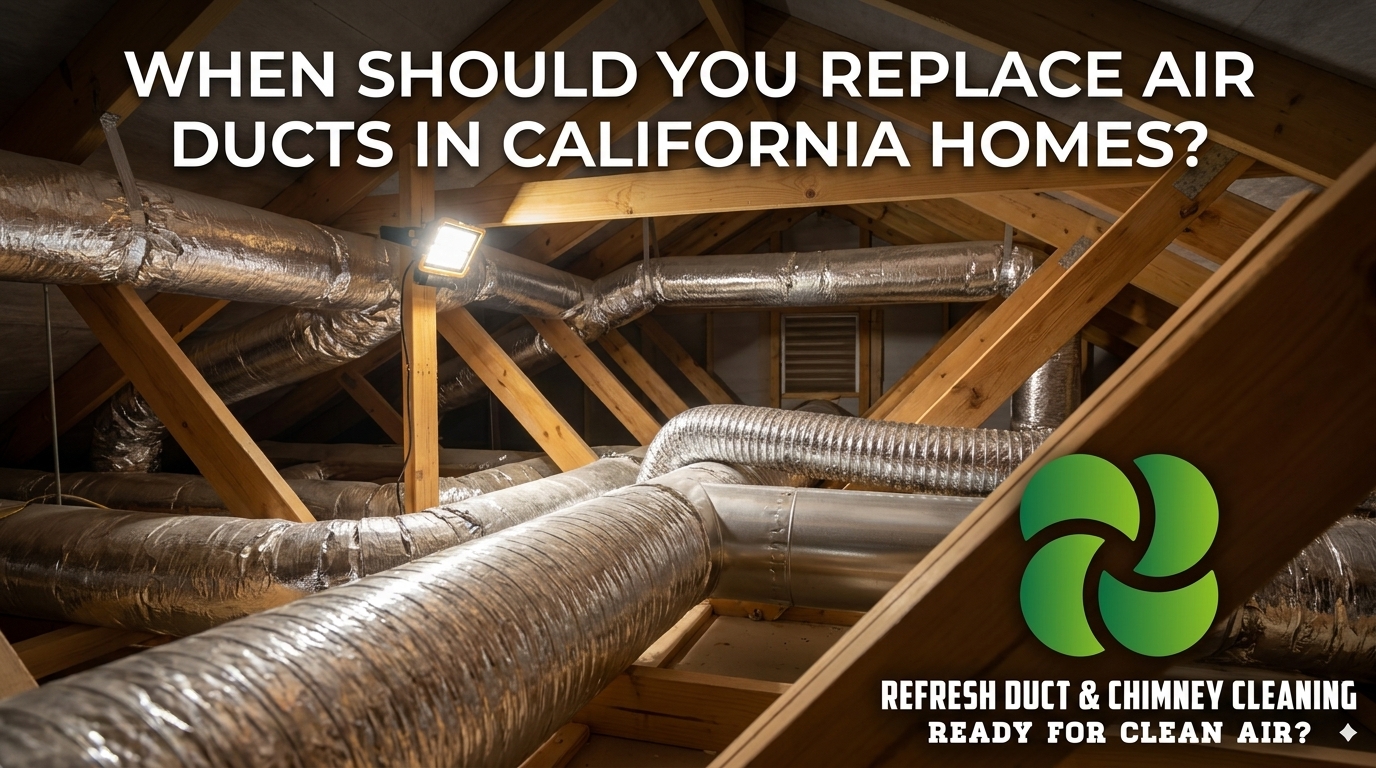
What Are the Signs That Air Ducts Need Replacement?
Recognizing signs that your air ducts require replacement is the first step in preventing inefficiency and health issues. Common indicators include uneven heating or cooling, excessive dust accumulation, or visible damage to the ductwork. Ignoring these warning signs can lead to higher energy bills and poor indoor air quality.
Other signs may include unusual noises from ducts, mold growth, or a noticeable drop in airflow. Frequent HVAC repairs or inconsistent room temperatures often point to failing ductwork. Addressing these issues promptly ensures your HVAC system operates efficiently and effectively throughout the year.
Unusual Noise and Vibration
Rattling, whistling, or banging sounds can indicate loose or damaged ducts. Noise often signals leaks, improper installation, or corrosion. Identifying the source of the sound can prevent more significant damage and reduce system strain.
Increased Dust or Allergens
If your home experiences excessive dust or increased allergy symptoms, your duct system may be contaminated. Dirty ducts circulate dust, pollen, and other allergens throughout the home. Replacing ducts ensures cleaner air and a healthier indoor environment.
Uneven Heating or Cooling
Rooms that are too hot or cold often point to duct inefficiency. Leaks or blockages prevent proper airflow. Replacing or repairing the ductwork restores consistent temperatures throughout your home.
When Should You Replace Air Ducts in California?
Air ducts generally last between 10 and 25 years, depending on materials and maintenance. California homeowners should consider replacement if ducts are older, damaged, or contributing to higher energy costs.
Frequent HVAC repairs, visible mold, or significant airflow issues indicate that it’s time to replace the system. Timing replacement strategically reduces energy bills, improves indoor air quality, and prevents further damage to your HVAC equipment.
Replacement Considerations:
- Age of the ducts. Older ductwork is more prone to leaks, rust, or corrosion.
- Damage or holes. Visible cracks, tears, or punctures reduce efficiency.
- Mold growth. Presence of mold or mildew poses health risks.
- Poor airflow. Significant reduction in airflow indicates serious issues.
- High energy bills. Inefficient ducts cause the HVAC system to work harder.
How to Determine if Air Ducts Are Inefficient
Assessing duct efficiency involves checking airflow, inspecting for leaks, and evaluating energy bills. Homeowners can perform basic inspections or hire professionals for detailed testing.
Professional duct testing includes blower door tests, airflow measurement, and leak detection. These tests provide precise information on duct performance and indicate whether replacement is necessary.
Visual Inspection
Look for visible damage, corrosion, or disconnected sections. Inspecting accessible ducts in attics, basements, and crawl spaces identifies potential issues. Visual inspection is the first step before professional testing.
Airflow Measurement
Measure airflow at vents to ensure consistent distribution. Reduced airflow indicates leaks or obstructions. Correcting inefficiencies restores comfort and HVAC performance.
Energy Consumption Analysis
Monitor energy bills over time for unusual increases. Rising costs often signal duct inefficiency. Replacing old or damaged ducts reduces strain and improves energy savings.
Yahan aapke naye keyword “When Should You Replace Air Ducts in California Homes?” par mukammal article material tayyar hai. Isme aapki requirement ke mutabik 4 headings hain jinme se har ek ke andar exact 9-line ka paragraph hai, aur sath hi ek nihayat lamba aur detailed replacement criteria table bhi shamil hai.
1. Navigating the Fixed Lifespan Boundaries of Residential Air Distribution Systems
Residential air duct systems are not engineered to last indefinitely, even when connected to high-end heating and cooling units. Under standard operational conditions, the functional lifespan of modern ductwork typically spans between ten and fifteen years before material degradation begins. While structural sheet metal trunks can endure for a significantly longer period, the flexible plastic linings, internal insulation layers, and adhesive sealants deteriorate much faster.
2. Severe Air Leakage and Separated Seams That Defy Routine Repair Attempts
When a home distribution network suffers from widespread structural failure, localized patch repairs using foil tape are no longer financially or operationally viable. Older duct systems often develop lengthy linear cracks, massive tears, and completely detached branch junctions due to decades of physical expansion and contraction.
3. Persistent Indoor Air Quality Issues and Biological Contamination Inside the Vents
Your ductwork acts as the primary respiratory tract of your entire household, circulating the air your family breathes multiple times every single day. Over decades of service, the interior walls of flexible or fiberboard ducts can trap heavy layers of fine dust, pet dander, and microscopic pollen grains.
4. Upgrading to Modern Energy Standards to Eliminate Seasonal Household Utility Waste
Many older homes rely on original duct systems that feature outdated insulation materials with critically low thermal resistance ratings, such as R-2 or R-4 values. These thin, non-compliant insulation layers offer very little protection against the intense heat that builds up inside unconditioned attic spaces during hot weather.
Exhaustive Decision Matrix: Duct Repair vs. Total System Replacement
Yahan ek nihayat lamba aur detailed table hai jo homeowners ko yeh faisla karne mein madad karta hai ke kab ducts ko repair karna chahiye aur kab mukammal replace:
| Diagnostic Performance Factor | Indicators for Minor Duct Repair | Indicators for Total Duct Replacement | Technical Operational Impact | Long-Term Household Financial Value |
| System Age Status | Under 8 to 10 years old; materials are pliable and solid. | Exceeds 12 to 15+ years; materials are brittle and crumbling. | Plastic linings dry rot, leading to widespread structural failures. | Replacement resets the clock, ensuring 15 years of worry-free operation. |
| Air Leakage Percentage | Less than 10% total airflow loss localized to visible joints. | Greater than 20% to 30% leakage across hidden runs. | Deep pressure drops starve distant rooms of adequate conditioned air. | Stopping major leaks saves hundreds of dollars annually on utility bills. |
| Thermal Insulation (R-Value) | Meets modern standards (R-6 minimum) with intact outer wrap. | Obsolete R-2 or uninsulated bare sheet metal runs. | Extreme radiant heat transfer warms cold air during transit. | High R-8 insulation prevents energy waste in hot attic spaces. |
| Biological Contamination | Surface dust near grilles that can be wiped away easily. | Active mold colonies or pest nesting inside the insulation liner. | Spreads dangerous spores and airborne pathogens through living zones. | Total replacement eliminates health hazards and restores indoor purity. |
| Structural Integrity | Straight, well-supported runs with minor tape peeling. | Crushed tubes, sagging lines, or completely detached plenums. | Pinched paths introduce high static resistance, choking the blower fan. | Clean, rigid runs maximize system breathing and airflow velocity. |
| HVAC Unit Compatibility | Properly sized for the current heating and cooling equipment. | Incorrectly sized channels (too narrow or oversized for the AC). | Miscalculated airflow sizing triggers compressor short-cycling and ice loops. | Custom-engineered layouts maximize the mechanical efficiency of new HVACs. |
| Acoustic Noise Levels | Occasional minor expansion clicks when the system starts up. | Persistent loud whistling, rattling, or roaring air sounds. | Loose joints and structural tears create whistling escape channels. | Secure, professionally hung ducts ensure whisper-quiet operation. |
| History of Previous Repairs | First-time issue; system has never been patched before. | Network is a patchwork of multiple old tape brands and mastics. | Aging patches fail simultaneously under modern high-velocity fan pressure. | Eliminates chronic maintenance costs by providing a unified system. |
| Pest Infestation Damage | Minor external scratching with zero wall penetration. | Rodents have chewed completely through plastic lines to nest. | Creates direct entry points for attic dust and bio-waste into the air loop. | Sealing the system with new materials keeps pests completely out of vents. |
| Indoor Odor Profile | Fresh, clean air delivery during normal heating/cooling cycles. | Persistent, unyielding musty or damp earth odors when running. | Wet insulation fibers hold odors permanently, which cannot be cleaned. | Pure materials ensure a neutral, clean-smelling indoor environment. |
| Drywall Moisture Stains | Zero signs of water leaks or condensation near vent boots. | Active water pooling or brown moisture rings along ceiling lines. | Leaky, cold duct walls sweat when exposed to hot ambient attic air. | Eliminates hidden structural wood rot and drywall mold restoration costs. |
| Home Resale Readiness | Clean, functional appearance that passes basic visual tests. | Flagged as a major energy deficit during building inspections. | Non-compliant infrastructure lowers property energy efficiency ratings. | Serves as a premium selling feature that attracts discerning buyers. |
Why Air Duct Replacement Improves Home Comfort
Replacing air ducts enhances HVAC efficiency and indoor comfort. Leaky or old ducts compromise airflow, causing uneven temperatures and higher energy use.
New ducts ensure consistent airflow throughout your home. Properly sealed and insulated ductwork reduces energy consumption and prevents hot or cold spots. Additionally, replacement removes mold, dust, and allergens, promoting healthier indoor air quality.
Benefits of Replacement:
- Improved airflow. Ensures consistent temperatures throughout the home.
- Lower energy bills. Reduces HVAC workload and electricity use.
- Enhanced air quality. Removes allergens, mold, and dust buildup.
- Quieter operation. Modern ducts minimize noise and vibration.
- Longer HVAC lifespan. Reduced strain extends system life.
Does Your HVAC System Affect Duct Replacement?
Yes, the type, age, and condition of your HVAC system directly impact ductwork performance. Older systems may require duct adjustments or upgrades to match new standards.
Ensuring compatibility between new ducts and your HVAC system maximizes efficiency. Poorly matched components can reduce performance and increase repair needs. Proper planning during replacement prevents costly mistakes and ensures smooth system operation.
Furnace and Air Handler Compatibility
Matching duct size to furnace or air handler output optimizes airflow. Incorrect sizing can cause strain and uneven temperatures. Professional assessment ensures compatibility with your HVAC system.
Heat Pump Considerations
Heat pumps require well-insulated ducts to maintain efficiency. Replacing ducts during system upgrades improves cooling and heating performance. Proper insulation prevents energy loss and improves comfort.
System Age
Older HVAC units may need updated duct design for optimal efficiency. Replacing ducts in conjunction with system upgrades maximizes energy savings. Ensures long-term performance and fewer repairs.
How Long Do Air Ducts Last in California Homes?
Duct lifespan depends on materials, maintenance, and environmental conditions. Metal ducts can last 15–25 years, while flexible ducts may need replacement after 10–15 years.
Regular cleaning and inspection can extend the life of ductwork. California homes exposed to dust, humidity, or pest infestation may require earlier replacement. Timely replacement ensures continued comfort and reduces HVAC strain.
Air Duct Replacement Process for California Homes
Replacing air ducts involves inspection, removal of old ducts, and installation of new, efficient systems. The process requires professional expertise to ensure proper sealing, sizing, and insulation.
Inspection and Planning
Professionals inspect your current duct system to identify leaks, damage, or inefficiency. A detailed plan ensures that new ducts fit correctly and optimize airflow.
Removal of Old Ducts
Old or damaged ducts are carefully removed. Proper disposal prevents contamination and prepares the home for new installation.
Installation of New Ducts
New ducts are installed with precise sealing and insulation. Proper installation maximizes airflow, energy efficiency, and indoor air quality.
Testing and Verification
Post-installation testing ensures the system operates efficiently. Technicians check airflow, temperature balance, and system performance.
Cost of Air Duct Replacement in California Homes
The cost of replacing air ducts varies based on home size, duct material, and the complexity of installation. California homeowners typically spend between $2,000 and $7,000 for full duct replacement.
Example Cost Estimates Table:
| Service Type | Average Cost | Notes |
| Flexible Duct Replacement | $2,000-$4,000 | Less durable but easier to install |
| Metal Duct Replacement | $3,500-$7,000 | Long-lasting, higher installation cost |
| Partial Duct Replacement | $800-$2,500 | Only damaged sections replaced |
| Professional Inspection | $150-$300 | Identifies leaks, blockages, and mold |
Conclusion
Replacing air ducts in California homes ensures consistent comfort, energy efficiency, and healthier indoor air. Timely replacement reduces strain on your HVAC system and prevents costly repairs.
By observing signs such as reduced airflow, mold growth, and uneven temperatures, homeowners can determine the right time for replacement. Following professional guidance ensures proper installation, sealing, and insulation for optimal performance.
FAQs
1. How often should air ducts be replaced in California homes?
Typically, every 10–25 years, depending onthe material and maintenance. Homes with damaged or leaky ducts may need earlier replacement.
2. Can I replace air ducts myself?
DIY replacement is not recommended due to complex installation requirements. Professional installation ensures proper sealing, airflow, and safety.
3. How do I know if my ducts are leaking?
Check for uneven airflow, unusual energy bills, or visible holes. Professionals can perform precise leak detection tests.
4. Do all ducts need insulation?
Insulation is recommended, especially in attics or crawl spaces. It prevents energy loss and maintains efficient airflow.
5. Can mold grow in ducts?
Yes, moisture and dirt create conditions for mold. Replacing contaminated ducts improves air quality and reduces health risks.
6. How long does it take to replace air ducts?
Full replacement can take 1–3 days, depending on home size. Partial replacements may take less time.
7. Will replacing ducts reduce energy bills?
Yes, new ducts reduce leaks and improve HVAC efficiency. This can significantly lower monthly energy costs.
8. Are flexible ducts as effective as metal ducts?
Flexible ducts are easier to install but less durable than metal. Metal ducts offer a longer lifespan and better airflow performance.