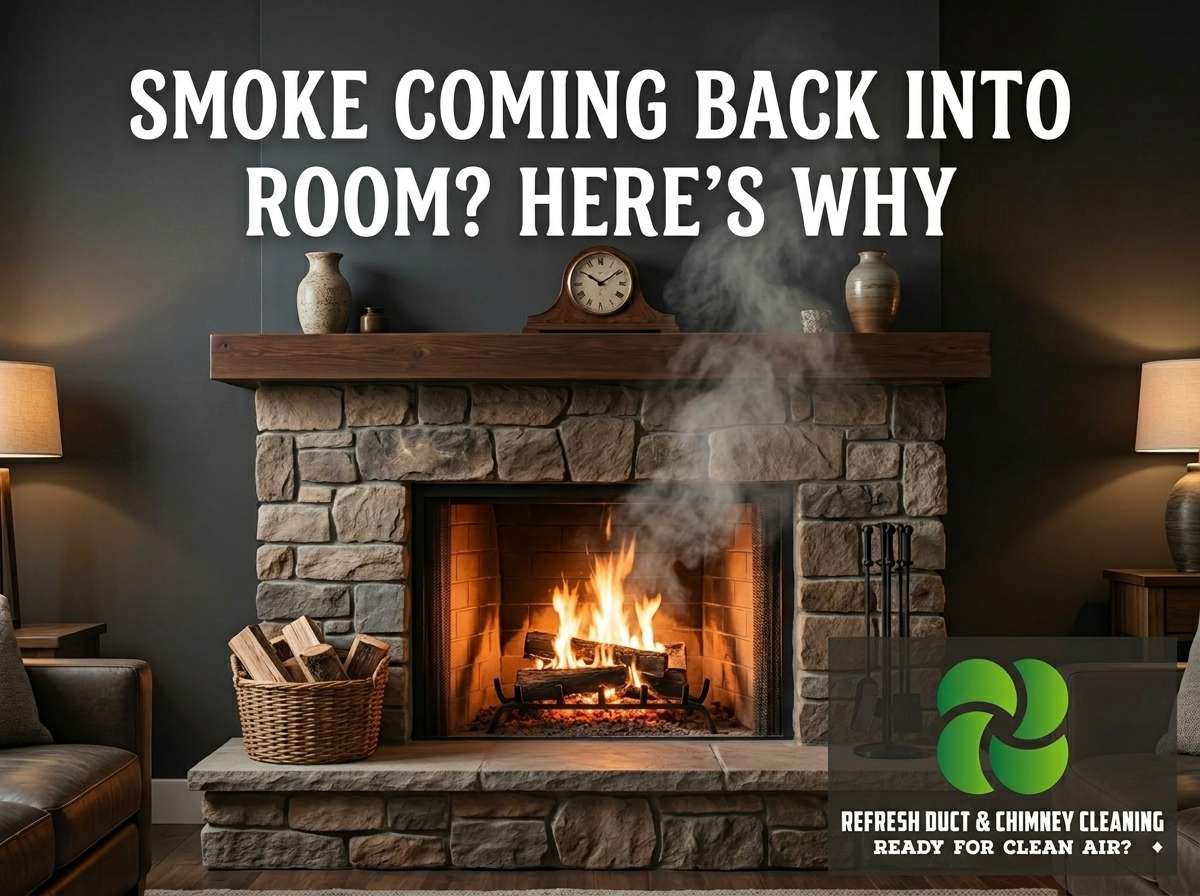
If you notice smoke drifting back into your room while using your fireplace or wood stove, it’s more than just an annoyance—it’s a potential safety hazard. Smoke entering living spaces can reduce indoor air quality, trigger health issues, and indicate a problem with your chimney or venting system. Understanding why smoke is coming back into the room helps homeowners in Riverside and Southern California address the issue safely and efficiently.
Several factors contribute to smoke backflow, including chimney blockages, negative air pressure, and poor draft. Identifying the root cause allows you to prevent recurring smoke problems and maintain a safe home environment. Proper inspection and maintenance are key to keeping your fireplace functional and smoke-free.
What Causes Smoke to Back Into a Room?
Smoke backing into a room is a common and frustrating issue for homeowners, especially those using fireplaces or wood-burning stoves. This problem usually indicates that something is interfering with the natural airflow or draft needed to push smoke up and out through the chimney. When this balance is disrupted, smoke finds the easiest path—and unfortunately, that can be back into your living space instead of outside. Understanding the root causes is essential for preventing the issue and maintaining a safe indoor environment.
Blocked or Dirty Chimney
A chimney that is clogged with debris, soot, or creosote can restrict airflow. This prevents smoke from rising properly and forces it back into the room. Regular cleaning helps keep the chimney clear and functioning correctly.
Poor Chimney Draft
A weak draft means the chimney is not pulling air upward effectively. This can cause smoke to linger or reverse direction into the home. Proper airflow is essential for maintaining good smoke ventilation.
Cold Chimney Flue
If the chimney is too cold, the air inside can become denser than the smoke. This causes smoke to struggle rising and instead flow downward into the room. Warming the flue before lighting a fire can help prevent this issue.
Negative Air Pressure Inside the Home
Modern homes are often tightly sealed, which can create negative pressure. This pulls air—and smoke—back into the house instead of letting it escape. Opening a window slightly can help balance the air pressure.
Improper Fireplace Operation
Using too much fuel or closing the damper too early can lead to smoke buildup. Incorrect operation disrupts proper airflow and causes smoke to escape into the room. Following proper fireplace usage guidelines is important.
Strong Outdoor Winds
High winds can disrupt the chimney draft and push smoke back down the flue. This is especially common in certain weather conditions. Installing a chimney cap can help reduce wind-related issues.
Chimney Height or Design Issues
A chimney that is too short or poorly designed may not create enough draft. This can prevent smoke from exiting efficiently. Proper chimney construction is essential for effective smoke control.
How Poor Draft Affects Smoke Flow?
A proper draft is essential for directing smoke up and out of your chimney. When the draft is weak or poor, smoke cannot travel efficiently through the flue and may instead move back into your living space. This creates a smoky indoor environment that can affect comfort, air quality, and overall safety. A poor draft is often caused by blockages, improper chimney height, cold air, or insufficient airflow in the home.
Incomplete Smoke Venting
The poor draft prevents smoke from fully exiting the chimney. Instead, smoke lingers and may re-enter the room. This results in a smoky, uncomfortable indoor environment.
Increased Smoke Backflow
When the draft is weak, the natural upward flow of smoke is disrupted. This causes smoke to flow backward into the home. It leads to poor air quality and potential health concerns.
Reduced Combustion Efficiency
A weak draft affects how efficiently the fuel burns in the fireplace. Incomplete combustion produces more smoke and harmful byproducts. This reduces heating efficiency and increases fuel usage.
Higher Creosote Formation
Poor draft causes smoke to cool and condense inside the chimney. This leads to increased creosote buildup on the chimney walls. Over time, this can create serious fire hazards.
Odor and Air Quality Issues
Improper smoke flow can cause lingering odors in your home. These odors come from smoke particles and soot settling indoors. This negatively impacts indoor air quality and comfort.
Potential Structural and Safety Risks
Persistent poor draft can damage chimney components over time. It increases the risk of blockages and chimney fires. Addressing draft issues early helps maintain safety and prevent costly repairs.
Smoke Coming Back Into Room? Here’s Why Comparison Table
| Cause / Situation | Why Smoke Comes Back | Associated Risks | Recommended Solutions |
|---|---|---|---|
| Blocked or Dirty Chimney | Creosote, debris, or nests restrict flow | Chimney fire hazard | Professional sweeping |
| Cold Chimney / Poor Draft | Insufficient temperature difference | Heavy smoke during startup | Warm flue before full fire |
| Missing or Damaged Chimney Cap | Wind blows smoke downward | Water damage and animal entry | Install quality cap |
| Negative Air Pressure in Home | Exhaust fans overpower chimney draft | Continuous smoke backup | Open window for makeup air |
| Wet or Green Wood | Produces excessive smoke and low heat | Poor burning and creosote buildup | Use seasoned dry hardwood |
| Damper Not Fully Open | Restricted exhaust pathway | Smoke fills firebox and room | Check and open damper fully |
| Improper Flue Sizing or Height | Inadequate draft due to design issues | Chronic drafting problems | Professional evaluation |
| Windy Weather Conditions | External wind affects chimney performance | Intermittent smoke backup | Use wind-resistant cap |
| Obstructed Flue or Liner | Cracks, corrosion, or fallen debris | Carbon monoxide risk | Camera inspection & repair |
| Oversized Fireplace Opening | Too much room air escapes up chimney | Weak draft and smoke spillage | Install glass doors |
| Dirty or Clogged Air Vents | Poor room air circulation | Increased negative pressure | Clean and maintain vents |
| Recent Home Renovations | Changed air pressure dynamics | New smoke backup issues | Rebalance ventilation |
| Animal Nests in Chimney | Physical blockage by nesting materials | Fire hazard and strong odors | Remove nests professionally |
| Soot and Creosote Buildup | Sticky residue narrows flue | Reduced airflow and fire risk | Annual cleaning |
| Faulty Damper Operation | Damper stuck partially closed | Smoke leaks into room | Repair or replace damper |
| Strong Outdoor Winds | Downdraft effect on chimney | Sudden smoke bursts | Install draft-inducing cap |
| Poor Fireplace Design | Inefficient airflow engineering | Persistent problem | Consult specialist |
| High Humidity or Wet Conditions | Moisture affects draft | Increased creosote formation | Dry wood and proper storage |
| Multiple Fuel-Burning Appliances | Competing for air supply | System-wide drafting issues | Professional air balancing |
| Old or Deteriorating Chimney | Structural problems reduce efficiency | Safety and performance decline | Full inspection & repairs |
| Lack of Regular Maintenance | Gradual buildup over time | Multiple combined problems | Annual professional service |
This table covers the most common reasons for smoke backing into the room along with solutions. If you’re experiencing persistent smoke issues, contact a certified chimney professional immediately for safe diagnosis and repair. Regular maintenance is the best way to prevent this problem from occurring.
Why Fireplace Design Matters?
Fireplace design plays a crucial role in how effectively smoke is ventilated and how safely your home operates. A well-designed fireplace ensures proper airflow, allowing smoke to exit smoothly through the chimney instead of entering your living space. Poor design, on the other hand, can lead to smoke backflow, inefficient burning, and increased buildup of creosote, which raises the risk of chimney fires. That’s why thoughtful design is essential for both performance and safety.
In addition to safety, fireplace design also impacts heating efficiency and overall comfort. The right design helps distribute heat evenly while minimizing energy waste. It also reduces maintenance issues and improves the longevity of the system. A properly designed fireplace not only enhances functionality but also adds aesthetic value to your home.
How Negative Air Pressure Causes Backflow?
Negative air pressure occurs when exhaust fans, HVAC systems, or tight home construction pull air out faster than it enters. This can reverse airflow in the chimney.
Balancing air intake by opening vents or using dedicated combustion air systems helps prevent smoke from entering rooms.
Sources of Negative Pressure
- Kitchen exhaust fans can pull air down the chimney.
- Bathroom fans reduce pressure inside the home.
- HVAC systems with sealed ductwork may restrict airflow.
Solutions
- Install a fresh air intake near the fireplace.
- Avoid running multiple exhaust fans while using the fireplace.
- Use a smaller pilot flame to help preheat the flue.
How Creosote Buildup Contributes to Smoke Problems?
Creosote buildup is one of the most common and dangerous causes of smoke problems in fireplaces and chimneys. Creosote is a highly flammable, tar-like substance that forms when wood smoke condenses and sticks to the inner walls of the chimney. Over time, this buildup restricts airflow, making it difficult for smoke to exit properly and causing it to flow back into your home. This not only leads to poor indoor air quality but also increases the risk of chimney fires.
Regular cleaning and inspection are essential to prevent these problems and ensure your chimney operates safely and efficiently.
Restricted Airflow and Poor Ventilation
Creosote buildup reduces the diameter of the chimney flue, limiting the amount of air that can pass through. This restriction disrupts proper airflow and causes smoke to move back into the living space. As a result, your fireplace becomes less efficient and more prone to smoke issues.
Increased Smoke Backflow
When airflow is blocked by creosote, smoke cannot escape efficiently through the chimney. This leads to backflow, where smoke enters your home instead of exiting. It creates discomfort and reduces indoor air quality significantly.
Higher Risk of Chimney Fires
Creosote is highly flammable and can ignite at high temperatures. Thick layers of creosote increase the likelihood of a dangerous chimney fire. Regular removal is critical to maintaining safety and preventing fire hazards.
Strong Odors and Indoor Air Pollution
Creosote produces a strong, unpleasant odor that can spread throughout your home. It also releases harmful pollutants into the air, affecting respiratory health. This makes your indoor environment uncomfortable and unhealthy.
Reduced Heating Efficiency
When creosote blocks airflow, your fireplace or heating system has to work harder. This reduces efficiency and increases energy consumption. Proper cleaning ensures optimal performance and better heat output.
Structural Damage to Chimney
Over time, creosote can damage the chimney liner and masonry. Its corrosive nature weakens the structure, leading to cracks and deterioration. This can result in costly repairs if not addressed promptly.
What Cost to Expect for Chimney Inspection and Cleaning?
Professional inspection and cleaning can prevent smoke problems and improve safety. Costs vary based on chimney size, type, and extent of buildup.
| Service Type | Average Cost | Frequency |
| Basic Chimney Sweep | $150–$250 | Annual |
| Detailed Inspection & Cleaning | $200–$400 | Annual |
| Creosote Removal (Heavy) | $300–$500 | As Needed |
| Multi-Flue Chimney | $400–$600 | Annual |
Investing in regular cleaning reduces the likelihood of costly repairs and smoke backflow.
Key Tips to Prevent Smoke Back Into Rooms
Preventing smoke from returning involves maintenance, proper use, and airflow management. Using seasoned firewood, ensuring proper chimney height, and addressing obstructions are key steps.
Regular inspection and cleaning, balancing home air pressure, and preheating the chimney also help maintain smooth smoke flow.
Homeowner Checklist
- Burn only dry, seasoned wood. Wet wood produces excessive smoke.
- Check the chimney cap for obstructions. Prevents debris and animals from blocking airflow.
- Inspect damper operation regularly. Ensures proper draft control.
- Schedule annual chimney cleaning. Reduces creosote buildup and fire risk.
- Preheat the flue with a small fire before burning large logs.
Benefits of Solving Smoke Backflow Issues
Solving smoke backflow issues is essential for maintaining a safe, healthy, and comfortable home environment. Smoke backflow occurs when smoke from a fireplace or chimney reverses direction and enters your living space instead of exiting properly. This can lead to poor indoor air quality, unpleasant odors, and potential health risks, especially for children, elderly individuals, and those with respiratory conditions. Addressing this problem promptly ensures that your ventilation system works efficiently and keeps harmful smoke outside where it belongs.
Improved Indoor Air Quality
Fixing smoke backflow significantly improves the air you breathe inside your home. It prevents harmful smoke particles, carbon monoxide, and toxins from circulating indoors. This creates a healthier living environment for everyone in the household.
Enhanced Safety for Your Family
Smoke backflow can pose serious fire and health hazards if left untreated. Resolving the issue reduces the risk of smoke inhalation and potential fire-related dangers. This makes your home safer for your family and guests.
Better HVAC and Ventilation Efficiency
When smoke flows properly out of your home, your ventilation system operates more efficiently. This reduces strain on your HVAC system and improves airflow throughout your property. As a result, your system lasts longer and performs better.
Protection of Interior Surfaces
Smoke can leave behind soot and stains on walls, ceilings, and furniture. Solving backflow issues prevents this buildup and keeps your interiors clean. It also reduces the need for frequent deep cleaning or repainting.
Reduced Unpleasant Odors
Smoke backflow often causes lingering odors that can be difficult to eliminate. Fixing the issue helps maintain a fresh and clean-smelling home. This improves overall comfort and livability.
Energy Efficiency Improvement
Proper airflow ensures your heating and cooling systems work efficiently. This reduces energy waste and can lower utility bills over time. A well-functioning system contributes to a more energy-efficient home.
Conclusion
Understanding why smoke is coming back into the room is critical for Riverside homeowners. Factors such as poor draft, negative air pressure, chimney obstructions, and creosote buildup are common causes. Regular inspection, cleaning, and proper fireplace use prevent smoke backflow.
Addressing these issues ensures safer homes, better indoor air quality, and improved heating efficiency. Maintaining a clean, properly functioning chimney also protects insurance coverage and reduces the risk of costly repairs. Knowledge and proactive maintenance are essential for smoke-free living spaces.
Frequently Asked Questions
- Why is smoke coming back into my room?
Smoke backflow can be caused by chimney blockages, poor draft, or negative air pressure. Proper inspection identifies the exact cause. - How often should I clean my chimney to prevent smoke issues?
Annual cleaning is recommended for most fireplaces. High-use chimneys may require semi-annual maintenance. - Can negative air pressure in my home cause smoke problems?
Yes, tightly sealed homes or running multiple exhaust fans can create negative pressure. This reverses smoke into living spaces. - Does chimney height affect smoke flow?
Yes, short chimneys often have inadequate draft. Taller chimneys promote smooth airflow and reduce smoke backflow. - Can creosote buildup cause smoke to enter rooms?
Yes, thick creosote restricts airflow and increases smoke backflow risk. Regular professional cleaning prevents buildup. - Is professional chimney cleaning necessary?
Professional cleaning ensures thorough removal of soot, creosote, and blockages. It also reduces fire hazards and insurance concerns. - Will fireplace inserts help reduce smoke backflow?
Yes, inserts improve draft and airflow efficiency. They direct smoke more effectively up the chimney. - What immediate steps can prevent smoke in the room?
Use seasoned wood and preheat the flue with a small fire. Open vents or intake systems to balance home air pressure.