
Living in San Bernardino means dealing with long summers, dry air, and frequent dryer usage throughout the year. While homeowners focus on air conditioning systems and roof maintenance, they often ignore one critical safety issue — Signs Your Dryer Vent is a Fire Hazard in San Bernardino. A neglected dryer vent can silently turn into a serious fire risk without obvious warning.
Understanding the early Signs Your Dryer Vent is a Fire Hazard in San Bernardino is essential for protecting your home, your family, and your investment. Dryer vents are designed to release heat and moisture safely outside, but when airflow becomes restricted, internal temperatures can rise quickly. Recognizing the warning signs early can prevent expensive repairs, property damage, and potential fire emergencies.
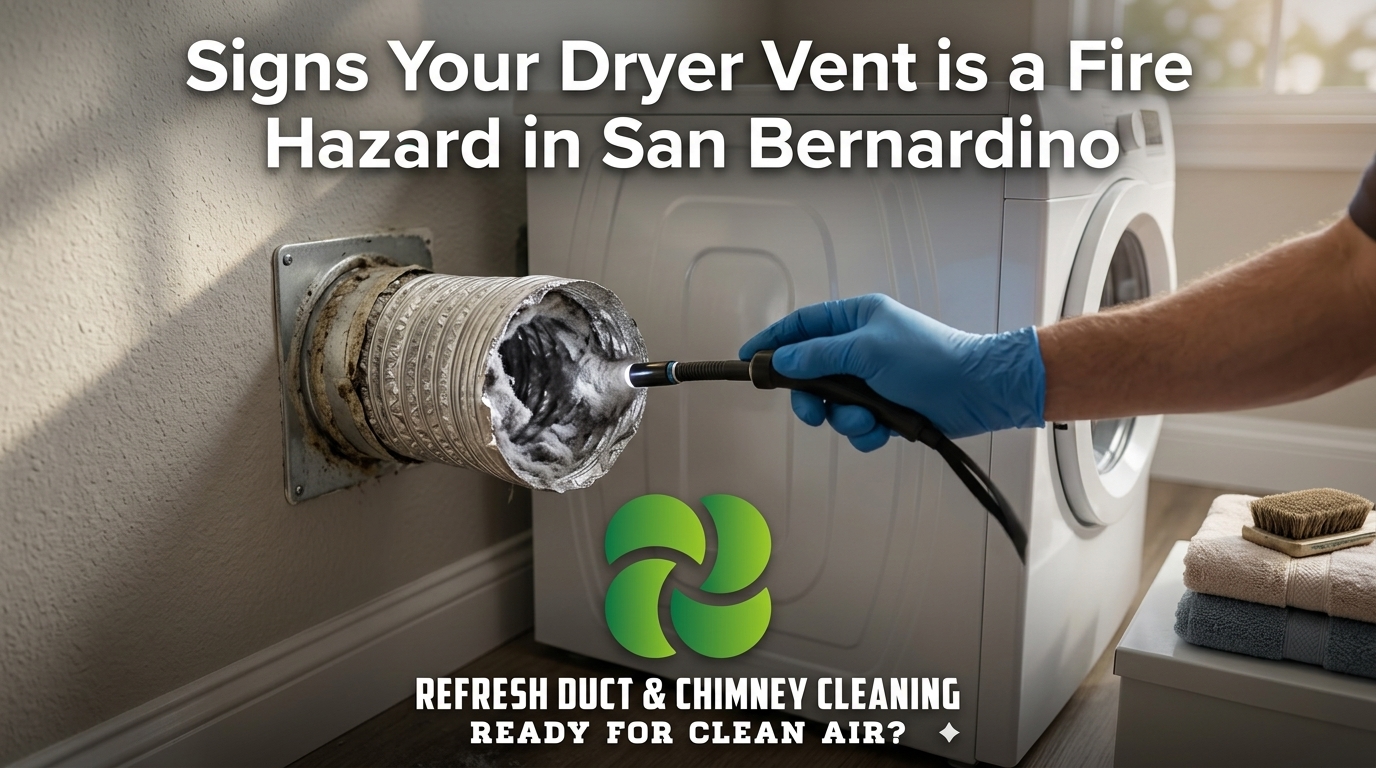
Why Dryer Vent Fire Hazards Are Common in San Bernardino
San Bernardino’s hot and dry climate increases the risk of overheating appliances. When outside temperatures are already high, restricted airflow inside a dryer vent can create extreme internal heat buildup. This makes it easier for lint and debris to ignite.
Many homes in San Bernardino also have older vent systems made of flexible foil or plastic ducts. These materials trap lint more easily and are more prone to overheating. When combined with poor maintenance, they become a major contributor to the Signs Your Dryer Vent is a Fire Hazard in San Bernardino.
Additionally, frequent dryer use in large households accelerates lint accumulation. Over time, even small blockages restrict airflow significantly. Without routine inspections, these minor issues can turn into serious safety hazards.
9 Clear Signs Your Dryer Vent is a Fire Hazard in San Bernardino
Below are the most critical warning signs every homeowner should watch for.
1. Clothes Take Longer Than Usual to Dry
If your clothes require multiple cycles to dry completely, your vent system may be blocked. Restricted airflow prevents moisture from escaping efficiently. This forces the dryer to run longer, increasing heat buildup.
Longer drying times are one of the earliest Signs Your Dryer Vent is a Fire Hazard in San Bernardino. Many homeowners assume the appliance is malfunctioning, but the real issue often lies within the vent system. Ignoring this sign can lead to overheating and internal damage.
2. Burning Smell During Dryer Operation
A burning odor while the dryer is running should never be ignored. Lint trapped near heating elements can begin to smolder. If airflow is restricted, temperatures can rise to dangerous levels.
This is one of the most urgent Signs Your Dryer Vent is a Fire Hazard in San Bernardino. The smell may start faint but can quickly intensify. Immediate inspection is necessary to prevent potential ignition.
3. Excess Lint Around the Dryer or Vent Opening
Lint collecting behind the dryer or around the exterior vent is a clear warning sign. When airflow is blocked, lint has nowhere to travel and begins escaping from joints and openings.
Visible lint buildup suggests deeper blockages inside the duct system. This is one of the most overlooked Signs Your Dryer Vent is a Fire Hazard in San Bernardino. The more lint you see outside, the more likely there is a larger accumulation hidden inside walls.
4. Dryer Feels Extremely Hot to the Touch
A properly functioning dryer should feel warm but not excessively hot. If the top, sides, or door feel unusually hot, airflow may be restricted.
Overheating is a serious indicator among the Signs Your Dryer Vent is a Fire Hazard in San Bernardino. Excess heat combined with lint buildup creates a dangerous environment. Prolonged overheating can also damage internal components of the appliance.
5. Vent Hood Flap Does Not Open Properly
The exterior vent hood should open fully when the dryer is running. If it barely moves or remains closed, there may be a blockage inside the vent line.
Weak airflow at the exterior vent is a common sign of obstruction. Birds, rodents, or debris can clog vents, especially in warmer regions like San Bernardino. This issue directly contributes to restricted airflow and increased fire risk.
The Exterior Vent Flap Fails to Open or Shows Thick Visible Lint Accumulation
Checking the outdoor termination hood where your dryer vents to the outside is an easy way to evaluate your system’s fire safety status. When the machine is running, the physical pressure of the escaping exhaust air should force the plastic or metal damper louvers to swing wide open. If the vent flap remains completely closed or barely flutters, it proves that the interior airflow pressure has dropped to a critically low level. Inspection of the exterior hood often reveals a thick matrix of lint, hair, and dust packed tightly against the protective pest screen.
Comprehensive Threat Analysis: Safe Venting vs. Critical Fire Hazard Indicators
Yahan ek nihayat lamba aur detailed table hai jo safe operating conditions aur critical fire hazard signs ka mukammal breakdown pesh karta hai:
| Operational Diagnostic Indicator | Safe & Code-Compliant Vent Status | Critical Fire Hazard Warning Sign | Imminent Risk Level & Technical Threat |
| Drying Cycle Duration | Standard load dries completely within 35 to 50 minutes total. | Load requires 60 to 120+ minutes or multiple restarts to dry. | High Risk: Extreme heat buildup inside the drum cooks internal electronics. |
| Olfactory (Smell) Status | Fresh, clean scent of laundry detergent or fabric softener. | Strong, hot burning toast or smoky plastic smell in the air. | Extreme Risk: Active scorching of lint accumulation near the heater box. |
| Appliance Surface Temp | Exterior cabinet metal remains warm or cool during operation. | Top or side panels are hot to the touch, burning skin contact. | High Risk: Thermal overload failure; high-limit safety switches are failing. |
| Outdoor Termination Hood | Flaps swing open smoothly; clear air velocity felt blowing out. | Flaps glued shut with lint; zero air movement felt externally. | Severe Risk: Entire duct run is turned into a highly pressurized fuse box. |
| Transition Hose Material | Rigid aluminum or heavy-walled semi-rigid metal ducting. | Thin, unlisted white plastic vinyl or flimsy foil accordion hoses. | Extreme Risk: Vinyl melts instantly upon ignition, spreading fire to walls. |
| Duct Run Configuration | Straight, short runs under 25 feet with minimal elbow bends. | Sagging, kinked runs with multiple sharp 90-degree turns. | High Risk: Sharp bends act as structural traps where heavy lint settles fast. |
| Lint Screen Environs | Fits snugly into slot; traps fine fibers smoothly each load. | Excess lint bypassing the screen and escaping behind the drum. | Moderate Risk: Loose fibers coat the internal electric motor, choking ventilation. |
| Laundry Room Humidity | Air remains dry and comfortable throughout the drying process. | Room feels like a humid sauna; moisture dripping from walls. | Moderate Risk: Blocked exhaust vents are forcing toxic damp air indoors. |
| Visible Wall Conditions | Drywall behind the laundry setup is clean and structurally solid. | Scorched marks, black soot, or warm spots on the back wall. | Extreme Risk: Active fire or intense heat transfer occurring within the wall. |
| External Vent Cover Flaps | Clean, clear plastic or metal slats that move independently. | Missing flaps allowing wild birds or rodents to build nests inside. | Severe Risk: Organic nesting materials ignite instantly when exposed to heat. |
| Electrical Circuit Stability | Unit runs seamlessly without affecting household electrical panel. | Dryer frequently trips the dedicated 30-amp circuit breaker. | High Risk: Overloaded motor pulling high amps due to extreme backpressure. |
| Clarity of Internal Piping | Mirror-smooth inner walls allowing friction-free passage of air. | Thick, felt-like layer of lint caking the entire internal radius. | Severe Risk: Highly combustible fuel source lining the path of hot air. |
6. Laundry Room Feels Humid or Musty
A functioning dryer vent removes heat and moisture from your home. If your laundry room feels unusually humid during dryer cycles, the vent may not be releasing air properly.
Excess moisture buildup is one of the subtle Signs Your Dryer Vent is a Fire Hazard in San Bernardino. Over time, trapped moisture can also encourage mold growth. Poor ventilation increases both fire and health risks.
7. Increased Energy Bills Without Explanation
When airflow is restricted, your dryer works harder and runs longer. This increases electricity or gas consumption.
A sudden rise in energy bills may be linked to vent blockage. Many homeowners overlook this connection, but it is one of the financial indicators of the Signs Your Dryer Vent is a Fire Hazard in San Bernardino. Inefficient operation often signals a deeper issue within the vent system.
8. Visible Damage to Vent Ducts
Crushed, bent, or disconnected vent ducts restrict airflow significantly. Flexible plastic or foil ducts are particularly vulnerable to sagging and lint accumulation.
Structural damage is among the most dangerous Signs Your Dryer Vent is a Fire Hazard in San Bernardino. Damaged ducts can leak hot air and lint into wall cavities or attic spaces. These hidden hazards increase fire risk dramatically.
9. No Annual Maintenance or Inspection
If your dryer vent has not been cleaned in over a year, it may already be partially blocked. Regular maintenance is essential for safe operation.
Lack of inspection is one of the silent Signs Your Dryer Vent is a Fire Hazard in San Bernardino. Even if no obvious symptoms appear, lint may still accumulate deep inside the vent line. Routine professional cleaning significantly reduces fire risk.
What Happens If You Ignore Dryer Vent Warning Signs?
Ignoring early warning signs can lead to devastating consequences. Dryer vent fires can spread quickly through walls, ceilings, and attic insulation. Once ignition occurs, flames can escalate rapidly.
Beyond fire hazards, blocked vents reduce appliance lifespan. Motors and heating elements experience extra strain. Ignoring the Signs Your Dryer Vent is a Fire Hazard in San Bernardino often results in costly repairs or complete dryer replacement.
Poor ventilation can also impact indoor air quality. Trapped moisture may encourage mold growth. Addressing problems early prevents both safety and structural damage.
Benefits of Identifying Dryer Vent Fire Hazards Early
Early detection significantly reduces the likelihood of fire incidents. Removing blockages improves airflow and stabilizes dryer temperature. This keeps your home safer year-round.
Improved airflow also reduces drying time. This lowers energy consumption and monthly utility costs. Recognizing the Signs Your Dryer Vent is a Fire Hazard in San Bernardino saves money in the long term.
Key Benefits Include:
- Reduces risk of lint ignition and house fires.
- Improves energy efficiency and lowers bills.
- Extends the lifespan of your dryer.
- Enhances indoor air quality by reducing moisture.
- Prevents expensive emergency repairs.
How Often Should Dryer Vents Be Cleaned in San Bernardino?
Most homes should schedule professional dryer vent cleaning at least once per year. However, households with large families or pets may require cleaning every six months.
Frequent dryer use increases lint accumulation. Pet hair combined with lint forms dense clogs quickly. Regular inspections help identify the Signs Your Dryer Vent is a Fire Hazard in San Bernardino before serious issues develop.
Professional cleaning ensures deep removal of hidden blockages. This keeps airflow unrestricted and reduces overheating risks.
Conclusion
Understanding the Signs Your Dryer Vent is a Fire Hazard in San Bernardino is critical for home safety. Warning signs like longer drying times, burning smells, overheating, and visible lint buildup should never be ignored. Early action can prevent devastating fire damage and protect your family.
Routine inspections and professional cleaning significantly reduce fire risks. By recognizing and addressing the Signs Your Dryer Vent is a Fire Hazard in San Bernardino, homeowners can maintain a safer, more efficient home. Prevention is always far more affordable and less stressful than dealing with a fire emergency.
Frequently Asked Questions (FAQs)
1. Can a dryer vent fire start suddenly without warning?
Yes, lint can ignite quickly if airflow is severely restricted. Many fires occur after subtle warning signs are ignored.
2. Is a gas dryer more dangerous than an electric dryer?
Both types can become fire hazards if vents are clogged. The primary risk comes from lint buildup and restricted airflow.
3. Does vent length affect safety?
Yes, longer vents with multiple bends increase airflow resistance. This encourages lint buildup and overheating.
4. Can outside weather impact dryer vent performance?
Yes, hot weather in San Bernardino can increase internal dryer temperatures. Combined with clogs, this raises fire risk.
5. Are flexible ducts safe to use?
Flexible foil or plastic ducts are more prone to lint accumulation. Rigid metal ducts are generally safer and more durable.
6. Should I replace my dryer if vents are clogged?
Not necessarily; cleaning the vent system often resolves the issue. However, prolonged overheating may damage internal components.
7. How do professionals check airflow?
Technicians use specialized tools to measure airflow pressure and inspect blockages. They also check for structural duct damage.
8. Can clogged vents affect clothing quality?
Yes, overheating can damage fabrics and cause excessive wear. Proper ventilation protects both your appliance and clothing.