
As the seasons change throughout the year, the demands on your household appliances shift dramatically, making routine care absolutely essential for a safe home. Your clothes dryer is one of the hardest-working machines in your house, yet its ventilation pathway is frequently ignored until a major issue arises.
Implementing seasonal dryer vent cleaning tips ensures that your appliance can handle weather-related challenges, from winter freezing to summer humidity. Debris like lint, dust, and outdoor nesting materials can quickly accumulate inside the pipes, blocking vital airflow and creating hidden hazards.
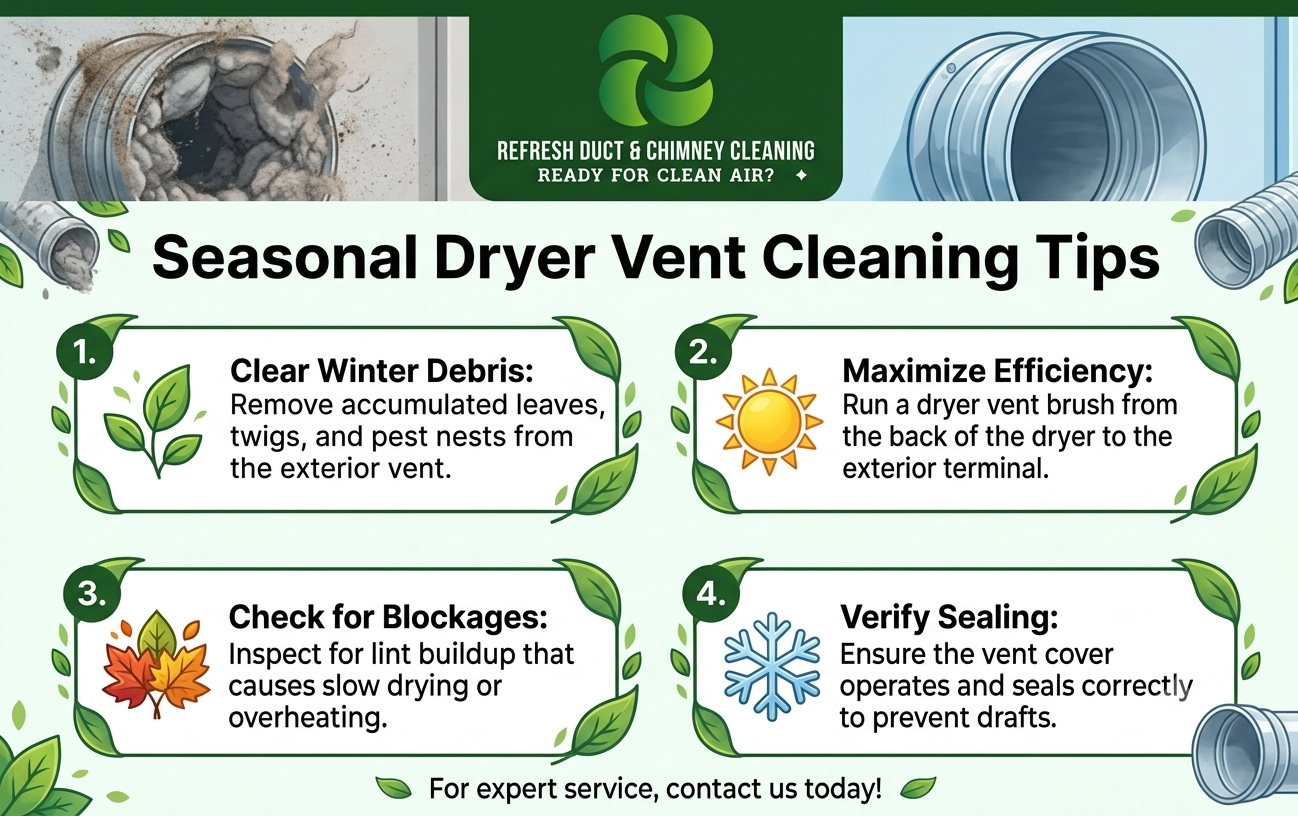
Seasonal Dryer Vent Cleaning Tips
Applying targeted seasonal dryer vent cleaning tips allows you to address the specific environmental factors that impact your appliance during different months. Each season brings unique challenges, such as heavy autumn leaf fall, spring animal nesting, or intense winter condensation that turns dry lint into thick, sticky paste.
By following a seasonal dryer vent cleaning Los Angeles routine, you can prevent major blockages from forming deep within the walls of your home. This systematic approach takes the guesswork out of appliance maintenance and keeps your ventilation system operating efficiently all year long.
Spring Ventilation Challenges and Solutions
Spring is a beautiful time of renewal, but it also introduces specific hazards to your external appliance connections that require immediate attention. Small birds, rodents, and insects are actively searching for warm, sheltered spaces to build their nests, and an open pipe looks perfect to them.
If animals manage to move inside, their nesting materials will create an immediate, complete blockage that stops all hot air from escaping. To solve this common spring problem, inspect your exterior hood frequently and install an approved, clear mesh pest guard over the opening.
Summer Humidity and High Load Care
During the hot summer months, high outdoor humidity makes it much harder for your appliance to expel moist air efficiently from the laundry drum. When the air outside is thick with moisture, the drying cycle naturally works harder, causing lint to become damp and stick to the inner pipe walls.
Furthermore, summer is often a time of increased laundry loads due to frequent swimming, outdoor activities, and constant clothing changes. This heavy usage means you must check your internal mesh filter after every single cycle without exception to prevent rapid dust accumulation.
Autumn Leaf Management and Inspections
- Autumn brings falling leaves and gusty winds, which can easily create unexpected obstructions around the exterior exit point of your ventilation system.
- Swirling leaves, twigs, and loose yard debris can pile up directly against the outside wall cap, trapping the exhaust flap in a closed position.
- When the flap cannot swing open freely, toxic heat and moisture back up into your home, creating a major fire risk.
- Make it a regular habit during your weekly yard cleanup to clear a two-foot perimeter around the outside exhaust hood.
- Inspecting the area ensures that autumn debris never interferes with the vital airflow required to complete your laundry chores safely.
- Regularly checking that the exterior louvers are not frozen shut ensures that humid air escapes completely before it can turn into ice.
- Frozen blockages completely choke the system, forcing the heating elements to spike
Winter Condensation and Freezing Risks
Winter introduces freezing temperatures that create a highly unique, dangerous situation inside your metal or plastic exhaust piping system. As warm, moisture-laden air travels from the running machine into a freezing cold pipe, it rapidly cools down and turns into liquid condensation. This moisture mixes with loose fabric fibers, creating a heavy, wet sludge that quickly freezes into solid ice during cold nights.
Clean Filter Screen
The primary line of defense against severe blockages is the removable mesh filter screen located directly inside your appliance housing. You must pull this screen out and scrape away the accumulated layer of fine fibers before starting every single load of laundry.
Wipe Internal Housing
Lint frequently bypasses the main filter screen and drops down into the deep, narrow slot where the frame sits inside the machine. Use a long, flexible crevice tool attached to your vacuum cleaner to suction out this hidden debris every few weeks completely.
Slide Machine Out
Carefully pull the heavy appliance away from the laundry room wall so you can easily access the rear connections without hurting yourself. Ensure you do not yank the electrical cords or strain the gas supply lines while moving the heavy metal cabinet forward.
Loosen the Clamps
Use a standard screwdriver or a small nut driver to loosen the metal ring clamps holding the transition duct to the back port. Gently slide the flexible pipe away from the solid metal exhaust tube to reveal the inner channel where blockages often begin.
Insert Flexible Brush
Take your specialized cleaning brush kit and connect the flexible plastic rods together to match the estimated length of your wall pipes. Insert the bristled brush head directly into the wall duct opening and push it forward using a slow, steady spinning motion.
Vacuum Loose Dust
After brushing loose the stubborn buildup from the inner walls, a large amount of debris will remain sitting inside the pipe floor. Insert your long vacuum hose deep into the opening to suction out all the loose particles before they can cause trouble.
Adjusting Cleaning Frequency by Household Size
- The ideal timeline for executing your maintenance checklist depends heavily on the volume of laundry your family processes every single week.
- A single person or a couple living together might only need to perform a deep pipe cleaning once every twelve months.
- However, a large family with children or pets running multiple loads a day will accumulate lint at a vastly accelerated rate.
- For busy households, checking the exhaust system every six months is highly recommended to maintain complete safety and operational efficiency.
- Adapting your cleaning schedule to match your actual appliance usage prevents unexpected blockages from sneaking up on your busy family.
Detailed Seasonal Maintenance Schedule Matrix
| Cleaning Season | Specific Target Area | Key Maintenance Action | Primary Safety Benefit |
| Early Spring | External Cap and Grill | Remove bird nests, install protective mesh screen, and clean swinging hinges. | Prevents wildlife entry and stops complete air blockages right at the exit point. |
| Late Spring | Internal Filter Slot | Vacuum deep inside the mesh screen housing using a narrow extension nozzle. | Eliminates hidden debris before it bypasses the system and enters wall cavities. |
| Mid Summer | Transition Hose Path | Straighten sharp bends, check for sagging sections, and wipe outer machine casing. | Boosts airflow during high-humidity periods and protects the motor from overheating. |
| Early Autumn | Perimeter Around Vent | Clear away dead leaves, trim nearby bushes, and remove exterior yard debris. | Keeps the exhaust flap swinging freely and prevents external fire hazards from yard trash. |
| Late Autumn | Full Pipe Length | Run a motorized brush kit through the main wall duct from inside to outside. | Clears out a full year of accumulated lint before heavy winter usage begins. |
| Deep Winter | Exhaust Louvers | Inspect for ice accumulation, melt frozen blockages, and check for indoor drafts. | Prevents frozen condensation from trapping toxic air and moisture inside the building. |
Selecting Safe and Code-Compliant Vent Materials
The structural materials chosen for your ventilation pathway have an enormous impact on your home’s daily safety and appliance health. Building codes strictly dictate that rigid galvanized steel or solid aluminum piping must be used for any ductwork hidden inside walls. Rigid metal has perfectly smooth interior walls that prevent flying lint from catching on ridges, reducing the speed of debris accumulation.
Check for Sagging
Examine the visible portions of your exhaust piping in your basement or crawlspace to ensure it is completely straight and well-supported. Over time, poorly installed pipes can begin to sag, creating low points where heavy, wet lint gathers and pools together.
Seal Loose Joints
Inspect every single connection joint along your ventilation line to verify that the pieces are firmly attached and completely airtight. Never use standard plastic duct tape to seal these joints, as the heat from the appliance dries out the adhesive rapidly. Instead, use high-quality aluminum foil tape or heavy-duty metal clamps to wrap and secure every single interlocking pipe seam perfectly.
Monitor Drying Times
Pay close attention to how long it takes for a standard load of towels or heavy clothing to dry completely. If you notice that your clothes are suddenly requiring two full cycles to dry instead of one, a clog is forming. This increase in drying time is a clear warning sign that air cannot move freely through the exhaust line.
Feel Casing Temperature
Touch the exterior metal cabinet of your appliance while it is actively running a normal drying cycle to check its temperature. The metal casing should feel warm to the touch, but it should never feel burning hot or painful to rest your hand on. If the exterior feels incredibly hot, it means the thermal exhaust air is trapped inside the machine by a blockage.
Test Outside Airflow
Walk outside to your exterior exit hood while a laundry cycle is running to test the strength of the air. Hold your hand carefully near the opening to feel if a strong, steady stream of warm air is blowing out. If the airflow feels weak or nonexistent, there is a major blockage somewhere along the line that needs cleaning.
Clear Appliance Back
Maintain a clean, clear space of at least two feet around the entire exterior of your laundry appliances at all times. Do not allow dirty clothes, empty detergent boxes, or flammable cleaning chemical bottles to pile up behind or next to the unit. If the machine overheats due to a restricted line, nearby combustible items can easily ignite and start a major fire.
Professional Maintenance Inclusions and Benefits
- While many homeowners can easily handle basic brushing, certain situations call for the advanced skills and specialized tools of a professional.
- Certified technicians possess industrial-strength truck-mounted vacuums and high-velocity air whips that clean complex, multi-story pipe runs with total ease.
- They can also perform vital safety inspections, such as checking for hidden line leaks inside solid walls using specialized snake cameras.
- Investing in professional service once every few years ensures that hard-to-reach sections, like roof vents, are fully cleared without damage.
- Balancing your personal DIY efforts with expert inspections guarantees the highest level of safety and operational efficiency for your property.
Conclusion
Adhering to a dedicated routine of seasonal dryer vent cleaning tips is a fundamental aspect of responsible and safe home ownership. By understanding the unique environmental challenges that spring, summer, autumn, and winter bring, you can easily protect your household from disaster.
Regular maintenance keeps your appliance operating at peak energy efficiency, which translates directly into lower utility bills and shorter chore times. Whether you manage the process independently with a basic brush kit or hire an expert technician, the safety rewards are immense.
FAQs
- How do changing seasons affect the buildup of lint inside my dryer vent?
Each season brings unique environmental conditions, such as high summer humidity that makes lint sticky, or winter cold that causes freezing condensation. These weather shifts cause loose fabric fibers to adhere to pipe walls faster, creating rapid blockages if not checked regularly. - What are the main signs that indicate my exhaust line has a spring pest blockage?
If a bird or rodent has built a nest in your pipe, you will notice a sudden drop in airflow outside. You might also hear strange scratching noises coming from behind the walls, or notice an unpleasant, musty odor filling your laundry room. - Can cold winter weather cause my exterior ventilation cap to freeze completely shut?
Yes, hot and moist air traveling through a freezing pipe quickly turns into liquid water droplets that can freeze instantly on the exit louvers. This ice accumulation locks the flap shut, trapping dangerous heat and moisture inside the pipe line and creating a fire hazard. - Why do clothes take much longer to dry during high-humidity summer months?
High outdoor humidity prevents the appliance from easily expelling the damp air trapped inside the spinning drum during a standard cycle. If your exhaust line is already partially restricted by lint, this extra humidity slows down the entire drying process significantly. - Is it safe to use a standard wire coat hanger to clean out deep wall pipes?
No, using a wire coat hanger is highly dangerous because the sharp metal tips can easily puncture flexible hoses inside your walls. It is also far too short to reach deep clogs and can accidentally push loose lint deeper, packing it into an unremovable block. - How does clear outdoor perimeter management in autumn protect my ventilation system?
Clearing away falling leaves and yard debris stops wind from trapping loose materials directly against your outside exhaust hood opening. This ensures the swinging flap can open fully under air pressure, allowing hot air to escape without backing up into the house. - What is the safest tape to use when joining sections of metal ductwork together?
You must always use high-quality aluminum foil tape specifically designed for HVAC systems to seal the interlocking pipe joints securely. Standard plastic duct tape dries out, cracks, and loses its adhesive properties quickly when exposed to continuous appliance heat. - How often should a large family with pets clean their full exhaust line?
A large household that processes multiple loads of laundry every day should thoroughly clean their entire pipe system every six months. Pets add heavy hair and dander to the laundry mix, which accelerates lint accumulation far quicker than normal. - What mechanical damage can happen if I ignore a heavily clogged exhaust system?
Operating a machine with a blocked line causes extreme heat buildup that can quickly burn out the thermal safety fuses and heating elements. It also places immense strain on the electric motor, leading to early mechanical failure and expensive replacement costs. - Does regular seasonal cleaning have a noticeable impact on my monthly electricity bills?
Yes, keeping the ventilation pathway clear allows your clothes to dry much faster, which drastically shortens the runtime of each cycle. Shorter runtimes mean your appliance consumes far less gas or electricity, leading to immediate savings on your utility bills.