
Clothes dryers are an essential convenience in modern households, making laundry day much faster and easier. However, many homeowners completely overlook the hidden dangers associated with poorly maintained dryer vents. Over time, lint and debris accumulate inside the ventilation pipes, creating severe hazards that can threaten both your property and your family’s safety.
Understanding these risks is the first crucial step toward maintaining a secure and efficient home environment. Regular inspection and consistent cleaning are simple yet vital practices that can prevent unexpected disasters from occurring in your laundry room. By paying closer attention to this small appliance component, you can ensure your home remains safe and efficient for everyone.
Most Common Dryer Vent Safety Risks
When you do not clean your dryer vent regularly, the accumulation of highly flammable lint restricts the airflow significantly. This restriction causes the appliance to overheat, which is the leading cause of dangerous residential dryer fires. As the internal temperature rises, the trapped lint can easily ignite from the heating element and spread through the walls.
Millions of dollars in property damage and numerous injuries occur every single year due to this specific maintenance oversight. Taking Dryer Vents Cleaning Los Angeles is absolutely essential to prevent these devastating fire hazards from threatening your home.
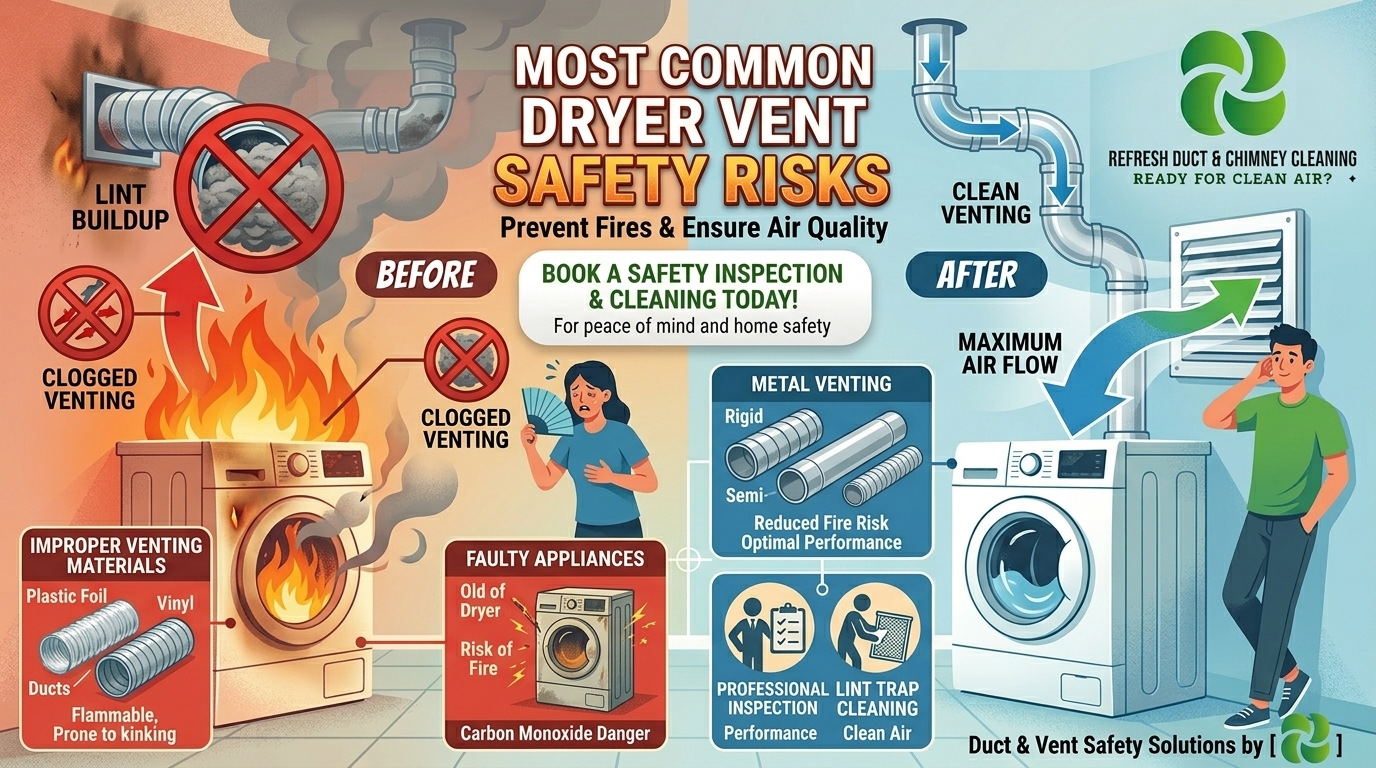
Restricted Airflow and Structural Damage
- A clogged dryer vent forces the appliance to work much harder than it was originally designed to perform.
- This extra strain leads to excessive heat buildup not just inside the machine, but also within the walls where the vent pipes run.
- Overheating can damage the internal components of your dryer, leading to costly mechanical breakdowns and a much shorter appliance lifespan.
- Furthermore, the trapped heat can negatively affect the surrounding drywall, wooden framing, and electrical wiring hidden inside your walls.
- Investing a little time in vent cleaning protects both your expensive appliance and the physical structure of your house.
Excessive Moisture and Mold Growth
When hot, wet air cannot escape through the ventilation system, the moisture gets trapped inside the dryer and the vent lines. This trapped humidity quickly condenses into water droplets that can leak into your walls, ceilings, and laundry room floors. Dark, warm, and damp spaces created by leaking vent moisture are the perfect breeding grounds for dangerous mold and mildew.
Mold infestations can ruin your home’s structure and require extremely expensive professional remediation services to completely remove the health hazard. Ensuring that moist air exits your home properly is the best way to prevent these hidden water damage issues.
Increased Energy Bills and Inefficiency
A clear vent allows your clothes to dry quickly, but a blocked path forces the system to run multiple cycles for a single load. Running your dryer repeatedly for the same clothes consumes a massive amount of extra electricity or gas every month.
You will quickly notice a significant and unnecessary increase in your monthly utility bills due to this hidden inefficiency. Moreover, wasting energy like this puts an unneeded burden on your household budget and contributes to general resource waste. Cleaning the vent restores the appliance’s original efficiency, saving you a lot of money on your energy statements.
Flammable Lint Accumulation
Lint is made of tiny fabric fibers that detach from your clothes during the high-heat drying process. These fibers are extremely dry, light, and catch fire instantly with the slightest spark from the heater. When lint blocks the pipe, it creates a perfect path for fire to travel into your walls.
Carbon Monoxide Poisoning Danger
Gas-powered dryers produce carbon monoxide, a deadly, invisible, and completely odorless gas that must be vented outside safely. If the vent is blocked, this toxic gas can back up directly into your living spaces instead of escaping. Exposure to carbon monoxide can cause severe illness, headaches, dizziness, or even fatal poisoning for your family.
Pest and Rodent Infestations
The outdoor exhaust hood of your dryer vent usually features a flap or screen to keep animals out. If lint buildup forces this flap to stay stuck open, small pests like mice, rats, and birds can enter. These animals build nests inside the warm pipe, creating massive blockages and bringing unsanitary bacteria indoors.
Accelerated Appliance Wear and Tear
Working against a heavy blockage forces the dryer’s motor, rollers, and heating elements to run under constant stress. This continuous strain causes parts to wear out years before they normally would under proper operating conditions. You will find yourself paying for frequent repairs or buying a new dryer much sooner than expected.
Toxic Fumes from Synthetic Fabrics
Modern clothing contains a high percentage of synthetic materials like polyester, nylon, and various elastic chemical blends. When lint from these specific fabrics overheats and scorches inside a blocked vent, it releases highly toxic chemical fumes. These dangerous fumes can seep into your laundry room air, posing a serious inhalation risk.
Cracking of Plastic Vent Hoses
Many older homes still use flexible vinyl or plastic hoses to connect the dryer to the main wall vent. These plastic materials cannot withstand the extreme heat generated when a vent is blocked and airflow is restricted. Over time, the plastic cracks, breaks, or melts, creating an immediate fire path and leaking lint.
Identifying the Warning Signs of a Clogged Vent
- It is very important to recognize the early warning signs of a clogged vent before a serious emergency happens.
- The most common indicator is when your clothes take two or three cycles to dry completely instead of just one.
- You might also notice that the top of the dryer or the clothes themselves feel unusually hot to the touch.
- A musty odor coming from the laundry room or a visible accumulation of lint around the outdoor exhaust opening are also major red flags.
- Paying attention to these subtle changes in performance will help you take action before dangerous conditions develop.
Comprehensive Dryer Vent Safety and Maintenance Comparison
The table below provides an overview of different vent materials, maintenance tasks, and warning signs to help you keep your home safe.
| Category | Component / Issue | Safety Risk Level | Impact on Home & Appliance | Recommended Action |
| Vent Material | Rigid Metal Aluminum | Low Risk | Provides smooth airflow, resists catching fire, and lasts for many years. | Best choice for safety; use this for the entire vent run. |
| Vent Material | Semi-Rigid Flexible Metal | Medium Risk | Can trap minor lint in ridges, but resists fire well if kept clean. | Use only for short transitions between dryer and wall. |
| Vent Material | Plastic or Vinyl Hoses | High Risk | Melts easily under heat, traps massive lint, and propagates fires quickly. | Replace immediately with rigid metal pipes for safety. |
| Warning Sign | Long Drying Times | Medium Risk | Increases energy bills and causes severe wear on internal motor parts. | Check and clean the entire vent system immediately. |
| Warning Sign | Hot Outer Cabinet | High Risk | Indicates dangerous internal heat buildup that can ignite dry lint. | Shut off the appliance and clear the blockage right away. |
| Warning Sign | Burning Smell | Extreme Risk | Means lint is already scorching or a fire has started inside. | Turn off power instantly and check for active fire. |
| Maintenance | Lint Trap Cleaning | Low Risk | Improves daily airflow and prevents large clumps from entering the pipe. | Clean by hand before and after every single laundry load. |
| Maintenance | Annual Pipe Cleaning | High Risk | Removes deep blockages, lowers fire risk, and restores full efficiency. | Clean from inside to outside at least once per year. |
| Maintenance | External Flap Inspection | Medium Risk | Prevents birds and rodents from nesting and blocking air exit. | Inspect monthly to ensure the flap opens and closes freely. |
Essential Tools Required for Proper Vent Cleaning
Cleaning a dryer ventilation system requires a few specific, inexpensive tools to ensure the job is done effectively. A specialized dryer vent cleaning brush kit, which includes flexible rods that connect together, is absolutely necessary for reaching deep inside long pipes. A standard vacuum cleaner with a long hose attachment helps suck out loose lint from the appliance’s internal housing.
You may also need a screwdriver or nut driver to disconnect the vent pipe safely from the back of the machine. Having these proper tools on hand makes the DIY cleaning process much simpler, faster, and highly effective.
Flexible Vent Cleaning Brush
This tool consists of a stiff bristle brush attached to long, screw-together fiberglass rods that bend around tight pipe corners. It is designed to scrape stubborn lint off the inner walls of the pipe without damaging the metal. You can attach it to a power drill to spin the brush for a deeper clean.
High-Powered Vacuum Cleaner
A vacuum is used alongside the brush to pull out the loosened debris from the vent line safely. It prevents the dislodged lint from simply settling into another part of the pipe and creating a new blockage. Using a vacuum keeps the workspace clean and ensures all dust is entirely removed from the home.
Safety Dust Mask and Goggles
Cleaning out old dryer vents can release a massive cloud of dust, lint, fabric particles, and animal dander. Wearing a mask and safety glasses protects your lungs and eyes from irritation while you work in tight spaces. This simple protective gear ensures you stay comfortable and healthy throughout the entire maintenance process.
Foil Vent Tape
Standard plastic duct tape dries out, loses its stickiness, and falls off when subjected to constant appliance heat. True aluminum foil tape is heat-resistant and specially designed to seal the joints between metal ventilation pipes securely. It ensures a airtight seal so that no moist air or loose lint leaks into walls.
Screwdrivers and Clamp Tools
You will need basic hand tools to loosen the metal clamps that hold the vent pipe to the dryer. Taking the connection apart safely allows you to look directly inside the machine’s exhaust port for hidden blockages. These tools are also necessary for reattaching everything tightly once the cleaning process is finished.
Cordless Power Drill
While you can use the flexible brush rods manually, connecting them to a cordless drill makes the work much easier. The spinning action of the drill allows the brush head to scrub away packed lint with minimal physical effort. It speeds up the process significantly and provides a professional-grade cleaning result.
Professional Cleaning vs. DIY Maintenance
- Many homeowners can easily handle basic dryer vent cleaning using standard DIY brush kits available at local hardware stores.
- However, if your vent line is exceptionally long, has multiple sharp turns, or goes up through the roof, professional help is recommended.
- Specialized technicians possess high-powered air compressors and camera equipment to inspect and clear complex commercial or residential systems thoroughly.
- They can also identify hidden structural issues, such as disconnected pipes inside walls, that a homeowner might completely miss.
- Balancing simple DIY care with occasional professional inspections ensures the highest level of safety for your home.
Conclusion
In conclusion, maintaining a clean and clear dryer vent is one of the most important yet ignored aspects of home safety. The risks associated with neglect, ranging from devastating house fires to toxic carbon monoxide leaks, are simply too high to ignore. Fortunately, preventing these dangerous hazards is incredibly simple, highly cost-effective, and only requires a small amount of regular attention.
By recognizing the warning signs early and establishing a consistent annual cleaning routine, you protect your property and family. A well-maintained dryer operates safely, lasts much longer, saves energy, and provides true peace of mind for your household.
FAQs
Q1: How often should I clean my household dryer vent?
You should clean your entire dryer vent system from the inside to the outside at least once every year. However, if you have a large family and use the appliance multiple times every day, cleaning it every six months is safer. Regular cleaning prevents lint from building up to dangerous levels.
Q2: Can I use standard plastic duct tape to connect my vent pipes?
No, you should never use regular plastic or cloth duct tape on your dryer ventilation pipes. The high heat from the dryer causes the adhesive on standard tape to dry out and fail very quickly. Always use professional aluminum foil tape because it is heat-resistant.
Q3: Why is my dryer taking two cycles to dry a single load of clothes?
This is the most common sign that your vent line is heavily clogged with trapped lint. When the hot, moist air cannot escape the machine, the clothes just spin in wet air and stay damp. Cleaning the vent will instantly restore your dryer’s normal performance.
Q4: Is it safe to use a flexible plastic hose behind my dryer?
No, flexible plastic or vinyl hoses are highly dangerous and are considered a major fire hazard by safety experts. They trap lint very easily in their ridges and can melt instantly if the dryer overheats. You should replace them with rigid aluminum metal pipes.
Q5: What are the health symptoms of a carbon monoxide leak from a dryer?
If a gas dryer vent is blocked, carbon monoxide can back up into your home and cause serious health issues. The common early symptoms include unexplained headaches, dizziness, nausea, confusion, and sudden fatigue. You should install a carbon monoxide detector near your laundry room.
Q6: Can birds build nests inside my outdoor dryer vent opening?
Yes, birds, mice, and rats love the warm air coming from the vent and often build nests inside. This happens when the exterior vent cover is broken or missing its safety flap. Animal nests create total blockages that must be removed immediately for safety.
Q7: How can I tell if my dryer vent is clogged without pulling it out?
You can check the outside exhaust hood while the dryer is running to see if air is blowing out strongly. If you feel only a very weak breeze or notice a burning smell near the machine, the vent is clogged. The dryer cabinet getting hot is another sign.
Q8: Does cleaning the lint filter after every load protect my main vent line?
Cleaning the mesh lint filter helps a lot, but it does not catch every single piece of fabric fiber. Small particles always bypass the screen and travel deep into the wall pipes over time. You still need to clean the main pipe annually despite cleaning the filter.
Q9: Can a clogged dryer vent cause my electricity bill to go up?
Yes, a clogged vent forces your dryer to run much longer and work twice as hard to dry clothes. This extended running time wastes a massive amount of electricity or gas, leading to a noticeable increase in bills. Keeping it clean saves you money monthly.
Q10: What should I do if I smell a burning odor while drying clothes?
You must stop the dryer immediately and unplug it from the wall electrical outlet for safety. A burning smell means that trapped lint is already scorching from the intense heat inside. Do not run the appliance again until the vent has been completely cleared.