
A clean dryer vent helps your dryer work efficiently and safely every time you do laundry. Over time, lint, dust, and fabric fibers collect inside the vent, reducing airflow and making the dryer work harder. While regular vent cleaning is important, there are also many simple habits that help keep the vent cleaner for a longer time. Preventing excessive lint buildup improves drying performance and reduces unnecessary wear on the appliance.
Small maintenance steps can save time, lower energy use, and help avoid unexpected problems. Understanding how lint forms and travels through the vent system makes it easier to prevent blockages. Good maintenance habits also help clothes dry evenly and improve the overall performance of the dryer. This guide explains practical ways to keep your dryer vent clean longer using easy and effective methods.
How to Keep Your Dryer Vent Clean Longer
Keeping your dryer vent cleaning Los Angeles results lasting longer starts with simple daily habits and regular inspections. Every drying cycle produces lint, but proper maintenance reduces how much of it enters the vent system. Cleaning the lint filter after each load, avoiding overloaded dryers, and checking the outside vent all help improve airflow. Good airflow prevents lint from settling inside the duct. Small maintenance tasks completed throughout the year reduce the need for frequent deep cleaning.
Following these simple practices helps keep the entire dryer vent system cleaner for a longer period. While regular vent cleaning is important, there are also many simple habits that help keep the vent cleaner for a longer time. Preventing excessive lint buildup improves drying performance and reduces unnecessary wear on the appliance.
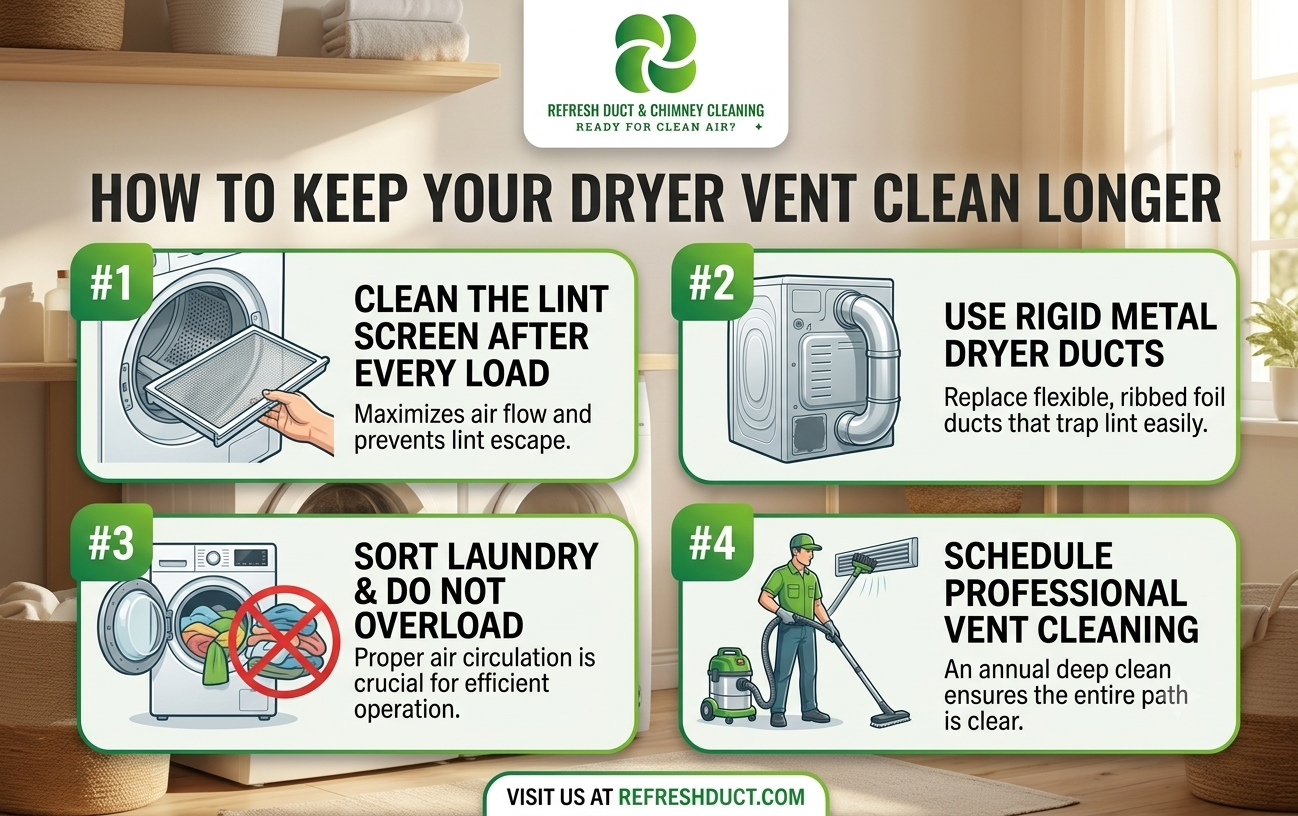
Why Dryer Vent Cleanliness Matters
A clean dryer vent allows hot air and moisture to leave the dryer efficiently. When lint collects inside the vent, airflow becomes restricted, causing the dryer to work harder than necessary. Reduced airflow can increase drying time and place extra stress on important components. A clean vent also improves energy efficiency because clothes dry more quickly.
Regular maintenance supports consistent dryer performance while helping reduce unnecessary wear. Keeping the vent clean is one of the easiest ways to maintain reliable operation.
Common Reasons Dryer Vents Get Dirty Quickly
- Many dryer vents become dirty faster because of everyday laundry habits.
- Overloading the dryer creates more lint and reduces proper airflow during drying cycles.
- Washing fuzzy blankets, towels, and heavy fabrics also produces larger amounts of lint.
- While regular vent cleaning is important, there are also many simple habits that help keep the vent cleaner for a longer time.
- Preventing excessive lint buildup improves drying performance and reduces unnecessary wear on the appliance.
- A musty or burning smell can suggest that lint has accumulated inside the vent.
- Recognizing these signs early allows you to clean the vent before bigger problems develop.
- Skipping lint filter cleaning allows more fibers to travel into the vent system.
- Damaged or crushed vent ducts can trap lint more easily than smooth ducts.
- Understanding these common causes helps prevent excessive buildup inside the vent.
Signs Your Dryer Vent Needs Attention
Even when trying to keep the vent clean, it is important to watch for warning signs. Clothes taking longer than usual to dry often indicate reduced airflow. The dryer may become hotter than normal during operation, or the laundry room may feel humid after each cycle. You may also notice extra lint around the dryer or outside vent opening. A musty or burning smell can suggest that lint has accumulated inside the vent. Recognizing these signs early allows you to clean the vent before bigger problems develop.
Clean the Lint Filter After Every Load
The lint filter captures most of the fabric fibers produced during drying. Cleaning it after every load prevents excess lint from entering the vent system. A clean filter also improves airflow and helps clothes dry faster. Making this a daily habit greatly reduces future vent buildup.
Avoid Overloading the Dryer
Large loads create more lint and reduce air circulation inside the drum. Poor airflow allows additional lint to travel into the vent. Drying smaller, balanced loads improves efficiency and reduces stress on the appliance. This simple habit helps keep the vent cleaner.
Shake Clothes Before Drying
Giving clothes a quick shake before placing them into the dryer removes loose lint, dust, pet hair, and fabric fibers. Less loose material enters the dryer during the cycle. This reduces the amount of lint reaching the vent. It also helps clothes dry more evenly.
Keep the Outside Vent Clear
The outside vent opening should remain free from leaves, dust, dirt, and other debris. A blocked vent prevents proper airflow and encourages lint buildup inside the duct. Checking the vent regularly ensures smooth ventilation. Clear airflow keeps the system working efficiently.
Use the Correct Drying Cycle
Choosing the right drying setting prevents unnecessary drying time. Over-drying clothes produces more lint than needed and increases wear on fabrics. Using suitable heat levels improves efficiency while reducing lint production. This helps keep the vent cleaner over time.
Inspect the Vent Hose Regularly
Check the vent hose every few months for damage, loose connections, or crushed areas. A damaged hose can trap lint more easily and reduce airflow. Replacing worn or kinked ducts helps maintain smooth ventilation. Regular inspections prevent hidden lint buildup.
Simple Maintenance Routine for Long-Term Vent Cleanliness
Creating a simple maintenance schedule keeps your dryer vent cleaner throughout the year. Clean the lint filter after every load and inspect the outside vent each month. Check the vent hose for damage and remove visible lint whenever necessary.A musty or burning smell can suggest that lint has accumulated inside the vent.
Recognizing these signs early allows you to clean the vent before bigger problems develop. Perform a complete vent inspection at least once every year to remove hidden buildup. Monitoring dryer performance also helps identify small airflow problems early. A consistent routine prevents excessive lint accumulation and supports reliable dryer operation.
Dryer Vent Maintenance Checklist
| Maintenance Task | How Often | Purpose | Benefit |
| Clean lint filter | After every load | Remove surface lint | Better airflow |
| Shake clothes before drying | Every load | Reduce loose fibers | Less lint production |
| Avoid overloading dryer | Every load | Improve air circulation | Cleaner vent |
| Inspect outside vent | Monthly | Remove blockages | Better ventilation |
| Check vent hose | Every 3 months | Find damage or kinks | Improved airflow |
| Vacuum behind dryer | Every 2 months | Remove dust and lint | Cleaner area |
| Wipe dryer drum | Monthly | Remove lint residue | Better performance |
| Inspect vent connections | Every 6 months | Prevent leaks | Efficient airflow |
| Monitor drying time | Every load | Detect airflow issues | Early maintenance |
| Remove debris near vent | Monthly | Improve air movement | Prevent restrictions |
| Inspect vent cover | Seasonally | Keep flap moving freely | Better exhaust flow |
| Check for unusual odors | Regularly | Detect hidden lint | Safer operation |
| Listen for unusual noises | Monthly | Identify problems | Early repair |
| Perform full vent cleaning | Yearly | Remove deep lint buildup | Long-term efficiency |
| Test airflow outside | After cleaning | Confirm proper ventilation | Reliable dryer performance |
Best Habits for Keeping Dryer Vents Cleaner
A musty or burning smell can suggest that lint has accumulated inside the vent. Recognizing these signs early allows you to clean the vent before bigger problems develop. A well-maintained dryer vent keeps the dryer operating efficiently while reducing unnecessary wear on important components. Following these practical maintenance tips makes laundry easier and helps your dryer perform at its best.
Wash the Lint Screen Occasionally
Although the lint filter is cleaned after every load, it should also be washed occasionally with warm water and mild soap. Fabric softener residue can block tiny holes in the screen. Cleaning it thoroughly improves airflow. A clean screen catches lint more effectively.
Dry Similar Fabrics Together
Heavy towels and lightweight clothing produce different amounts of lint. Separating fabric types improves drying efficiency and reduces unnecessary lint production. Balanced loads also improve air circulation inside the drum. This keeps the vent cleaner for longer.
Replace Damaged Vent Ducts
Old or crushed vent ducts trap lint more easily than smooth ducts. Replacing damaged sections improves airflow throughout the system. Proper ventilation reduces lint accumulation over time. Well-maintained ducts support better dryer performance.
Keep the Laundry Area Clean
Dust and loose lint around the dryer can enter the vent system during operation. Regularly vacuuming behind and around the dryer reduces debris. A cleaner laundry area supports better airflow. It also improves overall appliance maintenance.
Inspect the Dryer Regularly
Check for loose parts, unusual heat, or changes in drying performance. Small problems often indicate restricted airflow or developing vent issues. Regular inspections help identify concerns before they become serious. Early maintenance keeps the system efficient.
Schedule a Complete Vent Inspection
Even with excellent maintenance habits, hidden lint can still collect inside long vent systems. A complete inspection removes buildup that cannot be seen easily. Annual inspections improve airflow and dryer efficiency. They also help maintain reliable long-term performance.
Final Thoughts on Keeping Your Dryer Vent Clean Longer
- Keeping your dryer vent clean longer does not require complicated maintenance.
- Simple daily habits, such as cleaning the lint filter, avoiding overloaded loads, and inspecting the outside vent, make a significant difference over time.
- Regular attention prevents excessive lint buildup and allows air to flow freely through the system.
- Good airflow improves drying performance, reduces energy use, and supports longer appliance life.
- Monitoring the condition of the vent hose and watching for warning signs also helps prevent future problems.
- Combining routine inspections with yearly deep cleaning provides the best long-term results.
- A well-maintained dryer vent keeps the dryer operating efficiently while reducing unnecessary wear on important components.
- Following these practical maintenance tips makes laundry easier and helps your dryer perform at its best.
Conclusion
Keeping your dryer vent clean for a longer period not only boosts your appliance’s overall efficiency but also keeps your home safe. Implementing preventive habits, such as cleaning the lint trap after every single load and upgrading to rigid metal pipes, significantly slows down internal debris buildup.
When your venting system remains clear, the machine experiences less strain, which directly lowers your monthly electricity bills and dries clothes much faster. Putting a little effort into routine maintenance helps you easily avoid unexpected breakdown costs and heavy professional repair bills down the road.
FAQs
1. How can I keep my dryer vent clean for a longer time?
Clean the lint filter after every load, avoid overloading the dryer, and inspect the outside vent regularly. These simple habits reduce lint entering the vent system. Regular inspections also help identify small problems early. Consistent maintenance keeps the vent cleaner for longer.
2. Why does my dryer vent collect lint so quickly?
Heavy fabrics, large laundry loads, and poor maintenance can increase lint production. A dirty lint filter or damaged vent hose may also contribute to faster buildup. Regular cleaning reduces these issues. Proper airflow helps prevent excessive lint accumulation.
3. How often should I inspect my dryer vent?
The outside vent should be checked monthly for blockages or debris. The vent hose should also be inspected every few months. A complete vent inspection is recommended once each year. Regular checks help maintain efficient airflow.
4. Does cleaning the lint filter really help?
Yes. Cleaning the lint filter after every load captures loose fibers before they enter the vent system. This improves airflow and dryer performance. It also reduces lint buildup inside the duct.
5. Can overloading the dryer make the vent dirtier?
Yes. Overloaded dryers produce more lint and reduce airflow inside the drum. This allows additional lint to travel into the vent. Smaller loads improve drying efficiency and reduce vent buildup.
6. What fabrics create the most lint?
Towels, blankets, fleece, cotton fabrics, and new clothing usually produce the most lint. Washing and drying these items regularly increases lint accumulation. Cleaning the lint filter immediately afterward helps reduce buildup. Routine maintenance is especially important with these fabrics.
7. How do I know if airflow is restricted?
Long drying times, excessive heat, humid laundry rooms, and burning odors often indicate restricted airflow. These warning signs suggest the vent may need cleaning. Early maintenance restores normal performance. Regular inspections prevent larger issues.
8. Should I clean the outside vent cover?
Yes. Leaves, dust, lint, and debris can collect around the vent cover over time. Cleaning the area helps maintain unrestricted airflow. A freely opening vent cover supports efficient ventilation. Monthly inspections are recommended.
9. Can a damaged vent hose affect cleanliness?
A crushed, torn, or loose vent hose traps lint more easily than a properly installed duct. Damaged hoses also reduce airflow throughout the system. Replacing worn ducts improves ventilation. This helps keep the vent cleaner.
10. What is the best long-term maintenance plan?
Clean the lint filter after every load, inspect the vent monthly, check the hose regularly, and perform a complete vent cleaning once a year. Following this routine prevents excessive lint buildup. It also improves dryer efficiency and supports long-lasting performance.