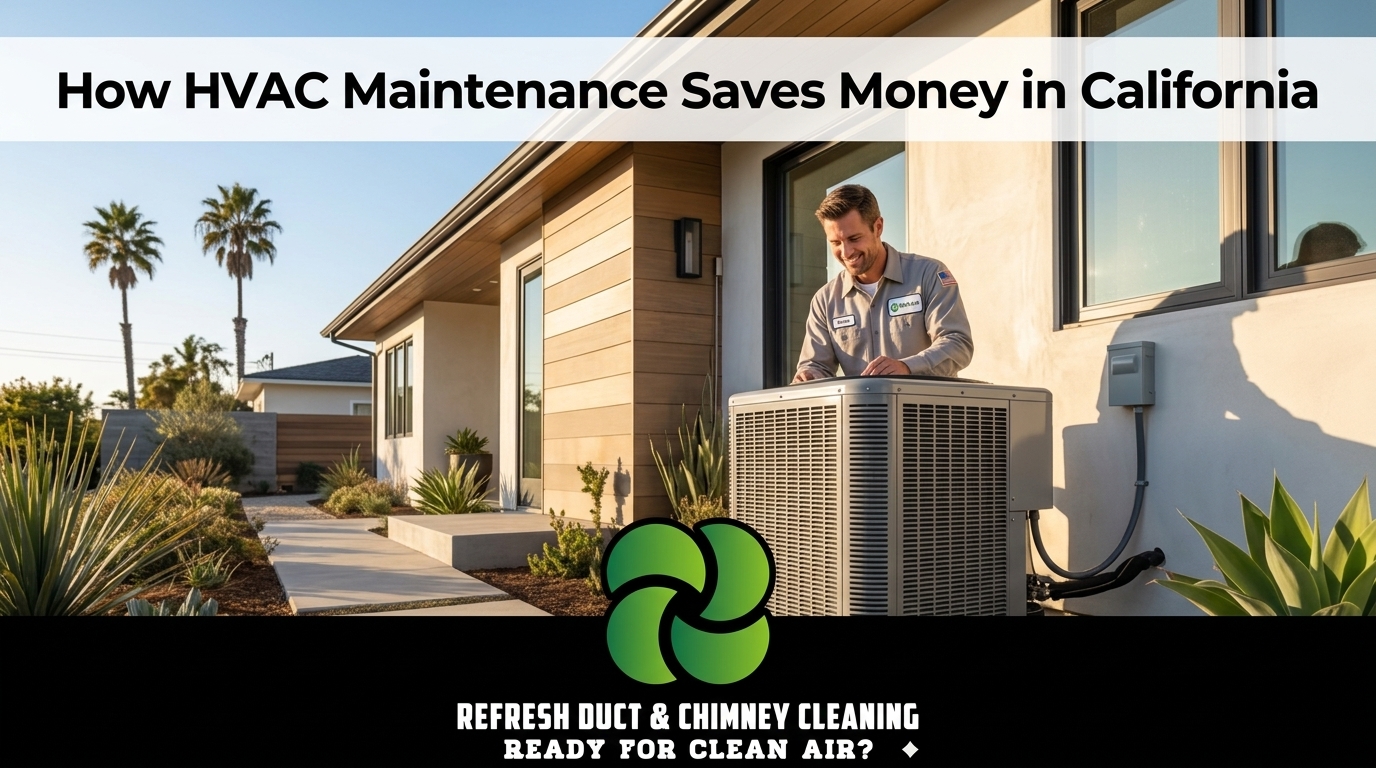
California homeowners deal with high electricity rates, strict energy efficiency regulations, and climate extremes that place heavy demand on heating and cooling systems. How HVAC maintenance saves money in California becomes obvious once you look at energy consumption patterns, repair frequency, and long-term equipment performance. Regular service reduces breakdown risks, improves operational efficiency, and prevents expensive emergency repairs that often occur during peak seasons.
Rising utility costs across cities such as Los Angeles, San Jose, and Sacramento push homeowners to search for reliable ways to control expenses. HVAC systems account for nearly half of a home’s total energy usage in many California households. How HVAC maintenance saves money in California is directly tied to lower utility bills, extended equipment lifespan, and fewer unexpected system failures.
What Is HVAC Maintenance and Why Does It Matter Financially?
HVAC maintenance involves systematic inspection, cleaning, testing, and calibration of heating and cooling equipment. Technicians examine coils, filters, refrigerant levels, motors, electrical connections, thermostats, and duct systems. Consistent servicing ensures that every component operates at optimal efficiency and avoids unnecessary strain.
Financial benefits appear quickly when maintenance becomes routine rather than reactive. Energy waste declines as airflow improves and refrigerant levels stabilize. Small mechanical issues get resolved before turning into expensive system failures.
How Routine Inspections Reduce Hidden Costs
Minor performance issues often go unnoticed until they trigger larger problems. Refrigerant leaks, clogged coils, or loose wiring can quietly increase electricity consumption for months. Early detection prevents long-term energy waste and reduces the likelihood of sudden breakdowns.
System diagnostics during maintenance visits also identify safety concerns. Faulty heat exchangers or electrical malfunctions pose fire and carbon monoxide risks. Addressing these issues early protects both finances and household safety.
Why Neglected Systems Cost More Over Time
Neglected HVAC systems operate under constant strain. Motors overheat, compressors wear down faster, and airflow restrictions force longer run cycles. Increased stress accelerates component failure and shortens equipment lifespan.
Replacement costs in California remain significantly higher than routine maintenance expenses. Preventive care delays large capital investments by several years. How HVAC maintenance saves money in California becomes clear when comparing minor tune-up costs with full system replacement.
How Energy Efficiency Directly Impacts Utility Bills
Energy efficiency represents the most immediate financial benefit of HVAC servicing. Clean coils, unobstructed filters, and calibrated thermostats allow systems to reach desired temperatures faster. Shorter run times directly reduce electricity usage.
California’s long cooling seasons amplify energy consumption. Inland regions experience extended heat waves that demand continuous air conditioning. Proper maintenance ensures cooling systems perform efficiently even during peak temperature spikes.
How Clean Components Improve Performance
Dirty condenser coils trap heat and reduce cooling efficiency. Cleaning these components improves heat exchange and lowers system workload. Reduced strain decreases electricity consumption and protects compressors from premature failure.
Air filters also play a critical role in performance. Clogged filters restrict airflow and force blowers to work harder. Regular replacement maintains balanced airflow and stabilizes energy usage.
How Thermostat Calibration Prevents Energy Waste
Incorrect thermostat readings cause frequent cycling and uneven temperature control. Calibration ensures accurate temperature sensing and prevents unnecessary operation. Smart thermostat integration further enhances energy optimization.
Programmable schedules reduce cooling or heating during unoccupied hours. Energy savings accumulate monthly and significantly impact annual utility expenses. How HVAC maintenance saves money in California often begins with simple thermostat adjustments.
Why Preventive Maintenance Lowers Repair Expenses
Emergency HVAC repairs often occur during extreme weather conditions when service demand peaks. Premium labor rates and urgent part replacements increase total costs dramatically. Preventive maintenance reduces the likelihood of these emergency scenarios.
Routine inspections allow technicians to identify worn belts, loose connections, and minor refrigerant leaks. Addressing these issues early prevents system-wide damage. Controlled maintenance spending remains far more predictable than emergency repair bills.
How Small Repairs Prevent Major Failures
Replacing a worn capacitor costs significantly less than replacing a burned-out compressor. Small component failures often cascade into larger mechanical breakdowns. Early intervention interrupts this chain reaction.
Lubrication of moving parts reduces friction and heat buildup. Lower friction protects motors and bearings from excessive wear. Preventive care preserves system integrity and reduces overall repair frequency.
How Electrical Testing Protects System Integrity
Electrical malfunctions account for a large percentage of HVAC breakdowns. Loose wiring increases resistance and heat generation. Routine testing ensures stable electrical flow and safe system operation.
Circuit board damage often results from unresolved electrical issues. Replacing control boards remains expensive compared to routine maintenance checks. Preventive diagnostics safeguard both functionality and finances.
What Role Does Climate Play in Maintenance Savings?
California’s diverse climate zones significantly influence HVAC workload. Coastal regions experience humidity fluctuations, while inland areas endure intense heat. Environmental conditions directly affect system efficiency and component durability.
Dust, pollen, and wildfire smoke create additional strain on air filters and duct systems. Accumulated debris restricts airflow and increases operating costs. Maintenance mitigates these environmental impacts and protects long-term performance.
How Heat Waves Increase System Strain
Extended heat waves force air conditioners to operate continuously. Continuous operation accelerates wear on compressors and motors. Routine servicing ensures systems remain resilient during extreme temperature periods.
Cooling efficiency declines rapidly without maintenance. High outdoor temperatures amplify inefficiencies in neglected systems. Proactive care ensures stable performance even during prolonged heat events.
How Air Quality Affects Operational Costs
Poor outdoor air quality increases indoor filter clogging frequency. Restricted airflow forces systems to work harder to maintain comfort. Frequent filter replacement reduces energy consumption and improves indoor air conditions.
Clean indoor air also reduces dust buildup inside ducts. Reduced debris improves airflow efficiency and lowers maintenance needs. How HVAC maintenance saves money in California includes protecting systems from environmental pollutants.
How HVAC Maintenance Saves Money in California
This guide explains the key ways regular HVAC maintenance reduces costs along with practical tips for maximizing savings and avoiding expensive repairs.
Understanding How Regular HVAC Maintenance Saves Money
Regular HVAC maintenance helps homeowners save significantly on energy bills by keeping the system running efficiently. Professional tune-ups improve airflow and ensure components operate at peak performance levels. Clean systems use less electricity to heat or cool the home compared to neglected units. Early detection of small issues prevents them from turning into major breakdowns that require costly replacements. Consistent maintenance extends the overall lifespan of the equipment reducing the need for premature new installations. Lower repair frequency means fewer emergency service calls that often come with premium pricing. Better indoor air quality from maintained systems can also decrease related health expenses. Many utility companies offer rebates or incentives for homes with well-maintained HVAC units. Investing a small amount annually in maintenance yields substantial long-term financial returns. Proper care translates directly into more money staying in your pocket year after year.
Key Ways HVAC Maintenance Reduces Energy Costs
Routine filter replacements alone can improve system efficiency and cut energy consumption noticeably. Technicians clean coils and ducts to remove buildup that forces the unit to work harder. Proper refrigerant levels and electrical connections ensure optimal performance without waste. Lubricated moving parts reduce friction and energy loss during operation. Calibrated thermostats prevent unnecessary cycling that spikes utility usage. Sealed ductwork stops air leaks that make the system compensate by running longer. Balanced airflow distributes temperatures evenly eliminating hot or cold spots that drive up costs. Annual inspections identify inefficiencies before they impact monthly bills. Upgraded components during maintenance often boost overall energy ratings. These combined improvements lead to measurable reductions in heating and cooling expenses throughout the seasons.
Common Issues Avoided Through Preventive HVAC Maintenance
Preventive maintenance catches refrigerant leaks early before they cause system failure and high repair bills. Dirty coils and clogged filters are cleaned to avoid strain that leads to component burnout. Electrical problems are fixed promptly preventing short circuits or fire hazards that could result in expensive damage. Worn belts and motors are replaced during routine visits rather than during breakdowns. Corrosion and rust are addressed to maintain system integrity over time. Condensate drain issues are cleared to stop water damage that might affect the home structure. Thermostat malfunctions are corrected to maintain accurate temperature control. Duct leaks are sealed to eliminate wasted energy and associated costs. Early intervention on these problems avoids emergency repairs that are always more expensive. Staying ahead of potential failures keeps unexpected expenses to a minimum.
Long-Term Financial Benefits of HVAC Maintenance
Well-maintained HVAC systems last many years longer than neglected ones saving thousands on replacement costs. Consistent efficiency improvements compound into major savings over the equipment’s lifetime. Reduced downtime means no lost productivity or discomfort during peak seasons. Lower energy usage contributes to decreased carbon footprint while cutting bills. Maintained systems often qualify for extended manufacturer warranties that protect against future costs. Professional documentation of service history can increase home resale value significantly. Fewer repairs translate to predictable budgeting instead of surprise expenses. Overall home comfort improves without additional spending on supplemental heating or cooling. Investing in maintenance creates a positive cycle of reliability and cost efficiency. Homeowners who prioritize this service enjoy sustained financial advantages for many years.
HVAC Maintenance Savings Comparison Table
| Maintenance Activity / Situation | Potential Annual Savings | Key Reasons & Financial Impact |
|---|---|---|
| Regular Filter Changes | $50 – $150 | Improves airflow, reduces energy use by up to 15% |
| Annual Professional Tune-Up | $100 – $300 | Optimizes efficiency and prevents major repairs |
| Duct Cleaning and Sealing | $80 – $250 | Eliminates air leaks and improves system performance |
| Coil Cleaning | $60 – $200 | Restores heat transfer efficiency significantly |
| Refrigerant Level Check and Adjustment | $100 – $400 | Prevents system strain and costly leaks |
| Thermostat Calibration | $40 – $120 | Ensures accurate temperature control |
| Lubrication of Moving Parts | $30 – $100 | Reduces friction and energy waste |
| Electrical Connections Inspection | $50 – $150 | Avoids shorts and inefficient operation |
| Homes with Pets | $150 – $350 | Prevents dander buildup that lowers efficiency |
| High Dust Environments | $120 – $300 | Keeps components clean for better performance |
| Older HVAC Systems (Over 8 Years) | $200 – $500 | Extends life and delays expensive replacement |
| Homes After Renovations | $100 – $250 | Removes construction debris from system |
| Poor Previous Maintenance History | $150 – $400 | Recovers lost efficiency quickly |
| High Usage Households | $180 – $450 | Handles increased load without extra costs |
| Energy Efficiency Upgrades During Service | $200 – $600 | Boosts SEER rating and long-term savings |
| Preventing Emergency Repairs | $300 – $1,000+ | Avoids after-hours and breakdown service fees |
| Extended Equipment Lifespan | $500 – $2,000+ over 5 years | Delays full system replacement costs |
| Utility Rebates and Incentives | $50 – $300 | Many programs reward regular maintenance |
| Reduced Repair Frequency | $200 – $600 | Fewer parts replacements and labor charges |
| Improved Indoor Air Quality | $100 – $250 | Lowers potential health-related expenses |
| Multi-Story Homes | $150 – $400 | Ensures balanced performance across levels |
| Homes with Frequent Guests | $80 – $200 | Handles variable loads more efficiently |
| After Wildfire Smoke Exposure | $120 – $350 | Removes particles that reduce efficiency |
| Homes with Indoor Plants | $60 – $180 | Clears pollen and debris buildup |
| Large Homes with Longer Duct Runs | $200 – $500 | Maintains airflow over greater distances |
This table highlights various maintenance activities and situations where consistent HVAC care delivers substantial cost savings. Always consult a qualified HVAC professional for personalized service recommendations tailored to your system.
How Does Regular Servicing Extend Equipment Lifespan?
HVAC systems represent one of the most expensive home investments. Extending operational lifespan provides significant financial returns. Proper maintenance reduces mechanical stress and preserves internal components.
Well-maintained systems often last five to ten years longer than neglected units. An extended lifespan delays replacement expenses and protects household budgets. Preventive care ensures consistent performance throughout the system’s life cycle.
How Balanced Airflow Protects Core Components
Balanced airflow prevents overheating within internal chambers. Overheating damages electrical circuits and compressor components. Routine airflow adjustments maintain optimal pressure and temperature control.
Duct inspections also identify leaks that waste conditioned air. Sealing ducts reduces system workload and prolongs equipment life. Efficient airflow management remains central to cost savings.
What Are the Key Financial Benefits of Scheduled HVAC Maintenance?
Scheduled HVAC maintenance provides predictable annual costs. Homeowners can budget for routine servicing instead of facing unexpected repair bills. Financial stability improves when maintenance becomes part of annual home care planning.
Energy savings compound monthly and annually. Reduced consumption lowers peak usage charges and stabilizes electricity expenses. Over time, these savings exceed the cost of maintenance services.
Major Financial Advantages
- Lower Monthly Utility Bills: Efficient systems consume less electricity during peak demand. Reduced runtime lowers energy expenses.
- Fewer Emergency Service Calls: Preventive inspections identify potential failures early. Early repairs cost less than emergency replacements.
- Extended Equipment Lifespan: Proper care delays full system replacement. Delayed replacement saves thousands of dollars.
- Improved Indoor Comfort: Stable temperatures reduce overuse. Reduced overuse decreases mechanical wear.
- Protection of Manufacturer Warranty: Documented maintenance preserves warranty validity. Preserved coverage reduces out-of-pocket costs.
Extending HVAC System Lifespan Through Maintenance
Regular HVAC maintenance plays a critical role in extending the lifespan of your heating and cooling system. When components are cleaned, inspected, and serviced on time, the system operates under less strain and avoids unnecessary wear. This not only improves efficiency but also delays costly replacements. In the long run, consistent maintenance helps homeowners get the maximum return on their HVAC investment.
Preventing Wear and Tear on Components
Routine maintenance reduces friction and stress on essential parts like motors, fans, and compressors. When components are properly lubricated and cleaned, they function smoothly without overworking. This minimizes damage over time and helps maintain system durability.
Early Detection of Potential Issues
Regular inspections allow technicians to identify small problems before they become major failures. Fixing minor issues early prevents costly breakdowns and system damage. This proactive approach ensures the HVAC system continues to run efficiently for years.
Maintaining Optimal Performance Levels
A well-maintained HVAC system consistently delivers reliable heating and cooling. Clean filters, balanced airflow, and calibrated controls keep performance at its peak. This reduces the workload on the system and extends its operational life.
Avoiding Premature System Replacement
Neglected systems often fail much earlier than expected due to accumulated damage. Regular maintenance keeps all components in good condition, delaying the need for replacement. This allows homeowners to save thousands by maximizing the system’s usable lifespan.
How Much Does HVAC Maintenance Cost Compared to Repairs?
Routine HVAC maintenance in California typically costs between $150 and $300 per visit. Annual service agreements often include two visits and priority scheduling at competitive rates. These predictable expenses remain significantly lower than major repair costs.
Compressor replacements, refrigerant leaks, or full system failures can exceed several thousand dollars. Preventive servicing dramatically reduces the probability of these costly breakdowns. How HVAC maintenance saves money in California becomes clear when comparing routine service costs with emergency repairs.
Conclusion
How HVAC maintenance saves money in California becomes evident through measurable reductions in energy consumption, repair frequency, and system replacement costs. Preventive servicing transforms HVAC systems from unpredictable liabilities into efficient, dependable assets. Routine inspections protect against climate-related strain and environmental pollutants.
Long-term savings accumulate steadily through improved efficiency and extended equipment lifespan. Stable indoor comfort enhances daily living while reducing operational expenses. How HVAC maintenance saves money in California ultimately reflects a smart investment strategy that prioritizes prevention over costly repairs.
FAQS
1. How often should I schedule HVAC maintenance in California?
Most experts recommend servicing HVAC systems at least twice a year, once in spring and once in fall. Regular servicing ensures optimal performance during extreme heat or cold seasons.
2. Can regular maintenance prevent unexpected HVAC breakdowns?
Yes, routine inspections catch minor issues before they escalate into major failures. Early detection significantly reduces emergency repair costs.
3. Does HVAC maintenance improve indoor air quality?
Cleaning filters, coils, and ducts removes dust, pollen, and other pollutants. This ensures cleaner air while reducing strain on the system.
4. Will maintenance lower my home’s electricity bill immediately?
Efficiency improvements often result in noticeable energy savings within one billing cycle. Optimized airflow and properly charged refrigerant reduce electricity consumption.
5. Is professional HVAC maintenance necessary, or can I do it myself?
Professional technicians have specialized tools and training to handle electrical and refrigerant components safely. DIY maintenance can help with minor tasks, but cannot replace a full professional inspection.
6. Can maintenance extend the life of my HVAC system?
Yes, reducing mechanical stress and ensuring proper operation prolongs the lifespan of motors, compressors, and other components. Well-maintained systems can last 5–10 years longer than neglected ones.
7. Are there hidden costs to skipping HVAC maintenance?
Skipping maintenance often leads to increased energy bills, more frequent repairs, and early system replacement. Unexpected breakdowns during peak seasons can also result in premium emergency service fees.
8. Does maintenance help with warranty coverage?
Many HVAC manufacturers require proof of regular maintenance to honor warranty claims. Keeping documented service records protects you from costly out-of-pocket repairs.