
Airflow is critical for maintaining comfort and energy efficiency in homes across Irvine. Many homeowners face uneven temperatures, high utility bills, or excessive dust due to aging or damaged ductwork. Understanding how duct replacement improves airflow in Irvine homes helps you make informed decisions for both comfort and long-term savings.
Duct replacement ensures your HVAC system operates efficiently by restoring proper airflow, sealing leaks, and optimizing air distribution. In Irvine, where temperatures vary between coastal and inland areas, proper ductwork is essential for consistent indoor comfort and improved energy efficiency.
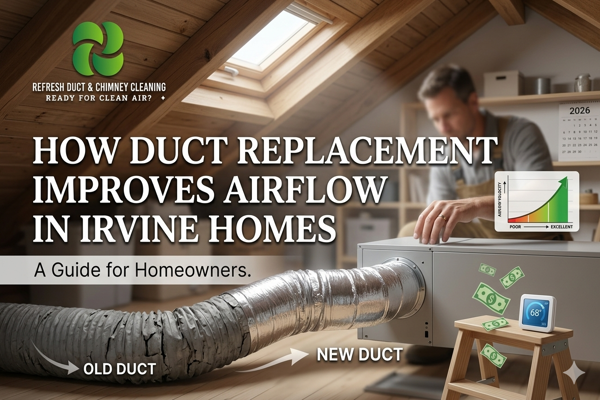
What Is Duct Replacement?
Duct replacement is the process of removing old, damaged, or inefficient ductwork in your HVAC system and installing new ducts. Over time, air ducts can develop leaks, rust, or blockages, which reduce airflow and make your heating or cooling system work harder. Replacing ducts improves energy efficiency, enhances indoor air quality, and ensures a more comfortable home environment.
Benefits of Duct Replacement
Replacing old ducts can significantly improve your home’s energy efficiency by reducing air leaks and system strain. New ducts also enhance indoor air quality by minimizing dust, allergens, and mold circulation. Additionally, duct replacement ensures more consistent heating and cooling, keeping every room at the desired temperature.
Signs You Need Duct Replacement
If your HVAC system struggles to heat or cool certain rooms, it may indicate damaged or inefficient ducts. Visible holes, disconnected sections, or rust on your ducts are strong signs that replacement is needed. You may also notice excessive dust or allergy problems even after regular cleaning, which points to compromised ductwork.
Professional Considerations
Professional duct replacement starts with a thorough inspection to identify problem areas and measure airflow efficiency. Choosing the right materials, such as sheet metal, flexible, or insulated ducts, is essential for durability and performance. Finally, proper sealing and installation ensure long-term energy savings and better system operation.
Why Duct Replacement Is Important in Irvine Homes
Duct replacement improves comfort, reduces energy costs, and prolongs the lifespan of HVAC systems. Inefficient ducts can reduce system efficiency by 20–30%, leading to higher electricity bills and HVAC strain.
In Irvine, where summers can be intense and winters moderately cool, proper airflow ensures even temperature distribution. New ducts also reduce indoor air pollutants by minimizing leaks where dust and allergens can enter.
Benefits of Replacing Ducts
- Energy savings: Sealed and properly sized ducts reduce unnecessary HVAC work.
- Enhanced airflow: Balanced distribution ensures comfort in all rooms.
- Improved air quality: Reduces dust, mold, and allergens circulating in the home.
- Longevity of HVAC system: Less strain on compressors and motors prevents early failure.
How Duct Replacement Improves Airflow?
Replacing ducts restores airflow by eliminating blockages, leaks, and improperly sized pathways. New ducts allow air to travel efficiently from the HVAC system to each room, improving comfort and energy efficiency.
Eliminating Air Leaks
Leaky ducts reduce HVAC efficiency by allowing conditioned air to escape. Proper replacement seals joints and gaps, directing airflow where it’s needed. This lowers energy consumption and improves indoor comfort.
Proper Sizing and Design
Undersized ducts restrict airflow, while oversized ducts can reduce pressure. New ducts are designed based on accurate load calculations to match HVAC capacity. Proper design ensures balanced airflow throughout the home.
Removing Blockages
Old ducts often accumulate dust, debris, and sometimes mold, which obstruct airflow. Replacing them removes these obstructions, allowing smooth air movement. This also improves indoor air quality and system performance.
Expanded Comparison: Old vs. Replaced Ductwork Performance
| Airflow & Performance Factor | Old, Deteriorated Ductwork System | Newly Replaced Ductwork System |
| Air Delivery Velocity | Weak and sluggish; air barely pushes out of the supply registers. | Strong and consistent; air circulates dynamically throughout the rooms. |
| Static Pressure Levels | Low pressure due to leaks, causing air to stall before reaching distant rooms. | Optimized and balanced pressure maintained from the plenum to the boot. |
| Temperature Consistency | Severe hot and cold spots; upstairs rooms remain hot while downstairs is cold. | Uniform temperature distribution across all zones and floors. |
| System Cycle Length | Long, exhausting cycles as the AC struggles to meet thermostat demands. | Short, efficient cycles that quickly condition the living space. |
| Energy Consumption | High utility bills caused by conditioned air leaking into unconditioned spaces. | Lower energy bills due to zero thermal loss and airtight seals. |
| Indoor Air Quality (IAQ) | Circulates trapped dust, mold spores, and allergens through the vents. | Pure, clean airflow free from historical dust accumulation. |
| Equipment Wear & Tear | High risk of blower motor burnout and premature compressor failure. | Minimal strain on mechanical parts, extending equipment lifespan. |
| Acoustic Noise Levels | Rushing, whistling, or rattling sounds caused by loose joints and leaks. | Quiet, whisper-smooth operation due to secure and insulated connections. |
| Thermal Resistance (R-Value) | Low or degraded insulation insulation, leading to thermal loss in hot attics. | High R-value insulation (R-6 or R-8) that keeps air cold during transit. |
| Humidity Control | Poor dehumidification because slow airflow prevents proper moisture extraction. | Excellent moisture control, maintaining ideal indoor humidity levels (30-50%). |
| Thermostat Accuracy | Thermostat misreads room temperature due to delayed or uneven airflow. | Fast and accurate thermostat response, preventing over-cooling or over-heating. |
| Odors and Freshness | Musty, stale, or dusty smells circulating every time the HVAC system turns on. | Clean, neutral, and fresh air circulation throughout the property. |
| Structural Integrity | Sagging flexible ducts, collapsed sections, and rusted metal joints. | Rigid, properly supported, and perfectly aligned duct runs. |
| Pest and Rodent Risk | Open gaps and holes allow rodents or insects to nest inside the ventilation. | Completely sealed, airtight barrier that keeps pests out of the airflow. |
| Zoning System Compatibility | Incompatible or highly inefficient when trying to direct air to specific zones. | Seamless integration with modern smart dampers and multi-zone systems. |
| Home Resale Value | Discovered during home inspection as a major liability, lowering property value. | Functions as a premium selling point that attracts buyers and boosts value. |
Key Factors Affecting Duct Replacement
Several factors determine the efficiency and cost of duct replacement:
- Home Size: Larger homes require more ductwork and increase material costs.
- Duct Material: Metal, flex, or insulated ducts affect durability and airflow.
- System Compatibility: Ducts must match the HVAC system capacity for optimal performance.
- Installation Complexity: Hard-to-access areas increase labor costs.
- Energy Efficiency Goals: Insulated and sealed ducts improve long-term energy savings.
- Climate Zone: Irvine’s coastal and inland climates influence duct insulation choices.
- Airflow Balance: Proper layout ensures even temperature distribution throughout the home.
Differences Between Duct Replacement and Repair
Duct repair and duct replacement are two important solutions for maintaining an efficient HVAC system, but they serve very different purposes. Duct repair focuses on fixing specific problems such as leaks, disconnected joints, or small damaged sections, which helps restore airflow and improve system efficiency without replacing the entire network. However, repair may only provide a temporary fix if the ductwork is old or has widespread damage. In such cases, repeated repairs can become costly over time.
On the other hand, duct replacement involves removing the existing duct system and installing a completely new one. This is typically recommended when the ductwork is severely damaged, outdated, or inefficient. Although replacement requires a higher upfront investment, it offers long-term benefits such as improved airflow, better indoor air quality, and enhanced energy efficiency. Choosing between repair and replacement depends on factors like system age, damage severity, and long-term performance goals.
| Feature | Duct Repair | Duct Replacement | Suitable When | Cost Level | Efficiency Impact |
|---|---|---|---|---|---|
| Purpose | Fixes specific issues like leaks | Replaces entire duct system | Minor vs major damage | Low | Moderate vs High |
| Scope | Limited to damaged sections | Full system overhaul | Localized problems vs aging ducts | Repair is cheaper | Replacement improves efficiency significantly |
| Cost | More affordable | More expensive upfront | Budget-conscious fixes | Low to medium | High long-term savings |
| Time Required | Quick process (few hours) | Longer installation (1–3 days) | Urgent vs planned work | Short | Longer |
| Energy Efficiency | Slight improvement | Major improvement | Minor leaks vs inefficiency | Moderate | High |
| Air Quality | Improves moderately | Improves significantly | Dust or small leaks | Moderate | High |
| Longevity | Short-term solution | Long-term solution | Temporary fix vs permanent upgrade | Low maintenance needed | Very durable |
| Maintenance Needs | May require repeated fixes | Minimal after installation | Frequent issues vs new system | Ongoing | Reduced maintenance |
| Best For | Small leaks or minor damage | Old or severely damaged ducts | Repairable systems vs failing systems | Low cost solution | Long-term investment |
| Overall Outcome | Temporary efficiency boost | Complete system improvement | Short-term vs long-term goals | Budget-friendly | Quick process (a few hours) |
Can Duct Replacement Improve HVAC Efficiency?
Yes, replacing old or damaged ducts can significantly improve your HVAC system’s efficiency. Over time, ducts can develop leaks, corrosion, or blockages that force your system to work harder, increasing energy consumption and utility bills. New ductwork ensures airtight connections, proper insulation, and optimized airflow, which allows your heating and cooling system to perform at its designed capacity. This not only reduces energy waste but also extends the lifespan of your HVAC equipment and improves indoor comfort.
Key ways duct replacement improves HVAC efficiency include:
- Eliminates leaks: Sealing gaps prevents conditioned air from escaping, ensuring energy is not wasted.
- Optimizes airflow: Properly sized and aligned ducts allow for consistent temperature distribution throughout the home.
- Improves insulation: Modern ducts often come with better insulation, reducing heat loss or gain.
- Reduces system strain: With fewer obstructions or leaks, the HVAC system doesn’t have to work as hard, lowering wear and tear.
- Enhances indoor air quality: New ducts reduce the accumulation of dust, mold, and allergens that can circulate with airflow.
- Lowers utility bills: Improved efficiency translates directly to reduced energy consumption and cost savings over time.
Conclusion
Proper duct replacement is essential for homeowners in Irvine seeking optimal comfort, improved indoor air quality, and reduced energy bills. By replacing old or damaged ducts, airflow is restored throughout the home, allowing HVAC systems to operate efficiently and evenly distribute heating and cooling. This not only enhances comfort in every room but also reduces the strain on your HVAC system, extending its lifespan.
Duct repair focuses on fixing specific problems such as leaks, disconnected joints, or small damaged sections, which helps restore airflow and improve system efficiency without replacing the entire network. However, repair may only provide a temporary fix if the ductwork is old or has widespread damage. In such cases, repeated repairs can become costly over time.
In addition to comfort and efficiency, duct replacement supports long-term energy savings and better system performance. New ducts minimize leaks, eliminate blockages, and ensure proper sizing, all of which improve HVAC efficiency in the variable Irvine climate. Homeowners who invest in duct replacement benefit from a healthier, more comfortable living environment while reducing monthly energy costs. Understanding how duct replacement improves airflow in Irvine homes ensures informed decisions that protect both your investment and your comfort.
Frequently Asked Questions (FAQs)
1. How do I know if my ducts need replacement?
If your HVAC system has uneven temperatures, frequent dust buildup, or unusually high energy bills, your ducts may need replacement. A professional inspection can confirm structural damage or airflow issues.
2. Can duct replacement improve indoor air quality?
Yes, replacing old or damaged ducts removes accumulated dust, mold, and debris. This allows clean air to circulate efficiently throughout your home.
3. How long does duct replacement take in an average Irvine home?
Most duct replacement projects take 1–3 days, depending on home size and accessibility. Complex layouts or multi-story homes may require additional time.
4. Will new ducts reduce my energy bills immediately?
Yes, sealing leaks and installing properly sized ducts reduces energy waste. Many homeowners notice lower utility bills within the first month of replacement.
5. Is duct replacement covered under home warranties?
Some HVAC system warranties may include ductwork if installed by a certified contractor. Always check your warranty details for coverage and exclusions.
6. Can I replace ducts myself?
Duct replacement requires precise measurements, proper sealing, and airflow calculations. DIY replacement is not recommended, as improper installation can worsen airflow and efficiency.
7. How often should ducts be inspected or replaced?
Ducts should be inspected every 3–5 years for signs of wear, leaks, or blockages. Replacement is typically required every 15–20 years, depending on material and usage.
8. Does duct replacement affect HVAC system lifespan?
Yes, replacing ducts reduces strain on your HVAC system by restoring proper airflow. Efficient airflow ensures that compressors, fans, and motors operate under optimal conditions, extending overall system life.