
Maintaining a household requires managing several chores that often go unnoticed until a problem arises. One of the most critical yet frequently ignored tasks in a busy family home is managing the laundry system efficiently. Families generate a massive amount of laundry every single week, which means clothes dryers are constantly running to keep up with the demand.
This continuous operation leads to a rapid accumulation of lint, debris, and moisture inside the ventilation pipes. When these pathways become restricted, the appliance has to work twice as hard, leading to higher energy bills and potential safety hazards.
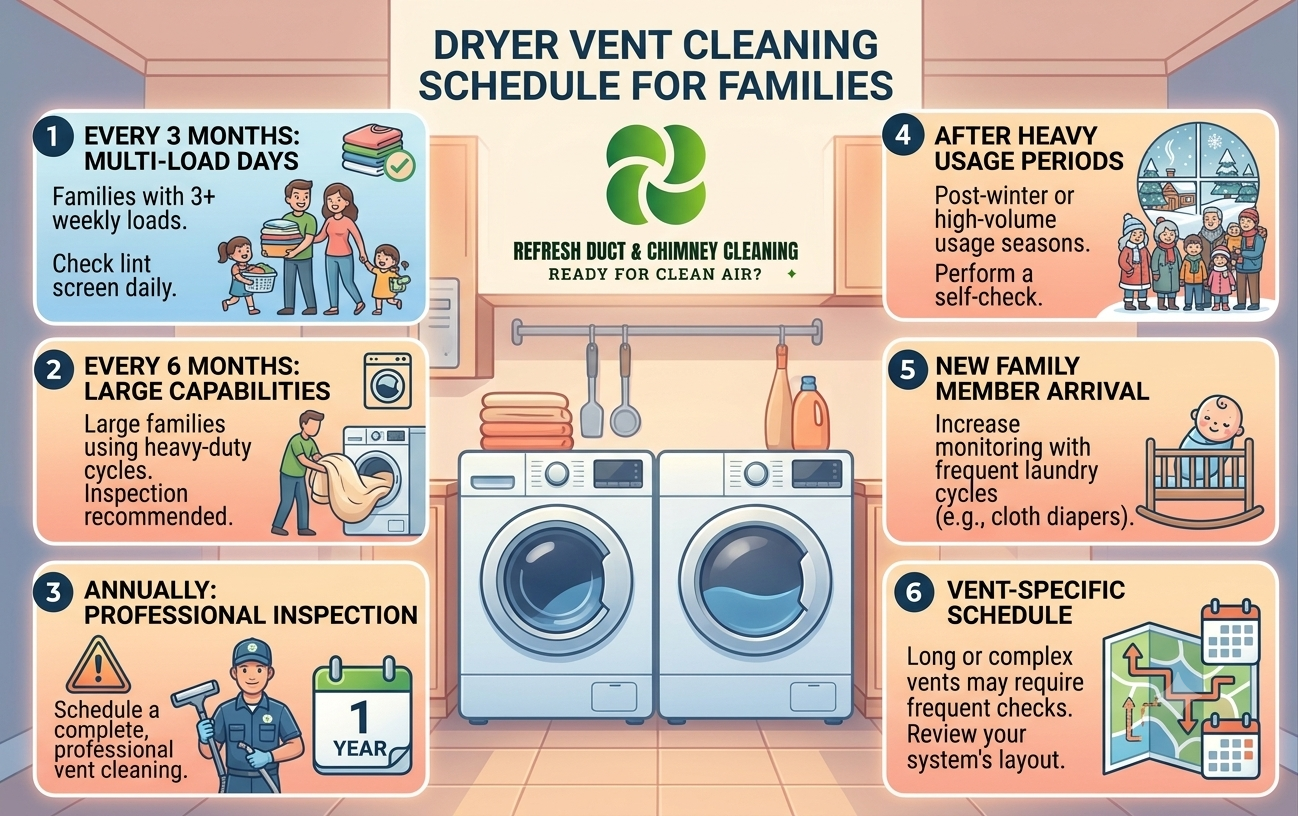
Dryer Vent Cleaning Schedule for Families
An organized dryer vent cleaning Los Angeles routine is vital for keeping a large household running smoothly and safely. The primary goal of a structured cleaning schedule is to prevent the dangerous buildup of lint that naturally sheds from clothing during every drying cycle.
For a typical family, relying on a set timetable ensures that this hidden maintenance task is never forgotten or pushed aside for too long. Depending on how many children you have and how many loads of laundry you run each week, your specific timing needs might vary slightly.
Why Regular Maintenance Matters for Busy Households
When a clothes dryer cannot exhaust hot, moist air properly, the entire mechanics of the machine begin to suffer severe wear and tear. For busy households, an appliance breakdown can disrupt the entire weekly routine, causing massive inconveniences and unexpected repair bills.
Regular upkeep ensures that the heating elements and internal motors do not overheat, which significantly extends the overall lifespan of your valuable machinery. Furthermore, clear pathways allow the appliance to complete cycles much faster, saving precious time for parents who need to process multiple loads back-to-back.
Identifying the Warning Signs of a Blocked Ventilation Pipe
- Recognizing when your system is struggling is the first line of defense against complete operational failure or dangerous overheating situations.
- The most common indicator that debris has clogged the line is when a standard load of clothes takes multiple cycles to dry completely.
- You might also notice that the exterior of the appliance feels unusually hot to the touch during or immediately after a cycle concludes.
- A musty odor lingering on your clean clothes or inside the laundry room itself suggests that damp air is trapped inside the pipe.
- Sometimes, the small exhaust flap on the outside wall of your home will fail to open because there is not enough airflow pushing through.
- Visual inspection might reveal chunks of lint collecting around the lint trap housing or spilling out from the back connection area.
- Paying close attention to these subtle warnings allows families to take immediate action before minor blockages escalate into major mechanical issues.
How Excessive Lint Buildup Impacts Daily Energy Efficiency
When air movement is restricted inside the exhaust duct, the entire thermodynamic process of drying your clothing becomes highly inefficient and costly. The machine is forced to prolong its heating cycles, consuming excessive amounts of electricity or gas to achieve the same results as a clean system.
Over time, this constant overworking adds a substantial amount of money to your family’s monthly utility expenses without providing any benefit. It also puts undue stress on the internal thermostat and sensors, causing them to degrade much faster than normal operating standards.
Small Families & Minimal Loads
For households with only one or two children, laundry demands are typically manageable and predictable throughout the week. These families usually run between two to four loads of clothes every seven days, resulting in slower lint accumulation rates.
Medium Households & Standard Routines
Families with three to four members generally see their laundry piles grow exponentially due to school uniforms, sports gear, and work attire. With weekly loads ranging from five to eight, lint builds up at a much more rapid pace within the pipe walls.
Large Families & Constant Demands
When a household contains five or more individuals, the washing and drying machines are often running almost every single day of the week. Heavy coats, bedding, towels, and daily outfits create a continuous stream of debris that quickly overwhelms standard internal lint screens.
Pets, Shedding & Fur Accumulation
Pet hair behaves very differently from standard clothing fiber because it easily passes through internal mesh screens and binds tightly inside ducts. The sticky nature of dander and fur causes it to attach to moisture film inside the pipes, creating thick, felt-like blockages.
Seasonal Impacts & Winter Clothing
During the colder months of the year, families naturally transition to wearing thicker garments like wool sweaters, fleece jackets, and heavy blankets. These specific fabrics shed an incredible amount of dense fiber during the tumbling process, filling up internal chambers very rapidly.
Long & Complex Duct Pathing
The physical architecture of your home plays a massive role in how quickly debris settles inside your appliance’s exhaust infrastructure. Straight, short pipes that exhaust directly through an exterior wall clear themselves much more efficiently than long, twisting configurations.
Step-by-Step Guide to Safely Cleaning Your Ventilation Lines
- Embarking on the process of clearing out your exhaust pathways requires a systematic approach to guarantee safety and thoroughness.
- Before you begin any work, you must completely disconnect the appliance from its power source to avoid electrical shock hazards.
- If you use a gas-powered machine, ensure the gas supply valve is tightly shut off before moving the unit away from the wall.
- Gently slide the machine forward to expose the flexible transition duct that connects the back of the unit to the main wall pipe.
- Use a specialized brush kit attached to a power drill to break loose the packed debris deep inside the rigid wall piping.
Comprehensive Comparison of Family Cleaning Schedules
| Family Size & Type | Weekly Load Count | Recommended Schedule | Primary Type of Debris | Main Risk Factor | Expected Benefit |
| Small Family (1-2 Kids) | 2 to 4 Loads | Once Per Year | Light Cotton Fibers | Gradual efficiency drop | Consistent drying times |
| Medium Family (3-4 Kids) | 5 to 8 Loads | Every 6 Months | Mixed Synthetic & Cotton | Mid-year airflow blockage | Reduced wear on motor |
| Large Family (5+ Members) | 9+ Loads | Every 3 Months | Heavy Denim & Towel Lint | High risk of overheating | Lower monthly power bills |
| Pet-Owning Households | Varying Loads | Every 4 Months | Animal Hair & Sticky Dander | Static cling pipe binding | Elimination of musty odors |
| Complex Duct Layouts | Any Load Volume | Every 4-6 Months | Multi-bend Corner Accumulation | Elbow joint line plugging | Balanced internal pressure |
| Infant Care Households | Daily Small Loads | Every 6 Months | Micro-fibers & Baby Blankets | Sensitive thermostat damage | Quick sanitizing cycles |
Essential Tools Required for Effective Household Vent Maintenance
Investing in the correct equipment makes the process of maintaining your laundry exhaust paths incredibly simple and highly effective for any homeowner. The most crucial tool is a flexible rotary duct brush kit, which usually comes with multiple attachable extension rods to reach deep inside walls. A high-powered shop vacuum with a long hose attachment is necessary to pull out the dislodged lint without scattering it everywhere.
DIY vs. Professional Services
Many families wonder if they should tackle this maintenance chore themselves or hire an experienced professional technician to handle it. Doing it yourself is highly cost-effective and perfectly fine for short, straight runs that are easily accessible with basic consumer brush ki
Inspecting the Exterior Exhaust Hood
The exit point on the outer wall of your structure requires regular evaluation to ensure birds or rodents haven’t built nests inside. The small louvers or swinging flaps must move freely and open wide whenever the appliance is actively running a cycle.
Dangers of Flexible Plastic Ducts
Many older homes still utilize white vinyl or plastic flexible hoses to connect the appliance to the main wall exhaust pipe. These plastic materials are highly flammable and possess ribbed inner surfaces that trap lint at an alarming rate compared to metal.
Managing Internal Lint Screen Debris
Every single time you prepare to dry a load of clothes, the internal lint screen must be wiped completely clean. However, fine particles often slip past this removable mesh screen and drop down into the deep housing cavity below it.
Laundry Room Safety Checklist
Educating everyone in the house about basic appliance safety rules creates a secure environment and spreads out the operational awareness. Teach older children never to operate the machine if the lint screen is missing or damaged in any way.
Tracking Your Maintenance History
Creating a simple tracking chart on the back of your laundry room door helps keep your family accountable to the schedule. Note down the exact date the system was brushed out, who performed the work, and any issues that were observed.
Long-Term Benefits of Keeping Your Household Vents Immaculate
- Committing to a consistent, long-term cleaning schedule yields incredible rewards for both your family’s safety and your financial well-being over time.
- When your machinery runs under optimal conditions, the internal components experience far fewer breakdowns, saving you from expensive emergency service calls.
- Your clothes will last longer too, as excessive heat and prolonged tumbling cycles break down fabric fibers much faster than gentle, efficient drying.
- The peace of mind that comes with knowing you have eliminated a major household fire hazard is truly priceless for parents.
- Furthermore, a well-maintained home operates with a much smaller carbon footprint, aligning your daily routines with environmentally conscious living practices.
- The small investment of time required to follow a structured schedule pays massive dividends in efficiency, safety, and operational harmony.
Conclusion
Establishing a dedicated dryer vent cleaning schedule is one of the most effective ways to protect your family, home, and budget. For households juggling busy schedules, tracking this simple maintenance task prevents the costly disruptions caused by appliance failure and unexpected mechanical repairs.
Clean vents ensure that air flows exactly as designed, allowing your machine to run rapidly, conserve electricity, and preserve clothing quality. By matching your cleaning frequency to your family’s size and laundry habits, you completely eliminate the hidden dangers of lint accumulation.
FAQs
- How often should a family of four with a dog clean their dryer vent?
A family of four with a furry pet should clean their ventilation line at least every four months to stay safe. The combination of heavy clothing use and floating pet hair causes rapid accumulation inside the pipe joints. - Can lint accumulation inside the ductwork really cause a serious house fire?
Yes, packed lint is an incredibly flammable material that can ignite easily if exposed to excessive heat from a malfunctioning element. When a pipe is blocked, heat builds up inside the machine until sparks can catch the debris on fire. - Why does it take my clothes two full cycles to dry completely now?
This is the classic hallmark sign of a severely restricted exhaust pipe that is trapping moist air inside the drum. Because the damp air cannot escape the home, your clothes simply tumble in wet fog instead of drying. - What kind of brush is best for cleaning deep inside rigid wall pipes?
A specialized rotary nylon brush attached to flexible, interlocking extension rods is the best tool for this specific job. The flexibility allows the brush to navigate through bends without poking holes or getting stuck in the walls. - Is it safe to use a flexible plastic hose to connect my dryer to the wall?
No, flexible white vinyl or plastic hoses are considered a severe safety hazard and should be replaced immediately. They trap lint much faster due to their rigid design and melt instantly if an internal fire occurs. - What should I do if the exterior exhaust vent flap outside is stuck shut?
You need to manually clean the exterior hood immediately by removing any built-up lint, bird nests, or dry paint. If the flap cannot open, hot air backs up into the machine, causing it to overheat within minutes. - Does a clean ventilation system actually help lower my monthly electric bills?
Yes, a clear path allows the machine to dry clothes in the shortest time possible, reducing overall energy consumption. When cycles are cut in half, your appliance draws significantly less electricity or gas over the month.. - How can I tell if my deep internal lint trap housing needs cleaning?
If you shine a flashlight down into the lint trap slot and see a thick wall of gray fuzz, it needs help. This area collects the fine dust that slips right past your main mesh screen over several months. - Should I ever leave my dryer running when my family leaves the house?
No, you should never leave a tumbling appliance unattended when no one is home to monitor its operation. If a mechanical failure or fire begins, quick intervention can save your property from severe damage. - What are the main differences between a DIY clean and a professional service?
DIY cleaning is great for short, accessible lines using standard consumer kits bought at a local hardware shop. Professional services are necessary for long, complicated roof vacuum equipment to clear safely.