Managing household systems requires a proactive approach to keeping all hidden infrastructure parts operating in peak condition over time. Among these critical systems, the exhaust pathways responsible for carrying hot air and moisture away from your laundry area are incredibly delicate. When structural components wear down, tear, or separate behind your walls, they cause immediate performance drops and dangerous operating environments.
Dealing with damaged dryer vent ducts is a challenging task for many homeowners because the structural breakdowns usually happen entirely out of sight. A broken, cracked, or punctured pipe immediately compromises the entire appliance cycle, leading to high utility costs and serious structural concerns.
Damaged Dryer Vent Ducts
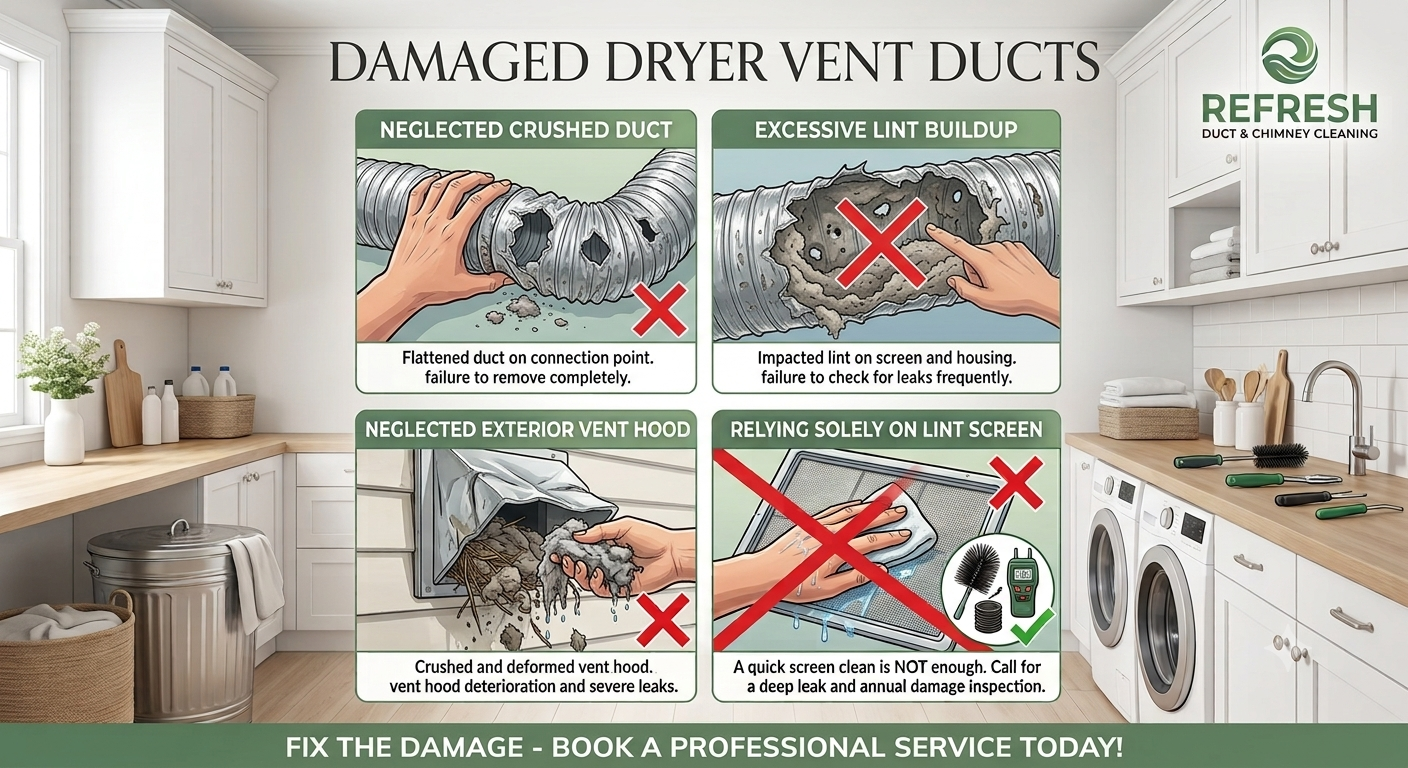
Encountering damaged dryer vent ducts can completely disrupt your weekly home routine and introduce silent hazards into your living space. When the metal or flexible piping responsible for expelling hot air suffers structural failure, the entire appliance system drops in efficiency. These breakdowns typically manifest as hidden tears, disconnected joints, or heavily crushed sections that physically block the exit path of the moving exhaust.
Homeowners often struggle to diagnose these underlying structural issues, mistakenly assuming their aging laundry machine simply needs a brand-new motor. In reality, a compromised pipe allows heavy moisture and highly flammable lint fibers to spill directly into your interior wall cavities.
How Structural Tears Spread Moisture Throughout Your Walls
- When an exhaust pipe suffers a physical tear or structural puncture, it begins leaking gallons of humid air directly inside your walls.
- A standard load of wet laundry contains a massive amount of water that must be completely evaporated and carried away during a run.
- If that damp air escapes through a crack in the ductwork, it quickly condenses into pools of water inside hidden framework spaces.
- Over time, this loose lint builds up into thick, dusty layers that can ignite instantly if they come near hot wires.
- Because the escaping debris is hidden behind drywall, a small spark can trigger a fast-moving fire before anyone notices.
- This continuous accumulation of dark, warm moisture creates an ideal breeding ground for toxic black mold and wood-destroying rot.
- Over several months, the trapped humidity can degrade structural wooden studs, ruin interior drywall, and create a strong, musty odor.
The Flammable Risk of Escaping Lint Accumulations
A physically broken or disconnected ventilation pipe creates a severe fire hazard by allowing dry fabric fibers to accumulate inside wall cavities. The high-velocity air stream from a laundry machine carries millions of microscopic lint strands that bypass the primary door screen easily.
When a duct joint separates, these highly flammable fibers escape into the open spaces between your ceiling joists and wall studs. Over time, this loose lint builds up into thick, dusty layers that can ignite instantly if they come near hot wires. Because the escaping debris is hidden behind drywall, a small spark can trigger a fast-moving fire before anyone notices.
Identifying External Wear and Tear on Exhaust Lines
Spotting physical wear and tear on your exhaust lines requires a combination of regular visual checks and careful performance monitoring. One of the most obvious signs of damage is a sudden loss of air pressure at the exterior exhaust hood while operating. You might also notice fine layers of grey lint settling on the floor or surfaces directly behind the laundry machine area.
If the laundry room feels exceptionally hot, humid, or smells like burning fabric during a normal cycle, a leak is present. Examining the exposed portions of the Dryer Vent Cleaning Los Angeles pipe for deep dents, crushed profiles, or peeling adhesive tapes provides immediate structural answers.
Inspecting Metal Joints for Complete Separation
The continuous vibrations generated during intense washing and drying cycles can cause interlocking pipe joints to slowly back apart over time. Use a bright flashlight to examine every visible connection point along the line to ensure they remain perfectly flush.
Looking for Deep Dents and Crushed Profiles
Exposed flexible aluminum transition hoses are highly susceptible to getting stepped on, kicked, or crushed flat during routine appliance shifts. A deep dent drastically reduces the internal diameter of the air channel, creating a major restriction point for traveling exhaust air.
Checking for Brittle and Peeling Foil Tapes
Older installation jobs often rely on cheap adhesive tapes that break down rapidly when exposed to continuous cycles of intense heat. If you see tape curling up, cracking, or turning brittle along the pipe seams, the seal has completely failed.
Testing for Physical Soft Spots Along Lines
Carefully feel along the length of flexible foil hoses to check for unexpected soft spots, sagging sections, or hidden tears. Over time, heavy pockets of trapped lint can weigh down flexible materials, causing them to sag and pull away from anchors.
Scanning for Pests Entering Through Pipe Cracks
A broken or disconnected pipe creates an easy gateway for outdoor pests, insects, and small rodents to enter your home. Check around the pipe openings for signs of chewing, scratching, or small dropping particles left behind by invading animals.
Measuring Total Cycle Lengths for Performance Drops
Keep a close eye on exactly how long a standard load of heavy towels takes to dry completely from start to finish. If your cycles have slowly stretched from forty minutes to well over an hour, your ductwork is likely damaged or blocked.
Selecting Durable Materials for Full Duct Restoration
Restoring a failing ventilation line requires selecting high-quality, commercial-grade materials that can withstand continuous thermal expansion and physical impact over the years. Completely rigid galvanized steel or heavy-gauge aluminum piping is the absolute gold standard for any hidden wall or ceiling installations.
Rigid metal pipes feature completely smooth inner walls that maximize air velocity while preventing loose fabric fibers from catching on edges. For the short transition zone directly behind the machine, choose a sturdy, semi-rigid aluminum hose instead of thin foil.
Technical Performance of Ventilation Materials
| Pipe Material Option | Resistance to Physical Damage | Lint Accumulation Risk | Fire Prevention Safety Rating | Expected Service Lifespan | Required Connection Method | Structural Vulnerability |
| Rigid Galvanized Steel | Extremely High | Very Low (Smooth Interior) | Maximum Fire Resistance | 20 to 30 Years | Metal screws and foil tape | Rigid shape is difficult to route |
| Heavy Semi-Rigid Aluminum | High to Moderate | Low (Minimal Ridges) | Highly Safe and Approved | 10 to 15 Years | Adjustable steel screw clamps | Can dent if struck with heavy force |
| Flexible Foil Accordion | Extremely Low | High (Deep Ribbed Walls) | Moderate (Can Tear Easily) | 2 to 3 Years | Foil tape or spring clamps | Sags, cracks, and punctures instantly |
| Thin Vinyl / Plastic Hose | Totally Defenseless | Dangerously High | High Fire Hazard (Code Violation) | Less than 1 Year | Plastic zip ties or wire loops | Melts under heat, crushes flat |
| Periscope Slim Metal Duct | High | Low to Moderate | Excellent Fire Protection | 10 to 15 Years | Interlocking slider joints | Restricted to tight wall spaces |
| Flexible Corrugated Rubber | Low | High | Poor Fire Performance | 1 to 2 Years | Friction fit collars | Brittle cracking from heat aging |
How Damaged Ductwork Constricts Your Household Budget
Operating an appliance with broken or leaking ductwork directly drains your household budget by wasting expensive energy resources every month. When a pipe loses its airtight seal, the essential vacuum pressure drops, forcing the machine to run longer to dry clothes. This extended operating time draws maximum current through your electrical heating elements, causing your monthly power statements to skyrocket.
The excessive heat buildup inside a restricted system also strains delicate internal computers, sensors, and drive belts, leading to breakdowns. Homeowners often end up paying for expensive appliance repair technicians when a simple pipe replacement would solve the problem completely. Keeping your air lines completely sealed ensures brief, efficient cycles that protect your clothes and keep cash in your wallet.
Using regular Screws inside Hidden Wall Pipes
Fastening hidden wall pipe joints together by driving standard pointed screws directly into the center of the air channel is a mistake. The sharp tips of the screws stick out inside the pipe, acting as hooks that catch lint constantly until a block forms.
Leaving Excess Hose Bunched Behind the Unit
Allowing a long, uncut length of flexible transition hose to loop and bunch up behind your laundry appliance creates restrictions. This excess material kinks easily when the machine is pushed back, creating immediate turbulence that slows down traveling exhaust air.
Mixing Different Pipe Sizes Along the Line
Attempting to piece together a ventilation line using varying pipe diameters, like connecting a three-inch hose to a four-inch pipe, destroys efficiency. These size mismatches create immediate air turbulence zones where heavy, wet fabric fibers drop out of the air current and settle.
Painting Over Rusted or Corroded Metal Pipes
Slapping a coat of cosmetic paint over rusted or corroded sections of old steel ducting does nothing to fix structural damage. Rust indicates that moisture has already eaten through the protective metal zinc coating, creating microscopic pinholes where air leaks out.
Venting the Exhaust Line Into Enclosed Crawlspaces
Terminating a damaged duct line inside a closed attic, basement, or under-floor crawlspace is a violation of building safety codes. Expelling thousands of cubic feet of damp, chemical-laden laundry air into enclosed house framing leads to rapid structural rot.
Forgetting to Clean Pipes After Making Repairs
Installing brand-new pipe sections without clearing out the surviving old portions of the ventilation line leads to immediate system failures. The sudden increase in air pressure from a repaired joint can push old, loose lint blocks deeper into the line, creating a clog.
The Long-Term Value of Code-Compliant Upgrades
- Bringing your residential ventilation network up to modern building safety codes offers immense long-term value for every type of property.
- Code-compliant setups require rigid metal paths, proper wall clearances, and approved exterior exit hoods that prevent pest entry and air backflow.
- These structural standards drastically lower the baseline risk of residential structure fires while maximizing the daily operating efficiency of your appliances.
- Upgrading your home infrastructure increases overall property value and ensures smooth pass ratings during professional real estate inspections when selling.
- Most importantly, a code-compliant installation provides unmatched daily peace of mind, knowing your family is safe from hidden threats.
- Investing in professional materials and proper layout designs transforms your utility area into a streamlined, low-maintenance asset for the future.
Conclusion
In conclusion, maintaining the structural health of your dryer vent ducts is a vital responsibility that directly impacts home safety and energy efficiency. Physical breakdowns like tears, Dryer Vent Cleaning Los Angeles separated joints, and crushed profiles restrict air velocity, ruin interior walls with moisture, and create flammable lint traps.
Homeowners can easily eliminate these hidden hazards by choosing rigid galvanized steel lines, securing seams with foil tape, and running tests. Keeping your exhaust route completely sealed ensures your appliance runs brief cycles, saving money on monthly utility statements. Do not wait for mold to appear on your drywall, a burning smell to fill your room, or a fuse to blow before inspecting the lines.
Frequently Asked Questions
- What is the single most common cause of duct damage behind walls?
The single most common cause of hidden duct damage is structural shifting combined with the constant mechanical vibrations of heavy laundry machines. These continuous micro-movements can shake weak joints apart or cause loose pipe segments to rub against sharp wooden framing edges. Over several years, this friction creates deep cracks and air leaks.
- Can I fix a torn flexible foil hose using standard gray tape?
No, you should never attempt to patch a torn flexible foil hose with standard gray cloth duct tape. The rubber-based adhesive on cloth tape dries out, turns brittle, and detaches completely when exposed to continuous heat. You must replace the torn section entirely or use certified high-temperature aluminum tape.
- How does a broken vent pipe lead to mold growth inside drywall?
A broken vent pipe blows thousands of gallons of hot, damp air directly into dark, unventilated wall cavities during normal laundry cycles. This moisture hits cool wood and drywall surfaces, condensing instantly into water droplets that soak the home framework. This dark, wet environment triggers toxic mold spores within days.
- Is it normal for lint to blow out of my pipe joints?
No, lint blowing out of your pipe joints is a definite indicator that your ventilation line has suffered structural damage. An airtight system should contain all fiber particles completely until they exit through the outdoor hood. Seeing lint anywhere else means a seam has separated.
- What size duct pipe does a standard modern dryer require?
Modern residential building codes state that all clothes drying appliances require a uniform four-inch diameter exhaust duct line. Using smaller sizes reduces airflow velocity significantly, causing intense backpressure that overheats the machine. Always maintain a true four-inch profile along the entire run.
- Can mice chew through flexible aluminum ventilation hoses?
Yes, determined mice and small rats can chew through thin flexible aluminum foil accordion hoses with ease to find warmth. Once inside, they use the soft fabric lint to build nests, completely blocking the path of escaping exhaust air. Upgrading to rigid galvanized steel prevents pest entry.
- How can I tell if a hidden wall joint has fully separated?
You can tell a hidden joint has separated if you notice a drop in air pressure outside accompanied by humidity indoors. You can also run an empty hot cycle and listen closely to your walls for unusual rushing or whistling sounds. A professional snake camera provides total visual confirmation.
- What happens to the dryer motor when a duct is broken?
When a duct is broken and blocked, the internal exhaust fan encounters severe resistance, causing the drive motor to labor intensely. This added physical resistance draws extra electric current, causing the motor windings to overheat and burn out prematurely. Replacing a motor is very expensive.
- Are flexible plastic vent hoses allowed inside finished ceilings?
No, flexible plastic or vinyl vent hoses are strictly prohibited by building codes from being installed inside finished walls or ceilings. Plastic materials melt instantly during a fire, allowing toxic smoke and open flames to spread rapidly through the home framework. Only rigid metal is permitted.
- How often should a professional check my home’s hidden ductwork?
It is smart to have a professional technician inspect your home’s hidden structural ductwork every two to three years. Experts use specialized high-pressure tools and digital video scopes to verify joint security, spot micro-tears, and measure airflow accuracy deep inside wall spaces.