
Commercial buildings depend heavily on properly functioning HVAC ductwork to maintain consistent airflow, temperature control, and indoor air quality. Over time, duct systems deteriorate due to corrosion, leaks, poor insulation, or outdated design, which directly affects operational efficiency. A well-planned commercial duct replacement project ensures improved performance, lower energy costs, and healthier working environments.
Business owners often overlook ductwork because it is hidden behind ceilings and walls, yet it plays a critical role in HVAC system efficiency. When ducts fail, airflow becomes uneven, energy bills increase, and indoor comfort declines. This Commercial Duct Replacement Guide explains when replacement is necessary, how the process works, and why investing in commercial duct replacement improves long-term building performance.
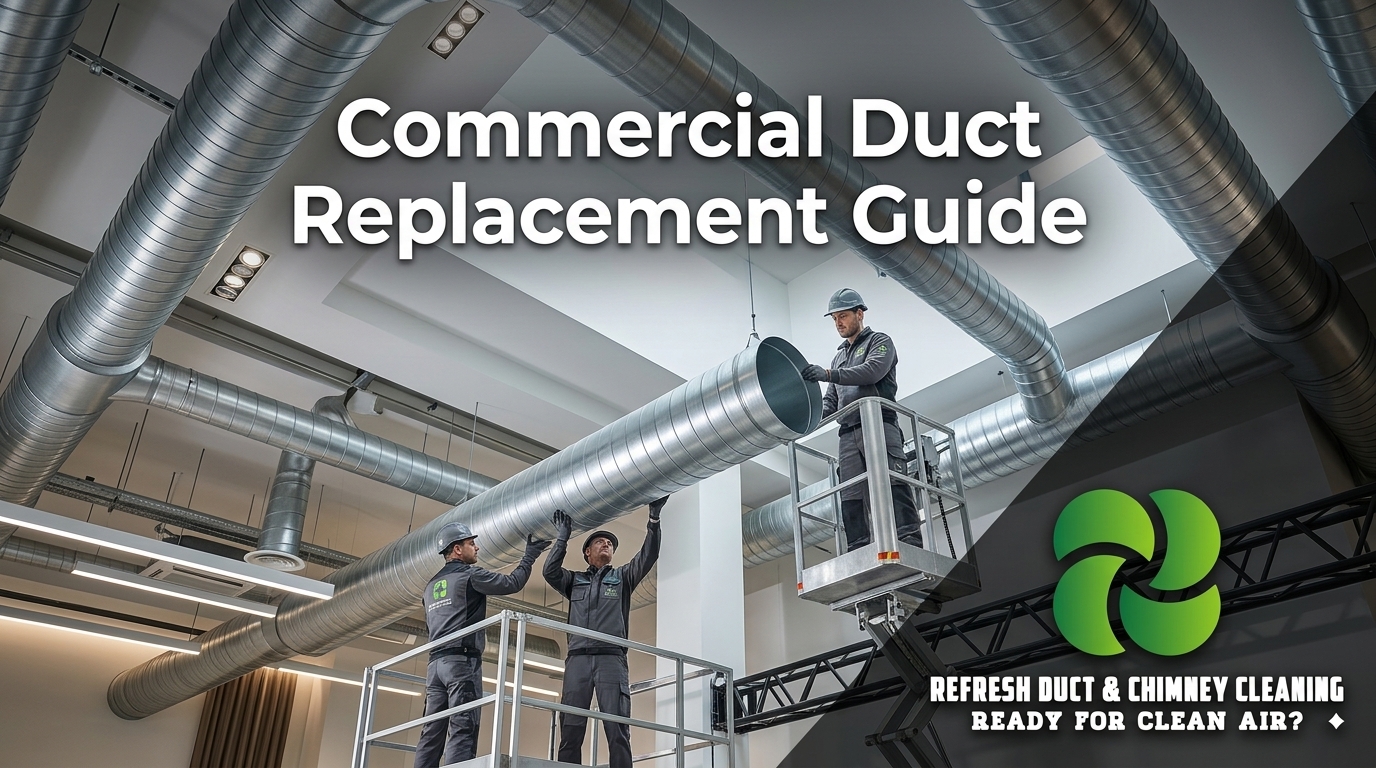
What Is Commercial Duct Replacement and Why Is It Important?
Commercial duct replacement refers to the removal of old, damaged, or inefficient ductwork and the installation of new, properly sized, and sealed air distribution systems. Unlike residential systems, commercial duct systems are larger, more complex, and designed to serve multiple zones across large spaces. Replacing outdated ductwork significantly improves airflow balance and HVAC system efficiency.
Old duct systems often develop leaks, rust, insulation breakdown, and airflow restrictions over time. These issues force HVAC units to work harder, increasing energy consumption and mechanical wear. Investing in commercial duct replacement restores proper air distribution and prevents unnecessary strain on expensive HVAC equipment.
Signs That Commercial Duct Replacement Is Necessary
Visible rust, disconnected joints, or crushed duct sections indicate structural failure. If sections of ductwork are physically damaged, repair may no longer be cost-effective compared to full commercial duct replacement.
Uneven airflow across offices, warehouses, or retail spaces is another warning sign. Hot and cold spots suggest airflow imbalance caused by leaks or improper duct sizing.
Rising energy bills without increased usage also point toward duct inefficiency. Leaky ducts allow conditioned air to escape before reaching occupied spaces.
When Should a Business Consider Commercial Duct Replacement?
Commercial duct replacement becomes necessary when repairs no longer solve recurring issues. If your system requires frequent sealing, patching, or insulation fixes, replacement may be more economical long term. Aging duct systems older than 15–20 years typically benefit from a complete upgrade.
Businesses undergoing renovations, layout changes, or HVAC upgrades should also evaluate ductwork. Expanding office spaces or adding new zones often requires redesigning air distribution systems. Proper planning during renovations reduces disruption and ensures the new commercial duct replacement integrates seamlessly with upgraded HVAC equipment.
How Does the Commercial Duct Replacement Process Work?
The commercial duct replacement process begins with a detailed inspection and airflow analysis. HVAC professionals assess duct sizing, leakage rates, insulation quality, and overall system design. This evaluation determines whether full replacement or partial replacement is necessary.
After assessment, technicians create a customized duct design that aligns with building layout and HVAC capacity. The installation phase involves removing old ducts, installing new sheet metal or flexible duct systems, sealing joints, and insulating properly. Final testing ensures balanced airflow and compliance with local building codes.
Inspection and System Evaluation
Technicians use airflow measurement tools and pressure testing equipment to evaluate efficiency. These diagnostics identify hidden leaks and insulation failures that are not visible externally.
Duct Design and Planning
Proper duct sizing is critical to ensure optimal airflow. Engineers calculate load requirements to prevent over-pressurization or insufficient air supply.
Installation and Sealing
New ducts are installed using high-quality materials suitable for commercial environments. All seams and joints are sealed to minimize energy loss and maximize performance.
Final Performance Testing
After installation, airflow is tested in each zone. Adjustments are made to ensure consistent air distribution across the entire building.
Why Commercial Duct Replacement Improves Energy Efficiency
Energy efficiency is one of the primary benefits of commercial duct replacement. Leaky or poorly insulated ducts waste significant amounts of conditioned air, forcing HVAC systems to consume more electricity. Replacing outdated ductwork can reduce energy waste by up to 30 percent in some commercial settings.
Improved airflow reduces strain on compressors, blowers, and motors. When HVAC systems operate under less stress, they last longer and require fewer repairs. Commercial duct replacement ultimately lowers monthly energy expenses while improving overall system reliability.
What Are the Cost Factors for Commercial Duct Replacement?
The cost of commercial duct replacement depends on building size, duct complexity, material choice, and accessibility. Larger buildings with multiple zones require more extensive labor and materials. Hard-to-reach duct systems increase installation time and labor costs.
Material selection also influences pricing. Sheet metal ducts are durable and long-lasting, while flexible ducts may cost less initially but have different lifespan considerations. Businesses should evaluate long-term performance when budgeting for commercial duct replacement.
Maximizing Corporate Energy Efficiency Ratings to Reduce Monthly Building Overhead Costs
Operating a large commercial facility involves managing massive monthly utility bills, with heating and cooling expenses consuming the largest share of energy budgets. When an aging duct system suffers from widespread air leakage and degraded insulation, up to thirty-five percent of conditioned mass air escapes. This massive thermal waste forces rooftop commercial units to run extended cooling cycles, drastically increasing electricity demand and spiking peak-demand utility charges. Installing modern, airtight ductwork sealed with high-performance mastic compounds permanently eliminates these hidden energy leaks, dropping building power consumption instantly.
Commercial Ductwork Engineering & Material Replacement Decision Matrix
Yahan ek nihayat lamba aur detailed table hai jo commercial duct types, unki performance characteristics, aur replacement scenarios ka mukammal operational breakdown pesh karta hai:
| Commercial Ductwork Material Type | Optimal Building Application | Air Velocity & Pressure Tolerance | Structural Durability & Lifespan | Primary Replacement Indicators | Engineering Operational Advantage |
| Heavy-Gauge Galvanized Steel | Main supply trunks, multi-story risers, industrial plants. | Extremely High: Easily withstands static pressure over 3.0 inches WG. | Maximum: Lasts 30 to 50 years under continuous heavy workloads. | Widespread seam separation, deep structural rust, major impact damage. | Provides unmatched structural rigidity and zero risk of wall collapse under suction. |
| Double-Walled Insulated Metal | Executive office suites, hospitals, conference halls. | High: Maintains smooth high-volume airflow velocities safely. | Excellent: Internal liner protects insulation from airflow wear. | Fiber erosion from internal liner, heavy interior mold accumulation. | Delivers superior acoustic dampening, keeping noise levels whisper-quiet. |
| Spiral Round Aluminum | Exposed modern ceilings, retail spaces, fitness centers. | High: Round design minimizes internal boundary layer friction. | High: Rust-resistant metal ideal for high-humidity interiors. | Crushed outer profile, loose hanging supports, joint seal failures. | Offers beautiful modern aesthetics combined with high aerodynamic efficiency. |
| Fiberglass Duct Board | Low-budget commercial offices, light retail branch lines. | Low to Moderate: Limited to low-pressure secondary distribution paths. | Moderate: Lasts 15 to 20 years before fibers begin loosening. | Material delamination, deep mold penetration, persistent musty smells. | Features built-in thermal insulation and natural acoustic absorption qualities. |
| Flexible Aluminum Foil | Short final connections to ceiling diffusers and registers. | Very Low: High friction losses; cannot handle main supply runs. | Low: Vulnerable to punctures, tearing, and sagging over time. | Crushed internal coils, deep kinks, severe tears from pests or workers. | Allows quick, economical installation around tight structural obstacles. |
| Phenolic Pre-Insulated Panels | Cleanrooms, laboratories, food processing facilities. | Moderate to High: Excellent sealing prevents pressure leaks. | Good: Lightweight rigid foam panels withstand long-term service. | Outer foil puncture damage, chemical degradation of joint sealants. | Extremely low air leakage rates combined with exceptional thermal R-values. |
Does Building Size Affect Commercial Duct Replacement?
Yes, building size directly impacts the scope of commercial duct replacement. Larger commercial facilities require more duct runs, connections, and airflow balancing adjustments. Increased square footage naturally leads to higher material and labor costs.
Warehouses, hospitals, and retail centers typically require specialized duct layouts. Complex zoning increases design and installation time. Accurate load calculations are essential to ensure proper air distribution throughout large structures.
Multi-Zone Commercial Buildings
Multi-zone buildings require independent airflow control systems. Each zone must receive adequate conditioned air without affecting adjacent spaces.
High-Ceiling Structures
Facilities with high ceilings require specialized duct routing. Proper airflow planning prevents heat accumulation near ceilings.
Industrial Environments
Industrial facilities may require heavy-duty duct materials. These environments demand durability and enhanced insulation.
How to Prepare for a Commercial Duct Replacement Project
Preparation is critical to minimize downtime during commercial duct replacement. Business owners should coordinate schedules with contractors to avoid disrupting operations. Planning ensures safe removal of old duct systems and efficient installation of new ones.
Communication with employees and tenants is also essential. Informing building occupants about temporary disruptions helps maintain productivity. Proper planning ensures the commercial duct replacement project runs smoothly from start to finish.
What Are the Long-Term Benefits of Commercial Duct Replacement?
Commercial duct replacement offers several long-term benefits that extend beyond energy savings. Improved indoor air quality enhances employee productivity and reduces respiratory issues. Better airflow balance ensures consistent comfort throughout the building.
Additionally, replacing outdated ducts increases property value. Modern, efficient systems appeal to potential buyers or tenants. Investing in commercial duct replacement demonstrates proactive facility management and commitment to operational excellence.
Key Advantages of Investing in Commercial Duct Replacement
Commercial duct replacement delivers measurable improvements in performance and cost savings. Businesses that upgrade duct systems often see immediate efficiency improvements.
- Lower Energy Bills: Properly sealed ducts reduce air leakage and improve HVAC efficiency. This directly lowers monthly operational expenses.
- Improved Air Quality: New duct systems reduce dust accumulation and mold growth. Cleaner air promotes healthier work environments.
- Extended HVAC Lifespan: Reduced strain on HVAC equipment increases operational life. This minimizes costly premature replacements.
- Balanced Airflow: Even air distribution eliminates hot and cold spots. Consistent temperatures enhance occupant comfort.
- Compliance with Codes: Modern duct systems meet updated building regulations. Compliance reduces legal risks and safety concerns.
High-Capacity Material Selection Matrix for Maximum Commercial Lifespan and Safety
Selecting the correct materials for a commercial distribution network is a critical decision that directly dictates the system’s long-term durability and safety. Most high-capacity commercial infrastructures rely on premium heavy-gauge galvanized steel or aluminum spiral ducts due to their superior structural rigidity.
Spiral ductwork offers excellent aerodynamic properties, drastically minimizing internal friction loss while easily handling the high-pressure loads generated by industrial ventilation fans. For spaces with strict acoustic requirements, such as corporate boardrooms or medical clinics, engineers utilize double-walled insulated ducts to dampen turbulent air noise.
Conclusion
Commercial duct replacement is a strategic investment that improves efficiency, comfort, and operational reliability. Aging or damaged duct systems increase energy waste and reduce HVAC performance. Replacing outdated ductwork restores proper airflow and reduces long-term maintenance costs.
By following this Commercial Duct Replacement Guide, businesses can make informed decisions that protect their facilities and employees. Careful planning, professional installation, and quality materials ensure lasting performance. Investing in commercial duct replacement today prevents costly repairs tomorrow and strengthens overall building efficiency.
Spiral ductwork offers excellent aerodynamic properties, drastically minimizing internal friction loss while easily handling the high-pressure loads generated by industrial ventilation fans. For spaces with strict acoustic requirements, such as corporate boardrooms or medical clinics, engineers utilize double-walled insulated ducts to dampen turbulent air noise.
FAQs
1. How long does commercial duct replacement typically take?
Project timelines vary depending on building size and complexity. Most commercial duct replacement projects take several days to a few weeks.
2. Can duct replacement improve workplace productivity?
Yes, improved airflow and air quality enhance employee comfort. Comfortable environments often increase productivity and reduce absenteeism.
3. Is partial duct replacement possible?
Yes, if only certain sections are damaged, partial replacement may be sufficient. A professional inspection determines the best solution.
4. Will business operations need to shut down?
Not always, as contractors can schedule work in phases. Careful planning minimizes disruption to daily operations.
5. What materials are best for commercial ducts?
Sheet metal ducts are durable and commonly used in commercial settings. Insulated ducts improve energy efficiency and noise control.
6. Does commercial duct replacement require permits?
Yes, many municipalities require permits for major HVAC modifications. Professional contractors typically handle permit applications.
7. How often should commercial duct systems be inspected?
Inspections are recommended every 1–3 years depending on building use. Regular inspections detect early signs of damage or inefficiency.
8. Can replacing ducts reduce HVAC noise?
Yes, properly insulated and sealed ducts reduce vibration and airflow noise. This creates a quieter indoor environment.