
Businesses in Orange County that operate dryers on a daily basis face unique operational challenges. Lint buildup in commercial dryer vents is not just a maintenance issue—it poses a fire hazard, reduces energy efficiency, and impacts overall productivity. Understanding why commercial dryer vent cleaning in Orange County is essential helps business owners protect their property, staff, and bottom line.
In addition to safety concerns, clogged vents can cause dryers to work harder and overheat, which reduces their lifespan. Commercial facilities like laundromats, hotels, gyms, and hospitals experience higher volumes of laundry than residential homes, making professional vent cleaning critical. Regular maintenance ensures safe operation, energy efficiency, and compliance with local safety standards.
What is Commercial Dryer Vent Cleaning?
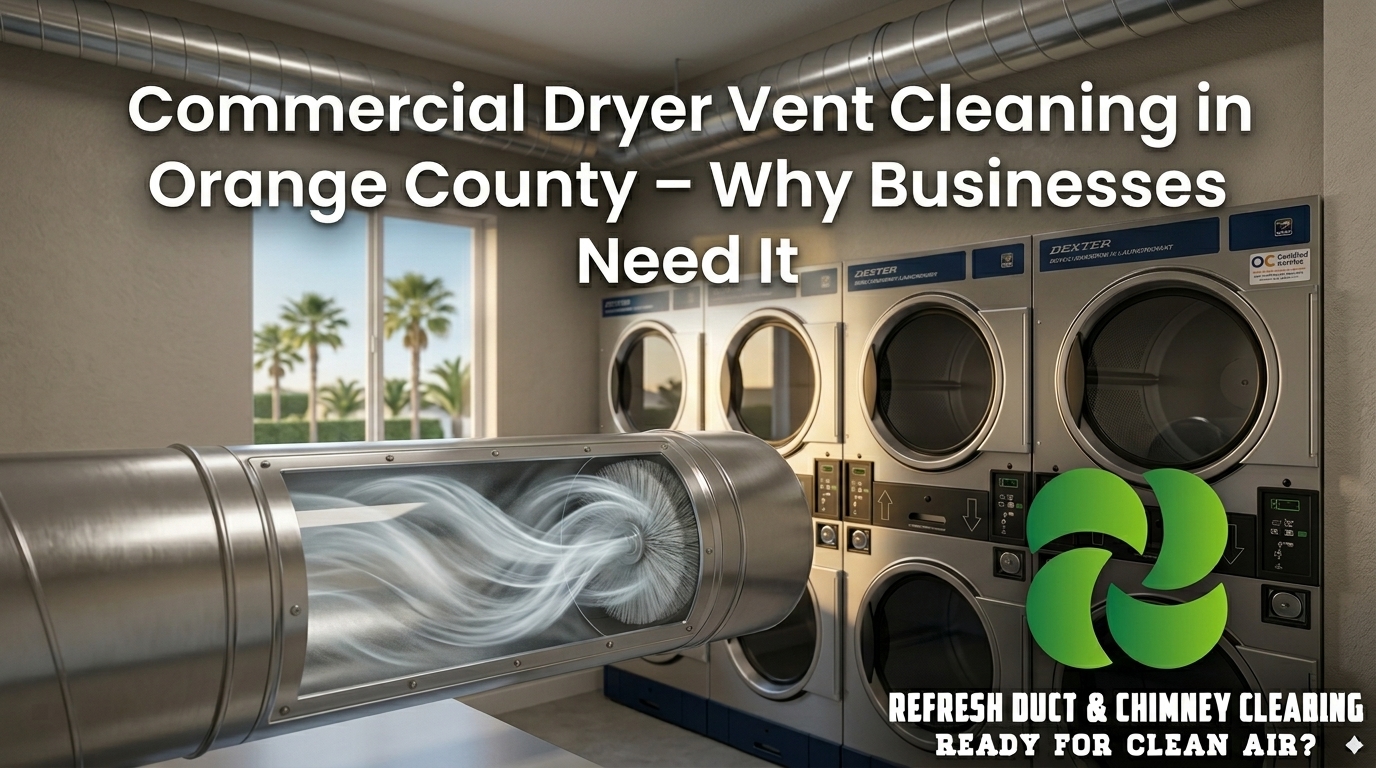
Commercial dryer vent cleaning is the professional process of removing lint, dust, and debris from industrial dryer vent systems. Unlike residential setups, commercial systems often have longer duct runs, multiple bends, and larger machines, which accumulate lint more rapidly.
Proper cleaning involves inspecting the vent, removing deep blockages, and ensuring the system allows proper airflow. Professional service includes checking exterior exhaust points, duct connections, and often using cameras or high-powered vacuums for a thorough assessment.
Difference Between Commercial and Residential Vents
Commercial vents are generally longer and more complex. Lint accumulation occurs faster due to higher laundry volumes.
Residential cleaning usually requires basic tools, but commercial systems need industrial-grade equipment. Professional cleaning prevents hidden blockages that could lead to fires.
Tools Used for Cleaning
- Rotary Brushes: Scrub lint from duct walls effectively.
- Industrial Vacuums: Remove debris throughout the system.
- Inspection Cameras: Detect hidden obstructions and duct damage.
- Air Blowers: Push out remaining fine particles for complete cleaning.
Inspection and Maintenance Importance
Regular inspections identify early warning signs of blockage or damage. Preventative maintenance reduces downtime and protects your business from fire hazards.
Technicians often provide recommendations for proper duct materials and configurations. This ensures your system runs efficiently for the long term.
Why Commercial Dryer Vent Cleaning Is Essential for Businesses?
Ignoring dryer vent maintenance can lead to severe operational and financial consequences. Businesses rely on efficiency and safety, both of which are compromised by clogged vents. Regular cleaning is a proactive step toward preventing disruptions.
How Does It Improve Operational Efficiency
Clean vents allow dryers to operate at peak performance. This reduces drying times and increases productivity. Businesses can handle more loads in less time.
Why Is It Critical for Fire Prevention
Lint is highly flammable, and accumulated debris can ignite under high heat. Cleaning eliminates this risk. It’s one of the most effective fire prevention measures.
How Does It Impact Compliance and Regulations
Many industries must comply with safety regulations. Regular cleaning helps meet inspection requirements. It also protects businesses from penalties.
What Are the Cost Implications of Neglect
Clogged vents increase energy consumption and cause equipment wear. This leads to higher utility bills and repair costs. Preventive cleaning is far more cost-effective.
Why Businesses in Orange County Require Regular Cleaning
Commercial facilities operate dryers multiple times per day, which increases the risk of lint buildup. Lint restricts airflow, reduces efficiency, and can lead to overheating. In a busy facility, blocked vents can slow operations, increase utility bills, and even trigger safety violations.
In Orange County, warm ambient temperatures exacerbate airflow problems in dryer vents. Consistent heat paired with lint accumulation raises the likelihood of fire. Routine professional cleaning reduces these risks and improves operational efficiency, ensuring business continuity.
Extended Dryer Life
Clogged vents increase mechanical strain on dryers. Overworked machines wear out faster.
Regular vent cleaning ensures proper airflow, which reduces stress on the appliance. Businesses save on repair and replacement costs over time.
Energy Savings
Blocked vents force dryers to run longer. Longer cycles increase electricity consumption.
Cleaning vents improves efficiency, shortens drying times, and lowers energy bills.
Safety Compliance
Orange County has strict fire and safety regulations for commercial laundry operations. Clean vents help maintain compliance.
Noncompliance can result in fines, insurance issues, or legal liabilities. Routine cleaning mitigates these risks.
Commercial Dryer Vent Cleaning Comparison Table
| Business Type / Situation | Key Risks of Neglect | Benefits of Regular Professional Cleaning | Recommended Frequency |
|---|---|---|---|
| Laundromats & Dry Cleaning Services | Rapid lint buildup, fire hazards | Faster cycles, lower energy bills | Every 3-6 months |
| Hotels & Hospitality | Guest safety concerns, downtime | Reliable operations, better reviews | Every 4-6 months |
| Restaurants & Commercial Kitchens | Grease + lint combination fires | Improved exhaust, code compliance | Every 3 months |
| Fitness Centers & Gyms | High towel usage, heavy lint | Better air quality, equipment longevity | Every 6 months |
| Apartment Complexes | Multiple units, tenant safety | Reduced liability, fewer complaints | Every 6-12 months |
| High-Volume Operations | Overheating and restricted flow | Increased productivity, cost savings | Every 3 months |
| Insurance Compliance Requirements | Claim denials, higher premiums | Better rates, documented proof | Annually minimum |
| Fire Code Compliance | Fines and shutdowns | Passed inspections, legal protection | Every 6 months |
| Older Buildings | Aging ducts with heavy accumulation | Prevents major failures | Every 3-6 months |
| After Renovations or Construction | Debris in vents | System restoration, immediate safety | Immediately + scheduled |
| Businesses with Gas Dryers | Higher fire and gas risks | Enhanced safety checks | Every 3-6 months |
| Multi-Unit Facilities | Complex vent networks | Comprehensive system cleaning | Every 4-8 months |
| Peak Season Businesses | Increased usage and lint | No downtime during busy periods | Before peak seasons |
| Energy Efficiency Focused Operations | Higher utility costs | Measurable energy savings | Every 6 months |
| Health & Safety Conscious Businesses | Poor indoor air quality | Cleaner environment for staff/customers | Every 4-6 months |
| Real Estate Management Companies | Tenant turnover issues | Easier property management | Annually per unit |
| Post-Incident or Near-Miss Events | Repeated risks | Root cause resolution | Immediately |
| Large Industrial Facilities | Extensive ductwork | Full-system efficiency | Every 3-6 months |
| Businesses Near Coastal Areas | Salt and moisture effects | Corrosion prevention | Every 6 months |
| Franchise Locations | Brand standard compliance | Consistent safety across sites | Scheduled quarterly |
| Budget-Conscious Small Businesses | Unexpected repair costs | Long-term savings | Every 6-12 months |
| High Employee Traffic Facilities | Lint-related slip hazards | Cleaner facilities | Every 4 months |
| After Wildfire or Smoke Exposure | Particle contamination | Thorough decontamination | Immediately |
| New Business Setup | Initial debris and testing | Proper startup and baseline | First year + ongoing |
This table highlights why different types of businesses in the region need professional commercial dryer vent cleaning. Always consult qualified professionals for tailored service plans and compliance guidance.
Signs That Commercial Dryer Vents Need Cleaning
Recognizing signs of clogged vents can prevent disasters before they occur. Common indicators include unusual odors, hot dryer surfaces, longer drying times, and visible lint around vent openings.
Businesses should monitor drying cycles and employee feedback. Any sudden performance change can signal restricted airflow, requiring immediate inspection.
Longer Drying Times
Drying cycles that take longer than normal indicate airflow restriction. This reduces overall efficiency and increases operational costs.
Extended drying cycles can also increase heat accumulation, raising fire risks.
Burning Smell
A burning odor near the dryer is a critical warning sign. It usually indicates overheated lint inside the vent.
Immediate professional cleaning is required to prevent fires and equipment damage.
Excess Heat
If the dryer surface or the surrounding area is unusually hot, airflow may be blocked. Excess heat stresses the machine and poses fire hazards.
Professional vent cleaning ensures proper air escape and temperature regulation.
Visible Lint Outside the Vent
Lint accumulation near vent outlets shows internal blockage. This is especially dangerous in commercial settings due to higher lint volumes.
Cleaning vents regularly prevents buildup and reduces potential fire hazards.
Key Benefits of Commercial Dryer Vent Cleaning
Commercial dryer vent cleaning offers multiple advantages that directly impact business performance and safety.
- Improved Energy Efficiency: Clean vents allow air to flow freely, reducing drying time and energy consumption. This leads to lower utility bills and improved operational efficiency. Businesses can allocate saved resources to other areas.
- Reduced Fire Risk: Removing lint buildup significantly lowers the chances of dryer-related fires. This protects employees, customers, and property. Safety improvements also enhance business credibility.
- Extended Equipment Lifespan: Regular maintenance prevents overheating and wear. This extends the life of dryers and reduces replacement costs. Businesses can maximize their equipment investment.
- Enhanced Performance: Clean systems operate more efficiently, delivering consistent results. This improves customer satisfaction, especially in service-based industries. Reliable performance is essential for business success.
- Regulatory Compliance: Routine cleaning helps businesses meet safety standards. This avoids fines and legal complications. Compliance also builds trust with stakeholders.
- Better Indoor Air Quality: Removing lint and debris improves air circulation. This creates a healthier environment for employees and customers. Good air quality contributes to overall well-being.
Factors That Increase the Risk of Lint Buildup
Several factors make commercial dryer vents more prone to blockage. These include duct length, material, design, and frequency of dryer use. Understanding these factors helps prioritize cleaning schedules.
Long or Complex Vent Runs
Long vents with multiple bends accumulate lint more quickly. Each bend slows airflow and traps debris.
Proper vent design reduces these issues but does not eliminate the need for professional cleaning.
Vent Material
Flexible plastic or foil ducts are prone to sagging and trapping lint. Rigid metal ducts are more durable and safer.
Choosing the right material helps minimize buildup but does not replace routine professional cleaning.
High Dryer Volume
Commercial facilities operate dryers frequently. High usage accelerates lint accumulation and airflow restriction.
Businesses that ignore maintenance face higher fire risks and energy inefficiency.
Local Climate
Orange County’s warm and dry conditions increase heat and airflow issues. Warmer temperatures dry lint faster, making it more flammable.
Frequent inspections and cleaning are especially important in these climates.
How Commercial Dryer Vent Cleaning is Performed
Professional cleaning involves a systematic approach to ensure complete debris removal. Technicians inspect, brush, vacuum, and use cameras to assess the system.
Exterior vents are also cleared to prevent outdoor obstructions. This thorough cleaning ensures dryers operate safely and efficiently.
Camera Inspection
Cameras detect hidden blockages and duct damage. They help technicians identify areas requiring additional attention.
Early detection reduces fire risk and prevents costly repairs.
Deep Cleaning Tools
Rotary brushes and industrial vacuums remove lint throughout the vent. This cleaning goes beyond surface-level maintenance. High-powered air blowers help remove remaining dust for complete safety.
Verification
After cleaning, airflow tests ensure vents are fully clear. Correct airflow confirms reduced fire and operational risk. Documentation is often provided for compliance and maintenance records.
Preventative Tips for Orange County Businesses
Even with professional cleaning, ongoing monitoring is key. Simple daily habits can prevent dangerous lint buildup.
- Inspect vents weekly for external lint accumulation.
- Avoid overloading dryers to minimize lint production.
- Ensure vent hoses remain straight and unobstructed.
- Schedule professional cleaning at least once per year.
- Educate staff to report unusual odors, heat, or longer drying cycles.
Conclusion
Commercial dryer vent cleaning in Orange County is essential for safety, efficiency, and operational continuity. Businesses that neglect vent maintenance face fire hazards, higher energy bills, and equipment damage. Proper cleaning ensures dryers run efficiently, protects employees, and keeps operations compliant with safety regulations.
Proactive maintenance, professional cleaning, and ongoing monitoring are critical for preventing disasters. By investing in commercial dryer vent cleaning in Orange County, businesses safeguard their property, reduce operational costs, and maintain a safer, healthier workplace environment.
FAQs
1. How often should commercial dryer vents be cleaned?
High-volume facilities may require quarterly service, while smaller businesses may need cleaning every 6–12 months. Frequency depends on usage, vent complexity, and lint accumulation.
2. Can clogged vents cause fires in commercial laundries?
Yes, lint accumulation restricts airflow and increases heat buildup. Professional cleaning dramatically reduces fire hazards.
3. Does vent cleaning improve dryer efficiency?
Yes, clear vents allow faster drying cycles, reducing energy use and wear on machines.
4. Are commercial facilities required to follow safety codes?
Yes, Orange County fire regulations and OSHA guidelines require regular inspections. Compliance avoids fines and liability issues.
5. Can DIY cleaning be effective in commercial settings?
DIY cleaning removes surface lint but cannot reach deep blockages. Professional cleaning is necessary for complete safety.
6. How long does a commercial dryer vent cleaning take?
Depending on the number of machines and duct complexity, cleaning can take 1–3 hours. Inspection and airflow verification are included.
7. Can cleaning vents reduce operational costs?
Yes, better airflow reduces drying times, energy bills, and equipment strain.
8. Is cleaning covered by insurance?
Coverage varies by provider. Regular maintenance may be required to ensure fire risk mitigation is recognized by insurers.