
Clogged dryer vents are more than just a minor maintenance issue, especially in California homes where climate variations create unique moisture challenges. Many homeowners do not realize that excess lint, trapped humidity, and restricted airflow can create the perfect environment for hidden mold growth. Understanding how clogged dryer vents cause mold in California homes is essential for protecting both property value and indoor air quality.
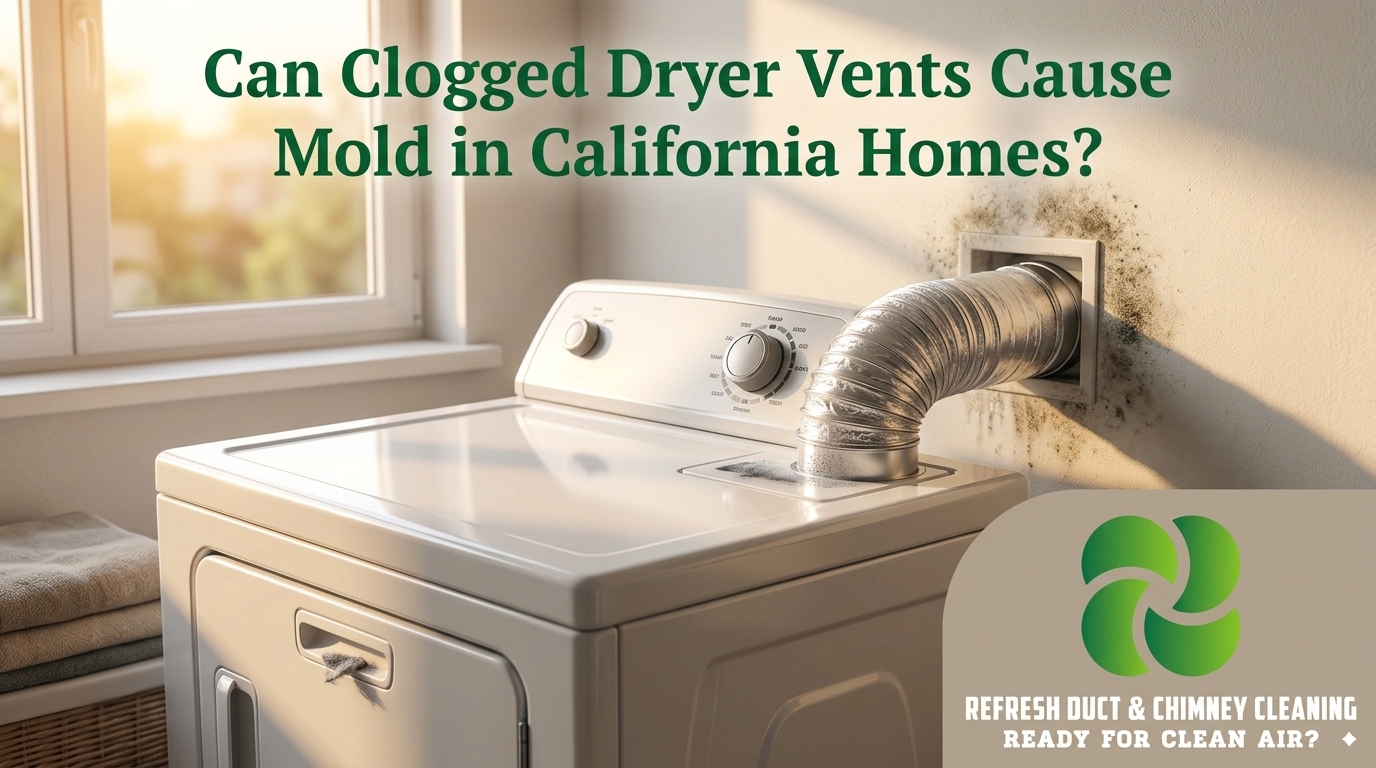
In coastal, inland, and even desert regions of California, moisture control plays a major role in home maintenance and safety. When dryer vents become blocked, warm, damp air has nowhere to escape, allowing condensation to accumulate in walls, ceilings, and laundry areas. Over time, clogged dryer vents cause mold in California homes by creating consistent humidity pockets that encourage fungal growth.
What Happens Inside a Clogged Dryer Vent System?
A dryer is designed to expel hot, moist air through a vent system that directs it safely outside the home. When lint and debris build up inside the vent pipe, airflow becomes restricted, and moisture lingers longer than it should. This trapped moisture begins to settle along duct walls and nearby building materials.
As lint accumulates, it acts like a sponge that absorbs humidity from each drying cycle. Over repeated use, this damp lint remains inside the duct, creating a warm and dark environment. These conditions are ideal for microbial growth, especially when the vent runs through insulated walls or crawl spaces.
When airflow is blocked, pressure inside the system increases and forces moist air to leak through small joints or cracks. That moisture may seep into drywall, insulation, or wooden framing. Over time, clogged dryer vents cause mold in California homes because the moisture never fully evaporates.
Why California Homes Are Especially Vulnerable to Moisture and Mold
California’s diverse climate zones create varying but persistent moisture challenges. Coastal areas experience higher humidity levels, while inland regions may deal with temperature fluctuations that cause condensation. Both scenarios increase the likelihood that clogged dryer vents cause mold in California homes.
Many homes in California are tightly sealed for energy efficiency. While this design conserves energy, it also reduces natural ventilation, allowing trapped moisture to accumulate more easily. In such environments, even small amounts of vent leakage can significantly raise indoor humidity.
Additionally, older California properties often have longer or improperly installed vent ducts. Extended duct runs increase the chances of lint buildup and airflow restriction. When moisture remains trapped in these extended pathways, mold spores find an ideal breeding ground.
How Does Moisture From Dryer Vents Lead to Mold Growth?
Moisture is the primary ingredient mold needs to grow, and dryers produce large amounts of humid air during each cycle. When this moisture cannot exit efficiently, it condenses inside ducts and surrounding surfaces. Condensation forms tiny water droplets that soak into porous materials like wood and drywall.
Once materials stay damp for more than 24 to 48 hours, mold spores can begin colonizing. California’s moderate temperatures often allow mold to thrive year-round. That is why clogged dryer vents cause mold in California homes more frequently than many homeowners expect.
Repeated drying cycles add consistent moisture to the same areas. Over time, the damp environment becomes persistent rather than temporary. This ongoing exposure significantly increases the risk of hidden mold infestations behind walls and ceilings.
Signs Your Dryer Vent May Be Contributing to Mold Problems
If a dryer vent is clogged, warning signs often appear before visible mold growth. Recognizing these indicators early can prevent larger structural and health issues. Paying attention to subtle changes in performance and environment is critical.
Excess Humidity in the Laundry Room
If your laundry room feels damp or muggy after running the dryer, moisture may not be venting properly. Persistent humidity can seep into nearby walls and flooring materials.
Condensation on windows or walls after drying clothes is another red flag. Over time, this moisture can trigger mold formation in hidden spaces.
Musty Odors Near the Dryer
A persistent musty smell near your dryer often signals trapped moisture and microbial activity. Mold spores release distinct odors that intensify in humid conditions.
If the smell worsens after running the dryer, the vent system may be retaining damp air. This is a strong indicator that clogged dryer vents cause mold in California homes.
Longer Drying Times
When clothes take longer to dry, airflow through the vent is likely restricted. Reduced airflow means humid air remains trapped inside the system.
This prolonged moisture exposure contributes to condensation buildup. Over time, it increases the risk of mold growth in adjacent areas.
Benefits of Preventing Mold Through Regular Vent Maintenance
Preventing mold growth begins with maintaining proper dryer vent airflow. When vents are clean and unobstructed, moisture exits the home efficiently. This significantly lowers indoor humidity levels and reduces the chance of mold development.
Regular inspections also protect structural materials from prolonged dampness. By ensuring that moisture does not linger in hidden spaces, homeowners preserve insulation, framing, and drywall integrity. Understanding how clogged dryer vents cause mold in California homes empowers homeowners to take proactive action.
- Improved Indoor Air Quality: Clean dryer vents prevent mold spores from circulating through your living spaces. This helps reduce respiratory irritation and allergic reactions.
- Reduced Structural Damage: By eliminating excess moisture, you prevent wood rot and drywall deterioration. This protects the long term value of your home.
- Lower Humidity Levels: Proper airflow keeps moisture from accumulating indoors. Stable humidity discourages mold colonies from forming.
- Enhanced Appliance Efficiency: A clean vent system allows the dryer to function optimally. Efficient drying reduces the amount of moisture released into surrounding areas.
What Are the Hidden Areas Where Mold May Develop?
Mold caused by clogged dryer vents does not always appear in obvious places. In many California homes, mold develops behind walls, under flooring, or inside attic spaces. These hidden areas can remain contaminated for months before detection.
Laundry rooms often share walls with bathrooms or garages. Moisture leaking from vents can travel through wall cavities and affect adjacent rooms. Once mold begins spreading, remediation becomes more complex and costly.
Crawl spaces are particularly vulnerable in older California properties. If a vent passes through these areas and leaks moisture, mold can thrive in dark and poorly ventilated conditions. Early detection is crucial to preventing widespread contamination.
When Should Homeowners Inspect Their Dryer Vent Systems?
Dryer vent inspections should be performed at least once per year in most households. Homes with larger families or frequent laundry use may require more frequent checks. Consistent monitoring helps prevent the buildup that leads to moisture retention.
If you notice performance issues such as overheating or extended drying cycles, immediate inspection is recommended. Waiting too long allows moisture problems to worsen. Acting promptly reduces the likelihood that clogged dryer vents cause mold in California homes.
Seasonal changes also make inspections important. During cooler months, temperature differences increase condensation risks inside duct systems.
Exhaustive Moisture Matrix: Clean vs. Clogged Venting Environmental Analysis
Yahan ek nihayat lamba aur detailed table hai jo clear venting aur clogged venting ke environmental impact ka mukammal operational breakdown pesh karta hai:
| Environmental & Structure Metric | Clean & Code-Compliant Venting | Clogged & Restricted Venting Status | Long-Term Biological & Financial Risk | Technical Explanation |
| Relative Room Humidity | Balanced safely between 30% and 50% throughout the cycle. | Soars past 70% to 85%, creating a sticky, damp sauna environment. | High Risk: High humidity triggers rapid airborne mold spore germination. | Air backpressure forces humid exhaust to bleed through connection seams into rooms. |
| Condensation Tendency | Zero; moisture is entirely contained inside the sealed pipe. | Water droplets pool actively on windows, walls, and baseboards. | Moderate Risk: Standing water damages wood trim and blisters wall paint. | Hot steam cools down rapidly upon hitting cold indoor surfaces, turning to liquid. |
| Concealed Wall Cavity State | Completely dry, sterile, and structurally sound framing. | Trapped moisture vents directly into dark, unventilated wall spaces. | Extreme Risk: Massive hidden toxic mold outbreaks (Stachybotrys chartarum). | High backpressure breaks weak joint seals inside drywall voids, releasing wet air. |
| Drywall Structural Integrity | Remains rigid, clean, and structurally solid for decades. | Absorbs water, becoming soft, spongy, and deeply discolored. | Severe Risk: Drywall rots, sags, and requires complete replacement. | Gypsum board acts like a sponge, absorbing escaped vapor until it structurally fails. |
| Wood Stud Health Status | Dry wood with zero risk of structural decay or rot. | High moisture content encourages wood-decaying fungi growth. | Severe Risk: Structural framing weakens, compromising home safety. | Continuous dampness breaks down the wood fibers, destroying load-bearing limits. |
| Insulation Performance | Dry fiberglass or cellulose preserves home thermal values. | Wet, compressed insulation loses its entire R-value rating. | Moderate Risk: Skyrockets heating/cooling bills due to lost insulation. | Moisture fills the tiny air pockets inside insulation, turning it into a wet mat. |
| Airflow Path Odor Profile | Fresh, clean scent of laundry soap and warm air. | Persistent musty, damp earth, or decaying organic smells. | High Risk: Spreads foul odors throughout the living zones of the home. | Active fungal colonies inside the lint trap release volatile organic compounds. |
| Airborne Spore Counts | Baseline outdoor levels; safe for respiratory health. | Elevated indoor spore counts circulating through the house. | Extreme Risk: Triggers severe asthma attacks, chronic coughing, and allergies. | Fan pressure pushes loose mold spores out of the wall gaps into the living spaces. |
| Appliance Rust Damage | Dry metal cabinet remains free from oxidation. | Water pools under the machine, causing heavy chassis rust. | Financial Risk: Ruins the washer and dryer frame, shortening system life. | Escaped humidity settles on cold sheet metal, creating localized rust spots. |
| Pest Attraction Levels | Clean, dry environment repels insects and rodents. | Damp, dark spaces attract termites, silverfish, and mice. | Moderate Risk: Secondary pest infestations that damage property wiring. | Insects actively seek out high-humidity zones with abundant organic mold food. |
| Home Remediation Costs | $0; routine maintenance keeps the home clean. | Can scale from $1,500 to $8,000+ for professional cleanup. | Financial Risk: High out-of-pocket costs rarely covered by standard insurance. | Eliminating structural mold requires containment zones, air scrubbers, and rebuilds. |
| Property Valuation Impact | Maintains maximum asset value; passes inspection. | Flagged as an environmental biohazard during home sale. | Asset Risk: Lowers property appraisal value and drives away buyers. | Hidden mold and rotten framing must be legally disclosed to potential home buyers. |
Factors That Increase the Risk of Mold From Dryer Vents
Several conditions can make it more likely that clogged dryer vents cause mold in California homes. These factors often work together, amplifying moisture retention and airflow restriction. Understanding these risks helps homeowners take preventive action.
Long or Complex Vent Runs
Extended vent pathways allow more opportunities for lint accumulation. The longer the duct, the harder it is for air to exit efficiently.
Complex routing with multiple bends reduces airflow speed. Slower airflow increases condensation buildup inside the duct.
Flexible or Improper Vent Materials
Flexible plastic or foil ducts trap lint more easily than rigid metal ducts. Their ribbed surfaces collect debris and restrict airflow.
Improper materials may also sag, creating low points where moisture pools. Standing moisture dramatically increases mold risk.
High Indoor Humidity Levels
Homes in coastal California naturally experience elevated humidity. When combined with poor ventilation, moisture problems intensify quickly.
Even inland homes can experience indoor humidity spikes during cooler seasons. Excess humidity accelerates mold growth when vents are clogged.
Infrequent Maintenance
Skipping annual cleaning allows lint to build up over time. Many homeowners underestimate how quickly blockages form.
Without regular inspections, small airflow issues become major moisture problems. This neglect significantly raises the risk that clogged dryer vents cause mold in California homes.
How Professional Cleaning Reduces Mold Risk
Professional dryer vent cleaning removes lint, debris, and blockages from the entire duct system. Technicians use specialized equipment to ensure thorough airflow restoration. This comprehensive cleaning reduces trapped moisture and prevents condensation buildup.
Experts also inspect joints and connections for leaks. Identifying small gaps early helps stop moisture from escaping into wall cavities. By addressing these vulnerabilities, homeowners minimize the risk that clogged dryer vents cause mold in California homes.
Routine professional maintenance supports long-term mold prevention strategies. Combined with proper ventilation practices, it creates a healthier and safer indoor environment.
Simple Prevention Tips for California Homeowners
Even small maintenance habits can make a significant difference in moisture control. Taking proactive steps ensures that dryer systems function efficiently and safely. Prevention is always more cost-effective than remediation.
- Clean the lint trap after every load to maintain optimal airflow. Consistent lint removal reduces moisture retention inside the system.
- Inspect the exterior vent hood regularly for obstructions. Clearing debris ensures humid air exits freely.
- Avoid crushing or bending the vent hose during installation. Proper alignment maintains consistent airflow and reduces condensation buildup.
- Schedule annual professional inspections for comprehensive cleaning. Expert maintenance significantly lowers the risk of mold development.
- Monitor humidity levels in the laundry area using a simple hygrometer. Keeping humidity balanced helps prevent mold growth.
Conclusion
Clogged dryer vents pose a serious yet often overlooked risk to California homeowners. When airflow is restricted, excess moisture becomes trapped inside ducts and surrounding structures. Over time, clogged dryer vents cause mold in California homes by creating persistent humidity that supports fungal growth. Recognizing early warning signs and maintaining proper ventilation can prevent costly and harmful consequences.
Protecting your home from mold requires consistent attention and preventive care. Regular inspections, professional cleanings, and awareness of moisture indicators make a substantial difference in long term safety. By understanding how clogged dryer vents cause mold in California homes, homeowners can take informed steps to safeguard indoor air quality and structural integrity. Proactive maintenance ultimately ensures a healthier living environment for years to come.
Frequently Asked Questions
1. Can mold from dryer vents spread to other parts of the house?
Yes, mold spores can travel through air circulation systems and settle in different areas of the home. Once airborne, they may colonize other damp surfaces if conditions allow.
2. Does running the dryer at a higher heat reduce mold risk?
Higher heat may dry clothes faster, but it does not fix airflow blockages inside the vent. If moisture cannot exit properly, condensation and mold risks remain.
3. Are newer homes less likely to experience vent-related mold?
Newer homes can still develop mold if vent systems are poorly installed or maintained. Energy-efficient sealing may actually increase indoor humidity if ventilation is restricted.
4. Can clogged dryer vents affect insulation?
Yes, trapped moisture can seep into insulation materials and reduce their effectiveness. Damp insulation also creates an environment where mold can thrive.
5. Is mold from dryer vents visible immediately?
Mold often develops behind walls or inside ducts before becoming visible. By the time surface mold appears, hidden growth may already be extensive.
6. Do electric dryers pose less mold risk than gas dryers?
Both electric and gas dryers produce humid air during operation. Mold risk depends more on ventilation efficiency than on the dryer type.
7. Can small households ignore annual vent cleaning?
Even light usage can lead to gradual lint accumulation over time. Annual inspections help prevent hidden moisture problems regardless of household size.
8. Does homeowners’ insurance cover mold caused by clogged vents?
Coverage varies by policy and provider. Many insurers consider mold caused by poor maintenance to be preventable and may limit coverage.