
Dryers are designed to remove moisture from clothes by using heat and airflow. During each drying cycle, hot and moist air travels through the vent system and exits outside. When the vent becomes clogged with lint, dust, or debris, airflow is restricted and the dryer cannot perform efficiently. Many homeowners do not realize that a blocked vent can cause serious problems beyond longer drying times.
Excess heat and trapped moisture can place additional stress on dryer components. Over time, this can lead to higher energy bills, poor performance, and costly repairs. Understanding the effects of a clogged vent helps prevent damage and keeps the dryer operating safely. Regular maintenance is an important step in extending the life of any dryer.
Can a Clogged Vent Damage a Dryer?
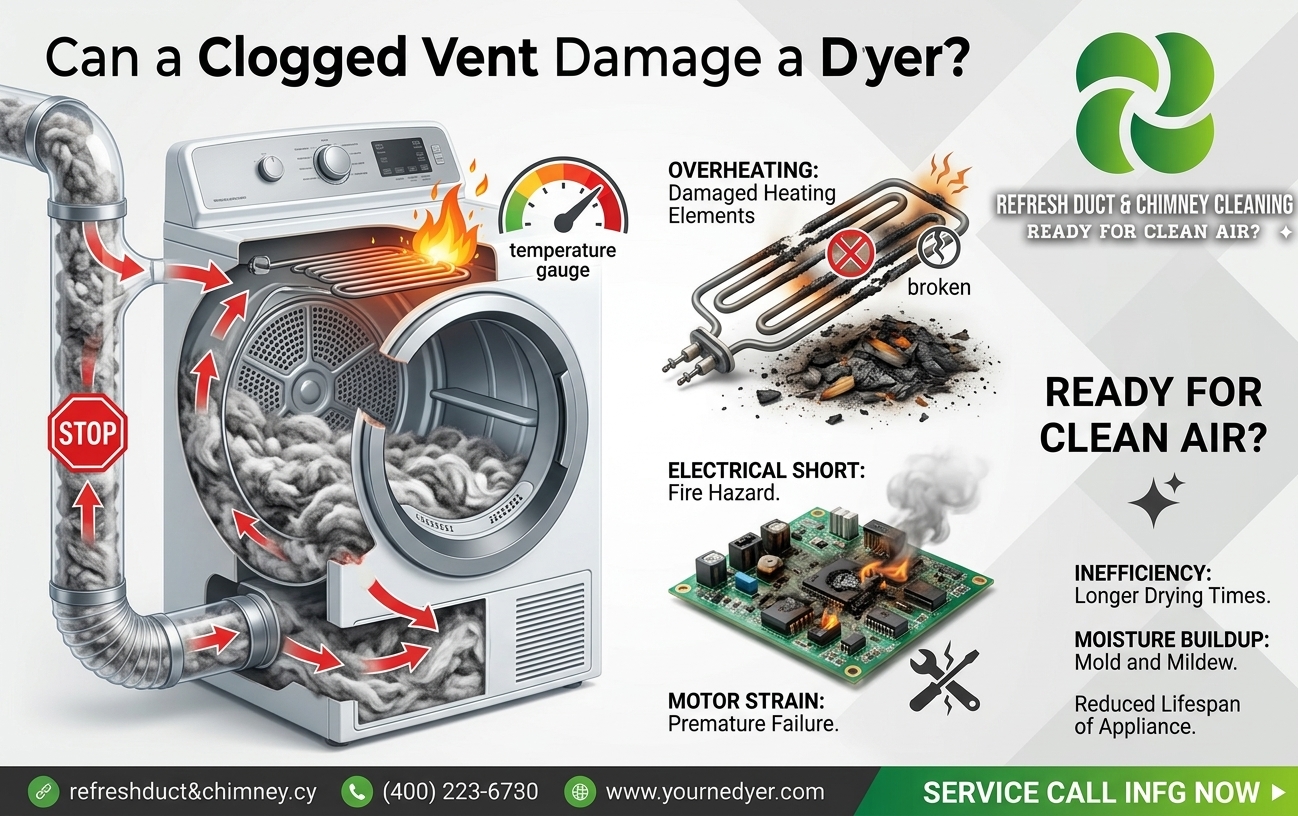
Yes, a clogged vent can damage a dryer in several ways. The vent system is responsible for removing hot and moist air from the appliance during operation. When airflow becomes restricted, heat builds up inside the dryer and forces components to work harder than normal. Understanding the effects of a clogged vent helps prevent damage and keeps the dryer operating safely.
Regular maintenance is an important step in extending the life of any dryer. This extra strain can wear out important parts faster and reduce overall efficiency. Drying cycles may become longer, causing the appliance to consume more energy. Regular dryer vent cleaning Los Angeles helps remove lint buildup, restore proper airflow, and reduce unnecessary stress on the appliance. If the blockage remains unresolved, the risk of overheating and mechanical failure increases significantly.
How a Dryer Vent Works
A dryer vent is an essential part of the drying system. It carries warm, moist air away from the appliance and releases it outside. Understanding the effects of a clogged vent helps prevent damage and keeps the dryer operating safely. Regular maintenance is an important step in extending the life of any dryer. Proper airflow helps maintain safe operating temperatures and improves drying performance.
When the vent is clean, moisture exits quickly and clothes dry efficiently. If lint and debris accumulate inside the vent, airflow becomes restricted. This makes it difficult for the dryer to remove heat and moisture effectively.
Common Causes of Dryer Vent Clogs
- Dryer vent clogs usually develop gradually over time.
- Lint from clothing is the most common source of blockage.
- Even when the lint filter is cleaned regularly, small particles can enter the vent system.
- Dust, pet hair, and fabric fibers may also contribute to buildup.
- Crushed vent hoses and poor installation can further restrict airflow.
- Regular inspections help identify these problems before they become severe.
- Understanding the effects of a clogged vent helps prevent damage and keeps the dryer operating safely.
- Regular maintenance is an important step in extending the life of any dryer.
Warning Signs of a Clogged Dryer Vent
A clogged dryer vent often produces noticeable warning signs. Clothes may take longer than usual to dry completely. The dryer and surrounding area may feel hotter during operation. Understanding the effects of a clogged vent helps prevent damage and keeps the dryer operating safely.
Regular maintenance is an important step in extending the life of any dryer. Excess moisture and humidity can develop around the appliance. A burning smell may also indicate trapped heat and lint buildup. Recognizing these warning signs early can help prevent costly damage.
Longer Drying Times
One of the first signs of a clogged vent is extended drying cycles. Moist air cannot leave the dryer efficiently when airflow is restricted. As a result, clothes remain damp for longer periods. This forces the appliance to run longer than necessary.
Excessive Heat Buildup
Restricted airflow causes heat to remain trapped inside the dryer. Internal temperatures may rise beyond normal operating levels. This extra heat places stress on various components. Over time, overheating can contribute to premature wear.
Increased Energy Consumption
A dryer with a clogged vent must work harder to dry clothes. Longer drying cycles require more electricity or fuel. This can increase energy costs over time. Improved airflow helps maintain better efficiency.
Moisture Accumulation
Blocked vents prevent moisture from leaving the system properly. Excess moisture may remain inside the dryer or laundry area. This can create an uncomfortable environment and reduce drying performance. Proper venting removes moisture effectively.
Unusual Burning Smell
A burning odor should never be ignored. Lint buildup near hot components may create a noticeable smell during operation. This often indicates restricted airflow and excessive heat. Immediate inspection is recommended.
Frequent Dryer Shutdowns
Modern dryers may shut down automatically when overheating occurs. This safety feature helps prevent severe damage. Frequent shutdowns can indicate airflow problems within the vent system. Cleaning the vent may restore normal operation.
Potential Damage Caused by a Clogged Vent
- A clogged vent can affect multiple parts of a dryer.
- Excess heat forces components to operate under stressful conditions.
- Heating elements, thermostats, and motors may wear out faster than expected.
- The appliance may also experience reduced efficiency and higher operating costs.
- Over time, repeated overheating can shorten the overall lifespan of the dryer.
- Addressing vent issues early helps prevent unnecessary repairs.
- Understanding the effects of a clogged vent helps prevent damage and keeps the dryer operating safely.
- Regular maintenance is an important step in extending the life of any dryer.
Dryer Vent Problems and Their Effects
| Vent Problem | Cause | Effect on Dryer | Possible Result |
| Lint buildup | Accumulated fabric fibers | Restricted airflow | Longer drying times |
| Blocked vent opening | Debris obstruction | Poor ventilation | Heat buildup |
| Crushed vent hose | Improper positioning | Limited airflow | Reduced efficiency |
| Dirty lint filter | Lack of cleaning | Increased workload | Higher energy use |
| Excess moisture | Poor venting | Damp clothes | Longer cycles |
| Overheating | Trapped hot air | Component stress | Premature wear |
| Thermostat strain | High temperatures | Inaccurate control | Performance issues |
| Heating element stress | Constant operation | Faster deterioration | Costly repairs |
| Motor overload | Increased workload | Reduced lifespan | Mechanical failure |
| Sensor malfunction | Excess heat exposure | Incorrect readings | Inconsistent drying |
| Vent disconnection | Improper installation | Air leakage | Reduced performance |
| Humidity buildup | Poor airflow | Moist environment | Lower efficiency |
| Frequent shutdowns | Safety activation | Interrupted cycles | User inconvenience |
| Increased utility bills | Longer operation | More energy use | Higher expenses |
| Reduced appliance lifespan | Continuous strain | Faster wear | Early replacement |
How to Prevent Dryer Vent Damage
Preventing dryer vent damage starts with routine maintenance. Regular cleaning removes lint and debris before major blockages develop. Checking vent hoses for damage helps maintain proper airflow. Keeping the lint filter clean after every load also improves performance. Monitoring drying times can help identify potential issues early. Preventive care reduces the risk of costly repairs and extends appliance life.
Maintenance Tips for a Healthy Dryer Vent
Understanding the effects of a clogged vent helps prevent damage and keeps the dryer operating safely. Regular maintenance is an important step in extending the life of any dryer. Regular cleaning of lint filters and vent systems plays a major role in preventing these issues.
Proper maintenance improves efficiency, protects internal components, and extends the life of the dryer. By keeping the vent system clear, homeowners can avoid costly repairs and maintain safe operation. A clean vent is one of the simplest ways to keep a dryer performing at its best.
Clean the Lint Filter After Every Load
The lint filter collects fibers released from clothing during drying. Cleaning it after every load improves airflow and efficiency. A clean filter reduces strain on the dryer. This simple habit supports long-term performance.
Inspect the Vent System Regularly
Routine inspections help identify lint buildup and airflow restrictions. Small blockages can become major problems if ignored. Checking the vent regularly prevents excessive accumulation. Early detection reduces repair costs.
Check for Crushed Vent Hoses
A crushed hose can restrict airflow significantly. Even a partially blocked hose can reduce drying efficiency. Ensuring the hose remains straight and unobstructed improves ventilation. Proper positioning supports dryer performance.
Remove Debris from Vent Openings
Vent openings should remain free from dust and debris. Blocked openings prevent air from leaving the system effectively. Cleaning these areas promotes better airflow. Improved ventilation reduces heat buildup.
Monitor Dryer Performance
Changes in drying performance often indicate a developing problem. Longer drying times and overheating should not be ignored. Paying attention to these signs allows early intervention. Quick action helps prevent further damage.
Schedule Routine Maintenance
Professional maintenance can identify hidden issues within the vent system. Technicians can inspect airflow and clean difficult-to-reach areas. Routine service helps maintain efficiency and safety. Preventive maintenance supports appliance longevity.
Benefits of Keeping Dryer Vents Clean
- Keeping dryer vents clean offers several important benefits.
- Proper airflow allows clothes to dry faster and more efficiently.
- Reduced operating time helps lower energy consumption.
- Clean vents also reduce strain on internal components and extend appliance lifespan.
- Regular cleaning of lint filters and vent systems plays a major role in preventing these issues.
- Proper maintenance improves efficiency, protects internal components, and extends the life of the dryer.
- By keeping the vent system clear, homeowners can avoid costly repairs and maintain safe operation.
- A clean vent is one of the simplest ways to keep a dryer performing at its best.
- Improved ventilation helps prevent overheating and moisture-related problems.
- Consistent maintenance ensures reliable performance and greater peace of mind.
Conclusion
A clogged dryer vent can absolutely damage a dryer if the problem is not addressed promptly. Restricted airflow causes heat and moisture to remain trapped inside the appliance, forcing components to work harder than intended. This extra strain can lead to overheating, higher energy bills, and premature wear of important parts. Warning signs such as long drying times, excessive heat, and unusual odors should never be ignored.
Regular cleaning of lint filters and vent systems plays a major role in preventing these issues. Proper maintenance improves efficiency, protects internal components, and extends the life of the dryer. By keeping the vent system clear, homeowners can avoid costly repairs and maintain safe operation. A clean vent is one of the simplest ways to keep a dryer performing at its best.
FAQs
1. Can a clogged vent really damage a dryer?
Yes, a clogged vent can cause significant damage over time. Restricted airflow leads to overheating and increased strain on components. This can reduce efficiency and shorten the dryer’s lifespan. Regular cleaning helps prevent these problems.
2. How does a clogged vent affect drying performance?
A blocked vent prevents moist air from leaving the dryer efficiently. Clothes take longer to dry because moisture remains trapped. The appliance must run longer to achieve the same results. This increases energy consumption.
3. What are the signs of a clogged dryer vent?
Common signs include long drying times, excessive heat, and damp clothes after a cycle. Some people may also notice a burning smell. Increased humidity around the dryer can occur as well. These warning signs should be addressed quickly.
4. Can a clogged vent increase energy bills?
Yes, restricted airflow forces the dryer to operate longer. Longer drying cycles require more energy to complete. Over time, this can lead to noticeably higher utility costs. Proper airflow helps improve efficiency.
5. Why does my dryer get hot when the vent is clogged?
Heat cannot escape properly when airflow is blocked. This causes temperatures inside the dryer to rise. Excessive heat places additional stress on components. Continued overheating may lead to damage.
6. How often should a dryer vent be cleaned?
The frequency depends on usage and lint accumulation. Regular inspections help determine when cleaning is needed. Consistent maintenance prevents major blockages. Keeping the system clean improves performance.
7. Can a clogged vent cause moisture problems?
Yes, blocked vents prevent moisture from leaving the dryer effectively. Excess moisture may remain inside the appliance or nearby area. This can reduce drying efficiency. Proper ventilation helps remove moisture quickly.
8. Will cleaning the vent improve dryer efficiency?
Cleaning the vent restores airflow and allows the dryer to operate more effectively. Clothes dry faster when moisture exits properly. Improved airflow reduces strain on the appliance. This often lowers energy usage as well.
9. Can a clogged vent shorten dryer lifespan?
Yes, continuous overheating and increased workload can wear out components faster. Motors, thermostats, and heating elements may experience additional stress. Over time, this can reduce appliance longevity. Preventive maintenance helps avoid premature failure.
10. What is the best way to prevent vent clogs?
Regular maintenance is the most effective prevention method. Clean the lint filter after every load and inspect the vent system routinely. Removing lint buildup improves airflow and efficiency. Consistent care helps keep the dryer operating safely.