
A dryer vent is an important part of every clothes dryer because it carries hot air, moisture, and lint outside. When the vent stays clean, the dryer works better and finishes clothes faster. Over time, lint, dust, and small debris collect inside the vent and reduce airflow. This can make the dryer use more energy and increase wear on its parts. A blocked vent may also create overheating problems if it is ignored for too long. Regular maintenance helps improve safety and keeps the dryer running smoothly throughout the year.
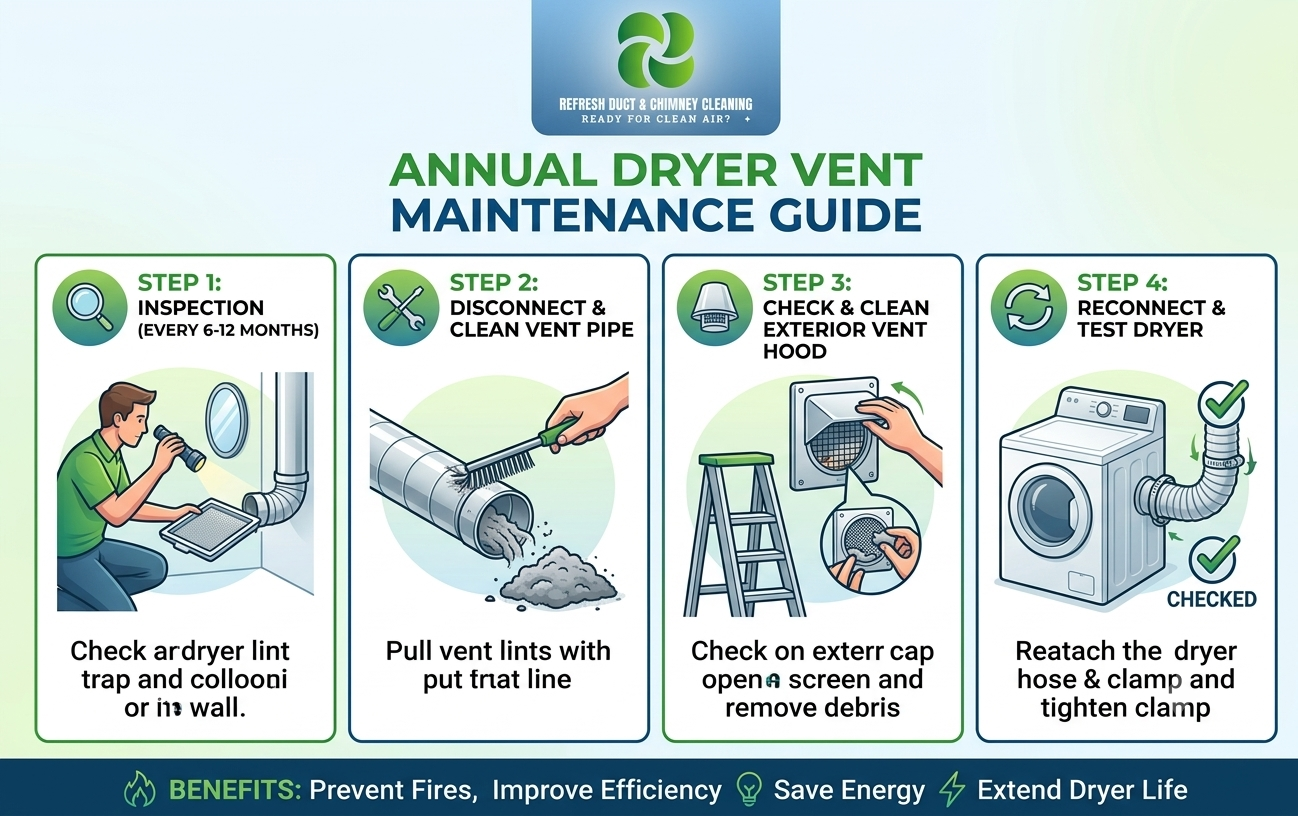
It also reduces unnecessary repair costs and helps clothes dry evenly. This annual dryer vent maintenance guide explains simple steps that help you keep your dryer vent in good condition.Carefully remove accumulated debris using appropriate cleaning tools. Inspect the vent connections to ensure they remain secure and free from damage. Finish by testing the dryer to confirm that airflow has improved.
Annual Dryer Vent Maintenance Guide
An annual dryer vent cleaning Los Angeles maintenance guide helps homeowners understand when and how to inspect their dryer vent system. A yearly inspection removes built-up lint before it becomes a serious problem. It also helps improve airflow, making drying cycles shorter and more efficient. Regular maintenance reduces strain on the dryer and supports longer equipment life.
A blocked vent may also create overheating problems if it is ignored for too long. Regular maintenance helps improve safety and keeps the dryer running smoothly throughout the year. Following a yearly schedule makes it easier to notice small issues before they become expensive repairs. Simple maintenance habits can improve both safety and dryer performance.
Why Annual Dryer Vent Maintenance Is Important
Dryer vents slowly collect lint every time the dryer is used. Even though the lint filter catches most fibers, some still travel into the vent system. A blocked vent may also create overheating problems if it is ignored for too long. Regular maintenance helps improve safety and keeps the dryer running smoothly throughout the year.
Over time, this buildup blocks airflow and causes the dryer to work harder. Annual maintenance removes these hidden blockages and improves ventilation. Better airflow helps clothes dry more evenly while lowering energy use. A clean vent also reduces unnecessary stress on important dryer components.
Benefits of Maintaining a Dryer Vent Every Year
- Yearly dryer vent maintenance offers many long-term advantages for both the dryer and the home.
- It helps reduce drying time, which saves electricity and daily operating costs.
- Proper airflow also lowers the chance of overheating inside the dryer.
- Regular maintenance extends the life of heating elements, motors, and other moving parts.
- It also helps prevent unpleasant odors caused by trapped moisture and lint.
- Dryer vents slowly collect lint every time the dryer is used.
- Even though the lint filter catches most fibers, some still travel into the vent system.
- A well-maintained vent supports better dryer performance throughout the year.
- A blocked vent may also create overheating problems if it is ignored for too long.
- Regular maintenance helps improve safety and keeps the dryer running smoothly throughout the year.
Common Signs Your Dryer Vent Needs Maintenance
Some warning signs clearly show that your dryer vent needs attention. Clothes may remain damp after one drying cycle or require extra time to dry completely. The dryer may become unusually hot while operating.Dryer vents slowly collect lint every time the dryer is used. Even though the lint filter catches most fibers, some still travel into the vent system.
A burning smell or musty odor can also indicate lint buildup inside the vent. Excess lint around the dryer or outside vent opening is another common sign. Addressing these problems early helps prevent larger maintenance issues.
Clothes Take Longer to Dry
When airflow becomes restricted, warm air cannot move through the vent properly. As a result, clothes stay damp after a normal drying cycle. This is often one of the first signs of a blocked dryer vent. Cleaning the vent restores normal airflow and improves drying efficiency.
Dryer Feels Extremely Hot
A dryer should become warm during operation, but excessive heat is not normal. Poor ventilation traps hot air inside the machine and increases internal temperatures. This extra heat places additional stress on dryer components. Regular vent maintenance helps prevent overheating.
Burning Smell During Drying
A burning smell may appear when lint accumulates near hot dryer parts. Since lint is highly flammable, this warning should never be ignored. Cleaning the vent removes excess lint and improves safe airflow. Immediate maintenance reduces potential safety risks.
Excess Lint Around the Dryer
Finding lint around the dryer or near the outside vent often means airflow is restricted. Lint may escape through small openings when the vent is partially blocked. Cleaning the entire vent system prevents further accumulation. Proper maintenance also keeps the surrounding area cleaner.
Moisture Inside the Laundry Area
Poor ventilation prevents moisture from leaving the dryer efficiently. This trapped moisture can make the laundry area feel humid and uncomfortable. Excess moisture may also encourage mold growth over time. Annual vent maintenance improves moisture removal.
Higher Energy Bills
A blocked dryer vent forces the dryer to run longer during every load. Longer drying cycles increase electricity consumption and operating costs. Cleaning the vent improves efficiency and reduces unnecessary energy use. Consistent maintenance helps lower utility expenses.
Steps for Annual Dryer Vent Maintenance
- Proper maintenance does not require complicated procedures when it is performed regularly.
- Begin by unplugging the dryer before any inspection.
- Dryer vents slowly collect lint every time the dryer is used.
- Even though the lint filter catches most fibers, some still travel into the vent system.
- Check the lint filter, vent hose, and outside vent opening for visible lint buildup.
- Carefully remove accumulated debris using appropriate cleaning tools.
- Longer drying cycles increase electricity consumption and operating costs.
- Cleaning the vent improves efficiency and reduces unnecessary energy use.
- Consistent maintenance helps lower utility expenses.
- Inspect the vent connections to ensure they remain secure and free from damage.
- Finish by testing the dryer to confirm that airflow has improved.
Annual Dryer Vent Maintenance Checklist
| Maintenance Task | Purpose | Recommended Frequency | Benefits |
| Clean lint filter | Remove surface lint | After every load | Improves airflow |
| Inspect vent hose | Check for damage | Monthly | Prevents airflow restrictions |
| Clean vent interior | Remove hidden lint | Yearly | Improves efficiency |
| Check outside vent | Ensure flap opens freely | Monthly | Maintains ventilation |
| Remove dust around dryer | Reduce debris buildup | Monthly | Cleaner operating area |
| Inspect vent connections | Prevent air leaks | Yearly | Better airflow |
| Check drying time | Monitor performance | Every load | Detect early problems |
| Look for burning odors | Identify overheating | Regularly | Improves safety |
| Inspect moisture levels | Detect ventilation issues | Monthly | Reduces humidity |
| Examine vent cover | Remove leaves or dirt | Seasonally | Prevents blockages |
| Check dryer temperature | Identify overheating | Monthly | Protects components |
| Listen for unusual sounds | Detect mechanical issues | Monthly | Early repair detection |
| Inspect flexible duct | Look for crushing or kinks | Yearly | Better airflow |
| Vacuum behind dryer | Remove dust and lint | Every few months | Cleaner environment |
| Perform complete inspection | Review entire vent system | Annually | Supports long-term performance |
Best Practices for Long-Term Dryer Vent Care
Better airflow helps clothes dry faster while reducing unnecessary energy use. Regular maintenance also lowers stress on important dryer components, helping them last longer. Watching for warning signs and following simple maintenance habits makes it easier to avoid common dryer problems.
A consistent yearly maintenance routine supports reliable dryer performance in every season. Keeping the dryer vent clean is a practical step toward maintaining an efficient and dependable laundry system.
Clean the Lint Filter After Every Load
Cleaning the lint filter after each drying cycle prevents excess lint from entering the vent system. This simple habit improves airflow and dryer efficiency. It also reduces the amount of debris collecting inside the vent. Regular filter cleaning supports better overall performance.
Avoid Overloading the Dryer
Large loads produce more lint and require longer drying times. Overloading also places extra strain on the dryer motor and heating system. Drying moderate-sized loads improves airflow inside the drum. This habit supports better vent performance.
Inspect the Outside Vent Regularly
The outside vent should open easily whenever the dryer operates. Dirt, leaves, or lint can block the vent opening over time. Regular inspections help maintain unrestricted airflow. A clear vent allows moisture and heat to escape properly.
Use the Correct Vent Material
Strong and smooth vent materials improve airflow and reduce lint buildup. Damaged or crushed vent ducts can trap debris more easily. Replacing worn vent materials helps maintain proper ventilation. Good-quality ducts also last longer.
Schedule a Complete Yearly Inspection
Even when no obvious problems appear, a yearly inspection is still valuable. Hidden lint can accumulate in areas that are difficult to see. Annual maintenance helps identify early signs of wear or damage. Preventive inspections improve long-term dryer performance.
Watch for Changes in Dryer Performance
Pay attention to longer drying times, unusual heat, or unexpected odors. Small performance changes often indicate developing vent problems. Addressing these issues early helps avoid larger repairs later. Regular observation supports effective maintenance.
Conclusion
Annual dryer vent maintenance is one of the simplest ways to improve dryer safety and efficiency. Small amounts of lint gradually build up over time, even when the lint filter is cleaned regularly. A yearly inspection removes hidden debris and restores proper airflow throughout the vent system. Better airflow helps clothes dry faster while reducing unnecessary energy use.
Regular maintenance also lowers stress on important dryer components, helping them last longer. Watching for warning signs and following simple maintenance habits makes it easier to avoid common dryer problems. A consistent yearly maintenance routine supports reliable dryer performance in every season. Keeping the dryer vent clean is a practical step toward maintaining an efficient and dependable laundry system.
FAQs
1. Why should I clean my dryer vent every year?
Annual cleaning removes lint that collects inside the vent over time. This improves airflow and helps the dryer work more efficiently. It also reduces unnecessary wear on the appliance. Yearly maintenance supports safer operation.
2. How do I know if my dryer vent is clogged?
Long drying times, excessive heat, burning smells, and visible lint near the vent are common warning signs. These symptoms often indicate restricted airflow. Early inspection helps prevent larger problems. Regular maintenance keeps the vent working properly.
3. Can a dirty dryer vent increase energy use?
Yes, blocked airflow forces the dryer to run longer to dry clothes completely. Longer drying cycles use more electricity. Cleaning the vent restores efficient airflow. This helps lower energy consumption.
4. What causes lint to build up inside the vent?
Small fabric fibers naturally separate from clothing during drying. While the lint filter captures most of them, some travel into the vent system. Over time, these fibers collect inside the duct. Regular cleaning removes the buildup.
5. Should I inspect the outside vent?
Yes, checking the outside vent helps ensure that air flows freely. Dirt, leaves, or lint may block the opening. Removing these obstructions improves ventilation. Monthly inspections are a helpful maintenance habit.
6. Does annual maintenance extend dryer life?
Regular maintenance reduces strain on the dryer by improving airflow. Better ventilation allows components to operate under normal conditions. Less stress often leads to fewer repairs. This supports a longer equipment lifespan.
7. Can poor ventilation affect drying performance?
Yes, restricted airflow prevents moisture from leaving the dryer efficiently. Clothes may stay damp after one cycle. Proper vent maintenance restores airflow. This improves drying performance.
8. What should I inspect during yearly maintenance?
Inspect the lint filter, vent hose, outside vent, duct connections, and airflow. Look for lint buildup, damage, or loose connections. Cleaning and inspection help identify problems early. A complete review improves reliability.
9. Is cleaning the lint filter enough?
Cleaning the lint filter is important but not sufficient. Some lint still enters the vent system during normal use. Over time, hidden buildup develops inside the duct. Annual vent cleaning removes this accumulated debris.
10. What are the biggest benefits of yearly dryer vent maintenance?
Yearly maintenance improves airflow, shortens drying time, reduces energy use, and supports better dryer performance. It also helps reduce wear on important parts. Routine inspections identify small issues before they become larger repairs. Consistent maintenance keeps the dryer operating efficiently.