
Choosing between flexible and rigid dryer vents is an important decision for safety, efficiency, and long-term performance. Dryer vents carry hot air, moisture, and lint from the machine to the outside. The type of vent material affects how well the system works and how often maintenance is needed. Many homeowners wonder which option is better for their setup.
Flexible vents are easier to install but can create problems over time. Rigid vents offer better durability and safety but may require more careful planning. Understanding the differences helps you make the right choice for your home. Proper vent selection reduces fire risks and improves drying results. Good decisions at installation time save money and effort later.
Flexible vs Rigid Dryer Vents
Flexible vs rigid dryer vents shows clear differences in performance and safety. Flexible vents bend easily for tight spaces but collect more lint and sag over time. Rigid vents provide smooth airflow with less buildup but need straighter paths. Many experts recommend rigid options for better safety and efficiency.
Flexible types work for short connections but often fail faster. Choosing the right type depends on your dryer location and duct length. Proper selection prevents common problems like clogs and leaks. Understanding these differences leads to smarter maintenance and fewer repairs.
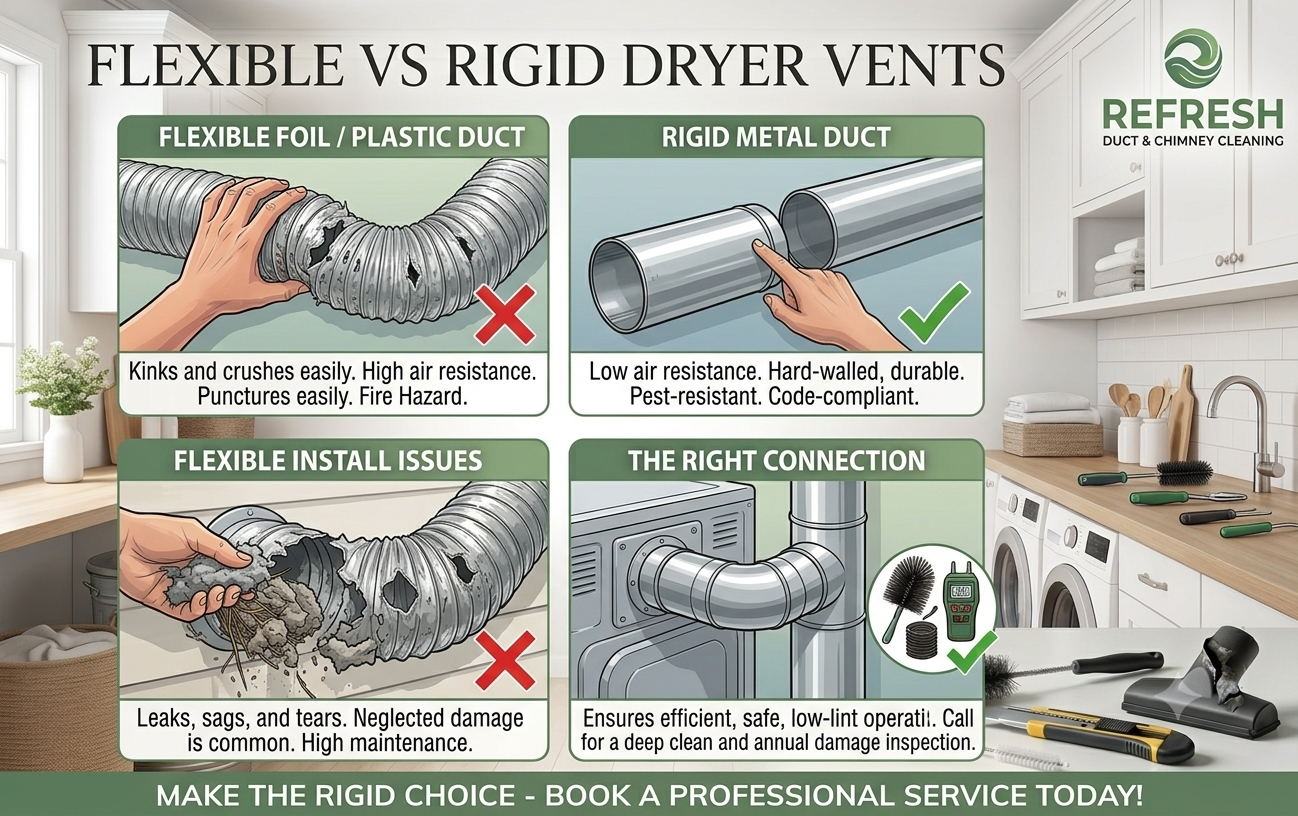
Advantages of Rigid Dryer Vents
- Rigid dryer vents offer several important advantages over flexible ones.
- Smooth metal surfaces resist lint adhesion and allow better airflow.
- They are much less likely to sag or create pockets where debris collects.
- Fire safety improves significantly because rigid metal does not burn easily.
- These vents last longer and require less frequent replacement.
- Rigid options maintain efficiency even in longer runs.
- Proper installation creates reliable performance for many years.
- Homeowners notice faster drying times and lower energy use with rigid systems.
- Overall durability makes them the preferred choice for most permanent setups.
Disadvantages of Flexible Dryer Vents
- Flexible dryer vents have noticeable disadvantages compared to rigid types.
- They trap lint more easily inside their ribbed surfaces and create restrictions.
- The material can kink, crush, or tear with movement over time.
- Fire hazards increase because plastic or foil versions burn more readily.
- Flexible vents often need replacement every few years.
- They reduce overall drying efficiency and increase energy consumption.
- Many building codes discourage long flexible runs for safety reasons.
- These drawbacks make flexible vents better for very short, temporary connections only.
- Understanding the limitations helps avoid future problems.
When to Choose Flexible vs Rigid
Deciding between flexible vs rigid dryer vents depends on your specific situation. Use short flexible sections only for the final connection to the dryer if needed. Choose rigid vents for the main duct run to ensure safety and performance. Consider available space and required duct length carefully. Rigid is almost always better for runs longer than a few feet.
Flexible may work in very tight spots but should be kept minimal. Professional advice helps when space limitations exist. Making the right choice from the beginning prevents many common vent problems. Proper selection balances convenience with long-term reliability.
Installation Differences
Installing rigid dryer vents requires more planning and straight routing. Measure carefully and use appropriate elbows for necessary turns. Secure all joints tightly with proper clamps. Flexible vents install more quickly but need support to prevent sagging. Avoid sharp bends in either type. Rigid installation takes more time but delivers better results.
Maintenance Requirements
Rigid dryer vents need less frequent deep cleaning due to smoother surfaces. Regular lint trap emptying remains important for both types. Flexible vents require more attention because they collect lint faster. Inspect flexible sections often for damage or kinks. Rigid systems benefit from occasional professional checks. Maintenance routines vary significantly between the two options. Consistent care extends the life of your chosen vent type.
Safety Considerations
Safety favors rigid dryer vents in most situations. Metal construction reduces fire risks compared to flexible materials. Proper rigid installation minimizes lint buildup that can ignite. Flexible vents can create dangerous restrictions if they collapse. Building codes often prefer rigid for longer runs. Both types need good outdoor termination but rigid performs more reliably. Safety should guide your final decision between flexible and rigid.
Cost Comparison
Initial costs for rigid dryer vents are often higher than flexible options. However, rigid vents last longer and need fewer replacements. Flexible vents seem cheaper upfront but may cost more over time due to repairs. Energy savings with rigid systems add up quickly. Factor in maintenance and replacement expenses when comparing. Long-term value usually favors rigid vents. Budget planning should consider total ownership costs.
Airflow Efficiency
Rigid dryer vents provide superior airflow efficiency compared to flexible ones. Smooth walls create less resistance and better exhaust. Flexible vents slow down air movement with their ridges and potential kinks. Better efficiency means shorter drying cycles and lower energy bills. Proper sizing matters for both types. Rigid options maintain performance better over years of use. Good airflow also reduces moisture problems inside the home.
Best Practices for Dryer Vent Selection
Best practices for choosing between flexible vs rigid dryer vents focus on safety first. Prioritize rigid metal ducts for the majority of the run. Use flexible only for short, accessible connections if absolutely necessary. Consult professionals for complicated installations. Follow local building codes and manufacturer recommendations.
Plan the shortest possible route with minimal bends. Quality materials and proper support ensure long-term success. Making informed choices prevents many common dryer vent problems. Good selection practices support efficient and safe operation.
| Feature | Flexible Dryer Vents | Rigid Dryer Vents | Winner | Key Considerations |
| Lint Collection | High (ribbed interior) | Low (smooth walls) | Rigid | Affects cleaning frequency |
| Fire Safety | Lower (flammable materials) | Higher (metal construction) | Rigid | Major safety factor |
| Durability | Lower (prone to damage) | High (lasts many years) | Rigid | Replacement frequency |
| Airflow Efficiency | Moderate to Poor | Excellent | Rigid | Impacts energy use |
| Installation Ease | Easier in tight spaces | Requires more planning | Flexible | Depends on space |
| Cost (Initial) | Lower | Higher | Flexible | Consider long-term costs |
| Maintenance Needs | Higher | Lower | Rigid | Time and effort |
| Code Compliance | Limited for long runs | Preferred in most cases | Rigid | Check local requirements |
Transitioning from Flexible to Rigid Vents
Transitioning from flexible to rigid dryer vents improves performance significantly. Plan the replacement during a deep cleaning session. Measure the existing path carefully before Dryer Vent Cleaning Los Angeles purchasing new materials. Remove old flexible sections completely.
Install rigid ducts with proper support and sealing. Test the system thoroughly after completion. The upgrade usually pays for itself through better efficiency and safety. Professional help makes the transition smoother for complex setups. Many homeowners report noticeable improvements after switching. Proper transition creates long-term benefits.
Common Mistakes to Avoid
Avoid using long flexible runs as permanent solutions. Do not crush or kink flexible vents during installation. Skip regular tape that dries out and fails. Never ignore building code recommendations for vent materials. Avoid sharp bends even with rigid ducts. Proper planning prevents these common errors. Learning from typical mistakes leads to better installations. Careful choices between flexible and rigid save future trouble.
Professional Installation Benefits
Professional installation ensures correct choice between flexible and rigid dryer vents. Experts understand code requirements and best practices. They can design optimal routing for your space. Proper sizing and material selection come with professional knowledge. Quality workmanship reduces future problems significantly. Professional service often includes testing and adjustments. The investment provides peace of mind and reliable performance.
Long-Term Performance Comparison
Long-term performance clearly favors rigid dryer vents in most homes. They maintain efficiency and require less maintenance over years. Flexible vents often need replacement and create ongoing issues. Performance differences become more obvious with heavy use. Rigid systems support better safety records and lower operating costs. Choosing rigid from the start or upgrading delivers lasting value. Monitoring performance helps confirm the benefits of your choice.
Upgrading Your Current System
Upgrading your current system from flexible to rigid is often worthwhile. Evaluate your existing setup for problem areas first. Replace flexible sections with rigid where possible. Improve overall routing during the upgrade. Add better termination hoods and clamps as needed. The upgrade process improves safety and efficiency together. Many people complete upgrades during regular maintenance. Results usually justify the effort involved.
Future Trends in Dryer Vent Materials
Future trends continue to favor safer, more efficient rigid-style materials. New coatings and designs improve performance further. Codes are becoming stricter about flexible vent usage. Homeowners benefit from ongoing innovations in vent technology. Staying informed helps with future replacements and upgrades. Modern options focus on both safety and convenience. Trends support better long-term choices between flexible and rigid.
Making the Right Choice for Your Home
- Making the right choice between flexible vs rigid dryer vents requires balancing your needs. Prioritize safety and efficiency for the best results.
- Consider your specific installation constraints carefully.
- Rigid vents are the better choice for most situations.
- Use flexible sparingly and only where necessary.
- Professional guidance helps when you feel unsure.
- Good decisions create reliable, safe, and efficient dryer operation.
- Take time to evaluate options thoroughly.
- The correct choice supports better performance for years to come.
- Regular care and timely upgrades keep the vent system working effectively.
- Choosing wisely protects your home and improves daily laundry routines.
- Both types have appropriate uses when applied correctly.
- Making informed choices about flexible vs rigid dryer vents leads to fewer problems and better overall satisfaction with your dryer setup.
Conclusion
Understanding flexible vs rigid dryer vents helps homeowners make better decisions for safety and efficiency. Rigid vents generally provide superior performance, durability, and fire safety compared to flexible options. While flexible vents offer installation convenience in tight spaces, their limitations make them less ideal for main duct runs. Proper selection, installation, and maintenance practices ensure optimal results regardless of the type chosen.
Investing in quality rigid systems usually saves time and money over the long term. Regular care and timely upgrades keep the vent system working effectively. Choosing wisely protects your home and improves daily laundry routines. Both types have appropriate Dryer Vent Cleaning Los Angeles
uses when applied correctly. Making informed choices about flexible vs rigid dryer vents leads to fewer problems and better overall satisfaction with your dryer setup.
FAQs
1. Which is better between flexible and rigid dryer vents?
Rigid dryer vents are generally better for safety, efficiency, and longevity. They reduce lint buildup and fire risks significantly. Flexible vents work only for very short connections. Most experts recommend rigid for the main duct system.
2. Can I use flexible dryer vents for the entire run?
It is not recommended to use flexible vents for long runs. They collect lint easily and can create restrictions or fire hazards. Short flexible sections near the dryer are acceptable. Rigid is much safer for longer distances.
3. How long do rigid dryer vents last?
Rigid metal dryer vents can last 10 to 20 years or more with proper maintenance. They resist damage better than flexible types. Regular cleaning extends their lifespan significantly. Quality installation also contributes to durability.
4. Are flexible dryer vents safe?
Flexible dryer vents are less safe than rigid ones, especially when used for long runs. They increase lint buildup and fire risks. Use them only for short, accessible connections. Regular inspection is essential if flexible vents are present.
5. What is the main difference in airflow?
Rigid vents provide smoother and more efficient airflow due to their straight, smooth walls. Flexible vents create more resistance with ridges and potential kinks. Better airflow means faster drying and lower energy use with rigid systems.
6. How difficult is it to install rigid dryer vents?
Rigid dryer vent installation requires more planning and measuring than flexible. It takes additional time but delivers better results. Following proper techniques and using correct fittings makes the process manageable. Professional help is useful for complex layouts.
7. Should I replace my flexible vents with rigid?
Yes, replacing flexible vents with rigid ones is often a good upgrade. It improves safety, efficiency, and reduces maintenance needs. The change usually pays for itself through better performance. Many homeowners notice immediate improvements.
8. What materials are used in rigid dryer vents?
Rigid dryer vents are typically made of galvanized steel or aluminum. These metals provide strength and fire resistance. Smooth interior surfaces help with airflow and cleaning. Avoid plastic or foil flexible types for main runs.
9. Do building codes prefer rigid or flexible vents?
Most building codes prefer or require rigid metal vents for dryer exhaust systems. Flexible vents are limited to short connections in many areas. Checking local requirements ensures proper and safe installation.
10. How often should I inspect my dryer vents?
Inspect dryer vents every six months regardless of type. Flexible vents need more frequent checks due to faster wear. Look for damage, lint buildup, and proper connections. Regular inspection prevents problems with both flexible and rigid systems.