
A dryer vent is an essential part of your laundry system that removes hot air, moisture, and lint from the machine. Over time, wear, blockages, or damage can affect its performance and safety. Recognizing early warning signs helps prevent bigger problems like reduced efficiency, higher energy bills, or even fire hazards. Many homeowners ignore small issues until the dryer stops working properly. Regular attention to these signs keeps your appliance running smoothly and protects your home.
Understanding what to look for empowers you to take action at the right time. Simple observations during daily use can reveal important clues about vent health. Addressing repairs promptly saves money and extends the life of your dryer. Staying informed about these signs promotes better household maintenance habits.
Signs You Need Dryer Vent Repair
Signs you need dryer vent repair appear in several noticeable ways during regular use. The dryer takes much longer to dry clothes than it used to, even on normal settings. You may feel excessive heat around the dryer or notice a burning smell during operation. Weak airflow from the outdoor vent cover is another clear indicator that repair is needed.
Lint buildup around the machine or on the floor nearby suggests vent problems. These signs should never be ignored as they point to restricted airflow or damage. Early repair prevents costly breakdowns and improves safety. Paying attention to performance changes helps you act quickly.
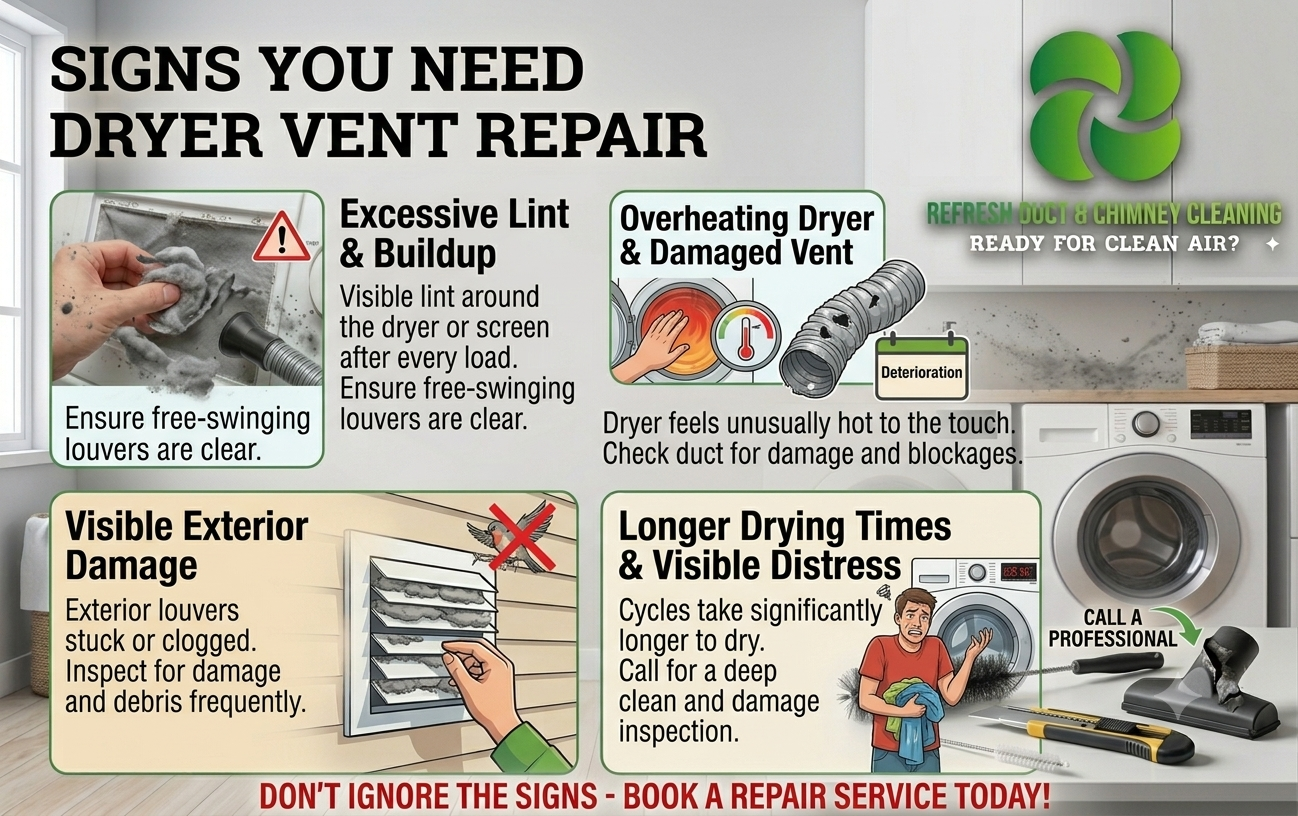
Common Signs of Dryer Vent Problems
- Many common signs indicate developing issues in the dryer vent system.
- Clothes coming out damp after full cycles show poor exhaust.
- The dryer may overheat and shut off automatically more often.
- Unusual noises like rattling or humming can come from blockages or loose parts.
- Visible lint escaping from connections or the vent hood points to leaks or clogs.
- Higher than normal energy bills often result from the machine working harder.
- These symptoms gradually worsen if left unaddressed.
- Recognizing them early allows for simpler fixes.
- Regular monitoring helps catch problems before they escalate.
- Use a flashlight to look inside accessible duct sections for heavy lint or obstructions.
- These simple checks provide valuable information about the vent condition.
- Document your findings to track changes over time.
- DIY inspections make it easier to decide when repairs are needed.
- Consistent self-checks support better overall maintenance.
Why Timely Repair Matters
Timely repair of dryer vent issues protects both your appliance and your home. Delayed action increases the risk of lint fires, which are a serious safety concern. A functioning vent removes moisture efficiently and prevents mold growth inside walls or the machine. Quick repairs maintain energy efficiency and keep drying times short. Ignoring signs leads to more expensive replacements later.
Proper maintenance routines combined with prompt repairs extend the overall lifespan of your dryer. Families benefit from reliable Dryer Vent Cleaning Los Angeles laundry performance and lower utility costs. Acting fast on warning signs creates long-term peace of mind and safety.
DIY Inspection Techniques
Learning basic DIY inspection techniques helps identify when professional repair is necessary. Start by unplugging the dryer and checking the lint trap for unusual buildup or damage. Pull the machine away from the wall to inspect the hose for cracks, kinks, or disconnections. Feel for strong airflow at the outdoor vent after a test cycle.
Use a flashlight to look inside accessible duct sections for heavy lint or obstructions. These simple checks provide valuable information about the vent condition. Document your findings to track changes over time. DIY inspections make it easier to decide when repairs are needed. Consistent self-checks support better overall maintenance.
Excessive Drying Time
One of the most obvious signs is when clothes take significantly longer to dry. This happens because restricted airflow forces the dryer to run extended cycles. Heavy lint or blockages reduce hot air escape and moisture removal. You may need to run multiple cycles for the same load.
Overheating and Automatic Shutoffs
Frequent overheating or sudden shutoffs signal serious vent problems that require repair. Blocked vents cause heat to build up inside the dryer instead of exiting properly. Safety sensors activate to prevent damage or fire. This symptom can damage heating elements over time if ignored.
Burning Smell or Unusual Odors
A burning smell during dryer operation is a critical warning that needs immediate attention. Lint accumulation near heating elements or in the vent can ignite or scorch. Musty odors may indicate trapped moisture from poor ventilation. These smells point to potential fire hazards or mold issues.
Weak or No Airflow at Outdoor Vent
Weak or absent airflow from the outdoor vent cover clearly shows blockage or damage. Hold your hand near the vent during a cycle to test exhaust strength. Little to no air movement means the system is not functioning correctly.
Visible Lint Accumulation
Excessive lint around the dryer, on floors, or near connections indicates leaks or vent failure. Lint escaping from joints suggests damaged ducts or poor seals. This buildup increases fire risk and spreads debris throughout the laundry area.
Higher Energy Bills
Unexpected increases in energy bills often trace back to dryer vent issues. The machine compensates for poor airflow by running longer and using more power. This hidden inefficiency adds up quickly over months.
Professional Repair Benefits
Professional repair offers several important advantages over DIY attempts alone. Trained technicians use specialized tools to access hard-to-reach areas safely. They can identify hidden damage that regular inspections might miss. Expert repairs ensure proper sealing and correct installation standards.
Professional service often includes comprehensive system checks and recommendations. This approach provides lasting solutions rather than temporary fixes. Many services offer warranties on their work for added confidence. Choosing professionals for complex issues saves time and prevents mistakes.
| Sign | Possible Cause | Urgency Level | Recommended Action | Expected Outcome After Repair | Prevention Tips |
| Longer Drying Times | Lint blockage or long duct | Medium | Clean vent and inspect hose | Normal cycle times restored | Empty lint trap every load |
| Overheating & Shutoffs | Severe restriction or damage | High | Professional diagnosis and repair | Safe, consistent operation | Avoid overloading dryer |
| Burning Smell | Lint near heat source | Very High | Immediate stop and expert repair | Eliminated fire risk | Regular deep cleaning |
| Weak Outdoor Airflow | Clogged vent or crushed hose | High | Clear blockage and replace parts | Strong exhaust restored | Check vent cover seasonally |
| Visible Lint Leaks | Damaged ducts or loose connections | Medium-High | Seal or replace affected sections | Cleaner laundry area | Use proper metal duct materials |
| Unusual Noises | Loose parts or heavy buildup | Medium | Inspection and tightening/repair | Quiet, smooth performance | Annual professional check |
| Musty Odors | Moisture trapped in system | Medium | Clean and improve ventilation | Fresh smelling operation | Use dryer balls for better airflow |
| Increased Energy Use | Poor overall airflow | Medium | Full system cleaning and repair | Lower utility bills | Maintain proper dryer settings |
Steps to Take After Noticing Signs
After noticing signs of dryer vent problems, take systematic steps toward repair. First, stop using the dryer to avoid risks. Perform basic cleaning of the lint Dryer Vent Cleaning Los Angeles trap and accessible hose sections. If issues persist, contact a qualified technician for thorough evaluation. Gather details about symptoms to share with the professional.
Consider upgrading materials during repair for better long-term performance. Follow all maintenance recommendations provided after the service. Document the repair for future reference. These steps ensure effective resolution and continued reliability.
When to Call a Professional
Call a professional when DIY cleaning does not resolve the symptoms. Complex installations or long duct runs often need expert tools and experience. Persistent signs after basic maintenance also warrant professional help. Safety concerns like burning smells require immediate expert attention.
Cost Factors for Dryer Vent Repair
Several factors influence the cost of dryer vent repair. The length and accessibility of the duct system play a major role. Extent of damage, such as crushed sections or extensive clogs, affects pricing. Labor rates and material upgrades add to the total.
Repair vs Replacement Decisions
Deciding between repair and full replacement depends on the age and condition of the vent system. Minor damage often responds well to targeted repairs. Severely deteriorated ducts may need complete replacement for safety and efficiency.
Safety Precautions During Repair
Safety precautions are essential when addressing dryer vent issues. Always unplug the dryer before any inspection or work. Work in well-ventilated areas and wear protective gear like masks and gloves. Avoid using the dryer until repairs are complete and tested.
Post-Repair Maintenance Tips
After repair, establish strong maintenance habits to prevent future problems. Clean the lint trap after every load without fail. Schedule regular professional inspections based on usage. Monitor performance closely for the first few weeks after service.
Common Repair Mistakes to Avoid
Avoid several common mistakes when handling dryer vent repair. Never use flexible plastic ducts as permanent solutions. Skipping full system inspection often leaves hidden problems unaddressed. Using improper sealing materials can create new leaks.
Long-Term Strategies for Dryer Vent Health
- Long-term strategies keep your dryer vent in excellent condition and reduce repair frequency.
- Develop a seasonal maintenance calendar that includes inspections and cleanings.
- Upgrade to high-quality components when repairs are needed.
- Educate family members about proper dryer use and basic care.
- Stay informed about new technologies and best practices in appliance maintenance.
- Combine DIY routines with occasional professional service for comprehensive care.
- These strategies promote reliability and efficiency over many years.
- Proactive planning minimizes unexpected problems and costs.
- Attempting complex repairs without proper tools or knowledge leads to incomplete fixes.
- Ignoring manufacturer specifications during reassembly causes performance issues.
- Learning from these mistakes ensures more successful outcomes.
- Careful planning prevents unnecessary repeat repairs.
Conclusion
Recognizing signs you need dryer vent repair is crucial for maintaining a safe and efficient laundry routine. Early detection through common symptoms like longer drying times or unusual smells allows for timely intervention. Addressing these issues promptly reduces safety risks, lowers energy costs, and extends the life of your dryer.
Both DIY inspections and professional repairs play important roles in keeping the system functioning well. Consistent maintenance habits prevent many problems from developing in the first place. Investing time in understanding and responding to warning signs pays off through better performance and peace of mind. A well-maintained dryer vent contributes to a safer home environment for your entire family.
FAQs
1. What is the most common sign that my dryer vent needs repair?
The most common sign is significantly longer drying times for normal loads. This indicates restricted airflow due to blockages or damage. Other symptoms may appear alongside it. Addressing this early prevents more serious complications from developing.
2. Is a burning smell from the dryer an emergency?
Yes, a burning smell requires immediate attention and stopping dryer use. It often signals lint near heating elements or severe blockages. Professional inspection is strongly recommended. Quick action helps prevent potential fire hazards.
3. How much does dryer vent repair typically cost?
Costs vary based on the extent of work needed and duct accessibility. Simple cleanings are usually more affordable while full replacements cost more. Getting multiple quotes helps determine fair pricing. Quality service provides better long-term value.
4. Can I repair the dryer vent myself?
Basic cleaning and minor fixes are possible with proper tools and knowledge. More complex issues like damaged ducts usually need professional help. Safety should always come first during any DIY attempts. Knowing your limits prevents incomplete repairs.
5. How often should I inspect my dryer vent?
Inspect the vent monthly for visible signs and perform thorough checks every six months. Heavy usage may require more frequent attention. Regular inspections help catch problems early. Combine visual checks with performance monitoring for best results.
6. What causes most dryer vent problems?
Lint buildup, crushed or damaged hoses, and poor installation are leading causes. Long ducts with many bends also contribute to issues. Regular maintenance reduces these risks significantly. Understanding causes helps with both prevention and repair.
7. Will repairing the vent lower my energy bills?
Yes, proper vent repair restores efficient airflow and reduces running times. This leads to noticeable savings on electricity over time. Combined with good habits, the benefits increase. Many homeowners see improvements after addressing vent problems.
8. Are there safety risks with a damaged dryer vent?
Yes, damaged vents increase fire risk and can cause carbon monoxide concerns in some cases. Poor ventilation also leads to moisture problems and mold. Timely repairs eliminate these hazards effectively. Safety is the primary reason for prompt action.
9. How long does professional dryer vent repair take?
Most standard repairs can be completed in a few hours. Complex jobs with full duct replacement may take longer. Scheduling in advance helps minimize inconvenience. Technicians work efficiently to restore your system quickly.
10. What maintenance should I do after vent repair?
After repair, clean the lint trap after every load and check the outdoor vent regularly. Follow any specific recommendations from the technician. Maintain good dryer habits to prevent recurrence. Periodic inspections help ensure lasting results.