
Maintaining your home appliances is the key to ensuring their longevity, efficiency, and safety over the years. Among these appliances, the clothes dryer is often overlooked until it starts underperforming or becomes a serious hazard. A dryer vent maintenance checklist serves as a comprehensive roadmap for homeowners to monitor, clean, and repair their ventilation systems regularly. Ignoring this simple task can lead to long drying times, high energy bills, and even dangerous house fires caused by trapped lint.
By understanding how to properly care for your dryer vent, you protect your investment and keep your household running smoothly without unnecessary interruptions. Taking just a few minutes every month to inspect the system can save you hundreds of dollars in professional repairs and utility costs while providing immense peace of mind.
Dryer Vent Maintenance Checklist
A comprehensive dryer vent maintenance checklist is designed to keep your laundry system operating at peak performance while eliminating hidden safety risks. Dryer Vent Cleaning Los Angeles When lint and debris accumulate inside the ductwork, they restrict airflow, forcing the machine to work twice as hard to dry a single load of clothes.
This increased strain not only wastes electricity but also causes critical internal components like the heating element and thermostat to wear out prematurely. By following a structured maintenance plan, you can easily identify warning signs such as unusually hot clothes, damp laundry after a full cycle, or a burning smell coming from the drum.
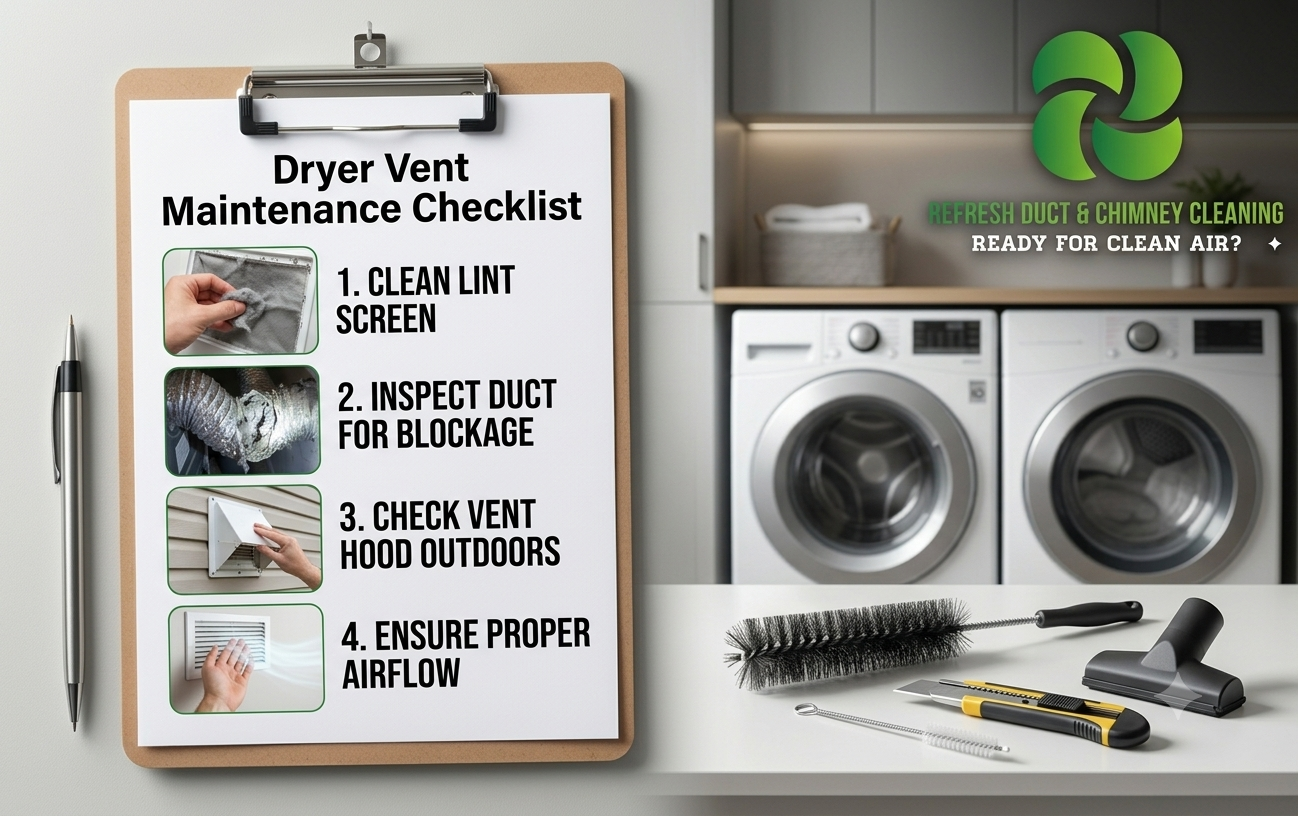
The Importance of Clear Airflow in Your Dryer System
Clear airflow is the lifeblood of any efficient clothes dryer, as the appliance relies on a continuous stream of moving air to carry moisture away. When hot, damp air cannot escape through the vent pipe, it remains trapped inside the drum, forcing the machine to repeatedly reheat the same wet air.
This restriction creates a highly inefficient cycle where clothes take multiple hours to dry completely, leading to immense frustration and skyrocketing electricity bills. Furthermore, the lack of ventilation causes excessive heat buildup inside the machine’s cabinet, which can melt internal wiring and create a severe fire hazard.
Common Signs That Your Dryer Vent Is Clogged
- Recognizing the early warning signs of a clogged dryer vent can prevent major appliance breakdowns and dangerous operating conditions in your household.
- One of the most obvious indicators is when a standard load of laundry requires two or three consecutive cycles to dry completely, even for lightweight fabrics.
- You might also notice that the outside of the dryer, the laundry room walls, or the clothes themselves feel exceptionally hot to the touch at the end of a cycle.
- Another clear red flag is the complete absence of air blowing out through the external exhaust hood while the machine is actively running.
- If you smell a musty or burning odor whenever you open the dryer door, it means trapped lint is overheating near the heating element.
- Paying close attention to these subtle changes in performance allows you to address blockages immediately before they turn into costly emergencies.
Safety Risks Associated with Neglected Dryer Vents
Neglecting your dryer ventilation system introduces significant safety hazards to your property that can easily be avoided with regular, proactive cleaning. The most alarming risk is a residential structure fire, as lint is a highly flammable material that can ignite instantly when exposed to excessive heat.
According to safety statistics, thousands of accidental fires are caused each year by blocked dryer ducts where heat buildup reaches dangerous flashpoints. Additionally, if you operate a gas-powered dryer, a restricted vent line can cause toxic carbon monoxide gas to back up into your living spaces instead of exhausting safely outdoors.
Inspect the Lint Trap Screen Before Every Load
Cleaning the lint screen before starting any laundry cycle is the easiest yet most critical habit for maintaining excellent airflow. A clogged screen restricts air right at the source, forcing lint deeper into the internal ductwork where it becomes much harder to clean later.
Clean the Lint Trap Housing with a Vacuum
Over time, a fine layer of dust and lint escapes the screen and accumulates inside the deep slot where the lint trap sits. Using a narrow vacuum attachment or a long, flexible brush once a month allows you to reach deep down into this housing cavity.
Check the External Vent Hood and Flap Outside
The external exit point of your dryer vent must be checked regularly to ensure that the exhaust flap can swing open and closed freely. If the flap gets stuck shut due to dirt or lint, the hot air will have absolutely no way to escape the system.
Wipe Down the Inside of the Dryer Drum
Residues from fabric softeners, dryer sheets, and wet clothes can create an invisible chemical film over the moisture sensors inside the drum. Wipe the interior surface with a microfiber cloth dipped in warm, soapy water every few weeks to keep these sensors working perfectly.
Verify the Condition of the Vent Hose Material
Inspect the flexible hose connecting the back of your dryer to the wall outlet to ensure it is not crushed, kinked, or punctured. Older foil or plastic hoses are highly susceptible to sagging and cracking, which creates dangerous air leaks and traps massive amounts of lint.
Test the Entire System for Proper Air Velocity
After performing your routine cleaning tasks, turn the dryer on a high heat cycle and walk outside to feel the exhaust vent. You should feel a strong, warm, and steady stream of air pushing through the exterior hood, accompanied by a pleasant laundry scent.
Essential Tools Required for DIY Vent Cleaning
Cleaning your dryer vent system requires a few specific, specialized tools to ensure the job is done thoroughly without damaging the delicate ductwork. A standard commercial dryer vent cleaning kit, which includes flexible, screw-together fiberglass rods and a stiff bristle brush attachment, is absolutely essential for long runs.
You will also need a powerful shop vacuum or a standard household vacuum with a long crevice tool to suck out loose debris. A screwdriver or nut driver is necessary to loosen the metal clamps that secure the flexible transitions to the wall and appliance ports.
Detailed Dryer Vent Maintenance Schedule and Tasks
| Maintenance Task | Recommended Frequency | Primary Tool Needed | Estimated Time | Expected Benefit | Danger of Skipping |
| Clean Lint Screen | Before every single load | Hands or soft brush | 30 seconds | Optimizes immediate airflow | Causes rapid lint buildup |
| Vacuum Screen Housing | Monthly | Crevice vacuum tool | 5 minutes | Prevents fan blockages | Restricts main air passage |
| Inspect Outside Flap | Every two months | Visual check / hands | 3 minutes | Keeps pests out of ducts | Traps damp air inside |
| Wipe Sensor Strips | Every three months | Soapy microfiber cloth | 5 minutes | Ensures accurate cycle timing | Overheats delicate fabrics |
| Deep Pipe Clean | Every six months | Flexible duct brush kit | 45 minutes | Removes heavy wall buildup | Extreme house fire risk |
| Check Hose Integrity | Annually | Flashlight and hands | 10 minutes | Catches cracks and leaks | Allows carbon monoxide leaks |
| Clear Exterior Hood | Bi-annually | Small hand brush | 7 minutes | Prevents backpressure issues | Blocks heat from escaping |
| Tighten Vent Clamps | Annually | Screwdriver or pliers | 4 minutes | Prevents disconnected pipes | Releases lint inside walls |
| Check Wall Alignment | Every two years | Visual inspection | 12 minutes | Eliminates sharp pipe bends | Crushes hose completely |
Step-by-Step Guide to Deep Cleaning Your Duct System
Deep cleaning your dryer duct system requires a careful, methodical approach to ensure that all hidden blockages are removed from start to finish. First, safely disconnect the appliance from its electrical outlet and shut off the gas valve if you are working with a gas model. Carefully pull the heavy machine away from the wall so you can comfortably access the flexible connection pipe located at the back.
Loosen the metal clamps holding the transition duct in place, slide it off, and vacuum both ends thoroughly to remove clumps. Next, insert the flexible Dryer Vent Cleaning Los Angeles
brush tool from your cleaning kit into the wall duct, rotating it slowly while pushing it deeper.
Unplug the Machine and Turn Off Utilities
Safety must always come first when working behind heavy household appliances that use high voltage electricity or natural gas lines. Unplug the power cord from the wall and secure it out of the way so you do not accidentally step on it.
Disconnect the Flexible Transition Duct from Wall
Carefully loosen the circular metal clamps or foil tape securing the flexible duct hose to the back of the machine and wall. Once released, slide the hose away and look inside both openings with a bright flashlight to inspect for large lint blocks.
Insert the Rotating Brush Into the Wall Duct
Attach the round, stiff-bristled brush head to the first section of your flexible fiberglass extension rods from your vent cleaning kit. Insert the brush into the wall opening and connect the opposite end of the rod to a standard power drill for rotation.
Add Extension Rods to Reach the Outside Exit
As you push the brush further into the wall, continuously screw on additional rod segments to extend your total reach through the pipe. Keep the drill spinning clockwise at all times so the threaded joints do not accidentally unscrew inside the dark wall cavity.
Clear Out the Exterior Exhaust Hood Opening
Walk outside to the exterior exit point and manually scoop away the massive piles of loose lint pushed out by the brush. Clean the individual louvers or the mesh screen of the hood, making sure there are no obstructions hindering the air path.
Reassemble All Connections and Conduct a Test
Carefully pull the long rods back out of the wall duct, vacuuming up the loose dust that falls out of the opening. Reattach the flexible transition hose to both the machine and the wall connector, tightening the metal clamps firmly with a screwdriver.
How Routine Maintenance Lowers Your Energy Bills
- Routine maintenance directly influences your monthly energy bills by keeping the dryer’s operating cycle as short, efficient, and streamlined as possible.
- When air moves freely through the exhaust pipe, moisture is quickly evaporated and extracted from the wet fabrics during the spinning motion.
- This optimal efficiency allows the machine to finish drying heavy items like towels and denim jeans in a single standard cycle.
- When the vent is choked with lint, the cycle duration doubles, causing the heavy electrical heating element to draw maximum power for hours.
- By keeping the pathway clear, you cut down on unnecessary machine run time, which dramatically reduces your household’s overall energy consumption.
- Over the course of a single year, these small energy savings accumulate into substantial cash savings, making maintenance a highly profitable habit.
Conclusion
In conclusion, implementing a consistent dryer vent maintenance checklist is an essential practice for every homeowner who values safety, efficiency, and appliance longevity. Taking care of your ventilation system prevents expensive mechanical breakdowns, lowers monthly utility expenses, and protects your household from the devastating threat of accidental fires.
The steps outlined in this guide are simple enough for anyone to perform with basic tools and a little bit of patience. By dedicating a small amount of time to monitoring airflow and clearing lint, you ensure your appliance serves your family reliably for many years. Do not wait for a complete system failure or a burning smell to remind you about this critical chore.
Frequently Asked Questions
How often should I clean my entire dryer vent line?
You should perform a comprehensive deep cleaning of your entire dryer vent line at least once or twice every year. However, if you have a large family and run multiple loads of laundry every single day, you might need to clean it every three to four months.
Can I use plastic flexible hoses to connect my dryer?
No, you should never use flexible plastic or vinyl hoses for your dryer ventilation because they are highly dangerous fire hazards. Plastic hoses melt quickly when exposed to high temperatures and their ribbed inner surfaces trap large pockets of flammable lint easily.
Why does my dryer feel incredibly hot on the outside?
Your dryer feels hot on the outside because the hot, humid air cannot escape through a clogged or restricted exhaust vent pipe. This blockage traps the thermal energy inside the metal cabinet, causing the exterior panels to overheat dangerously during a standard cycle.
What is the maximum allowed length for a dryer vent?
The maximum standard length for a clothes dryer vent line should not exceed thirty-five feet from the appliance to the exit. Every ninety-degree bend or turn you add to the pipe layout reduces this maximum allowable distance by five full feet.
How do I know if my exterior vent flap is working?
You can check your exterior vent flap by turning your dryer on an empty hot cycle and walking outside to inspect it. The flap should blow wide open under the pressure of the escaping air stream and close tightly when the machine turns off.
Is lint buildup the only thing that blocks a vent?
No, lint buildup is not the only thing that can obstruct your ventilation system over long periods of time. Bird nests, small rodents, spider webs, paper debris, and seasonal leaves often find their way inside open or broken exterior hoods.
Will a clogged vent cause my clothes to smell musty?
Yes, a clogged vent will trap heavy moisture inside the dryer drum, creating a humid environment where damp clothes sit for hours. This trapped moisture quickly leads to a stale, musty odor on your fabrics, even if you used fragrant detergents.
Can I clean my long dryer vent without buying a kit?
While you can vacuum the very ends of the pipe, cleaning a long internal wall duct thoroughly without a specialized rod kit is extremely difficult. The rotating brushes in standard kits are specifically engineered to scrape packed lint off the smooth metal walls without puncturing the pipe.
What happens if the moisture sensor strips get dirty?
When the internal moisture sensor strips get covered in chemical film from dryer sheets, they lose their ability to detect dry clothes. This causes automatic cycles to either shut off way too early, leaving clothes damp, or run indefinitely, wasting precious electricity.
Is professional dryer vent cleaning worth the expense?
Yes, hiring a professional technician is highly beneficial if your vent line runs through a complicated path inside your roof or concrete foundation. Professionals use industrial-strength high-pressure air vacuums and long camera scopes to guarantee every single pocket of lint is removed safely.