
Taking proper care of your household appliances is an essential part of keeping a residential property running safely, smoothly, and cost-effectively all year long. The clothes dryer is an incredibly convenient machine that most families rely on multiple times a week, yet its hidden exhaust pathway is frequently neglected.
Many homeowners do not realize that simple maintenance mistakes can lead to severe operational issues, high energy consumption, and major safety hazards inside their walls. Understanding common dryer vent cleaning Los Angeles maintenance mistakes is the first crucial step in preventing these unnecessary complications before they turn into expensive mechanical breakdowns.
Common Dryer Vent Maintenance Mistakes
Falling into standard traps while attempting to clean or repair your exhaust line can easily compromise the long-term safety and overall performance of your appliance. Many individuals accidentally commit common dryer vent maintenance mistakes because they rely on incorrect information, faulty tools, or dangerous materials during their DIY home projects.
These errors range from selecting non-compliant flexible plastic piping to pushing loose debris deeper into a wall channel instead of extracting it completely. When these hidden oversights occur, they create a false sense of security while the internal hazards steadily grow worse over time.
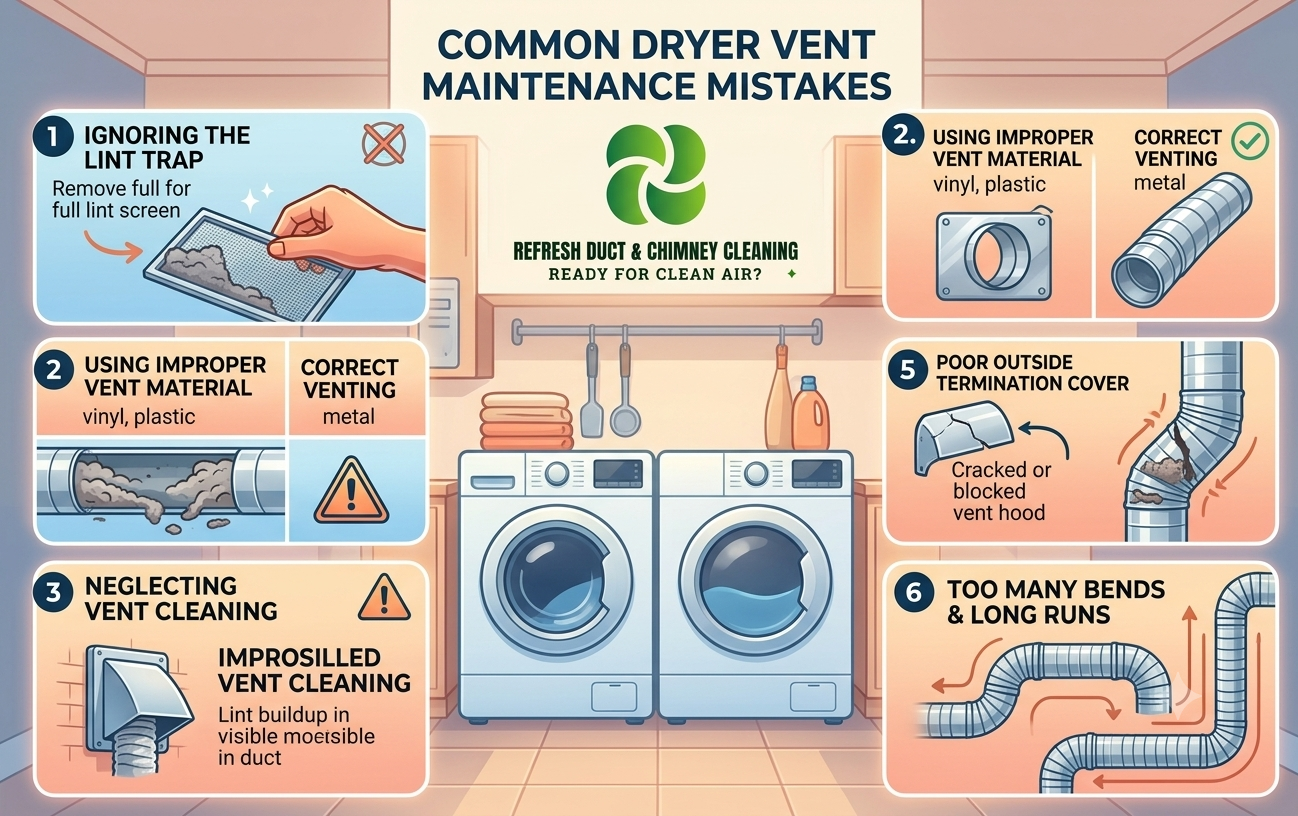
Using the Wrong Types of Duct Materials
One of the most dangerous errors a property owner can make is installing improper, non-compliant materials to guide hot exhaust air out of the building. Many people use flexible plastic, vinyl, or thin nylon foil transition hoses because they are cheap, highly pliable, and incredibly easy to squeeze into tight corners.
However, these materials are highly restrictive because their deep corrugated ridges trap loose fabric fibers like a net, causing blockages to form rapidly. More importantly, plastic and thin foil are highly combustible and will melt or ignite instantly if an internal lint fire breaks out.
Relying Solely on the Screen Filter
- A highly widespread misconception among homeowners is the belief that cleaning the removable mesh screen filter before every load is enough to protect the system.
- While clearing the slide-out mesh is incredibly important, it is definitely not a complete solution because fine particles consistently bypass this primary barrier over time.
- These minuscule fabric fibers travel deep into the internal blower wheel, the transition hose, and the long vertical or horizontal pipes inside your walls.
- Relying exclusively on the lint trap allows these hidden accumulations to build up quietly until the entire diameter of the pipe is completely choked.
- True maintenance requires a comprehensive approach that looks far beyond the surface filter to ensure the entire length of the pipe remains clear.
Neglecting the Outside Exhaust Cap Cover
Many individuals focus all their energy on cleaning behind the machine while completely ignoring the exterior termination hood located on the outer wall. The outside cap is a critical component that regulates airflow, but it is constantly exposed to harsh weather conditions, blowing dirt, and outdoor debris. Over time, heavy lint can collect on the swinging louvers or protective grids, gluing them firmly shut and blocking air from exiting.
Pushing Lint Deeper Instead of Removing It
Attempting to clear out a blocked pipe without using the proper tools or techniques often results in compacting the debris rather than extracting it. Many homeowners use makeshift items like stiff wire coat hangers, flexible plumbing snakes, or generic long sticks to poke around inside the ductwork. These items are completely ineffective because they simply slide through the loose dust or push the accumulation forward into a tight, solid plug.
Using Rigid Metal Screws
When joining sections of metal piping together during installation, many people mistakenly use standard pointed sheet metal screws to secure the interlocking seams. While screws create a firm physical connection, their sharp points protrude directly into the internal pathway where the hot air flows.
Leaving the Hose Kinked
When pushing a heavy laundry machine back into its designated spot against the wall, it is very easy to accidentally crush the flexible transition hose. A pinched, twisted, or severely kinked connector pipe immediately cuts off vital airflow, acting exactly like a dense, solid blockage of packed lint.
Using Standard Duct Tape
Securing exhaust joints with regular silver plastic duct tape is a classic mistake that can lead to early line failure and hidden air leaks. Standard duct tape is completely unsuited for this specific task because its synthetic rubber adhesive dries out, becomes brittle, and fails under continuous heat.
Forgetting the Internal Cabinet
Many homeowners completely clean the entire wall pipe line but totally forget that a massive amount of dust settles inside the actual dryer cabinet. Over several years of continuous operation, fine fibers escape the internal gaskets and collect around the electric motor, heating element, and wire bundles.
Ignoring Slow Drying Times
One of the worst mistakes you can make is ignoring the subtle warning signs your machine displays when the ventilation line begins to clog. When a standard load of light clothing or thick towels suddenly requires two or three full cycles to dry, a restriction is present.
Skipping Annual Deep Inspections
Skipping your scheduled annual deep inspection allows small, hidden issues to develop into massive, incredibly dangerous problems completely undetected by your family. Over a twelve-month period, pipes can sag, joints can separate inside walls, or small pests can build dense nests inside the channel.
Understanding the True Dangers of Deferred Maintenance
Delaying or ignoring your ventilation upkeep creates a highly dangerous environment that threatens both your property value and your physical safety. When hot, moisture-heavy air cannot escape your home, it creates a breeding ground for toxic black mold inside structural wall cavities.
This trapped moisture can also rot wooden support beams, warp drywall panels, and cause expensive structural damage that requires professional remediation. Furthermore, gas-powered appliances can leak deadly carbon monoxide into your living spaces if the exhaust line is blocked by a dense clog.
Comprehensive Troubleshooting Guide for Vent Mistakes
| Mistakes Made | Immediate Consequences | Long-Term Hazards | Corrective Action Required |
| Using plastic flexible hoses | Ribbed interior walls trap loose lint rapidly, reducing immediate airflow from the drum. | The plastic material can melt or ignite instantly if an internal appliance fire occurs. | Replace the hazardous plastic with code-compliant rigid aluminum or galvanized steel piping. |
| Joining pipes with sharp screws | The sharp pointed tips catch flying fabric fibers, creating a dense nest of debris. | A total blockage forms around the joint, causing extreme heat to back up into the room. | Remove all pointed screws immediately and secure the seams using high-quality aluminum foil tape. |
| Crushing the transition duct | Airflow is instantly cut off at the machine exit, causing internal temperatures to spike. | The electric motor overheats and burns out prematurely due to extreme physical backpressure. | Slide the machine out and adjust the pipe to ensure it follows a wide, smooth, unpinched path. |
| Using regular plastic duct tape | The adhesive dries out and cracks under heat, causing the pipe joints to separate completely. | Highly humid air and fine lint leak directly into walls, causing toxic black mold growth. | Scrape off the old residue and wrap all interlocking seams tightly with professional foil tape. |
| Neglecting the outside hood flap | Sticky debris glues the swinging louvers shut, completely blocking the main exit point. | Moisture backs up, ruining drywall and allowing outdoor pests to enter the open line. | Wash the exterior vent cover with warm soapy water and clear away nearby leaves or weeds. |
| Poking with wire clothes hangers | Loose lint is pushed forward into a tight, solid plug deep inside a hidden pipe bend. | The compacted obstruction becomes unremovable with standard tools, requiring pipe replacement. | Use a specialized rotating brush kit with flexible linkable rods to pull the debris out. |
Comparing Professional Cleaning to Inexperienced DIY Methods
While basic surface cleaning is easy to manage independently, attempting to clear complex line layouts without experience can lead to serious damage. Inexperienced homeowners often accidentally disconnect hidden pipe joints inside walls when they push brushes too forcefully through tight, twisting turns.
If a joint separates inside a ceiling or crawlspace, fixing it requires cutting through drywall and spending thousands of dollars on structural repairs. Professional technicians use specialized high-pressure air whips and vacuum systems that clean the entire line thoroughly without putting structural joints at risk.
Mismatching Pipe Diameters
When replacing damaged sections of your exhaust system, it is vital to ensure that all replacement pipes share the exact same diameter. Mismatching a four-inch connector with a three-inch wall pipe creates a restrictive lip that catches moving lint instantly during operation.
Running Vents Too Long
Building codes establish strict limits on the maximum allowable length for an appliance exhaust line to ensure proper air pressure is maintained. Running a line longer than thirty-five feet creates excessive resistance, causing air to slow down and heavy lint to drop before exiting.
Venting into Attic Spaces
An incredibly severe mistake made by uncertified builders is routing the exhaust line directly into an attic, garage, or crawlspace area. A dryer vent must always terminate entirely outside the building structure because it carries massive amounts of warm moisture and fine dust particles.
Ignoring Burning Smells
Never continue to operate your laundry machine if you detect a distinct, sharp burning odor filling your laundry room area. A burning smell is a clear indication that trapped lint has made direct contact with the internal heating elements or motor coils.
Allowing Lint to Accumulate
Allowing fine dust and loose clothing fibers to pile up around the floor space of your laundry room is a major safety oversight. The area surrounding the back panel of your machine should remain perfectly clean and free of loose debris at all times.
Trusting Cheap Plastic Hoods
Installing a cheap, flimsy plastic hood over your exterior exit point is a recipe for early structural failure and animal intrusion. Flimsy plastic covers degrade quickly when exposed to direct sunlight and freezing winter temperatures, becoming extremely brittle and cracking wide open.
The Ultimate Maintenance Routine for Long-Term Safety
- Establishing a structured, comprehensive care plan is the absolute best way to protect your property investment and ensure your family stays safe.
- By combining daily habits, like cleaning the filter screen, with annual deep cleanings, you completely eliminate the dangers of lint accumulation.
- Taking the time to use compliant materials, seal joints properly, and monitor machine performance prevents unexpected breakdowns and keeps operating costs low.
- Do not view appliance upkeep as an annoying chore; treat it as an essential piece of preventative home security.
- Staying disciplined with your maintenance routine guarantees that your appliance will perform safely and efficiently for many years to come.
Conclusion
Avoiding common dryer vent maintenance mistakes is an absolute necessity for any property owner looking to maintain a safe, highly efficient home environment. By taking the time to learn about compliant rigid metal materials, proper joint sealing, and correct cleaning techniques, you eliminate major risks.
The financial savings associated with lower monthly energy bills and extended appliance lifespans far outweigh the effort required to stay organized. Do not wait for a dangerous burning smell or an expensive mechanical breakdown to force you into taking action with your ventilation line.
FAQs
- Why is using flexible plastic or vinyl hoses considered a major mistake for dryer vents?
Flexible plastic and vinyl hoses feature deep interior ridges that easily catch and trap loose fabric fibers, causing blockages to form incredibly fast. Additionally, these materials are highly flammable and will melt or ignite instantly if an internal appliance fire breaks out inside the line. - Can I use standard silver duct tape to connect my exhaust pipe sections together securely?
No, using standard duct tape is a serious mistake because its adhesive dries out, cracks, and completely fails when exposed to continuous heat. You must always use professional high-temperature aluminum foil tape, which creates a permanent, airtight seal that can withstand extreme heat fluctuations. - What happens if I accidentally use pointed metal screws to attach my duct joints?
The sharp tips of sheet metal screws protrude directly into the internal pathway where the hot air and lint travel during a cycle. These sharp points act exactly like hooks, constantly catching fine fibers until a massive, dense nest of debris forms and completely chokes airflow. - How does a crushed or kinked transition hose impact the performance of my clothes dryer?
A crushed transition hose acts exactly like a dense, solid blockage, cutting off vital airflow and causing internal temperatures to spike dangerously. This extreme restriction places immense physical backpressure on the electric motor, causing it to overheat and burn out prematurely over time. - Why should an appliance ventilation line never terminate inside an attic or crawlspace?
Exhaust air carries massive amounts of extreme moisture and fine dust particles that must be guided completely outside the building structure. Venting into a closed attic space causes immediate condensation to form on wooden roof beams, leading to rapid wood rot and toxic mold growth. - What are the immediate visual signs that my outside vent cap cover is neglected?
A neglected outside cap will often feature sticky lint accumulation that glues the swinging louvers or exhaust flaps firmly in a closed position. You might also notice loose yard debris, dead leaves, or animal nesting materials piling up around the grid, blocking air exit paths. - How can a homeowners’ DIY cleaning method accidentally cause expensive structural wall damage?
Inexperienced homeowners often push cleaning brushes too forcefully through tight, twisting turns, causing hidden pipe joints to disconnect completely inside solid walls. If a joint separates inside a wall cavity, fixing it requires cutting through drywall, resulting in expensive repair bills. - Why is it a mistake to rely exclusively on the removable mesh lint screen filter?
While cleaning the screen filter is vital, fine fabric fibers consistently bypass this initial barrier and travel deep into the hidden pipe line. Over time, these escaping particles accumulate along the entire length of the internal ductwork, creating a severe fire hazard if ignored. - What should I do immediately if I notice a strong burning smell in my laundry room?
You must turn off the appliance immediately, disconnect the power cord from the wall outlet, and safely shut off the gas valve. A burning smell indicates that trapped lint is actively scorching against heating elements, requiring an immediate professional safety inspection before reuse. - How does avoiding standard maintenance mistakes directly help lower my monthly utility bills?
Avoiding mistakes keeps the ventilation line perfectly wide open, allowing the appliance to expel hot, moist air instantly during a normal cycle. This allows your clothes to dry much faster, drastically shortening the runtime of the machine and reducing electricity or gas use.