Keeping your home safe and efficient requires regular attention to the appliances you use every day, especially your clothes dryer. Many homeowners forget that a dryer needs proper airflow to function correctly, which is why a dryer vent maintenance checklist is incredibly helpful. Over time, lint and debris build up inside the ventilation pipes, creating serious hazards and reducing performance.
By following a structured dryer vent cleaning Los Angeles routine, you can prevent dangerous fires, lower your monthly energy bills, and extend the lifespan of your appliance. Taking the time to understand the basic care of your ventilation system ensures that your laundry routine remains smooth and trouble-free. It is a simple maintenance task that delivers lasting benefits for both your peace of mind and your wallet.
Dryer Vent Maintenance Checklist
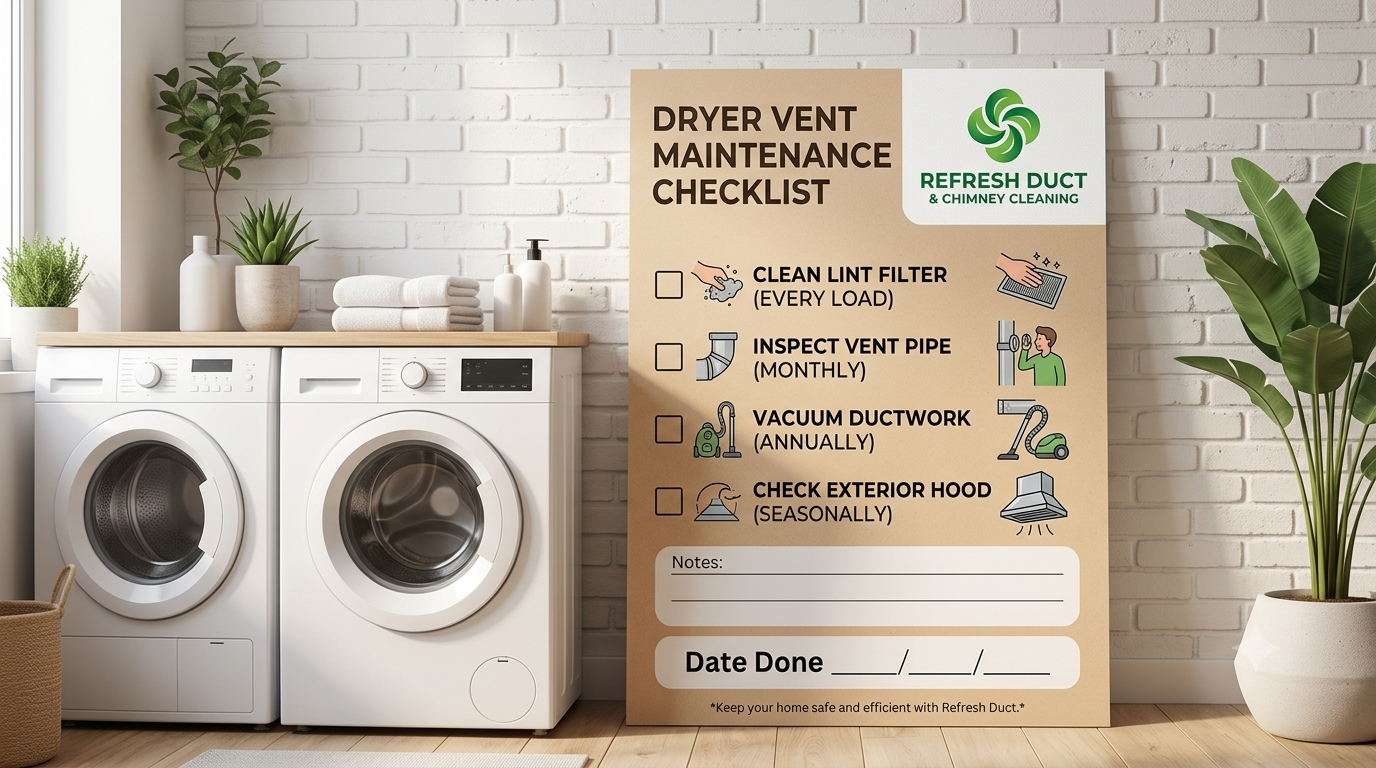
A comprehensive dryer vent maintenance checklist serves as your ultimate guide to keeping your laundry system running safely and efficiently all year long. This detailed list outlines every necessary step, from simple daily tasks to deeper cleanings that should be performed every few months.
By sticking to a strict schedule, you ensure that hidden lint accumulations are cleared away before they can choke the airflow or cause a dangerous fire. It helps you stay organized and guarantees that no part of the ventilation pathway is overlooked during your routine home inspections.
Why Regular Vent Cleaning Matters for Safety
Neglecting the ventilation system of your clothes dryer can lead to serious safety risks that threaten your entire living space. As highly flammable lint passes through the exhaust pipes, it easily sticks to the walls and forms thick, restrictive clogs over time.
Regular cleaning eliminates this fuel source entirely, keeping your home secure and your family protected from preventable disasters. Additionally, clear pipes prevent toxic carbon monoxide gas from backing up into your living areas if you use a gas-powered model.
Signs Your Ventilation System is Clogged
- It is crucial to recognize the warning signs that indicate your appliance is struggling with a blocked or heavily restricted exhaust pathway.
- The most common symptom is when clothes take two or three full cycles to dry completely instead of just one.
- You might also notice that the exterior of the machine feels unusually hot to the touch during operation, or a musty odor fills the room.
- Sometimes, the exhaust flap on the outside wall fails to open because there is not enough air pushing through it.
- Paying close attention to these indicators allows you to address the clog immediately before it causes total mechanical failure.
- Keep a trash can nearby to catch any loose debris that falls out during this step.
- Check the outside vent one last time to confirm a strong, warm stream of air is exiting.
Essential Tools for DIY Vent Cleaning
Before you begin cleaning out the debris, gathering the correct tools will make the job much faster and significantly more effective. A specialized vent cleaning brush kit, which includes flexible, linkable rods, is absolutely essential for reaching deep into long, twisting pipes.
A screwdriver or nut driver is usually required to loosen the clamps holding the ductwork to the back of the machine. Finally, wearing a dust mask and protective gloves will keep you comfortable and clean throughout the entire process.
Unplug the Appliance
Safety must always come first whenever you are inspecting or servicing any major household appliance. Before moving the machine or touching the back panels, completely disconnect the power cord from the wall outlet.
Disconnect the Duct
Carefully slide the appliance away from the wall so you have enough comfortable physical space to access the rear connections. Use your screwdriver to loosen the metal clamps or remove the heavy-duty tape securing the flexible duct to the exhaust port.
Vacuum the Port
Take your vacuum hose attachment and insert it directly into the exposed exhaust opening at the back of the dryer unit. Move the hose around gently to extract all the loose, packed lint that accumulates right at the fan housing exit.
Brush the Pipes
Attach the flexible rods to your specialized vent brush and carefully feed it into the wall duct opening with a steady motion. Spin the brush slowly, preferably using a power drill on a low setting, to scrape stubborn lint off the inner walls.
Check Outside Vent
Walk around to the exterior of your building to inspect the outside termination cap where the moist air finally exits. Ensure that the swinging flap or louvers move freely and are not jammed shut by dirt, nests, or lint buildup.
Reconnect and Test
Once all components are completely clean, carefully slide the ductwork back onto the machine’s exhaust port and tighten the metal clamps securely. Push the appliance back into its original position, making sure you do not pinch or kink the flexible tubing behind it.
How Often to Perform Maintenance
- The frequency of your cleaning routine depends largely on how often your household uses the laundry machine every single week.
- For an average family, conducting a thorough, deep cleaning of the entire exhaust system at least once a year is standard.
- However, if you have a large family that runs multiple loads every day, you should check it every six months.
- Ignoring this timeline allows lint to build up quietly, steadily reducing efficiency and increasing the risk of mechanical breakdown.
- Establishing a fixed schedule on your home calendar ensures you never forget this vital piece of property maintenance.
Detailed Maintenance Schedule and Tasks
| Maintenance Frequency | Target Component | Action Required | Expected Benefit |
| Every Single Load | Lint Screen | Pull out the mesh screen, scrape off all accumulated lint with fingers, and slide it back in. | Maintains immediate airflow and prevents loose fibers from entering the main wall ductwork. |
| Every Month | Screen Housing | Vacuum inside the deep slot where the lint filter sits using a narrow crevice attachment tool. | Removes hidden debris that bypasses the primary screen before it packs down tightly. |
| Every 6 Months | Rigid Wall Duct | Inspect accessible portions of the pipe for sagging, damage, visual blockages, or loose tape. | Prevents hidden air leaks and structural breakdowns inside walls or ceiling joists. |
| Every Year | Complete System | Use a brush kit to clean the entire pipe length from the machine to the exterior exit cap. | Eliminates the primary cause of household appliance fires and restores peak energy efficiency. |
| Every Year | Exterior Vent Cap | Wash the outside flap cover, clear away weeds or bird nests, and ensure it opens fully. | Prevents outside pests from entering the home and allows humid air to escape freely. |
| Every 2 Years | Internal Cabinets | Open the main dryer casing to vacuum lint away from the motor and internal heating elements. | Protects sensitive mechanical parts from burning and greatly extends total appliance lifespan. |
Choosing the Right Duct Materials
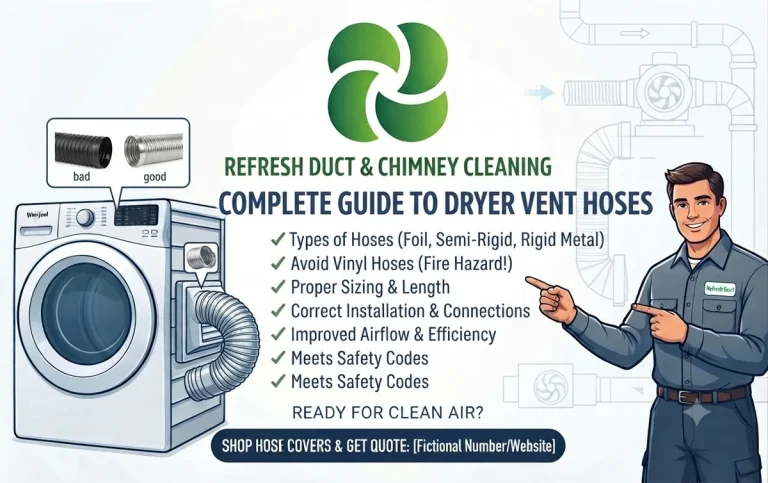
The type of material used for your exhaust pathway plays a massive role in both overall safety and efficiency. Rigid metal piping made of aluminum or galvanized steel is highly recommended because its smooth walls prevent lint from catching easily.
Plastic hoses are highly dangerous because they sag easily and can melt rapidly if an internal fire occurs. Upgrading your system to solid rigid metal pipes reduces friction, optimizes airflow, and keeps your home fully compliant with safety codes.
Inspect for Damage
Regularly check the entire visible length of your exhaust pipes for any physical signs of cracking, crushing, or splitting. Even a minor puncture in a flexible foil connector allows highly humid air and fine lint to leak directly into your walls.
Clear Surrounding Area
It is vital to keep the immediate floor space around your laundry appliances completely clean and free of clutter. Never store flammable cleaning chemicals, stacks of cardboard boxes, or piles of dirty laundry directly against your hot dryer.
Clean Lint Filter
The removable mesh lint filter inside your machine must be cleaned thoroughly before you start every single load of laundry. Pull the screen out entirely and scrape away the film of fibers that collected during the previous drying cycle.
Straighten the Hose
When pushing your appliance back against the wall, it is incredibly easy to accidentally crush or kink the flexible transition hose. A pinched hose acts exactly like a major clog, immediately cutting off vital airflow and causing heat to spike dangerously.
Check the Flap
Walk outside while the appliance is running to verify that the exhaust hood flap is opening wide and swinging easily. If the louvers stay closed during operation, it means air cannot escape or the hinges are jammed with sticky lint.
Watch for Pests
Outside ventilation openings are highly attractive to small birds, mice, and large insects looking for a warm place to build nests. If your exterior vent cap is missing its protective screen or has broken flaps, animals will quickly move inside the pipe.
Professional vs. DIY Cleaning Options
- Deciding whether to clean the ventilation pathway yourself or hire a trained professional depends on your skills and home layout.
- A straightforward, short exhaust run that exits directly through an adjacent exterior wall is incredibly easy for homeowners to clean independently.
- However, if your ductwork travels through deep crawlspaces, inside solid concrete walls, or up to a high roofline, professional help is recommended.
- Experts possess high-powered vacuum equipment and commercial motorized brushes that can clear complex, long systems thoroughly without causing structural damage.
- Balancing your personal capabilities against the difficulty of the layout ensures the job is done perfectly and safely.
- Breakdown to occur before taking action with your ventilation system.
Conclusion
Consistently following a dryer vent maintenance checklist is one of the simplest yet most impactful ways to protect your home and family. Taking responsibility for this straightforward appliance chore prevents devastating fires, keeps utility bills manageable, and ensures your clothes dry quickly.
Whether you tackle the process yourself using standard brush kits or hire a certified specialist, the rewards remain exactly the same. Do not wait for a major warning sign or a breakdown to occur before taking action with your ventilation system. Make appliance maintenance a permanent part of your household care routine, and you will enjoy a highly efficient, safe home for years to come.
FAQs
How do I know if my dryer vent needs immediate cleaning?
Your system needs immediate attention if your clothes take multiple cycles to dry completely or feel burning hot at the end of a cycle. You might also notice a burning smell while the machine runs, or see that the outside exhaust flap does not open at all.
Can a clogged dryer vent really cause a dangerous house fire?
Yes, built-up lint is highly flammable and can easily ignite if the internal temperature of the dryer spikes due to restricted airflow. Regular maintenance completely removes this fuel source, making it one of the most effective ways to prevent household appliance fires.
What is the best material to use for a dryer exhaust pipe?
Rigid aluminum or galvanized steel ductwork is the absolute best material because its smooth inner walls prevent lint from catching easily. Flexible foil or plastic hoses should be avoided inside walls because they sag, trap debris, and melt quickly during fires.
How often should a typical family clean their dryer vent system?
An average household should perform a comprehensive cleaning of the entire ventilation system at least once a year to ensure safety. If you have a large family and run multiple loads every day, you should inspect and clean it every six months.
Can I use a regular leaf blower to clean out the lint?
While some people attempt this, using a leaf blower is not recommended because the high pressure can easily pop hidden pipe joints apart inside your walls. A specialized flexible brush kit combined with a vacuum cleaner is much safer and far more effective.
Why is my clothes dryer getting extremely hot on the outside casing?
The exterior casing gets hot when trapped heat cannot escape through the ventilation pipe because a heavy lint clog is blocking the path. This indicates your appliance is overheating internally, which can quickly destroy sensitive electrical components and the motor.
Is it necessary to clean the lint screen before every single load?
Yes, cleaning the mesh screen before every load is vital because it maintains maximum airflow from the very start of the cycle. A clean screen prevents loose fabric fibers from bypassing the filter and building up inside the hard-to-reach wall pipes.
What should I do if a bird builds a nest inside my vent?
You must turn off the appliance immediately and carefully remove all nesting material using a long brush or hook tool before running it again. Once cleared, install an approved pest-proof exterior vent cap to prevent animals from entering the pipe in the future.
How much does it typically cost to hire a professional cleaner?
Hiring a professional generally costs between ninety and one hundred and eighty dollars, depending entirely on the overall length and complexity of your ductwork layout. It is a worthwhile investment for complex systems that travel through roofs or deep crawlspaces.
Does cleaning the ventilation system help reduce my monthly energy bills?
Yes, clearing away blockages allows the appliance to expel hot, moist air instantly, which drastically shortens the time needed to dry clothes. Shorter running cycles mean the machine consumes much less electricity or gas, lowering your monthly utility costs.