
A dryer is designed to dry clothes quickly and efficiently, but sometimes it takes much longer than expected. This problem can be frustrating because it wastes both time and energy. Many homeowners notice that clothes remain damp even after a full drying cycle. Several factors can affect dryer performance, including airflow issues, overloaded loads, and worn-out parts. Understanding these causes can help prevent unnecessary repairs and improve drying efficiency.
Regular maintenance also plays an important role in keeping the appliance working properly. By identifying the problem early, you can restore your dryer’s performance and reduce energy consumption by taking dryer vents cleaning Los Angeles. In some cases, faulty heating components may reduce the amount of heat produced. Identifying the exact cause is the first step toward solving the problem and improving dryer performance.
Why Is My Dryer Taking Too Long to Dry Clothes?
If your dryer is taking too long to dry clothes, there may be several reasons behind the issue. Poor airflow is one of the most common causes because hot air cannot circulate properly. A clogged lint filter or vent can restrict airflow and increase drying time. Overloading the dryer can also prevent clothes from tumbling freely. In some cases, faulty heating components may reduce the amount of heat produced.
Identifying the exact cause is the first step toward solving the problem and improving dryer performance. Several factors can affect dryer performance, including airflow issues, overloaded loads, and worn-out parts. Understanding these causes can help prevent unnecessary repairs and improve drying efficiency.
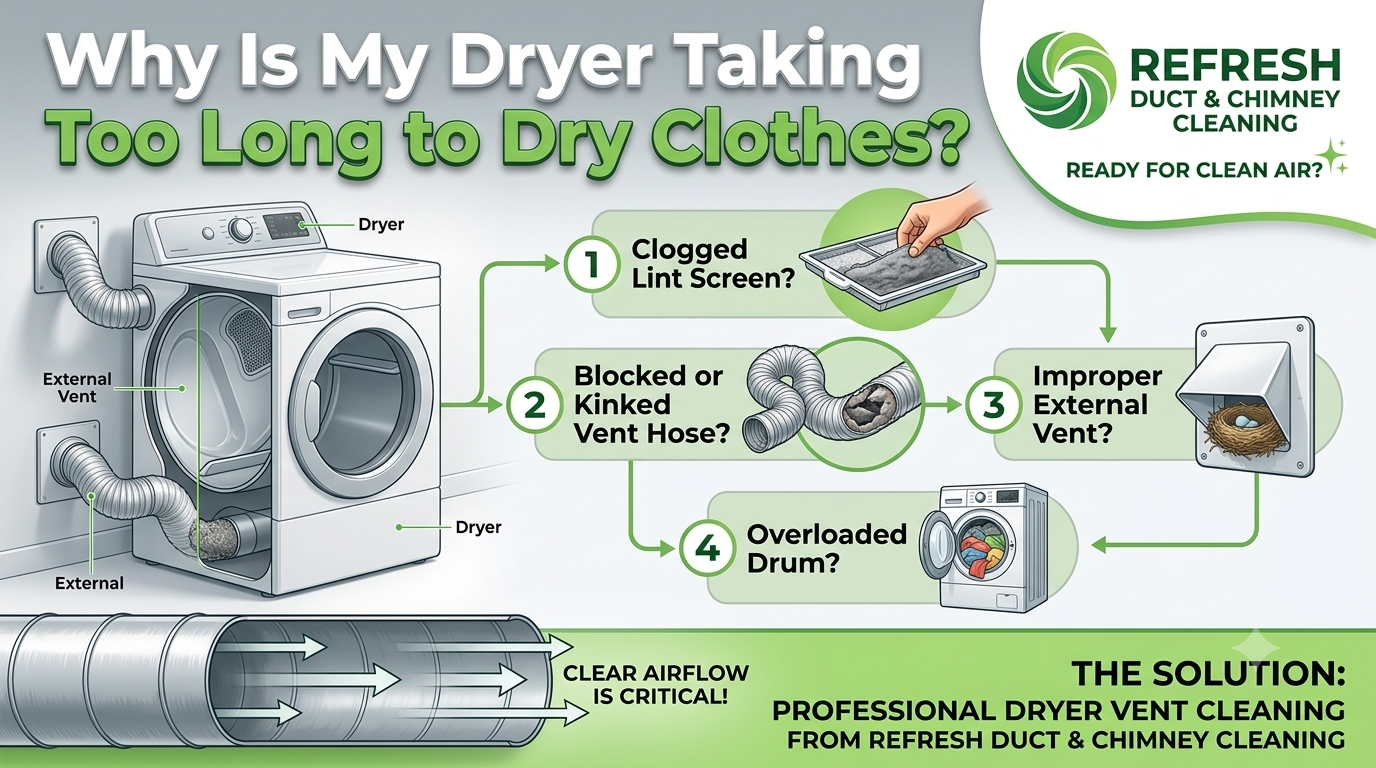
Common Reasons a Dryer Takes Too Long
- Many dryers experience longer drying cycles because of simple maintenance issues.
- A blocked vent system often traps moisture inside the dryer.
- Dirty filters can reduce airflow and force the appliance to work harder.
- Excessively wet clothes from the washing machine may also require longer drying times.
- Incorrect dryer settings can contribute to the problem as well.
- Checking these common causes can help restore normal drying performance.
- Several factors can affect dryer performance, including airflow issues, overloaded loads, and worn-out parts.
- Understanding these causes can help prevent unnecessary repairs and improve drying efficiency.
How Airflow Affects Dryer Performance
Proper airflow is essential for efficient drying. The dryer removes moisture by circulating hot air through the clothes. When airflow is restricted, moisture remains trapped inside the drum. Several factors can affect dryer performance, including airflow issues, overloaded loads, and worn-out parts.
Understanding these causes can help prevent unnecessary repairs and improve drying efficiency. This can significantly increase drying times and energy use. Blocked vents, crushed hoses, and dirty filters are common airflow problems. Regular cleaning helps maintain strong airflow and improves drying efficiency.
Signs Your Dryer Needs Maintenance
A dryer often shows warning signs before a major problem develops. Clothes may feel damp after a full cycle or require multiple cycles to dry completely. The appliance may become unusually hot during operation. Increased energy bills can also indicate reduced efficiency. Excess lint around the dryer area may suggest a ventilation issue. Performing regular maintenance can prevent these problems and extend the appliance’s lifespan.
Dirty Lint Filter
A dirty lint filter reduces airflow inside the dryer. This makes it harder for moisture to escape during the drying process. As a result, clothes take longer to dry completely. Cleaning the lint filter after every load helps maintain proper performance.
Blocked Dryer Vent
A blocked vent prevents moist air from leaving the dryer efficiently. This causes moisture to remain inside the drum for longer periods. Drying times increase, and the appliance may overheat. Regular vent inspections can prevent these issues.
Overloaded Dryer
Too many clothes inside the dryer restrict movement and airflow. Clothes cannot tumble properly when the drum is overcrowded. This leads to uneven drying and longer cycles. Smaller loads usually dry faster and more evenly.
Incorrect Dryer Settings
Using the wrong drying cycle can affect performance. Some settings use lower temperatures and require more time. Choosing the correct setting for fabric types improves efficiency. Always follow garment care instructions when selecting cycles.
Faulty Heating Element
The heating element produces the warmth needed for drying clothes. If it becomes damaged, the dryer may not generate enough heat. Clothes can remain damp even after a full cycle. Professional inspection may be required to confirm this issue.
Excess Moisture in Clothes
Clothes that come out of the washer extremely wet need more drying time. A washing machine with spinning issues may leave excess water in fabrics. This places extra work on the dryer. Ensuring proper washing machine performance can reduce drying times.
Ways to Improve Dryer Efficiency
- Improving dryer efficiency can reduce drying times and lower energy costs.
- Start by cleaning the lint filter after every load.
- Check the vent system regularly for blockages and buildup.
- Several factors can affect dryer performance, including airflow issues, overloaded loads, and worn-out parts.
- Understanding these causes can help prevent unnecessary repairs and improve drying efficiency.
- Avoid overloading the drum with too many clothes at once.
- Use appropriate drying settings based on fabric types. Routine maintenance helps ensure consistent performance and extends the life of the appliance.
- The heating element produces the warmth needed for drying clothes.
- If it becomes damaged, the dryer may not generate enough heat.
- Clothes can remain damp even after a full cycle. Professional inspection may be required to confirm this issue.
Dryer Problems and Solutions
| Problem | Possible Cause | Effect on Dryer | Recommended Solution |
| Clothes remain damp | Dirty lint filter | Reduced airflow | Clean filter after each load |
| Long drying cycles | Blocked vent | Moisture trapped inside | Clean vent system |
| Uneven drying | Overloaded drum | Poor air circulation | Reduce load size |
| Low heat output | Faulty heating element | Slower drying | Inspect heating system |
| High energy use | Restricted airflow | Longer operation time | Remove obstructions |
| Dryer overheating | Vent blockage | Safety concerns | Clean exhaust pathway |
| Excess lint buildup | Lack of maintenance | Reduced efficiency | Schedule regular cleaning |
| Wet clothes after washing | Washer spin issue | Increased drying time | Check washer performance |
| Dryer stops early | Sensor problems | Incomplete drying | Test moisture sensors |
| Bad odors | Moisture buildup | Poor drying quality | Improve ventilation |
| Multiple drying cycles needed | Airflow restriction | Wasted energy | Inspect vents and hoses |
| Drum not rotating properly | Mechanical issue | Poor drying results | Repair damaged parts |
| Clothes feel hot but wet | Vent obstruction | Moisture retention | Clear vent blockage |
| Increased utility bills | Inefficient operation | Higher costs | Perform maintenance |
| Slow drying of heavy fabrics | Overloaded machine | Reduced effectiveness | Dry smaller loads |
Preventing Future Dryer Drying Problems
Preventive maintenance is the best way to avoid dryer performance issues. Regular cleaning keeps airflow strong and efficient. Checking vents and hoses helps prevent blockages from developing. Avoid placing too many clothes into a single load. Monitor dryer performance and address unusual behavior quickly. Consistent care helps maintain reliable drying results.
The heating element produces the warmth needed for drying clothes. If it becomes damaged, the dryer may not generate enough heat. Clothes can remain damp even after a full cycle. Professional inspection may be required to confirm this issue.
Clean the Lint Filter Regularly
Cleaning the lint filter is one of the simplest maintenance tasks. It improves airflow and helps the dryer work efficiently. A clean filter can also reduce energy consumption. Make this a habit after every drying cycle.
Inspect the Vent System
The vent system should be checked regularly for lint buildup. Even small obstructions can reduce performance significantly. Proper ventilation allows moisture to escape effectively. Routine inspections help prevent future problems.
Avoid Overloading Loads
Smaller loads allow clothes to tumble freely and dry evenly. Overloading reduces airflow and increases drying time. Following recommended load sizes improves efficiency. It also helps protect clothing from excessive wear.
Use Proper Dryer Cycles
Different fabrics require different drying settings. Choosing the right cycle helps prevent over-drying or under-drying. Modern dryers often include specialized options for various materials. Using the correct setting improves overall results.
Check Dryer Components
Important components should be inspected periodically for signs of wear. Heating elements, sensors, and belts can affect performance. Early detection of problems helps avoid costly repairs. Professional inspections may be useful when issues persist.
Maintain the Washing Machine
- A washing machine plays a role in dryer performance as well.
- Clothes that leave the washer too wet take longer to dry.
- Ensuring proper spin cycles can reduce drying times.
- Maintaining both appliances leads to better overall efficiency.
- The heating element produces the warmth needed for drying clothes.
- If it becomes damaged, the dryer may not generate enough heat.
- Clothes can remain damp even after a full cycle.
- Professional inspection may be required to confirm this issue.
- Cleaning the lint filter and inspecting the vent system can significantly improve drying performance.
- Avoiding overloaded loads also helps clothes dry faster and more evenly.
- Addressing problems early can prevent expensive repairs and reduce energy costs.
- By following proper maintenance practices, homeowners can enjoy reliable dryer performance.
- Consistent care ensures clothes dry quickly, safely, and efficiently.
Conclusion
A dryer that takes too long to dry clothes can be caused by several factors, including poor airflow, blocked vents, dirty filters, and mechanical issues. Understanding these common causes makes troubleshooting easier and more effective. Regular maintenance is the key to keeping the appliance running efficiently. Cleaning the lint filter and inspecting the vent system can significantly improve drying performance.
Avoiding overloaded loads also helps clothes dry faster and more evenly. Addressing problems early can prevent expensive repairs and reduce energy costs. By following proper maintenance practices, homeowners can enjoy reliable dryer performance. Consistent care ensures clothes dry quickly, safely, and efficiently.
FAQs
1. Why is my dryer running but not drying clothes properly?
A dryer may run normally while failing to dry clothes due to airflow restrictions or heating problems. Dirty lint filters and blocked vents are common causes. These issues prevent moisture from escaping effectively. Regular maintenance often resolves the problem.
2. How often should I clean the lint filter?
The lint filter should be cleaned after every drying cycle. This helps maintain proper airflow and efficiency. A clean filter also reduces the risk of overheating. Consistent cleaning improves dryer performance.
3. Can overloading a dryer increase drying time?
Yes, overloading prevents clothes from tumbling freely inside the drum. Restricted movement reduces airflow and slows moisture removal. Smaller loads dry more evenly and quickly. Following recommended load limits is important.
4. What happens if the dryer vent is blocked?
A blocked vent traps moist air inside the dryer. This leads to longer drying times and reduced efficiency. In severe cases, overheating can occur. Regular vent cleaning helps prevent these issues.
5. Why are my clothes still damp after one cycle?
Damp clothes may result from poor airflow, low heat, or overloaded loads. Moisture cannot leave the dryer efficiently under these conditions. Checking filters and vents is a good starting point. Further inspection may be needed if the issue continues.
6. Does a faulty heating element affect drying performance?
Yes, the heating element generates the heat required for drying clothes. If it is damaged, the dryer may not reach the proper temperature. This causes longer drying cycles. Professional diagnosis may be necessary.
7. Can washing machine problems affect drying time?
A washing machine that leaves clothes excessively wet can increase drying time. Poor spinning performance is a common cause. The dryer must remove more moisture than normal. Maintaining the washer helps improve drying efficiency.
8. How can I improve dryer efficiency?
Cleaning the lint filter regularly is one of the best ways to improve efficiency. Checking vents and avoiding overloaded loads also helps. Using proper dryer settings can further reduce drying times. Routine maintenance is essential.
9. Is it normal for heavy fabrics to take longer to dry?
Yes, thicker fabrics naturally hold more moisture than lightweight materials. Towels, blankets, and similar items often require longer cycles. Proper load sizes can help improve drying results. Adequate airflow remains important.
10. When should I call a professional for dryer problems?
If basic maintenance does not solve the issue, professional assistance may be necessary. Persistent heating problems or mechanical failures require expert inspection. Early repairs can prevent larger issues from developing. Professional service helps maintain safe operation.