
A clothes dryer is an exceptionally convenient household appliance designed to make daily laundry chores fast, smooth, and highly efficient. However, experiencing a frustrating technical situation where your dryer keeps shutting off early can turn a simple chore into an annoying problem. In many cases, restricted airflow caused by lint buildup can be a contributing factor, making dryer vent cleaning Los Angeles an important part of maintaining reliable dryer performance and preventing unexpected shutdowns.
Many homeowners feel completely overwhelmed when this happens, assuming that their expensive appliance is entirely broken and needs a costly total replacement. By learning exactly what causes this system behavior, you can easily protect your laundry equipment from sustaining severe internal damage. Let us take a deep, comprehensive look into the root causes of why your dryer refuses to stay running for a full cycle.
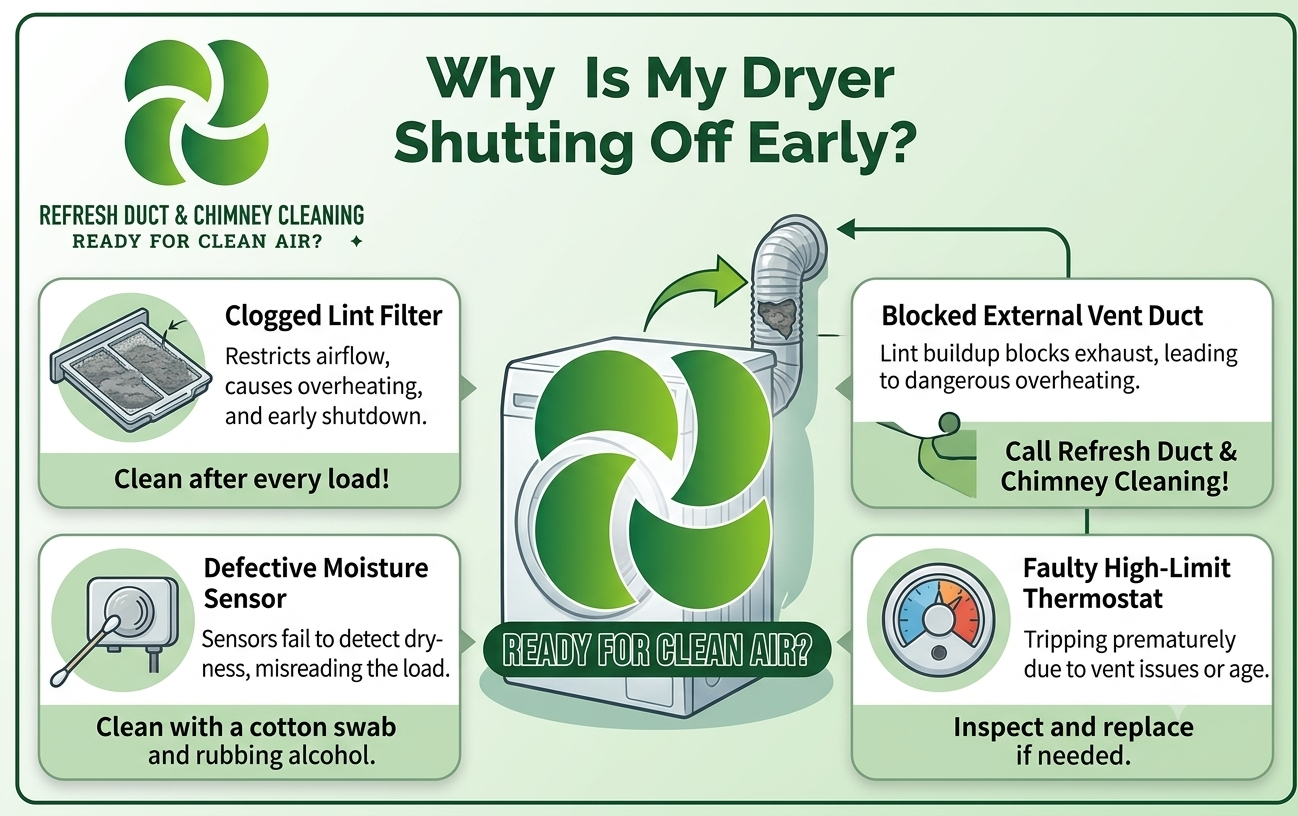
Why Is My Dryer Shutting Off Early?
When you analyze why your dryer is shutting off early, the issue is frequently linked to faulty moisture sensor bars. These small metal strips are located right inside the drum and work by measuring the electrical conductivity of wet clothes. As wet fabrics tumble and touch these sensors, they signal the main control board to keep the drying cycle running smoothly.
However, if these metal bars become heavily coated with an invisible layer of waxy residue from fabric sheets, they blind. The dryer falsely assumes that your clothes are completely dry within just a few minutes and shuts down the power prematurely.
The Dangerous Role of Internal Overheating and Clogged Vents
Another major reason your machine stops running unexpectedly is the activation of the internal high-limit safety thermal fuse component. Dryers generate a massive amount of heat, but they rely on a constant, unrestricted flow of moving air to stay cool. If your ventilation piping is tightly packed with thick lint, the extreme heat gets trapped inside the appliance cabinet.
When internal temperatures skyrocket past safe operational design limits, the thermal fuse instantly trips to cut off all electrical power. This emergency shutdown protocol is engineered directly into the system to prevent a catastrophic residential structural fire from occurring.
Faulty Door Latches and Broken Switch Mechanisms
The door switch mechanism is a critical safety feature that guarantees the dryer only operates when the door is completely closed. Over years of constant slamming and opening, the plastic latch can crack, wear down, or become physically misaligned from its slot.
The moment the switch loses contact, even for a split second, the machine instantly cuts power as a safety precaution. This leaves you with a dead machine and wet clothes, even though nobody actually touched the handle during operation.
Malfunctioning Main Electronic Control Boards and Timer Failures
The main electronic control board acts as the central digital brain of your modern laundry equipment, directing all cycle stages. Internal electrical power surges, heat stress, or aging circuit solder joints can cause this vital computer board to fail.
It might erratically cut power to the drive motor or the heating element midway through a perfectly normal cycle. Similarly, on older mechanical models, a broken timer motor can get stuck or skip forward rapidly without warning.
Glazed Over Moisture Sensor Strip Insulation
The small metal moisture strips inside the drum rely on direct contact with wet fabric to measure humidity levels. If you frequently use liquid fabric softeners, a clear chemical wax gradually builds up and coats these metallic surfaces completely.
Blown One-Time Thermal Safety Fuses
The thermal fuse is a small but incredibly vital safety sentinel mounted directly on the internal exhaust blower housing. If a severe airflow blockage causes the internal cabinet heat to spike dangerously, this fuse burns out to stop operation.
Overheated Drive Motor Mechanical Assemblies
The electric drive motor is responsible for spinning the heavy drum and turning the blower fan simultaneously for long periods. If the motor bearings become clogged with thick dust, the internal motor windings will experience extreme mechanical friction heat.
Defective Mechanical Cycle Control Timers
On traditional non-digital dryer models, a mechanical timer wheel uses a small internal motor to advance through the cycle. If the gears inside this timer box warp, break, or lose their teeth, the timer can advance improperly.
Broken Plastic Door Catch Assemblies
The mechanical door catch consists of a small metal or plastic prong that snaps tightly into a spring-loaded retaining clip. If this catch wears down, it loses its grip and cannot hold the heavy door tightly against the machine frame.
Damaged Internal Electrical Wiring Connections
The internal environment of a running dryer involves constant high-frequency physical vibrations combined with intense thermal heat cycling. Over time, the insulated electrical wires connecting the main power switch to the motor can rub against sharp metal edges.
How Improper User Loading Habits Trigger Early Shutdowns
- Sometimes, the reason your laundry appliance cuts out early has absolutely nothing to do with broken mechanical parts.
- Putting a single, extremely heavy wet item, like a massive denim jacket, into an otherwise empty drum causes issues.
- The single item fails to make regular, consistent physical contact with the fixed moisture sensor bars as it tumbles around.
- The machine searches for dampness, senses nothing but dry air for several consecutive minutes, and automatically initiates the shutdown sequence.
Comprehensive Dryer Premature Shutdown Diagnostics Matrix
The following broad informational matrix details various appliance components, their failure modes, safety risks, and the required solutions to keep your system running.
| System Component | Specific Failure Mechanism | Safety Risk Level | Direct Impact on Operation | Recommended Corrective Action |
| Moisture Sensors | Invisible accumulation of waxy fabric softener sheets residue. | Low Risk | Blinds the system sensors, causing the dryer to turn off while clothes stay wet. | Gently scrub the metal strips with a cloth dipped in rubbing alcohol. |
| Thermal Safety Fuse | Internal filament breaks due to extreme, unmanaged heat buildup inside cabinet. | Extreme Risk | Instantly cuts all electrical power to the system to prevent a severe house fire. | Clean out the entire exhaust vent pipe and replace the blown fuse. |
| Door Switch | Internal copper contacts wear out or plastic housing cracks apart. | Medium Risk | Machine stops running instantly whenever drum vibrations shake the door. | Unplug the dryer and install a brand-new matching door switch part. |
| Drive Motor | Bearings seize or internal windings overheat due to heavy dust accumulation. | High Risk | Shuts down mid-cycle due to thermal overload protection; smells like burning. | Clear away external dust or replace the motor if bearings are failing. |
| Control Board | Microprocessor chips burn out or relays fail from voltage line surges. | Medium Risk | Sends random, erratic shutdown signals to the motor during active cycles. | Remove the top console panel and replace the faulty electronic board. |
| Exhaust Vent | Thick layers of combustible lint block the exit path of moving air. | Extreme Risk | Traps extreme radiant heat inside, triggering emergency safety shutdowns. | Use a professional flexible brush kit to clear the wall pipe entirely. |
| Blower Wheel | Plastic hub strips out, preventing the wheel from spinning on the motor shaft. | High Risk | Air stops moving completely, leading to instant overheating and fuse failure. | Open the lower blower housing and replace the stripped plastic wheel. |
| Idler Pulley | Wheel loses lubrication, seizes up, and creates massive friction drag on belt. | Medium Risk | Strains the main drive motor, causing it to shut off from electrical overload. | Replace the noisy or seized idler pulley wheel and the drive belt. |
| Timer Assembly | Internal contact points burn out or plastic gears lose their teeth. | Low Risk | Skips directly to the end of the designated cycle without drying clothes. | Replace the complete mechanical timer control unit behind the console. |
Essential Diagnostic Tools for Troubleshooting Shutdowns
When your appliance repeatedly stops running before the clothes are dry, having a few basic diagnostic tools can save you time. An electrical multimeter is the single most important tool, allowing you to test internal switches, thermostats, and fuses for continuity.
You may also want a small flashlight to peer deep into the dark blower housings and check for hidden clogs. Using these basic diagnostic tools takes the guesswork out of appliance repair and allows you to locate faults accurately.
Utilizing Electrical Multimeters Safely
A digital multimeter allows you to check whether an electrical path is open or broken inside a specific component. By placing the test leads on a thermal fuse, you can instantly see if the part is functional or blown. This testing method prevents you from wasting money replacing perfectly healthy parts based on pure guesswork.
Removing Panel Screws Correctly
Most modern laundry appliances are held together by standard hex-head screws located along the rear or bottom seams. Using the proper size nut driver ensures you do not strip the heads while removing panels to access the motor. Keep all removed screws organized in a small bowl so you do not lose them during reassembly.
Inspecting with Flashlights
A bright flashlight helps you see deep inside the internal air ducts where lint and foreign objects love to hide. You can check if a loose coin or sock has bypassed the filter and jammed the moving blower fan blades. Visual inspections with a good light source often reveal obvious problems that testing tools might miss.
Cleaning with Soft Microfiber Cloths
When cleaning sensitive electronic control boards or moisture sensors, you should avoid using abrasive metal pads or harsh chemicals. A soft microfiber cloth paired with a bit of standard rubbing alcohol is perfect for dissolving tough waxy residue layers.
Inspecting the Belt Tension System
The idler pulley maintains constant tension on the long rubber drive belt that rotates the heavy metal clothing drum. If you remove the main cabinet cover, you can manually spin the drum to see if the pulley moves smoothly.
Checking Voltage Outlets Correctly
Sometimes the problem lies within the household wall outlet rather than the internal components of the drying appliance itself. A multimeter can be used to verify that the wall receptacle is delivering a steady flow of high-voltage power.
The Long-Term Operational Risks of Neglecting Early Shutdowns
- Allowing your laundry appliance to continue shutting off early without diagnosing the root cause can lead to severe mechanical issues.
- Constantly restarting a machine that is stopping due to thermal overload puts immense strain on the electric motor windings.
- This repetitive electrical stress will eventually burn out the motor entirely, turning a simple cleaning job into a costly repair.
- Furthermore, if the machine is stopping due to a heavily clogged vent, you are operating on the edge of a fire hazard.
Conclusion
In conclusion, a clothes dryer that keeps shutting off early is a clear indicator that something is wrong within the system. Whether the problem is a simple layer of residue on the sensors or a dangerous thermal fuse blowout, it requires attention.
Maintaining a clean ventilation system and adopting proper loading habits will prevent these frustrating interruptions from happening on laundry day. Ensuring your appliance can operate through its full cycle safely saves energy, protects your clothes, and gives you complete peace of mind.
FAQs
Q1: Why does my dryer turn off after only five minutes when the clothes are still wet?
This rapid shutdown is almost always caused by dirty or coated moisture sensor bars located inside the drum assembly. When these metal strips are coated with fabric softener wax, they cannot detect the actual moisture in your clothes. The machine thinks the clothes are dry and shuts off early; cleaning them fixes it.
Q2: What is a thermal fuse, and how does it cause my machine to stop running?
The thermal fuse is a critical safety device designed to cut off all electrical power if the dryer overheats dangerously. If a clogged vent traps hot air inside the cabinet, the fuse breaks the circuit to prevent a house fire. Once it blows, the machine will shut off early or refuse to start.
Q3: Can a broken door switch cause a running dryer to shut down randomly?
Yes, the door switch is a safety feature that instantly stops the machine if the door is opened during operation. If the switch is cracked or loose, the natural vibrations of the tumbling drum can cause it to lose connection. This intermittent electrical break forces the machine to stop early.
Q4: Why does my dryer motor shut off mid-cycle and then refuse to restart until it cools?
This behavior indicates that your drive motor is experiencing severe mechanical or electrical thermal overload during operation. When the motor bearings get old or clogged with dust, the motor runs extremely hot and trips an internal safety switch. The switch resets automatically once the motor cools back down.
Q5: How can a single heavy jacket cause my automatic dryer to shut down prematurely?
A single item cannot make consistent physical contact with the fixed moisture sensor bars as it tumbles inside the large drum. The control board senses only dry air for several minutes and automatically assumes the cycle is finished, shutting off early. Adding a few towels helps balance the load.
Q6: Does a clogged external vent line cause a dryer to shut off before clothes are dry?
Yes, a clogged vent pipe traps extreme ambient heat inside the machine, causing internal temperatures to skyrocket past safe limits. This thermal buildup triggers the high-limit safety thermostats or blows the thermal fuse, cutting power mid-cycle. Keeping the vent clear prevents these emergency safety stops.
Q7: Can a broken mechanical timer cause my dryer to cut out early?
Yes, on older appliance models, a mechanical timer uses small internal plastic gears to advance through the cycle options. If these gear teeth break or wear down, the timer can slip forward rapidly or drop directly into the off position. Replacing the timer assembly restores normal cycle lengths.
Q8: How do I safely clean the waxy chemical film off my internal moisture sensors? You can easily clean the sensors by unplugging the machine and locating the two metal strips near the lint filter housing. Take a soft microfiber cloth, dip it in standard household rubbing alcohol, and scrub the metal surfaces thoroughly. This removes the invisible fabric softener wax without scratching the sensors.
Q9: Why does a failing electronic control board cause random early cycle shutdowns? The main electronic control board acts as the digital brain of the appliance, processing all sensor data streams. If a resistor or relay on the board malfunctions, it can misinterpret healthy signals and cut power to the motor randomly. Replacing the faulty control board is necessary to stop this behavior.
Q10: What should I do if my dryer shuts off early and smells like something is burning? You must instantly unplug the machine from the electrical outlet and keep the door closed to prevent oxygen from entering. A burning smell indicates that accumulated lint is scorching or the motor is failing dangerously. Do not use the appliance again until a professional inspects it.