
A dryer naturally produces some lint during every drying cycle, but excessive lint can become a concern for many homeowners. Lint is made up of tiny fibers that separate from clothing, towels, and other fabrics during washing and drying. While a small amount of lint is normal, an unusually large buildup may indicate an underlying issue. Excess lint can affect dryer efficiency, increase drying times, and create maintenance challenges.
Understanding why a dryer produces more lint than usual can help prevent future problems. Several factors, including fabric type, dryer usage habits, and ventilation conditions, may contribute to increased lint production. Regular maintenance and proper laundry practices can reduce lint accumulation and improve dryer performance. Learning the causes and solutions can help keep your dryer operating efficiently and safely.
Why Is My Dryer Producing Excess Lint?
If you are asking, “Why Is My Dryer Producing Excess Lint?” There are several possible explanations. Excess lint often occurs when clothing fibers break down more quickly than normal. Certain fabrics naturally shed more fibers during drying cycles. Overloading the dryer can increase friction between garments, causing additional lint production.
Poor airflow and clogged vents may also contribute to the problem. In some cases, aging clothes and improper washing practices can increase the amount of lint collected by the dryer. When airflow becomes restricted, dryer vent cleaning Los Angeles helps remove built-up lint and debris that may be limiting your dryer’s performance. Identifying the exact cause is the first step toward reducing excess lint and keeping your appliance operating efficiently.
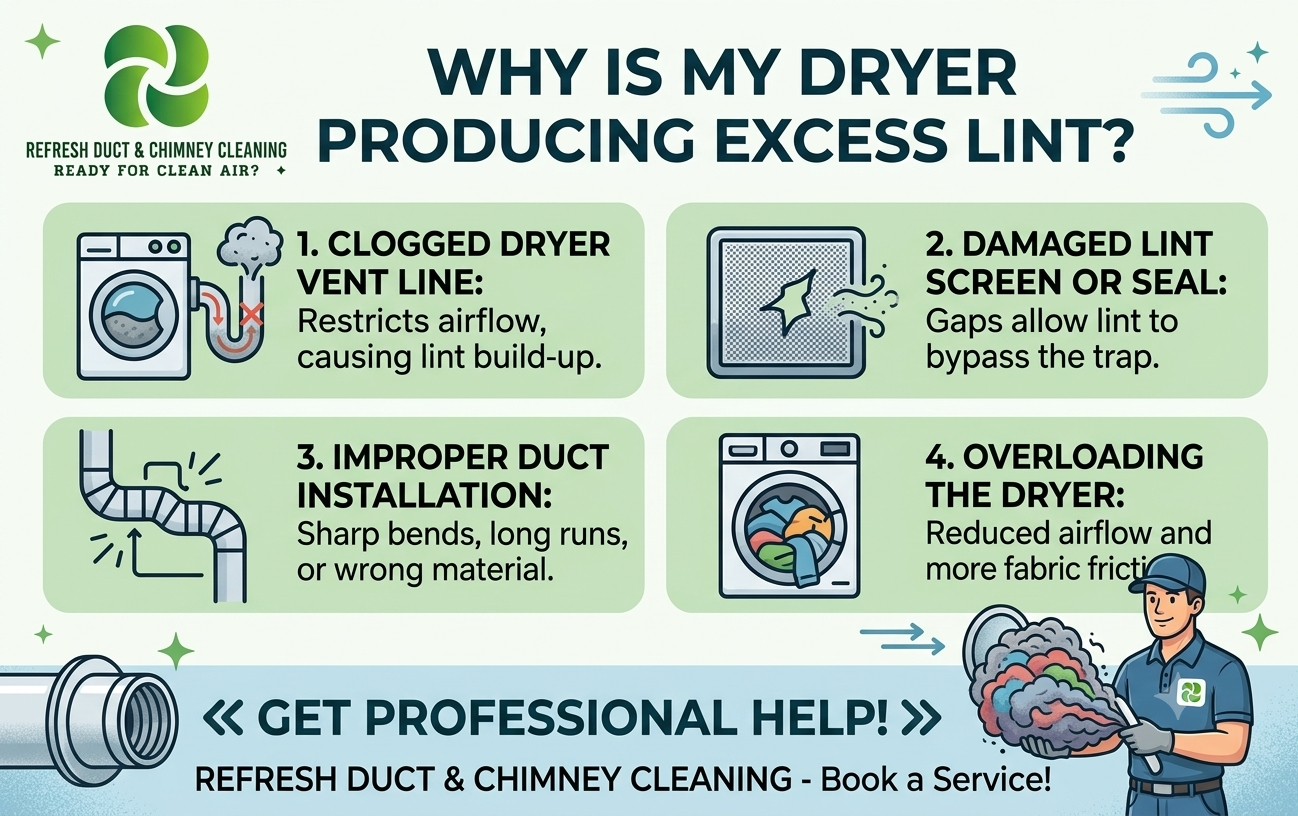
Common Causes of Excess Lint in a Dryer
- Many factors can lead to excessive lint production. Clothing made from cotton, fleece, and similar materials tends to release more fibers during drying.
- Overcrowding the dryer drum creates additional rubbing between fabrics.
- High heat settings may weaken fabric fibers and increase lint formation.
- A clogged lint filter can reduce airflow and make the dryer less efficient.
- Understanding these common causes helps homeowners take corrective action.
- Excess lint can affect dryer efficiency, increase drying times, and create maintenance challenges.
How Lint Is Created During the Drying Process
Lint is created when fabric fibers become detached from clothing and household textiles. During drying, garments tumble continuously inside the drum. This movement creates friction between fabrics and dryer surfaces. Tiny fibers loosen and separate from the material over time. The lint filter captures much of this debris before it enters the vent system. However, excessive fiber loss can result in larger-than-normal lint accumulation.
Signs Your Dryer Is Producing Too Much Lint
There are several signs that a dryer may be producing excess lint. The lint filter may fill up more quickly than usual after each cycle. Clothing may appear worn or thinner over time. Excess lint can affect dryer efficiency, increase drying times, and create maintenance challenges. Excess lint may collect around the dryer area or vent opening. Drying times may increase if airflow becomes restricted. Recognizing these warning signs can help prevent performance issues and excessive fabric wear.
Overloading the Dryer
When too many items are placed in the dryer, fabrics rub against each other more aggressively. This extra friction causes additional fibers to break away. As a result, more lint collects in the lint filter. Smaller loads help reduce unnecessary fabric wear.
High Heat Settings
Excessive heat can weaken fabric fibers during drying. Weakened fibers are more likely to separate from clothing. This increases lint production over time. Using appropriate temperature settings helps protect fabrics.
Aging Clothing Fabrics
Older clothing naturally sheds more fibers than newer garments. Repeated washing and drying gradually weaken fabric structure. As fibers break down, lint production increases. Delicate fabrics may be especially prone to shedding.
Clogged Dryer Vent
A restricted vent can reduce airflow inside the dryer. Poor airflow may cause clothes to tumble longer than necessary. Extended drying times increase friction and lint production. Regular vent maintenance helps improve efficiency.
Mixed Fabric Loads
Different fabric types behave differently during drying cycles. Rough fabrics can create friction against softer materials. This may increase fiber shedding and lint accumulation. Sorting laundry by fabric type can reduce lint production.
Poor Lint Filter Maintenance
A dirty lint filter reduces airflow and dryer performance. Restricted airflow may lead to longer drying times. Extended operation increases wear on clothing fibers. Cleaning the filter after every load helps minimize lint issues.
Effects of Excess Lint on Dryer Performance
- Excess lint can negatively affect both dryer performance and clothing quality.
- Large amounts of lint may restrict airflow and reduce drying efficiency.
- The dryer may require longer cycles to dry clothes completely.
- Excess lint can affect dryer efficiency, increase drying times, and create maintenance challenges.
- Increased operating times can lead to higher energy consumption.
- Excessive lint can also contribute to wear and tear on garments.
- Proper maintenance helps reduce these negative effects and supports efficient operation.
Common Lint Problems and Solutions
| Problem | Possible Cause | Impact on Dryer | Recommended Solution |
| Excess lint in filter | Fabric shedding | Frequent cleaning needed | Inspect clothing types |
| Longer drying times | Poor airflow | Reduced efficiency | Clean vent system |
| Lint around dryer | Vent leakage | Increased mess | Check vent connections |
| Worn clothing | Excess friction | Fabric damage | Reduce load size |
| High lint production | Overloading | More fiber breakdown | Dry smaller loads |
| Restricted airflow | Dirty filter | Longer cycles | Clean filter regularly |
| Excess lint in vent | Lack of maintenance | Reduced ventilation | Schedule vent cleaning |
| Clothing pilling | Fabric wear | Reduced garment quality | Use gentler settings |
| Increased energy use | Longer operation | Higher utility bills | Improve airflow |
| Excess lint on clothes | Mixed fabrics | Poor appearance | Separate laundry loads |
| Overheated dryer | Vent blockage | Component strain | Inspect ventilation |
| Reduced dryer efficiency | Airflow restriction | Poor performance | Remove obstructions |
| Frequent maintenance | Excess fiber shedding | More cleaning required | Monitor fabric condition |
| Dust accumulation | Escaped lint particles | Cleaner needed often | Improve vent sealing |
| Fabric thinning | Repeated wear | Shorter clothing lifespan | Use proper dryer settings |
How to Reduce Excess Lint Production
Reduced lint buildup supports better dryer performance and lower energy usage. Clothing experiences less wear when drying conditions are optimized. Regular maintenance also helps keep the vent system functioning effectively. Taking simple preventive steps can improve both appliance performance and fabric longevity.
A dirty lint filter reduces airflow and dryer performance. Restricted airflow may lead to longer drying times. Extended operation increases wear on clothing fibers. Cleaning the filter after every load helps minimize lint issues. Excess lint can affect dryer efficiency, increase drying times, and create maintenance challenges.
Clean the Lint Filter After Every Load
Cleaning the lint filter improves airflow and dryer efficiency. A clean filter captures fibers more effectively during drying. This reduces lint accumulation in other parts of the system. Consistent maintenance supports better performance.
Avoid Overloading the Dryer
Smaller loads allow clothes to move freely inside the drum. Reduced friction means fewer fibers break away during drying. Proper load sizes also improve airflow. This helps reduce overall lint production.
Sort Laundry by Fabric Type
Sorting fabrics before drying can minimize friction between garments. Similar materials interact more gently during tumbling. This helps reduce fiber shedding. Proper sorting also improves drying results.
Use Appropriate Heat Settings
Lower heat settings can help protect delicate fabrics. Excessive heat may weaken fibers and increase lint production. Choosing the correct setting extends fabric life. It also supports efficient drying.
Inspect and Clean Dryer Vents
Clean vents help maintain proper airflow throughout the system. Good airflow reduces drying times and fabric wear. Regular inspections prevent lint buildup inside the vent. This improves overall dryer performance.
Replace Worn Clothing When Necessary
Older fabrics naturally shed more fibers over time. Replacing heavily worn garments can reduce excess lint production. Newer fabrics often maintain their structure better. This results in less fiber loss during drying.
Benefits of Managing Dryer Lint Properly
- Managing dryer lint properly offers several advantages.
- Improved airflow helps clothes dry faster and more efficiently.
- Reduced lint buildup supports better dryer performance and lower energy usage.
- Excess lint can affect dryer efficiency, increase drying times, and create maintenance challenges.
- Clothing experiences less wear when drying conditions are optimized.
- Regular maintenance also helps keep the vent system functioning effectively.
- Taking simple preventive steps can improve both appliance performance and fabric longevity.
Conclusion
Excess lint in a dryer is often caused by normal fabric wear, but certain conditions can increase lint production significantly. Overloading the dryer, using high heat settings, and drying aging fabrics can all contribute to excessive lint accumulation. Poor airflow and clogged vents may worsen the problem by extending drying times and increasing friction between garments. Understanding these causes helps homeowners take effective steps to reduce lint.
Regular cleaning of the lint filter and vent system plays an important role in maintaining efficiency. Proper laundry practices can also help protect clothing from unnecessary wear. Excess lint can affect dryer efficiency, increase drying times, and create maintenance challenges. By managing lint buildup proactively, homeowners can improve dryer performance and extend the life of their garments. Consistent maintenance remains one of the most effective ways to control excess lint production.
FAQs
1. Is it normal for a dryer to produce lint?
Yes, some lint production is completely normal during the drying process. Lint consists of small fibers that separate from fabrics. Every drying cycle generates some amount of lint. Excess lint can affect dryer efficiency, increase drying times, and create maintenance challenges. The lint filter is designed to capture these fibers.
2. Why is my lint filter filling up so quickly?
A rapidly filling lint filter may indicate increased fabric shedding. Certain materials naturally release more fibers than others. Overloaded dryers can also contribute to excess lint. Excess lint can affect dryer efficiency, increase drying times, and create maintenance challenges. Checking laundry habits may help reduce the issue.
3. Can overloading a dryer create more lint?
Yes, overloading increases friction between clothing items. This additional rubbing causes more fibers to break away. As a result, more lint accumulates in the filter. Excess lint can affect dryer efficiency, increase drying times, and create maintenance challenges. Smaller loads help reduce fabric wear.
4. Do older clothes produce more lint?
Older garments often shed more fibers because their fabric structure weakens over time. Repeated washing and drying contribute to wear. Excess lint can affect dryer efficiency, increase drying times, and create maintenance challenges. This natural breakdown increases lint production. Replacing heavily worn items may help.
5. Does a clogged vent affect lint production?
A clogged vent can contribute indirectly by increasing drying times. Excess lint can affect dryer efficiency, increase drying times, and create maintenance challenges. Longer cycles expose fabrics to more friction and heat. This may result in greater fiber loss. Proper airflow helps reduce unnecessary wear.
6. Which fabrics produce the most lint?
Cotton, fleece, towels, and similar materials often produce more lint than synthetic fabrics. Excess lint can affect dryer efficiency, increase drying times, and create maintenance challenges. These fabrics contain fibers that separate more easily. The amount of lint may vary depending on fabric quality. Proper care can help reduce shedding.
7. How often should I clean the lint filter?
The lint filter should be cleaned after every drying cycle. This helps maintain airflow and efficiency. Excess lint can affect dryer efficiency, increase drying times, and create maintenance challenges. A clean filter captures fibers more effectively. Regular cleaning supports dryer performance.
8. Can high heat settings increase lint production?
Yes, excessive heat can weaken fabric fibers and make them more likely to separate. Excess lint can affect dryer efficiency, increase drying times, and create maintenance challenges. Over time, this results in additional lint accumulation. Using appropriate temperature settings helps protect clothing. Lower heat often reduces fabric stress.
9. Why is lint collecting around my dryer?
Lint around the dryer may indicate airflow issues or vent leaks. Escaped lint particles can settle near the appliance. Inspecting the vent system may help identify the cause. Excess lint can affect dryer efficiency, increase drying times, and create maintenance challenges. Proper maintenance reduces this problem.
10. What is the best way to reduce excess lint?
Regular maintenance and proper laundry habits are the most effective solutions. Excess lint can affect dryer efficiency, increase drying times, and create maintenance challenges. Clean the lint filter after every load and inspect the vent system regularly. Avoid overloading the dryer and sort fabrics appropriately.