
When you dry your clothes, tiny fibers detach from the fabrics due to the heat and the tumbling action inside the machine. While the lint trap catches a large portion of these fibers, it cannot stop everything from passing through. The remaining particles escape into the airflow and enter the exhaust system, where they gradually accumulate over time, making dryer vent cleaning Los Angeles an essential part of routine home maintenance. The internal fan immediately sucks these loose particles out of the drum to keep the air moving freely.
However, because the volume of shed material is so high, a percentage always bypasses the primary mesh screen and settles deep within the ductwork. This slow accumulation restricts the airflow and causes the appliance to work much harder to dry your clothes properly. Understanding how this process happens highlights the importance of regular dryer vent cleaning to maintain proper airflow, improve drying performance, and reduce potential safety risks. Regular awareness of this hidden buildup helps keep your appliance efficient and your laundry routine trouble-free for years.
How Lint Builds Up Inside Dryer Vents
The process begins every time wet clothes spin inside the heated drum, releasing microscopic fragments of cotton, polyester, and wool. These fragments travel with the warm, moist air into the ventilation tubes, where they begin to stick to the inner walls. Over several months, the thin layers of debris consolidate into thick, fuzzy barriers that severely restrict the path of escaping air. Because the exhaust air carries high humidity, the moisture mixes with the fibers, creating a sticky paste that adheres firmly to any surface.
This continuous cycle turns a clear exhaust pathway into a clogged channel that traps heat and moisture inside the machine. The internal fan immediately sucks these loose particles out of the drum to keep the air moving freely. However, because the volume of shed material is so high, a percentage always bypasses the primary mesh screen and settles deep within the ductwork.
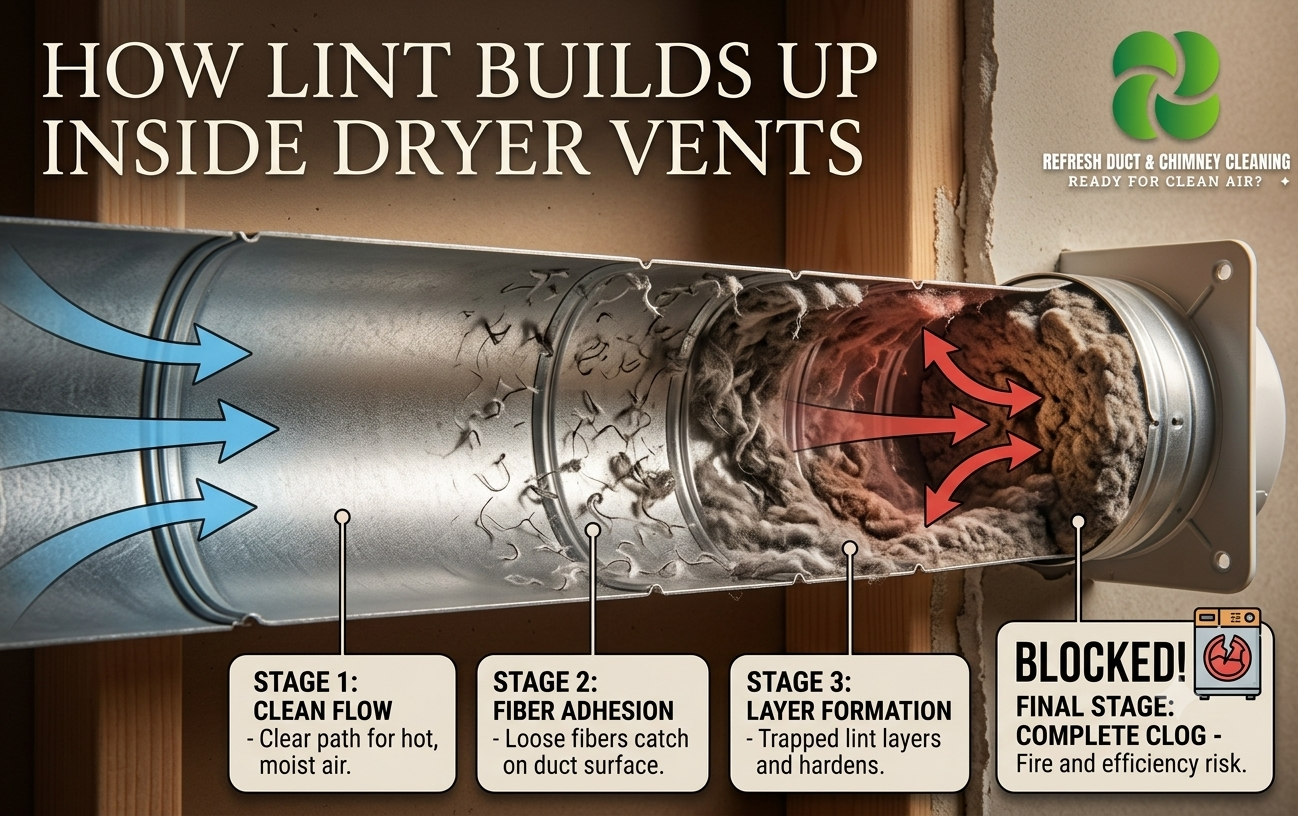
The Role of Moisture in Fiber Accumulation
- Moisture acts as the primary binding agent that transforms loose clothing fibers into a solid, stubborn blockage inside your ventilation system.
- As hot air leaves the appliance, it carries a heavy load of evaporated water from your wet garments.
- When this warm, damp air hits the cooler walls of the exhaust pipe, condensation forms instantly, creating a wet surface.
- The flying clothing fibers get trapped in this moisture, sticking to the walls like glue instead of exiting outside.
- As more cycles are run, new layers of dry fibers land on top of the wet ones, baking into a hard crust under the continuous heat.
- The internal fan immediately sucks these loose particles out of the drum to keep the air moving freely.
- However, because the volume of shed material is so high, a percentage always bypasses the primary mesh screen and settles deep within the ductwork.
Mechanical Friction and Fabric Shedding
Every fabric undergoes a significant amount of physical stress and mechanical friction as it tumbles inside the heavy metal drum. This constant rubbing action weakens the structural integrity of the threads, causing microscopic pieces to break away from your shirts, towels, and blankets.
Rough materials like denim and heavy fleece shed much larger quantities of these particles compared to delicate silks or synthetics. The internal fan immediately sucks these loose particles out of the drum to keep the air moving freely. However, because the volume of shed material is so high, a percentage always bypasses the primary mesh screen and settles deep within the ductwork.
Design Flaws and Vent Pipe Material
The specific material and physical layout of your exhaust system play a massive role in how quickly debris accumulates over time. Flexible foil or plastic hoses feature ribbed interior surfaces that create tiny pockets where loose clothing fibers easily catch and settle. Additionally, if the piping has long horizontal runs or multiple sharp turns, the air slows down significantly at every single bend.
When the velocity of the air drops, it loses the strength to push heavy, damp particles all the way outside. This causes the debris to drop out of the airflow and pile up at the bottom of the elbows and turns.
Rough Interior Ridges
Flexible foil and plastic ducts have ribbed interior walls that easily catch passing airborne debris. These ridges act like tiny speed bumps, disrupting the smooth flow of exhaust air and trapping small particles. Over time, the trapped particles create a foundation for more debris to collect, accelerating the clogging process significantly.
Long Exhaust Pathways
When the exhaust tubing has to travel a long distance to reach the outside wall, the airflow naturally loses its velocity. As the air slows down, it can no longer support the weight of the heavy, moisture-laden clothing fibers. Consequently, the debris falls out of the air stream and settles along the bottom of the pipe.
Excessive Elbow Bends
Every sharp turn or 90-degree elbow in the piping creates a major obstacle for the moving air and debris. The sudden change in direction forces the airborne fibers to collide directly with the back wall of the pipe. These impact points quickly become primary collection zones where thick blockages develop much faster than in straight sections.
Sagging Low Points
If the ventilation pipes are not supported properly, they can sag or dip over time, creating low pockets. These sagging areas collect condensed water, which mixes with passing clothing fibers to create a heavy, sludgy mess. This thick mixture rarely dries completely, forming a permanent restriction that reduces the overall diameter of the duct.
Restricted Exterior Hoods
The exit terminal on the outside wall often features a protective flap or a mesh grid to keep pests out. However, this narrow exit point can easily trap escaping fibers if it is not cleaned out on a regular basis. Once the exterior opening becomes restricted, the debris backs up rapidly through the entire length of the tube.
Crushed Vent Hoses
When a heavy laundry appliance is pushed too close to the back wall, it can easily crush or kink the flexible hose. This physical compression severely narrows the pathway, creating an immediate trap for any passing clothing fibers. The restriction stops the air from moving at high speed, causing a rapid backup right behind the machine.
The Consequences of Restricted Airflow
When the exhaust pathway becomes heavily restricted, the appliance loses its ability to expel heat and dampness efficiently from the drum. This forces the system to run much longer cycles, wasting valuable energy and putting immense strain on the internal motor. The trapped heat builds up to dangerous temperatures inside the cabinet, which can easily overheat delicate electrical components.
Furthermore, your clothes will come out feeling damp and smelling musty, requiring multiple cycles just to dry a standard load. Over time, this continuous strain dramatically shortens the lifespan of your appliance, leading to expensive repairs and high utility bills.
Maintenance and Prevention Comparison
| Maintenance Factor | Foil/Plastic Flexible Ducts | Rigid Metal Ducting | Exterior Vent Hoods | Internal Lint Screen |
| Buildup Rate | Extremely High | Very Low | Moderate | Continuous |
| Cleaning Frequency | Every 3 to 6 months | Once every year | Every 6 months | After every single load |
| Airflow Efficiency | Poor due to ridges | Excellent and smooth | Disrupted if blocked | Restrained if neglected |
| Durability Level | Easily crushed or torn | Highly durable and rigid | Exposed to weather | Fragile mesh material |
| Primary Debris Risk | Traps fibers in ridges | Collects debris at joints | Clogs up exit flaps | Lets fine dust pass through |
| Required Effort | Difficult to clean safely | Easy to brush clean | Simple manual clear | Instant manual clean |
Signs That Your Ventilation System Is Clogged
It is crucial to recognize the early warning signs that indicate your exhaust system is reaching a dangerous level of restriction. The most obvious indicator is when a standard load of laundry takes two or three full cycles to dry completely.
You might also notice that the exterior of the appliance feels unusually hot to the touch during operation. A musty odor arising from the laundry room or directly from the dried fabrics is another clear sign of trapped moisture. Lastly, if the exterior exhaust flap does not open fully when the machine is running, airflow is severely compromised.
Excessive Drying Times
When a standard load takes longer than forty-five minutes to dry, the exhaust system is likely restricted. The trapped moist air keeps circulating around the clothes instead of escaping, preventing them from drying efficiently.
Overheating Appliance Surfaces
If the top or sides of your machine feel hot to the touch, heat is not escaping properly. The blocked pipe forces the extreme thermal energy to back up into the cabinet, creating an operational hazard.
Musty Clothing Odors
Trapped humidity inside a clogged pipe creates a damp environment where stagnant odors develop rapidly during the cycle. This moisture settles back into the fabric fibers, leaving your clean clothes smelling stale and unwashed.
Closed Outside Flaps
The exterior wall cap flap should open wide whenever the machine is blowing out air during a cycle. If the flap barely moves or stays closed, the air pressure inside the pipe is too weak to push it open.
Visible Lint Accumulation
Seeing physical debris spilling out of the joints of the pipe or around the outdoor hood is a major warning sign. This means the system is completely full and has no more room to hold the traveling fibers.
Burning Smell Discovered
A burning odor during a cycle indicates that loose fibers have drifted onto the heating element inside the machine. This is a critical warning sign that requires you to stop using the appliance immediately until it is cleaned.
Long-Term Benefits of Regular Cleaning
- Clearing out the accumulated debris from your ventilation system on a regular schedule provides massive benefits for your home and appliances.
- It ensures that your machine operates at peak efficiency, which drastically lowers your monthly electricity and gas consumption bills.
- Your clothes dry much faster, preserving the quality of the fabrics by minimizing the time they spend tumbling in high heat.
- Regular maintenance also prevents unexpected mechanical breakdowns, saving you from costly emergency technician visits and parts replacements.
- Ultimately, keeping the air path clear provides peace of mind by ensuring a safe and highly efficient laundry environment.
Conclusion
Understanding how clothing fibers accumulate inside your exhaust system is the first step toward maintaining a safe and efficient home laundry setup. The combination of humidity, friction, and pipe layout creates a perfect environment for stubborn blockages to develop over time. By recognizing the early warning signs of restricted airflow, you can take action before your appliance suffers severe mechanical damage.
Regular inspection and routine cleaning of the entire duct network keep your machine running smoothly and spinning efficiently. Prioritizing this simple home maintenance task saves time, reduces energy expenses, and ensures long-term operational safety for your household. The internal fan immediately sucks these loose particles out of the drum to keep the air moving freely. However, because the volume of shed material is so high, a percentage always bypasses the primary mesh screen and settles deep within the ductwork.
FAQs
- How often should I clean my exhaust pipe?
You should clean the entire length of the exhaust pipe at least once every year to maintain proper performance. Households that do laundry multiple times a day may need to clean the system every six months to prevent thick buildup. Regular checks ensure that the air moves freely without forcing the motor to overwork itself during normal operation.
- Why does debris bypass the mesh screen?
The internal screen is designed with tiny holes to maximize airflow while catching as many large fabric fibers as possible. However, microscopic fibers are small enough to pass right through the mesh openings along with the fast-moving exhaust air stream. Once these tiny particles enter the main pipe, they combine with moisture and settle on the inner walls.
- Can flexible plastic hoses cause faster blockages?
Yes, flexible plastic hoses cause debris to accumulate much faster than smooth, rigid metal pipes due to their design. The corrugated ridges on the inside of plastic hoses trap fine fibers easily and slow down the passing air speed. Furthermore, plastic hoses are highly susceptible to sagging and kinking, which creates immediate restriction points.
- What happens if the airflow is completely blocked?
When the airflow is completely blocked, the appliance will fail to dry clothes and will overheat very quickly. The internal thermal fuse may trip, cutting off power to the heating element to protect the system from melting. This severe restriction creates a major safety hazard and can cause permanent damage to the motor.
- How do I know if my pipe is clogged?
The most common sign is that your clothes take multiple cycles to dry completely and feel unusually hot. You might also notice a burning smell, a musty odor, or observe that the outdoor exhaust flap remains closed during operation. Visible debris collecting around the edges of the dryer connection is another clear indicator of a clog.
- Does fabric softener affect fiber accumulation?
Fabric softeners and dryer sheets leave a thin, invisible chemical residue on the fabrics and inside the exhaust system. This residue makes the inner walls of the ventilation pipe sticky, causing airborne fibers to adhere more easily. Over time, this sticky film accelerates the formation of thick, stubborn blockages within the ductwork.
- Is it safe to clean the system yourself?
You can clean the ventilation system yourself using specialized brush kits designed to navigate the twists and turns of the pipe. However, if the piping runs deep inside walls or through the roof, hiring a professional technician is highly recommended. Professionals have the tools to clear long runs without disconnecting or damaging the joints.
- What is the best material for an exhaust duct?
Rigid aluminum or galvanized steel ducting is the best material for safety and high airflow efficiency. The perfectly smooth interior walls offer nowhere for traveling clothing fibers to catch, reducing the rate of accumulation significantly. Rigid metal pipes also withstand high heat without collapsing, sagging, or posing a fire hazard.
- Can a blocked vent damage the appliance?
Yes, a blocked pathway forces the motor to work against heavy backpressure, which can cause it to overheat and fail prematurely. The heating elements must stay on much longer to dry the clothes, which shortens their operational lifespan significantly. This added strain leads to frequent component breakdowns and expensive repair costs.
- Why does moisture collect inside the duct?
The exhaust air is filled with water vapor extracted from your wet clothing during the heated drying process. When this warm, wet air travels through cooler pipes, it cools down and condenses back into liquid water droplets. This wet surface acts like a magnet, catching passing fibers and forming a thick sludge.