
Maintaining a safe and efficient chimney is often overlooked in many households, but the risks of neglecting it can be severe. One of the most common yet dangerous issues homeowners face is creosote buildup, a byproduct of burning wood in fireplaces or stoves. This sticky, flammable substance accumulates inside chimneys over time, posing serious fire hazards if not regularly addressed.
Understanding the dangers of creosote buildup is essential not only for protecting your home but also for safeguarding your family. Many homeowners underestimate how quickly creosote can accumulate, especially in frequently used fireplaces. Recognizing the warning signs and taking preventative measures is critical to ensuring long-term safety and efficiency.
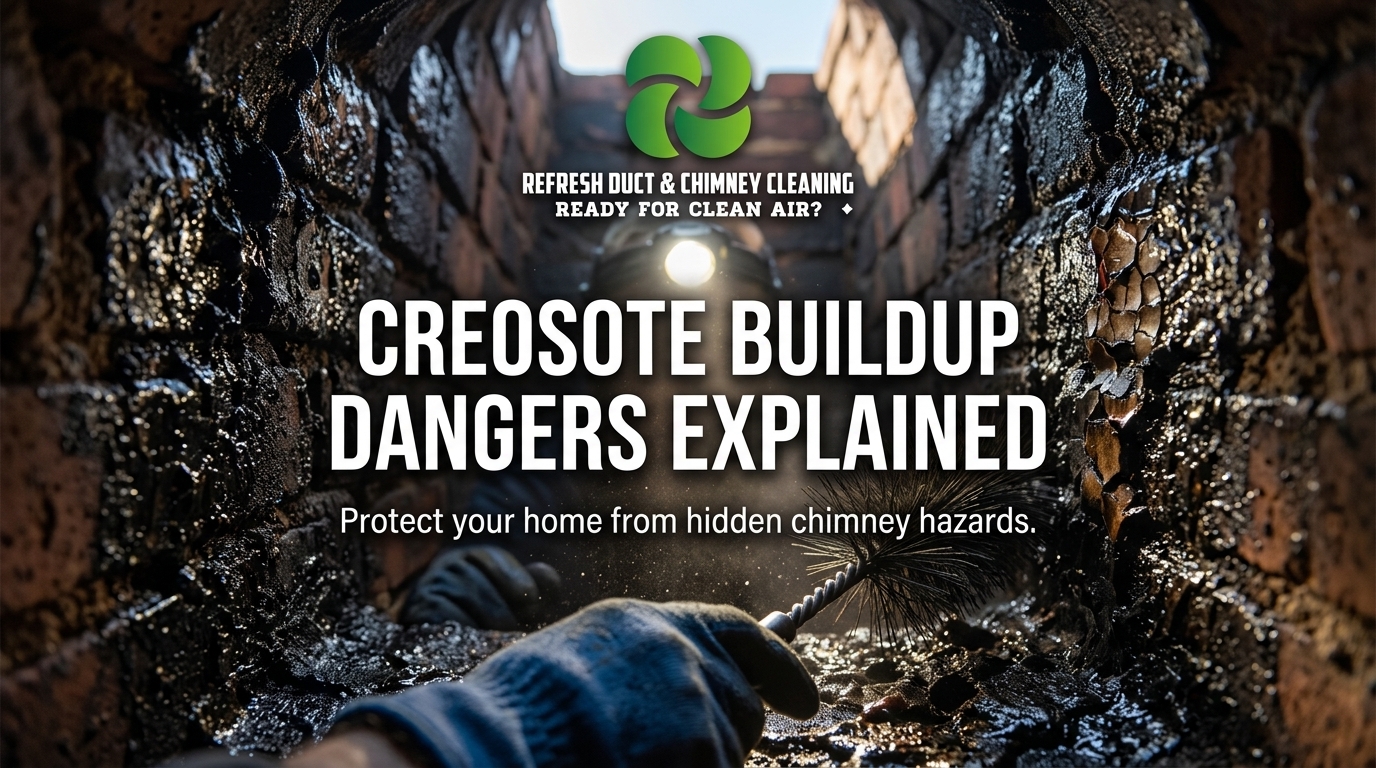
What is Creosote?
Creosote is a black or brown tar-like substance formed from the incomplete combustion of wood. It coats the inside walls of chimneys, flues, and stovepipes. While it may seem harmless initially, even thin layers of creosote can ignite under high temperatures, creating a severe fire risk.
How Creosote Forms
Creosote forms in three stages:
- Stage One – Flaky Residue: Early deposits are dry and powdery but highly acidic.
- Stage Two – Sticky Buildup: As more smoke passes through the chimney, the creosote becomes sticky and thick.
- Stage Three – Hard, Glassy Coating: Over time, this hard layer adheres firmly to the chimney walls, making removal difficult and extremely hazardous.
Factors Accelerating Creosote Formation
Several conditions can accelerate creosote accumulation:
- Burning unseasoned or wet wood
- Low-temperature fires that create smoke rather than heat
- Poor chimney draft or ventilation issues
Creosote Removal Methods and Cleaning Techniques
Removing creosote requires proper tools and techniques. The method depends on the stage of buildup.
DIY Cleaning Methods
Basic cleaning tools like chimney brushes can remove light soot. This method is effective for early-stage buildup but requires caution.
Chemical Cleaning Products
Specialized chemicals can break down creosote deposits. These products are useful for moderate buildup but must be used correctly.
Professional Chimney Cleaning
Experts use advanced tools and techniques to remove heavy buildup. Professional cleaning is recommended for safety and thoroughness.
When to Call a Professional
If the buildup reaches stage 2 or 3, professional help is necessary. Attempting to remove hardened creosote without expertise can be dangerous.
What is Creosote and How Does It Build Up?
Creosote is a dark, sticky, tar-like substance that forms inside chimneys when wood is burned. It is created from the condensation of smoke and vapors that contain unburned wood particles, resins, and chemicals. Over time, this flammable substance coats the inside walls of the chimney flue. The buildup is often accelerated by burning wet or unseasoned wood, burning at low temperatures, or poor airflow.
Without regular chimney cleaning, creosote layers become thicker and harder, turning from a flaky stage to a shiny, glazed form that is extremely difficult to remove. This silent accumulation poses serious risks to your home and family safety.
Major Fire Hazards Caused by Creosote
Creosote is highly flammable and one of the leading causes of chimney fires. When it ignites, it can burn at extremely high temperatures, sometimes exceeding 2,000°F, which can crack chimney liners, damage the chimney structure, and even spread fire to the roof or walls of your home.
Many homeowners are unaware of the danger until a fire starts. A chimney fire can happen suddenly with little warning and can cause extensive damage. Regular professional chimney sweeping removes creosote before it reaches dangerous levels, greatly reducing the risk of these intense, destructive fires.
Health and Structural Risks
Beyond fire hazards, creosote buildup can cause serious health concerns and structural damage. Creosote contains toxic chemicals that can release harmful gases into your living space if the chimney is not properly sealed or drafted. It can also corrode metal components and deteriorate masonry over time.
Heavy buildup restricts proper venting of smoke and carbon monoxide, increasing the risk of carbon monoxide poisoning. Addressing creosote buildup promptly protects both your family’s health and the integrity of your chimney system.
Prevention and Professional Solutions
The best way to prevent creosote dangers is through regular chimney inspections and cleanings by certified professionals. Burning dry, well-seasoned hardwood, using proper burning techniques, and installing chimney caps can also help reduce buildup.
Homeowners should schedule professional chimney services at least once a year, or more frequently if you use your fireplace often. Investing in preventive maintenance is far more affordable than dealing with the consequences of a chimney fire or major repairs.
Dangers of Creosote Buildup in Chimneys
| Danger / Risk | How Creosote Causes the Problem | Potential Consequences | Warning Signs | Prevention & Solutions |
|---|---|---|---|---|
| Chimney Fires | Highly flammable tar ignites easily | Rapid fire spread, chimney damage, home destruction | Loud cracking or popping sounds from chimney | Annual professional chimney sweeping |
| High-Temperature Damage | Burns hotter than 2,000°F | Cracked flue liners and masonry damage | Discolored or warped chimney exterior | Remove creosote before it glazes |
| Carbon Monoxide Poisoning | Blocked venting traps toxic gases | Serious health risk or fatality | Headaches, nausea, dizziness | Proper drafting and regular cleaning |
| Chimney Corrosion | Acidic creosote eats away at metal and mortar | Structural weakening and expensive repairs | Rust on damper or metal parts | Use creosote-removing chemicals and inspections |
| Reduced Draft & Smoke Backflow | Thick layers restrict airflow | Smoke and fumes enter living areas | Smoke odor in home, poor draw | Clean flue and improve burning practices |
| Toxic Chemical Exposure | Harmful compounds released into air | Respiratory issues and long-term health effects | Irritated eyes, throat, or persistent cough | Professional removal and proper ventilation |
| Glazed Creosote Formation | Hard, shiny layer from repeated low-temp burns | Extremely difficult and costly to remove | Shiny black coating visible in chimney | Burn hotter fires with seasoned wood |
| Masonry Deterioration | Creosote seeps into bricks and mortar | Spalling, cracking, and chimney failure | Loose bricks or mortar damage | Timely cleaning and chimney repairs |
| Increased Insurance Risks | Unaddressed creosote raises fire hazard | Higher premiums or denied claims after fire | Insurance inspection flags | Maintain cleaning records |
| Weakened Chimney Structure | Long-term buildup compromises integrity | Partial or full chimney collapse risk | Visible cracks or leaning chimney | Professional inspection and maintenance |
| Environmental Impact | Incomplete burning releases more pollutants | Higher emissions and environmental harm | Excessive smoke from chimney | Use EPA-approved stoves and clean regularly |
| Overall Safety & Property Value | Hidden danger lowers home safety rating | Reduced property value and buyer concerns | Strong creosote smell near fireplace | Schedule yearly professional service |
This guide explains the serious dangers of creosote buildup and why regular chimney maintenance is essential for safety. Professional cleaning is the most effective way to keep your home protected.
Fire Hazards from Creosote Buildup
One of the primary concerns associated with creosote buildup dangers is the heightened risk of chimney fires. Creosote is highly combustible, and even a small spark from your fireplace can ignite it.
How Chimney Fires Occur
When creosote ignites, temperatures inside the chimney can exceed 2000°F. This extreme heat can spread rapidly to nearby wooden structures, including your roof or walls. Chimney fires are unpredictable and can escalate within minutes, often leaving homeowners little time to react.
Signs of a Chimney Fire
You can identify potential chimney fires by observing:
- Loud cracking or popping sounds from the fireplace
- Thick, dark smoke billows from the chimney
- Unusually strong, acrid odors in the home
Early detection and immediate action are crucial to prevent property damage and personal injury.
Health Risks Associated with Creosote
Beyond fire hazards, creosote buildup dangers also include significant health risks. Inhaling creosote-laden smoke can irritate the respiratory system and exacerbate conditions such as asthma.
Respiratory Issues
Small particles of creosote can travel into living spaces, especially if the chimney isn’t sealed properly. Prolonged exposure may lead to chronic coughing, shortness of breath, and throat irritation.
Carcinogenic Effects
Studies have shown that creosote contains carcinogenic compounds. Consistent exposure, even in small amounts, can elevate the risk of developing respiratory cancers over time.
Structural Damage from Creosote
Neglecting creosote removal can result in serious structural damage. This substance is acidic and corrosive, gradually deteriorating metal and masonry inside the chimney.
Damage to Chimney Linings
Chimney liners are particularly vulnerable to creosote buildup. Acidic compounds in the creosote weaken the liner, leading to cracks and gaps that compromise safety.
Roof and Wall Damage
In the event of a chimney fire, heat and sparks can damage roofing materials and walls. Water penetration through cracked chimneys can further exacerbate structural problems, creating long-term repair costs.
How to Prevent Creosote Buildup
Prevention is always better than dealing with the aftermath. There are several strategies homeowners can adopt to minimize creosote buildup dangers.
Regular Chimney Cleaning
Professional chimney sweeps can remove creosote layers that are difficult to reach. Experts recommend cleaning at least once a year or more frequently for heavy users.
Use Seasoned Wood
Burning dry, well-seasoned wood produces less smoke, significantly reducing creosote accumulation. Avoid burning green or wet logs that generate excessive tar deposits.
Proper Ventilation
Ensuring your chimney has adequate draft prevents smoke from lingering and condensing on the chimney walls. Installing chimney caps can also improve airflow and prevent debris intrusion.
Warning Signs of Excessive Creosote
Recognizing early warning signs can save homeowners from dangerous situations.
Visible Residue
Black, shiny deposits along the chimney walls indicate advanced creosote buildup.
Strong Odors
Persistent, smoky odors inside your home may signify a blockage or excessive creosote accumulation.
Frequent Soot Flare-Ups
Sparks or soot falling into the fireplace more often than usual is another red flag.
Health Risks Associated with Creosote Exposure
Creosote is not only a fire hazard but also a health concern. Exposure can lead to various physical issues.
Respiratory Problems
Inhaling creosote fumes can irritate the lungs and cause breathing difficulties. Long-term exposure may worsen respiratory conditions.
Skin Irritation
Direct contact with creosote can cause skin irritation or burns. Protective gear is essential when handling it.
Eye Irritation
Fumes and particles can irritate the eyes, causing redness and discomfort. Proper ventilation reduces this risk.
Indoor Air Pollution
Creosote contributes to poor indoor air quality, affecting overall health. Clean chimneys help maintain a healthier environment.
Tools and Techniques for Creosote Removal
While professional help is recommended, some homeowners use tools for minor maintenance.
- Chimney Brushes: Designed to scrape off soft deposits efficiently.
- Chemical Treatments: Specialized solutions can dissolve small creosote deposits safely.
- Vacuum Systems: High-powered vacuums can remove debris, reducing inhalation risks.
Even with these methods, always prioritize safety gear and proper ventilation to minimize exposure.
DIY vs. Professional Chimney Cleaning
Many homeowners debate whether to clean their chimneys themselves or hire professionals.
Pros of DIY
DIY cleaning saves money and allows for regular maintenance. Simple tools can handle minor buildup effectively.
Cons of DIY
Professional chimney sweeps ensure thorough cleaning, especially for hardened creosote layers. They also inspect for structural damage and fire hazards that may go unnoticed during DIY attempts.
Common Causes of Creosote Accumulation
Understanding the causes helps in preventing dangerous buildup. Several factors contribute to the formation and accumulation of creosote.
Burning Unseasoned Wood
Wet or green wood produces more smoke due to higher moisture content. This increases the amount of residue deposited inside the chimney. Properly seasoned wood burns cleaner and reduces buildup.
Poor Ventilation
Restricted airflow prevents complete combustion, leading to more smoke. Chimneys that are blocked or poorly designed can trap smoke and accelerate creosote formation.
Low-Temperature Fires
Smoldering fires produce more unburned particles. These particles condense quickly, forming creosote layers inside the chimney.
Infrequent Cleaning
Skipping regular chimney cleaning allows creosote to accumulate over time. Routine maintenance is essential to prevent dangerous buildup.
Conclusion
Creosote buildup is a serious hazard that should never be underestimated. The combination of fire risks, health dangers, and potential structural damage makes it one of the most critical maintenance concerns for homes with fireplaces or wood stoves.
Proactive prevention through proper burning practices, regular inspections, and professional cleaning is essential. By understanding and addressing creosote buildup dangers, homeowners can safeguard their property, health, and peace of mind.
FAQs
1. Can creosote cause chimney fires even in small amounts?
Yes, even thin layers of creosote are highly flammable. A small spark can ignite it and cause a severe fire.
2. How often should I have my chimney inspected?
It’s recommended to have annual inspections, but homes with heavy fireplace use may require twice-yearly checks.
3. Is it safe to burn artificial logs in a fireplace?
Artificial logs produce less creosote but still require proper ventilation to prevent residue buildup.
4. Can cold weather increase creosote buildup?
Yes, cooler fires produce more smoke that condenses inside the chimney, accelerating creosote formation.
5. Are chemical creosote removers effective?
They can help dissolve minor deposits, but professional cleaning is required for hardened layers.
6. What is the difference between soot and creosote?
Soot is a black powdery residue from combustion, while creosote is sticky, tar-like, and highly flammable.
7. Can creosote affect indoor air quality?
Yes, it can release harmful particles and irritants that impact respiratory health.
8. Is chimney cap installation necessary?
Chimney caps improve airflow, prevent debris and animal intrusion, and reduce creosote buildup risks.