
Stucco homes are admired for their timeless texture, durability, and ability to withstand varying weather conditions. However, when grime, algae, mildew, and environmental pollutants begin to accumulate, homeowners naturally ask: is pressure washing safe for stucco homes? The answer is not a simple yes or no — it depends entirely on the method, pressure level, and expertise used during cleaning. When performed correctly using proper techniques, pressure washing can safely restore the beauty of stucco without causing damage.
Stucco is not as forgiving as brick or concrete. Its porous and slightly brittle surface requires careful handling to avoid cracking, chipping, or moisture intrusion. While pressure washing can be highly effective for cleaning, improper use can lead to structural issues or expensive repairs. Understanding the science behind stucco, the risks of high-pressure water, and the benefits of professional soft washing will help homeowners make informed decisions about maintaining their exterior walls.
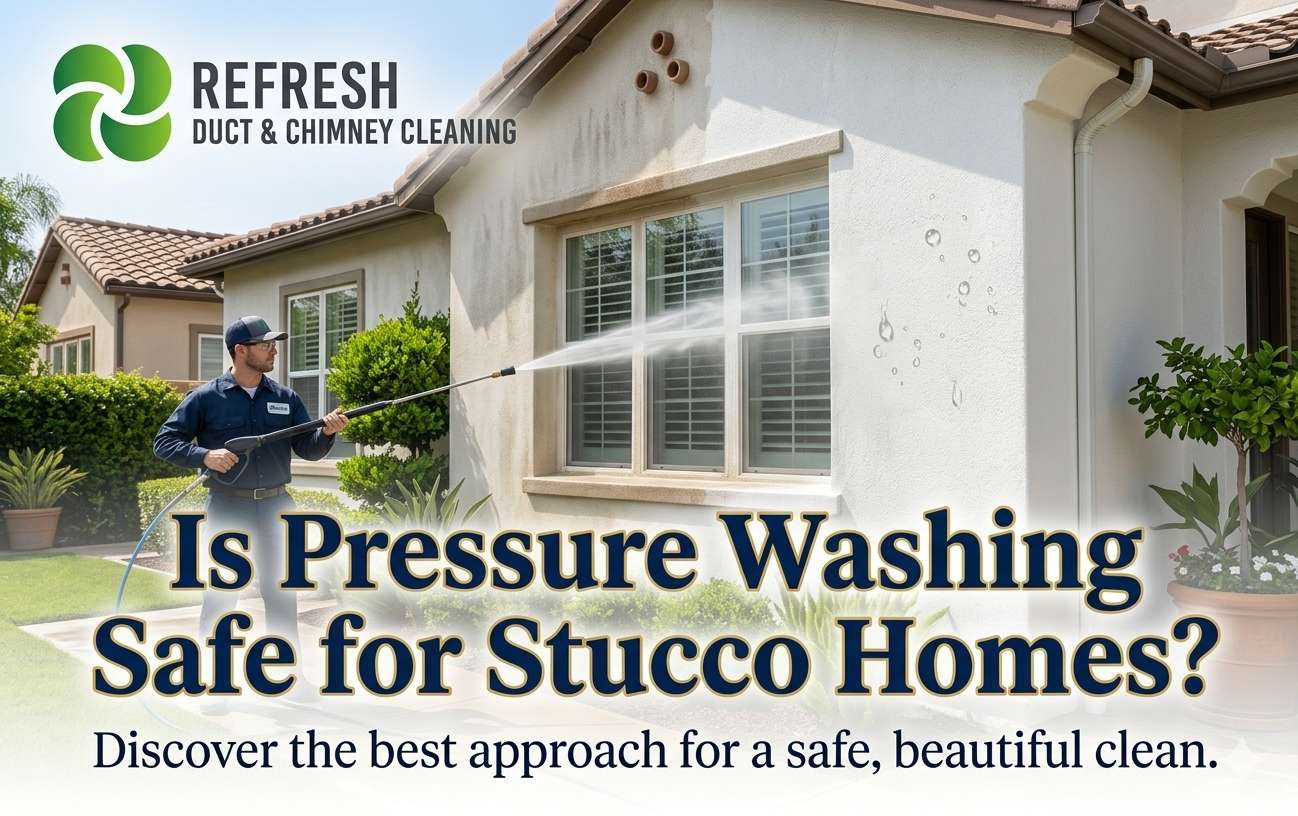
What Is Stucco and Why Does It Require Special Cleaning Care?
Stucco is a cement-based plaster mixture composed of sand, lime, cement, and water. It is applied in layers over a supportive base such as wire mesh or foam board, forming a textured exterior coating. Once cured, stucco becomes durable and weather-resistant, making it a popular exterior choice in both dry and humid climates.
However, despite its strength, stucco remains porous and somewhat absorbent. The textured surface contains small pits and grooves that trap dirt, pollen, pollution, and organic growth. Over time, moisture can settle into these tiny cavities, encouraging mold and mildew development. This porous quality is why homeowners often wonder: is pressure washing safe for stucco homes, especially when water penetration is a concern.
The Porous Nature of Stucco
Stucco’s surface texture is designed for visual appeal and durability, but it also increases its susceptibility to dirt buildup. Unlike smooth vinyl siding, stucco can hold grime within its rough finish. If high-pressure water is applied improperly, moisture may be forced deep into the material rather than simply rinsing away surface debris.
Because of this structure, stucco requires controlled cleaning methods. Excessive PSI can weaken its outer layer or create microfractures that worsen over time. Proper cleaning ensures contaminants are removed without compromising the material’s integrity.
Layered Construction and Moisture Risks
Traditional stucco systems consist of multiple layers, including a scratch coat, brown coat, and finish coat. Beneath these layers lies a moisture barrier and structural substrate. If water penetrates through cracks or weak points, it may become trapped behind the surface, potentially leading to mold growth or structural decay.
Modern synthetic stucco systems (EIFS) are even more sensitive to water intrusion. These systems rely on foam insulation and require specialized soft washing techniques rather than high-pressure cleaning. Therefore, understanding your stucco type plays a major role in determining whether pressure washing is safe for your home.
Is Pressure Washing Safe for Stucco Homes When Done Correctly?
The short answer is yes — pressure washing is safe for stucco homes when performed using proper techniques and controlled pressure levels. The key lies in adjusting water pressure to a safe range and using cleaning solutions that loosen dirt before rinsing.
Most professionals recommend a low-pressure method, typically between 1,000–1,500 PSI or less, depending on surface condition. In many cases, soft washing — which relies more on detergents than pressure — is the safest option. This approach effectively removes dirt, algae, and mildew without risking erosion or water intrusion.
Why Professional Technique Matters
Professional pressure washing technicians understand how to regulate water pressure, nozzle angles, and detergent dwell time. They also inspect for cracks or weak areas before beginning the cleaning process. This preparation significantly reduces the risk of surface damage.
Improper DIY attempts often involve too much pressure or incorrect spray direction. Spraying upward or too closely at high PSI can force water into cracks. When homeowners ask, “is pressure washing safe for stucco homes?” the safety largely depends on expertise and preparation.
Importance of Pre-Inspection
Before any washing begins, the stucco surface should be carefully inspected. Hairline cracks, loose patches, or deteriorating caulk must be repaired to prevent water infiltration. Ignoring this step can lead to moisture problems even if low pressure is used.
Professionals typically seal cracks and ensure flashing and trim areas are secure. This preventive step ensures that pressure washing remains a safe and effective cleaning solution for stucco homes.
Why High Pressure Can Damage Stucco Surfaces
While pressure washing is safe under controlled conditions, high-pressure cleaning can cause significant harm. Stucco’s brittle outer layer can chip or erode when exposed to excessive force. Over time, repeated high-pressure washing can thin the surface and reduce its protective properties.
Another major concern is water intrusion. When water is sprayed directly into cracks or seams at high PSI, it may seep behind the stucco. Trapped moisture can promote mold growth within wall cavities, potentially leading to costly repairs.
Surface Erosion and Texture Loss
Excessive pressure can smooth out the textured finish of stucco, altering its appearance. This erosion not only affects aesthetics but also weakens the material’s outer layer. Once compromised, stucco becomes more vulnerable to environmental damage.
Maintaining the original finish requires gentle cleaning methods. Preserving texture ensures that the home retains its architectural character and protective qualities.
Paint and Coating Damage
Many stucco homes are painted for added protection and aesthetic appeal. High-pressure washing can strip paint or cause peeling, especially if the coating is older or already compromised.
Using lower pressure and appropriate detergents helps preserve painted surfaces. When considering whether pressure washing is safe for stucco homes, the condition of the paint must also be evaluated.
How Often Should You Pressure Wash a Stucco Home?
Cleaning frequency depends on climate, environmental exposure, and surrounding vegetation. In moderate climates, stucco homes typically benefit from washing every 12–18 months. In humid or coastal areas where algae growth is more common, annual cleaning may be necessary.
Visible signs such as discoloration, green patches, or dark streaks indicate it’s time for cleaning. Allowing buildup to persist for too long can cause staining that becomes harder to remove. Routine maintenance reduces the need for aggressive cleaning later.
Climate Considerations
Homes in humid environments experience faster mold and mildew growth. Shaded walls, particularly those facing north, often accumulate moisture longer and may require more frequent washing.
In dry climates, dust and pollution are the primary concerns. Even without visible mildew, dirt accumulation can dull the finish over time. Regular washing maintains brightness and curb appeal.
How Professionals Safely Clean Stucco Homes?
Professional stucco cleaning follows a systematic process to ensure safety and effectiveness. The first step involves inspecting the surface and identifying vulnerable areas. Next, technicians apply a biodegradable cleaning solution designed to break down dirt, algae, and organic stains.
After allowing the detergent to dwell and loosen contaminants, the surface is rinsed with controlled low-pressure water. The spray is directed downward to prevent water from entering cracks or seams. This method effectively cleans stucco while minimizing risk.
Step-by-Step Safe Cleaning Process
- Inspect and repair cracks before washing.
- Cover electrical outlets and sensitive areas.
- Apply a low-pressure detergent solution.
- Allow adequate dwell time for cleaning agents.
- Rinse gently with controlled PSI.
- Allow proper drying time before sealing or painting.
This careful approach answers the question, is pressure washing safe for stucco homes, with confidence when executed professionally.
Does Soft Washing Work Better for Stucco?
Soft washing is often a better and safer option for cleaning stucco surfaces compared to traditional pressure washing. Stucco is a porous and somewhat fragile material, which means high-pressure water can easily cause cracks, chips, or force moisture deep into the walls. Soft washing uses low-pressure water combined with specialized cleaning solutions to gently remove dirt, mold, mildew, and algae. This method cleans effectively without putting stress on the surface, making it ideal for maintaining stucco homes.
Another advantage of soft washing is that it not only cleans the surface but also treats the underlying contaminants that cause staining. The cleaning solutions used in soft washing can kill mold and bacteria at the root, helping to keep the stucco cleaner for a longer period. It also reduces the risk of water damage since less force is used and the process is more controlled. Overall, soft washing provides a longer-lasting, safer, and more reliable cleaning solution for stucco exteriors.
Cost of Pressure Washing Stucco Homes
The cost of cleaning stucco homes varies depending on home size, surface condition, accessibility, and severity of staining. Because stucco requires careful handling and specialized methods, pricing may be slightly higher than that of vinyl siding cleaning.
Below is a detailed cost breakdown:
| Home Size | Average Cost Range | Cleaning Method | Included Services |
| 1,000–1,500 sq ft | $250–$400 | Soft wash | Detergent treatment + low-pressure rinse |
| 1,500–2,500 sq ft | $400–$650 | Soft wash / Low PSI | Full exterior cleaning + mildew removal |
| 2,500–3,500 sq ft | $650–$900 | Detailed soft wash | Crack inspection + protective rinse |
| 3,500+ sq ft | $900–$1,200+ | Comprehensive wash | Multi-level cleaning + stain treatment |
| Spot Treatment | $150–$300 | Targeted soft wash | Localized mold or stain removal |
Prices vary based on accessibility, height, preparation needs, and location. Investing in professional cleaning reduces long-term repair expenses and maintains curb appeal.
Key Factors That Determine Whether Pressure Washing Is Safe for Stucco Homes
Pressure washing stucco homes can be safe and effective, but it depends on several important factors. Stucco is a delicate material compared to brick or concrete, so using the wrong pressure or technique can cause cracks, water intrusion, or surface damage. The condition of the stucco, the type of equipment used, and the experience of the person performing the cleaning all play a crucial role. When done correctly with proper care, pressure washing can clean stucco surfaces without harming their structure or appearance.
Key Factors to Consider:
- Water Pressure Level: Low to moderate pressure is essential to avoid damaging the stucco surface.
- Condition of Stucco: Cracked or chipped stucco is more vulnerable and should be repaired before cleaning.
- Nozzle Type: A wider spray nozzle helps distribute pressure evenly and reduces the risk of damage.
- Distance from Surface: Keeping a safe distance prevents concentrated force on one spot.
- Cleaning Solutions: Using mild, stucco-safe detergents helps break down dirt without harsh impact.
- Experience and Technique: Proper handling and consistent motion are key to safe cleaning.
- Drying Conditions: Good weather allows stucco to dry properly, preventing moisture issues.
- Professional vs DIY: Hiring professionals ensures safer results, especially for older or fragile stucco.
Conclusion
So, is pressure washing safe for stucco homes? Yes — when performed with low pressure, proper technique, and careful preparation. High-pressure methods can damage stucco, but controlled soft washing effectively removes dirt and mildew while preserving the surface.
Routine maintenance every 12–18 months keeps stucco looking fresh and prevents costly repairs. Hiring experienced professionals ensures safety, efficiency, and long-term protection. When done correctly, pressure washing is a valuable and safe maintenance practice for stucco homes.
FAQs
1. Can pressure washing cause stucco to crack?
Yes, if extremely high pressure is used or if the surface already has weak areas, cracking can occur. Proper low-pressure techniques significantly reduce this risk.
2. Is it safe to pressure wash newly applied stucco?
New stucco should fully cure before any washing, typically for at least 30 days. Washing too soon can weaken the surface and disrupt proper curing.
3. Can pressure washing remove efflorescence from stucco?
Pressure washing may reduce surface-level efflorescence, but specialized cleaners are often required for complete removal. Efflorescence is caused by mineral deposits and may reappear if moisture issues persist.
4. Will pressure washing help prepare stucco for repainting?
Yes, cleaning removes dirt, mildew, and loose debris, creating a better surface for paint adhesion. Proper drying time after washing is essential before painting begins.
5. Is warm or cold water better for cleaning stucco?
Cold water is generally sufficient for routine cleaning. Warm water may improve the removal of oily stains, but it must still be used with controlled pressure.
6. Can pressure washing void a stucco warranty?
In some cases, using improper cleaning methods can void manufacturer warranties. Always review warranty terms or hire professionals familiar with stucco-safe techniques.
7. Does pressure washing remove spider webs and insect residue from stucco?
Yes, low-pressure washing effectively removes cobwebs, insect nests, and residue without harming the surface. Regular cleaning also discourages pests from returning.
8. Should windows and trim be protected during stucco pressure washing?
Yes, windows, seals, and trim should be carefully protected to prevent water intrusion. Professional cleaners take precautions to shield vulnerable areas before starting the process.