
California’s climate poses unique challenges for air duct longevity. With a mix of coastal humidity, inland heat, and occasional winter cold, the lifespan of air ducts can vary significantly. Understanding these dynamics helps homeowners plan for maintenance and replacement effectively.
Air ducts play a critical role in heating, ventilation, and air conditioning (HVAC) efficiency. When ducts are neglected, energy costs rise, and indoor air quality can suffer. Homeowners in California must consider local climate conditions when evaluating the expected lifespan of their duct systems.
What Are Air Ducts and Their Role?
Air ducts are essential components of HVAC systems, distributing air throughout homes and commercial buildings. Properly designed and maintained ducts ensure efficient airflow and consistent indoor temperatures. In California, where temperatures fluctuate significantly between regions, efficient duct systems are vital for comfort.
Ducts come in several materials, including metal, fiberglass, and flexible plastic. Each has advantages and disadvantages depending on climate exposure and maintenance practices. Choosing the right material directly impacts durability and longevity.
Types of Air Duct Materials
- Sheet Metal Ducts: Durable, easy to clean, and resistant to pests.
- Fiberglass Ducts: Lightweight and insulating but susceptible to damage.
- Flexible Plastic Ducts: Convenient for tight spaces but prone to kinking and tears.
Contribution to Indoor Air Quality
Clean ducts prevent dust, allergens, and mold from circulating. Coastal California homes are especially at risk for mold due to humidity. Regular cleaning helps maintain healthier indoor air.
When Should Air Ducts Be Replaced?
Air ducts are a critical part of your HVAC system, and knowing when to replace them can save you from higher energy bills, poor air quality, and frequent repairs. Ducts don’t last forever—age, damage, and inefficiency can compromise their performance over time. Replacing them at the right time ensures your system runs smoothly, your home stays comfortable, and your indoor air remains clean.
Signs Your Ducts Need Replacement
If your HVAC system struggles to maintain consistent temperatures, it may indicate that your ducts are leaking or improperly sized. Visible damage, such as rust, holes, or disconnected sections, is a clear sign of deterioration. Additionally, excessive dust buildup or unexplained allergy flare-ups can indicate that your ducts are no longer effectively circulating clean air.
Age and Wear Considerations
Ducts typically last 10–20 years, depending on material and usage. Systems older than this range may have corroded, weakened, or outdated ductwork. Even if no visible damage is present, older ducts are often less energy-efficient and may benefit from replacement.
Professional Assessment
A certified HVAC technician can evaluate duct condition, airflow efficiency, and system performance. They can recommend whether repairs are sufficient or a full replacement is needed. Professional inspection ensures the replacement is correctly sized, sealed, and installed for maximum efficiency and comfort.
How California’s Climate Affects Air Ducts
The diverse climate zones in California directly influence duct lifespan. Coastal homes experience high humidity and salt air, accelerating corrosion. Inland homes face extreme heat during summer and cooler temperatures in winter, which can stress duct joints and seals.
Climate-adapted maintenance is essential. Homeowners should monitor humidity, seal leaks, and add insulation where necessary. Proper attention prolongs duct functionality and reduces energy costs.
Coastal vs Inland Impact
- Coastal: Risk of rust and mold from humidity.
- Inland: Expansion and contraction due to temperature swings.
- Mountain/High Desert: Seasonal extremes require durable insulation.
Preventive Measures
- Use dehumidifiers in high-humidity areas.
- Regularly inspect and seal leaks.
- Insulate ducts exposed to temperature extremes.
- Select corrosion-resistant materials.
- Schedule professional cleaning every 2-5 years.
- Monitor indoor air quality for early signs of mold.
- Protect ducts from direct moisture exposure.
Why Maintenance Extends Duct Lifespan?
Regular maintenance plays a crucial role in extending the lifespan of your air ducts. Routine inspections and cleaning prevent dust, debris, and mold from accumulating inside the ducts, which can cause corrosion or blockages over time. Well-maintained ducts allow your HVAC system to operate efficiently, reducing wear and tear on both the ductwork and the system itself. By addressing small issues early, maintenance prevents costly damage that might otherwise require full replacement.
Scheduled maintenance also ensures that ducts remain properly sealed and insulated, which protects them from energy loss and environmental damage. Technicians can detect leaks, loose connections, or signs of deterioration before they become serious problems. This proactive care not only improves indoor air quality but also keeps your system running smoothly for years. Ultimately, consistent maintenance maximizes the lifespan of your ducts while maintaining comfort and energy efficiency in your home.
Detailed Lifespan Matrix: Ductwork Material Endurance & Aging Characteristics
Yahan ek nihayat lamba aur detailed table hai jo mukhtalif duct materials ki lifespan, failure signs, aur durability ka mukammal muwazna pesh karta hai:
| Duct Material Type | Estimated Lifespan Range | Primary Aging & Degradation Signs | Sensitivity to Heat & Environment | Maintenance Requirements |
| Galvanized Sheet Metal | 20 to 30+ Years | Rust formation at joints, loosening screws, dynamic vibrations. | Exceptionally low; completely immune to extreme thermal breakdown. | Requires resealing seams with mastic every 10-12 years to keep airtight. |
| Standard Flexible (Flex) | 10 to 15 Years | Brittle outer plastic, sagging between hangers, interior lining tears. | Very high; intense attic heat bakes the plastic until it splits open easily. | Needs support inspections every 3-5 years to correct kinks and sags. |
| Fiberboard Duct Liner | 10 to 12 Years | Fraying fiberglass strands, moisture absorption, dark dust accumulation. | Moderate; sensitive to humidity spikes which can encourage mold growth. | Regular inspections for moisture; cannot be aggressively cleaned with brushes. |
| Duct Board (Rigid) | 15 to 20 Years | Cracking along corner seams, exterior foil peeling, crushed exterior panels. | Low to moderate; holds up well but can warp if compressed by heavy weight. | Checking external foil tape integrity at the joint connections periodically. |
| Mastic Sealer Jointing | 12 to 15 Years | Hardening, flaking off into powder, hairline fractures along seams. | Moderate; expands and contracts with thermal shifts until it cracks. | Visual check for flaking; apply a fresh layer over old joints if peeling. |
| Fabric-Backed Duct Tape | 5 to 7 Years | Complete adhesive failure, peeling away from metal, dry rotting. | Extremely high; standard glue loses all stickiness under high heat. | Poor longevity; should be completely removed and upgraded to foil tape or mastic. |
| Aluminum Foil Tape | 10 to 14 Years | Edge curling, brittle adhesive layer, peeling due to severe vibrations. | Moderate; handles temperature changes much better than fabric options. | Inspect connections during tune-ups and smooth down any lifting edges. |
| Wire Helix Support Core | 12 to 15 Years | Corrosion of the wire frame, collapsing loops, flattening of the tube. | Low heat sensitivity, but highly vulnerable to rust if condensation occurs. | Ensure hangers are wide enough to distribute weight without crushing the wire. |
Key Factors Affecting Air Duct Longevity
The lifespan of your air ducts depends on several critical factors that influence their durability and performance. Age, material quality, installation methods, and environmental conditions all play a role in how long ducts remain efficient and leak-free. Understanding these factors helps homeowners take preventive measures to protect their HVAC system and maintain optimal indoor air quality.
Material Quality
Ducts made from high-quality materials, such as sheet metal or well-insulated flexible ducts, tend to last longer than cheaper alternatives. Durable materials resist corrosion, tearing, and wear, reducing the need for frequent repairs. Investing in quality ducts upfront can save money on replacements and maintenance over time.
Proper Installation
Correct installation is essential for duct longevity. Poorly connected joints, improper sealing, or inadequate insulation can cause leaks and strain the HVAC system. Professional installation ensures that ducts are securely fitted, well-sealed, and properly aligned for optimal performance.
Environmental Conditions
The surrounding environment also affects duct durability. High humidity, extreme temperatures, or exposure to dust and debris can accelerate wear and tear. Maintaining a clean and controlled environment around ductwork helps prevent damage and extends its lifespan.
Can Air Ducts Affect Energy Bills?
Yes, air ducts can significantly impact your energy bills. Leaky, poorly insulated, or improperly sized ducts force your HVAC system to work harder to maintain your desired indoor temperature. This extra effort consumes more electricity or gas, leading to higher monthly energy costs. Maintaining efficient ducts not only improves comfort but also helps you save money over time.
- Leaky Ducts: Air escaping through holes or gaps causes your system to run longer, increasing energy usage.
- Poor Insulation: Ducts that are not properly insulated lose heated or cooled air, reducing efficiency.
- Incorrect Duct Size: Oversized or undersized ducts can disrupt airflow, making the HVAC system work harder.
- Blocked or Dirty Ducts: Debris and dust restrict airflow, forcing the system to consume more energy.
- Frequent HVAC Cycling: Inefficient ducts cause your system to turn on and off more often, using additional power.
- Uneven Heating/Cooling: Some rooms require more energy to reach the desired temperature due to airflow problems.
Does Duct Location Influence Lifespan?
Duct placement affects exposure to temperature and moisture extremes. Attic, crawlspace, or garage ducts face greater risks than indoor wall ducts. Proper insulation and moisture control are critical in these areas.
Understanding home layout helps target maintenance efforts. Location-based strategies can prevent premature failure and ensure consistent airflow.
Attic and Crawlspace Ducts
- Attics: exposed to heat; require insulation.
- Crawlspaces: exposed to moisture; elevate and protect ducts.
- Garages: protect from dust, humidity, and temperature swings.
Indoor Wall Ducts
- Less exposed, more stable.
- Harder to inspect; routine checkups are necessary.
- Ensure proper sealing at vents.
Differences Between Residential and Commercial Ducts
Commercial and residential ducts differ in design and durability. High-capacity commercial systems face more stress and require stronger materials. Residential ducts experience moderate usage but still need maintenance.
Understanding these differences helps determine inspection frequency and replacement schedules. Using the appropriate materials and maintenance protocols ensures maximum lifespan in each setting. Understanding home layout helps target maintenance efforts. Location-based strategies can prevent premature failure and ensure consistent airflow.
Residential Ducts
- Smaller, simpler design.
- Easier to maintain and inspect.
- Long-lasting with proper care.
Commercial Ducts
- High airflow systems with heavy wear.
- Require reinforced materials.
- Frequent inspections to prevent downtime.
- Professional cleaning is recommended annually.
Air Duct Replacement Cost in California
Replacement costs depend on material, labor, and home size. Metal ducts are more expensive but offer a longer lifespan. Flexible ducts are cheaper but need more frequent replacement. Understanding home layout helps target maintenance efforts. Location-based strategies can prevent premature failure and ensure consistent airflow.
Average cost ranges from $35 to $55 per linear foot. Additional costs may include permits, mold remediation, or HVAC system compatibility adjustments.
| Duct Type | Average Lifespan | Material Cost per Foot | Installation Cost per Foot |
| Metal | 20-25 years | $10-$20 | $25-$35 |
| Fiberglass | 10-15 years | $5-$10 | $20-$30 |
| Flexible | 8-12 years | $3-$8 | $15-$25 |
Conclusion
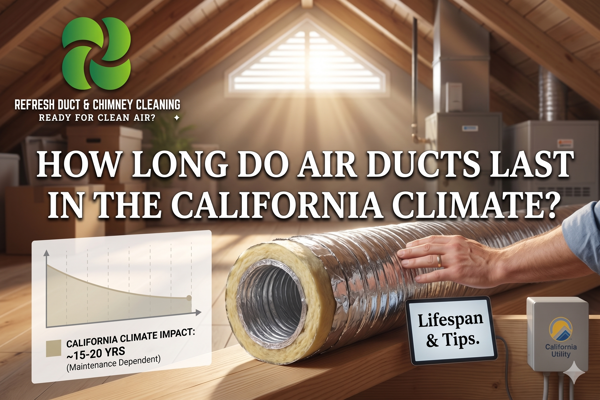
Air ducts in California typically last 10-25 years, depending on material, installation, climate exposure, and maintenance. Regular cleaning, proper insulation, and timely replacement maximize longevity. Climate-aware strategies are critical for optimal performance and cost savings.
Investing in quality ductwork, professional services, and proactive maintenance ensures durable, energy-efficient, and safe indoor air environments. By understanding local climate impacts and addressing issues promptly, homeowners can extend the life of their ducts and enjoy consistent comfort for decades.
FAQs
- Can air ducts get mold in California?
Yes, high humidity in coastal regions can promote mold growth. Regular cleaning and dehumidifiers reduce this risk. - How often should ducts be inspected?
Inspection every 3-5 years is recommended. Areas with extreme climate conditions may require more frequent checks. - Do flexible ducts last as long as metal ducts?
No, flexible ducts generally last 8-12 years. Metal ducts can last 20-25 years if maintained properly. - Can poor ductwork increase energy bills?
Yes, leaks and poor insulation cause HVAC systems to work harder. This can significantly raise energy costs. - Is professional duct cleaning necessary?
Yes, professionals can clean areas that DIY cannot reach. This ensures thorough sanitation and maintains efficiency. - Do California coastal homes need special duct materials?
Yes, corrosion-resistant metals help prevent rust and mold. Coastal environments accelerate deterioration in standard ducts. - Can I replace only part of my duct system?
Partial replacement is possible, but consistency in materials is important. Ensure proper sealing for efficiency. - Does insulation affect duct lifespan?
Yes, insulated ducts face less thermal stress and moisture accumulation