
Aging duct systems in homes and commercial buildings across Southern California are contributing to significant energy inefficiencies. Many duct networks installed decades ago were not designed with modern energy-saving standards, leading to air leakage, uneven airflow, and higher utility bills. Homeowners and business managers often overlook the hidden energy waste that these old systems generate every year.
In addition to increased costs, outdated duct systems can negatively affect indoor air quality and overall comfort. Dust, debris, and mold accumulation are common in older ducts, exacerbating energy waste and reducing HVAC efficiency. Understanding the connection between old duct systems and energy loss is critical for property owners who want to improve performance and lower their carbon footprint.
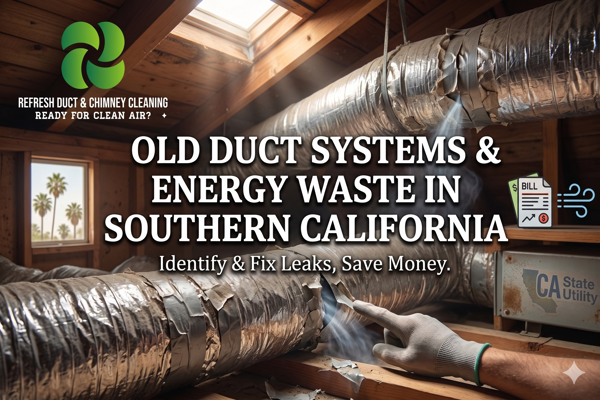
Common Problems in Old Duct Systems
Old duct systems in Southern California face a range of issues that directly impact energy efficiency. One of the most prevalent problems is duct leakage, where gaps and cracks in the system allow conditioned air to escape. This forces HVAC units to work harder to maintain indoor temperatures, leading to higher energy consumption.
Another issue is inadequate insulation. Many older ducts were not insulated properly or have lost their insulating properties over time. This causes energy loss, especially in attics or exterior walls where ducts are exposed to temperature extremes.
Duct Leakage and Its Impact
Leaky ducts can waste up to 30% of the air that HVAC systems produce. This not only increases electricity bills but also causes uneven temperature distribution across rooms.
Poor Insulation and Energy Drain
When ducts are poorly insulated, cooled, or heated, air loses its temperature before reaching the intended room. This inefficiency puts extra strain on HVAC systems and raises operational costs.
Mold and Debris Accumulation
Older ducts often accumulate dust, dirt, and even mold. These contaminants reduce airflow and efficiency, while also posing health risks to building occupants. How Old Duct Systems Cause Energy Waste?
Energy waste in Southern California homes is directly linked to the condition of duct systems. Older ducts often have multiple leaks, poorly sealed joints, and bends that restrict airflow. This inefficient air delivery forces HVAC systems to operate longer and at higher energy levels.
The problem is compounded in larger homes and commercial spaces where ductwork extends across multiple zones. Each additional junction or damaged segment increases the potential for energy loss. Modern duct designs prioritize streamlined airflow and sealing to reduce energy waste, something many older systems lack.
Signs That Your Ducts Are Wasting Energy
Inefficient or damaged ducts can silently waste energy, causing higher utility bills and putting extra strain on your HVAC system. Detecting the signs early helps prevent unnecessary energy loss and keeps your home comfortable year-round. Regular inspections and awareness of these warning signals can save both money and system lifespan.
- High Energy Bills: A sudden spike in heating or cooling costs may indicate leaking or poorly insulated ducts.
- Uneven Heating or Cooling: Some rooms feel too hot or too cold, showing that airflow is not distributed properly.
- Visible Leaks or Gaps: Holes, disconnected joints, or rust on ducts allow conditioned air to escape.
- Excess Dust or Debris: Dust accumulation around vents suggests that air is leaking from the ducts and pulling in contaminants.
- Weak Airflow: Low airflow from vents can mean obstructions, leaks, or poorly sized ducts.
- Unusual Noises: Whistling, rattling, or banging sounds often signal air escaping through damaged sections.
- Frequent HVAC Cycling: The system turns on and off more often to maintain temperature, indicating energy inefficiency.
The Cost of Ignoring Old Duct Systems
Failing to address aging ductwork can lead to escalating energy bills and premature HVAC system failure. According to energy experts in Southern California, households with leaky or poorly insulated ducts can see energy losses of up to 25–40%. This directly translates to higher monthly utility costs and unnecessary strain on heating and cooling units.
Additionally, ignoring old ducts can result in more frequent HVAC repairs, shortening the lifespan of expensive equipment. Investing in duct repair or replacement now can save substantial money in the long term.
Table: Estimated Annual Energy Loss by Duct Condition
| Duct Condition | Energy Loss (%) | Additional Cost ($/Year) |
| Minor leaks | 10–15% | $100–$250 |
| Moderate leaks | 20–25% | $250–$500 |
| Severe leaks/old ducts | 30–40% | $500–$1000+ |
Energy-Saving Upgrades for Old Duct Systems
Upgrading old ducts is one of the most effective ways to reduce energy waste. Sealing duct leaks with mastic or metal tape can immediately improve airflow and efficiency. Adding or replacing insulation further reduces energy loss, especially in areas exposed to extreme temperatures.
Modern HVAC systems also benefit from automated dampers and smart zoning controls. These technologies ensure that conditioned air is delivered precisely where needed, minimizing unnecessary energy consumption.
Sealing and Insulating Ducts
Proper sealing and insulation reduce air loss and improve system efficiency. This upgrade is relatively low-cost compared to replacing the entire duct system.
Upgrading to Energy-Efficient HVAC
Replacing an older HVAC unit in conjunction with duct upgrades maximizes energy savings. High-efficiency systems consume less electricity while maintaining optimal comfort.
Smart Home Integration
Smart thermostats and zoning systems allow homeowners to control airflow and temperature for different areas. This technology reduces wasted energy by conditioning only occupied spaces.
Regional Impact: Southern California Energy Challenges
Southern California’s climate and urban development patterns make duct efficiency particularly critical. Homes experience both high summer temperatures and occasional winter cold snaps, increasing HVAC demand. Aging duct systems exacerbate energy waste, contributing to higher regional electricity consumption.
Moreover, energy waste from old ducts adds to environmental concerns. Increased electricity usage leads to higher greenhouse gas emissions from local power plants, impacting air quality and the region’s sustainability goals.
DIY vs Professional Duct Solutions
While some homeowners attempt DIY duct sealing or cleaning, professional services often yield superior results. Professionals have the tools and expertise to locate hidden leaks, measure airflow accurately, and apply proper sealing materials.
DIY methods may address surface-level issues but often miss leaks deep within the duct network. Investing in professional duct inspection and repair ensures maximum energy savings and extends the life of HVAC equipment.
Maintenance Tips for Older Duct Systems
Maintaining older ductwork can significantly reduce energy waste without requiring full replacement. Regular inspections, cleaning, and minor repairs prevent small issues from escalating. Here are some practical tips:
- Inspect ducts for visible leaks, cracks, and disconnected joints.
- Clean ducts to remove dust, mold, and debris.
- Ensure insulation is intact, especially in attics or crawlspaces.
- Replace air filters regularly to maintain airflow.
- Schedule professional HVAC inspections annually.
Exhaustive Energy Waste Matrix: Old vs. Energy-Efficient Modern Duct Systems
Yahan ek nihayat lamba aur detailed table hai jo purani ducts se hone wale energy loss aur nayi ducts ke energy savings ka mukammal muwazna pesh karta hai:
| Energy Efficiency Metric | Old, Deteriorated Ductwork System | Modern Energy-Efficient Duct System | Household Financial & Comfort Impact |
| Average Air Leakage Rate | Loses 25% to 40% of treated air into unconditioned house voids. | Strict leakage rate of less than 4% to 6% total volume. | Saves hundreds of dollars annually by stopping conditioned air theft. |
| Insulation Rating (R-Value) | Degraded R-2 or completely uninsulated bare sheet metal runs. | High-efficiency R-6 or R-8 certified thermal insulation wraps. | Eliminates heat transfer, keeping air ice-cold on its way to rooms. |
| HVAC Daily Runtime | Extended, continuous cycles running 45-60 minutes per hour. | Short, precise cooling cycles lasting 15-20 minutes total. | Drastically reduces monthly electricity usage and wear on parts. |
| Peak Demand Power Load | Extremely high electrical draw as system fights attic heat gain. | Optimized, low-stress power consumption during hot afternoons. | Minimizes household strain on the local electrical utility grid. |
| Static Air Pressure | Severe pressure drops caused by open joints and loose tape. | Perfectly balanced, airtight pressure from plenum to register. | Restores strong, dynamic air velocity out of every single vent. |
| Thermostat Run Efficiency | System runs non-stop because rooms fail to reach target temp. | Quick temperature drops allow thermostat to rest efficiently. | Prevents constant mechanical overworking of the cooling compressor. |
| Infiltration of Hot Attic Air | High; gaps pull 120°F attic air directly into the cooling stream. | Zero; completely sealed barrier keeps external hot air out. | Lowers the cooling workload by keeping the supply air pure and cold. |
| System Lifespan Protection | Forces premature replacement due to constant operational overload. | Extends mechanical equipment lifespan by reducing total runtime. | Saves thousands of dollars by delaying expensive HVAC replacement. |
| Convective Heat Loss | Thin, cracked plastic outer shells allow easy cold air radiation. | Dual-layer reflective foil jackets bounce radiant heat away. | Ensures the energy footprint of the home remains small and clean. |
| Zoned Climate Efficiency | Fails completely; air leaks bypass localized damper controls. | Integrates perfectly with modern smart zoning control systems. | Allows homeowners to cool only the rooms they are actively occupying. |
| Air Return Balance | Leaky return ducts pull dust, insulation fibers, and attic dirt. | Sealed returns draw air exclusively from clean living zones. | Keeps the indoor evaporator coil clean, preserving system efficiency. |
| Home Carbon Footprint | Excessively high energy consumption increases fossil fuel reliance. | Optimized operation significantly reduces carbon emissions. | Helps homeowners meet regional environmental sustainability goals. |
Benefits of Upgrading Old Ducts
Upgrading old ducts can transform the efficiency, comfort, and air quality of your home’s HVAC system. Older ductwork often suffers from leaks, corrosion, or poor insulation, which forces your system to work harder and consume more energy. Replacing or upgrading these ducts ensures better airflow, reduces energy costs, and promotes a healthier indoor environment.
Improved Energy Efficiency
New ducts minimize leaks and maintain consistent airflow, allowing your HVAC system to operate at optimal efficiency. This reduces energy consumption and lowers utility bills over time. Proper insulation in upgraded ducts also prevents heat loss or gain, enhancing overall system performance.
Enhanced Indoor Air Quality
Upgraded ducts reduce the circulation of dust, mold, and allergens throughout your home. Smooth, sealed duct surfaces are easier to clean and maintain. This creates a healthier living environment, especially for allergy sufferers or households with children.
Increased Comfort and System Longevity
Consistent airflow from new ducts ensures even temperatures across all rooms. The HVAC system experiences less strain, which can extend its operational lifespan. Additionally, fewer repairs are needed, saving you both time and money in the long run.
Conclusion
Old duct systems in Southern California represent a hidden source of energy waste that affects comfort, costs, and environmental impact. Leaky, uninsulated, and poorly maintained ducts force HVAC systems to work harder, increasing electricity usage and accelerating wear and tear. By understanding the risks and taking proactive measures, homeowners can reduce energy waste and improve overall efficiency.
Upgrading or maintaining ducts is an investment with long-term benefits. Proper sealing, insulation, and professional inspections can save money, enhance comfort, and promote healthier indoor environments. Southern California residents who prioritize duct system upgrades contribute not only to their own savings but also to regional energy conservation efforts.
FAQs
1. How often should old duct systems be inspected?
Professional inspections should be conducted at least once a year. Regular checks prevent minor issues from escalating into major energy waste.
2. Can duct cleaning improve HVAC efficiency?
Yes, removing dust, mold, and debris improves airflow. This allows the system to operate more efficiently and reduces energy costs.
3. How much can I save by sealing old ducts?
Sealing leaks can save 10–30% on energy bills. Savings depend on the severity of leaks and insulation quality.
4. Is duct replacement always necessary?
Not always. Minor leaks and insulation issues can often be repaired. Full replacement is ideal when ducts are severely damaged or outdated.
5. What is the typical cost of duct repair in Southern California?
Costs range from $150 to $800 for repairs, depending on size and complexity. Professional sealing and insulation maximize value.
6. Can old ducts affect indoor air quality?
Yes, accumulated dust, mold, and debris reduce air quality. Upgrading or cleaning ducts can improve overall health and comfort.
7. Are there energy rebates for duct upgrades in California?
Yes, programs from utility companies may offer rebates. Homeowners should check local incentives for HVAC and duct improvements.
8. How do I know if my ducts are leaking?
Signs include uneven temperatures, high utility bills, and visible gaps in ductwork. A professional can perform diagnostic tests to confirm leaks.