Insurance & Fire Code Compliance for Dryer Vent Cleaning is no longer a minor maintenance topic—it is a serious safety and financial responsibility for property owners. Dryer vent fires continue to cause significant residential and commercial losses every year, and most of these incidents are preventable. Lint buildup, improper vent materials, and neglected maintenance are the leading contributors to dryer-related fires. When fire code standards are ignored, the risk increases dramatically, and insurance claims may be denied due to negligence.
Understanding Insurance & Fire Code Compliance for Dryer Vent Cleaning helps homeowners, landlords, and business owners protect their property and avoid legal complications. Insurance companies expect property owners to follow local fire codes and maintain safe dryer vent systems. Failure to comply can result in policy cancellation, increased premiums, or complete claim denial after a fire incident. By prioritizing regular inspections and professional cleaning, you ensure both safety and financial protection.
Understanding Fire Code Requirements for Dryer Vent Systems
Fire code compliance plays a critical role in preventing dryer vent fires. Local and national fire safety regulations establish strict guidelines for the installation, materials, and maintenance of dryer exhaust systems. These codes are designed to reduce the accumulation of lint, improve airflow, and eliminate potential ignition sources.
Insurance & Fire Code Compliance for Dryer Vent Cleaning begins with understanding these regulations. Most fire codes require vents to exhaust outdoors, prohibit plastic duct materials, and limit vent length to prevent clogging. Regular inspections are often mandatory in commercial properties, while residential properties are strongly encouraged to follow annual cleaning guidelines.
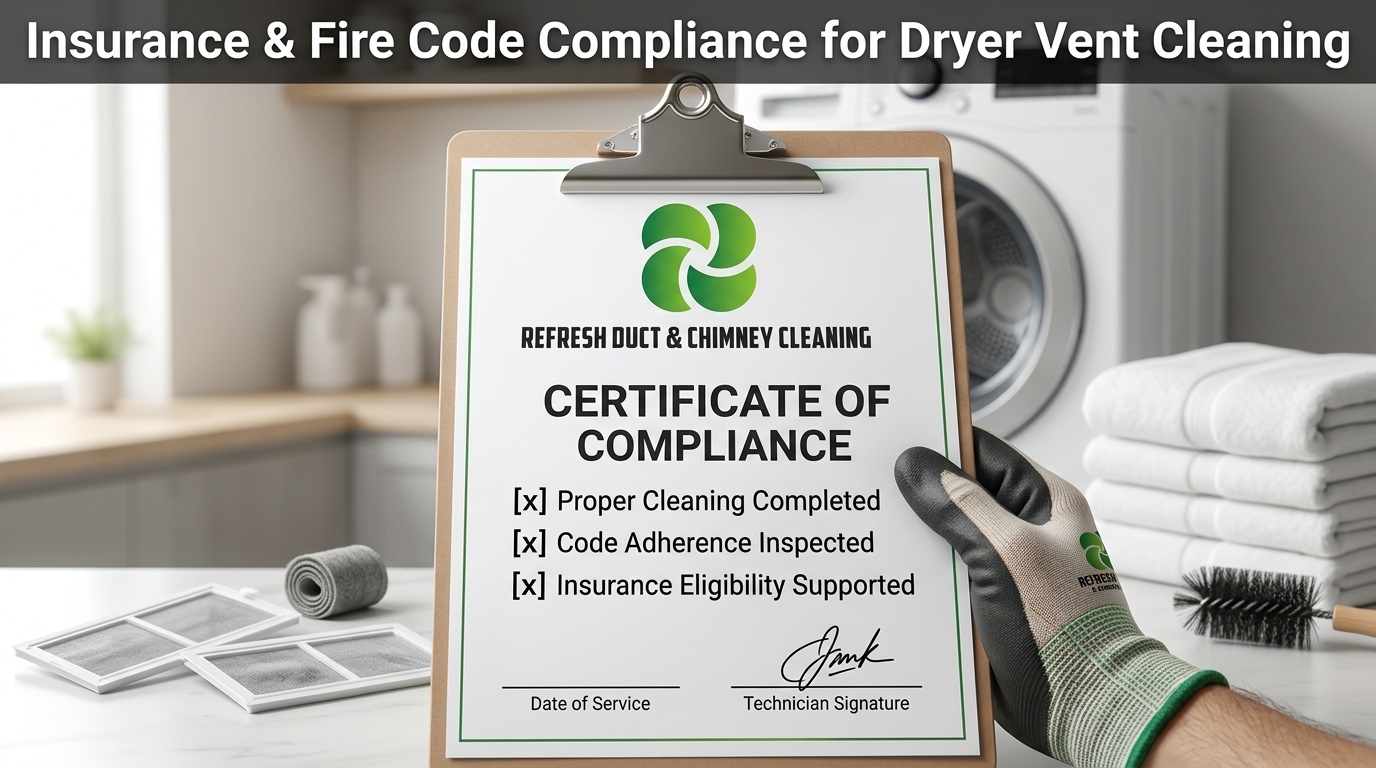
Proper compliance not only prevents hazards but also ensures your insurance coverage remains intact. Insurance providers may request proof of compliance during underwriting or after a claim. Without documentation, property owners may face financial losses that could have been avoided through routine dryer vent maintenance.
Approved Dryer Vent Materials Under Fire Codes
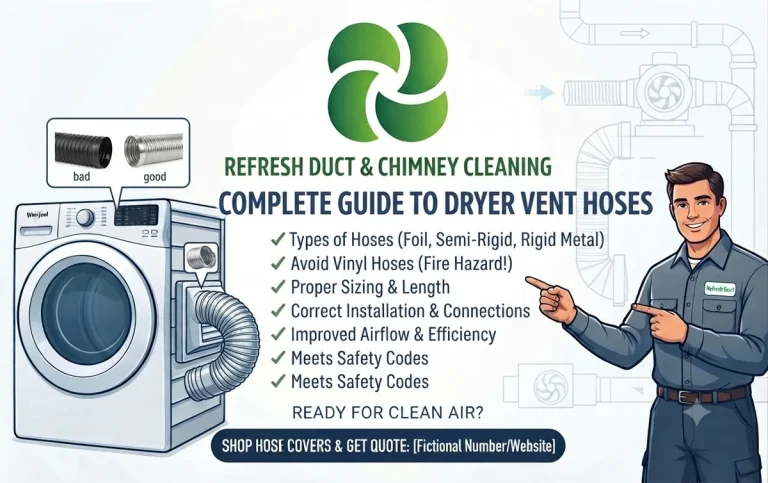
Fire codes typically mandate the use of rigid or semi-rigid metal ducts for dryer vent systems. These materials resist heat buildup and reduce fire risk compared to plastic or foil ducts.
Metal ducts also allow smoother airflow, preventing lint accumulation inside the vent. Insurance inspectors often check for proper material compliance during property evaluations.
Using approved materials ensures Insurance & Fire Code Compliance for Dryer Vent Cleaning and significantly reduces fire hazards.
Vent Length and Airflow Restrictions
Fire codes limit the maximum allowable length of dryer vents. Excessively long or improperly routed vents increase lint buildup and restrict airflow.
Bends and turns must be minimized to maintain efficient air movement. Poor airflow leads to overheating, which is one of the primary causes of dryer vent fires.
Insurance providers consider airflow efficiency when assessing risk levels for properties with multiple dryer units.
Proper Vent Termination Standards
Dryer vents must terminate outdoors in a safe and unobstructed location. Venting into attics, crawl spaces, or garages violates most fire codes.
Termination points should be positioned away from windows, doors, and combustible materials. This prevents lint accumulation near structural components.
Correct termination is essential for Insurance & Fire Code Compliance for Dryer Vent Cleaning and prevents structural fire risks.
How Often Should Dryer Vents Be Cleaned?
Dryer vent cleaning is an essential part of home maintenance because it directly affects safety, efficiency, and compliance with fire prevention standards. Over time, lint, dust, and debris accumulate inside the vent system, restricting airflow and increasing the risk of overheating and fire. Regular cleaning ensures that your dryer operates efficiently and reduces unnecessary energy consumption. Most experts recommend following a consistent cleaning schedule to avoid potential hazards and maintain optimal performance.
Understanding how often dryer vents should be cleaned depends on usage, household size, and environmental conditions. Light usage homes may require less frequent cleaning, while heavy-use households or commercial setups need more regular maintenance. Ignoring this task can lead to serious safety risks, including fire hazards and damage to your dryer system. Therefore, setting a proper cleaning routine is not only a safety measure but also a smart long-term investment in your home.
The Connection Between Insurance Policies and Dryer Vent Maintenance
Insurance companies evaluate property risks carefully before issuing or renewing policies. Dryer vent systems are considered potential fire hazards, especially when maintenance is neglected.
Insurance & Fire Code Compliance for Dryer Vent Cleaning directly affects claim eligibility. If a fire investigation reveals clogged vents or improper materials, insurers may deny coverage. This leaves property owners responsible for repair and reconstruction costs.
Maintaining proper compliance protects against such financial setbacks. Insurance companies often reward proactive maintenance with better policy terms and reduced premiums.
Insurance Claim Denials Due to Negligence
When dryer vents are not cleaned regularly, insurers may classify resulting fires as preventable negligence. Policies typically require reasonable maintenance of appliances and exhaust systems.
Failure to meet this obligation can result in partial or complete claim denial. This is especially critical for landlords and commercial property owners.
Maintaining documented cleaning records is the best defense against negligence claims.
Documentation Requirements for Insurance
Insurance providers may request proof of professional dryer vent cleaning. Invoices, inspection reports, and service logs demonstrate compliance.
Keeping organized records strengthens your position during claim investigations. Digital storage solutions make documentation easier to manage and retrieve.
Proper documentation ensures full Insurance & Fire Code Compliance for Dryer Vent Cleaning and smooth insurance processing.
How Compliance Can Lower Premiums
Properties that demonstrate strong fire prevention practices may qualify for insurance discounts. Routine dryer vent inspections reduce the likelihood of fire-related claims.
Insurance underwriters often view regular maintenance as a risk-reduction strategy. Lower risk translates into more favorable policy terms.
Over time, consistent compliance may save thousands in insurance costs.
Insurance & Fire Code Compliance for Dryer Vent Cleaning Comparison Table
| Aspect / Requirement | Compliance Details | Potential Risks of Non-Compliance | Recommended Frequency & Tips |
|---|---|---|---|
| Annual Professional Vent Cleaning | Full removal of lint and debris | Fire hazards, denied insurance claims | Once per year minimum |
| Insurance Policy Maintenance Clauses | Proof of vent cleaning required | Policy cancellation or claim denial | Document every service |
| Fire Code Duct Material Standards | Rigid or semi-rigid ducts only | Failed inspections, safety violations | Check during installation |
| Exterior Vent Termination | Must terminate outside away from combustibles | Fire spread risk, code violations | Inspect and clear annually |
| Lint Trap and Vent Connection Cleaning | Regular homeowner + professional service | Reduced airflow, overheating | Monthly homeowner check |
| Dryer Performance Monitoring | Longer drying times indicate issues | Increased fire probability | Monitor and act promptly |
| Documentation for Insurance | Receipts and service reports | Difficulty proving maintenance | Keep records for 5+ years |
| Multi-Story or Long Vent Runs | More frequent cleaning needed | Higher lint accumulation | Every 6-12 months |
| Homes with Gas Dryers | Additional safety checks required | Gas leak + fire combination risk | Annual professional service |
| High-Usage Households | More lint production | Faster blockage and higher risk | Clean 2 times per year |
| Older Homes with Original Vents | Potential damage or improper installation | Code violations and inefficiency | Full inspection + cleaning |
| Post-Claim or Renovation Requirements | Mandatory cleaning after incidents | Coverage issues if not addressed | Immediately after work |
| Smoke Detector Proximity to Dryer | Proper placement and functioning | Delayed fire detection | Test monthly |
| Local Fire Department Inspections | Compliance with municipal codes | Fines and mandatory corrections | As required by locality |
| Flexible vs Rigid Duct Compliance | Rigid preferred for safety | Higher fire risk with flexible ducts | Replace flexible ducts |
| Dryer Vent Booster Fans (if used) | Proper installation and maintenance | Malfunction leading to poor exhaust | Annual check |
| Insurance Discount Programs | Maintenance records for discounts | Missed savings opportunities | Submit documentation yearly |
| Bird Nest or Debris in Exterior Vent | Common blockage source | Complete vent obstruction | Seasonal exterior inspection |
| Dryer Overheating Warnings | Sign of restricted vent | Fire or appliance damage | Immediate professional help |
| Real Estate Transaction Requirements | Clean vents often needed for sale | Delayed closing or failed inspection | Clean before listing |
| Manufacturer Recommendations | Follow specific vent guidelines | Voided appliance warranty | Refer to user manual |
| Combined HVAC & Dryer Maintenance | Integrated service for efficiency | Overlooked risks in combined systems | Coordinated annual service |
This table summarizes key compliance aspects for dryer vent cleaning related to insurance and fire codes. Always consult licensed professionals and local authorities for requirements specific to your area.
Residential Dryer Vent Compliance Standards
Homeowners often underestimate the importance of dryer vent maintenance. However, residential fires caused by lint buildup remain a common hazard.
Insurance & Fire Code Compliance for Dryer Vent Cleaning in homes typically requires annual professional cleaning. High-use households may benefit from biannual service.
Proper compliance ensures safe appliance operation and prevents costly fire damage.
Annual Inspection Guidelines
An annual inspection identifies lint buildup, loose connections, and improper materials. Early detection prevents minor issues from escalating into serious hazards.
Professional inspections provide documented proof for insurance purposes. This protects homeowners during claim evaluations.
Regular inspection supports overall household fire safety.
Signs of Non-Compliant Dryer Vents
- Clothes take longer than usual to dry.
- The dryer feels excessively hot during operation.
- A burning smell occurs while drying clothes.
These warning signs indicate restricted airflow and possible lint accumulation. Immediate action is necessary to maintain Insurance & Fire Code Compliance for Dryer Vent Cleaning.
Benefits of Professional Residential Cleaning
Professional cleaners use specialized tools to remove deep lint blockages. DIY methods often fail to reach hidden areas within the vent system.
Certified technicians also check for code violations and provide compliance documentation.
Professional service ensures maximum safety and insurance protection.
Commercial and Multi-Unit Property Requirements
Commercial buildings face stricter fire code enforcement. Laundromats, hotels, apartment complexes, and healthcare facilities operate multiple dryer units daily.
Insurance & Fire Code Compliance for Dryer Vent Cleaning in commercial settings requires more frequent inspections and cleaning. Quarterly or biannual service is often mandatory.
Failure to comply can result in fines, business closure, or legal liability in the event of fire.
High-Volume Usage Risks
Commercial dryers produce significant lint due to continuous operation. Accumulation occurs faster than in residential properties.
Blocked vents in commercial spaces can lead to rapid fire spread. Insurance providers closely monitor compliance in high-volume environments.
Routine cleaning reduces operational risk and ensures code compliance.
Legal Liability for Property Owners
Landlords are responsible for maintaining safe dryer vent systems in rental properties. Non-compliance can result in lawsuits from tenants affected by fire damage.
Insurance coverage may not protect landlords if negligence is proven. Regular documented cleaning protects against liability claims.
Inspection Scheduling Best Practices
- Schedule quarterly inspections for high-use facilities.
- Maintain detailed service logs for each dryer unit.
- Conduct post-cleaning airflow tests to verify compliance.
These steps ensure complete Insurance & Fire Code Compliance for Dryer Vent Cleaning in commercial properties.
Cost of Insurance & Fire Code Compliance for Dryer Vent Cleaning
The cost of compliance depends on property size, vent complexity, and service frequency. Residential dryer vent cleaning typically ranges between $150 and $300 per visit. Commercial services may cost significantly more due to multiple units and detailed reporting requirements.
Although compliance involves upfront expenses, the long-term savings outweigh the costs. Preventing a single fire incident can save tens of thousands in repairs and insurance complications.
| Property Type | Cleaning Frequency | Average Cost Range | Compliance Notes |
| Single-Family Home | Annual | $150–$300 | Includes inspection and report |
| Duplex / Triplex | Biannual | $250–$450 | Separate unit documentation |
| Apartment Complex | Quarterly | $400–$900 | Multi-unit airflow testing |
| Laundromat | Quarterly | $600–$1,500 | High-volume lint removal |
| Hotel / Hospitality | Biannual | $500–$1,200 | Insurance compliance reporting |
Investing in Insurance & Fire Code Compliance for Dryer Vent Cleaning prevents costly fines, lawsuits, and denied claims.
Key Dryer Vent Cleaning Standards and Guidelines
Dryer vent cleaning standards provide clear instructions for maintaining safe and efficient systems. These guidelines cover cleaning frequency, inspection methods, and acceptable practices.
Following these standards ensures that your system operates safely and meets regulatory requirements.
What are industry-recommended cleaning practices?
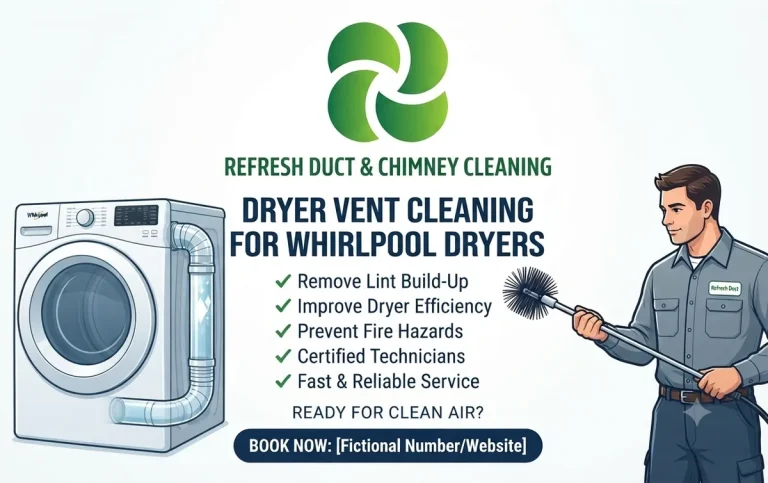
Industry standards recommend using specialized tools to remove lint and debris from the entire vent system. This includes the duct, exhaust hood, and internal dryer components. Thorough cleaning ensures optimal airflow and reduces fire risks.
How should inspections be conducted?
Inspections should include checking for blockages, damage, and proper installation. Regular inspections help identify issues before they become serious problems. Professional inspections provide a more comprehensive assessment.
Why is documentation important?
Maintaining records of cleaning and inspections demonstrates compliance with regulations. Documentation can be used to support insurance claims and pass inspections. It also helps track maintenance schedules.
What tools are used in professional cleaning
Professionals use brushes, vacuums, and high-pressure air systems to clean vents. These tools ensure thorough removal of lint and debris. Proper equipment is essential for effective cleaning.
Benefits of Professional Dryer Vent Cleaning Services
Professional cleaning services offer expertise and equipment that ensure thorough maintenance. These services help property owners meet compliance requirements and reduce risks.
Hiring professionals can save time and provide peace of mind.
What advantages do professionals offer?
Professionals have the tools and knowledge to clean vents effectively. They can identify potential issues and recommend solutions. Their expertise ensures compliance with safety standards.
How do services improve efficiency?
Clean vents improve airflow, reducing drying times and energy consumption. This leads to cost savings and better performance. Efficient systems are less likely to overheat.
Why is certification important?
Certified professionals follow industry standards and provide reliable service. Certification ensures that the job is done correctly. It also adds credibility to maintenance records.
Are professional services cost-effective?
While there is an upfront cost, professional cleaning can prevent expensive repairs and damage. It also reduces energy costs and extends equipment lifespan. Overall, it is a worthwhile investment.
Preventative Measures to Maintain Compliance
Maintaining compliance requires a proactive approach. Simple habits significantly reduce fire risks.
Routine Maintenance Checklist
- Clean the lint trap after every load.
- Inspect the vent exterior for blockages monthly.
- Schedule annual professional cleaning.
- Replace damaged or non-compliant vent materials immediately.
Fire Safety Enhancements
- Install smoke detectors near laundry areas.
- Keep a fire extinguisher accessible.
- Avoid overloading dryers to reduce lint production.
Long-Term Compliance Strategy
Develop a maintenance calendar and keep digital service records. Coordinate with certified professionals who understand fire codes and insurance requirements.
Consistency ensures full Insurance & Fire Code Compliance for Dryer Vent Cleaning year after year.
Conclusion
Insurance & Fire Code Compliance for Dryer Vent Cleaning is a vital component of property safety and financial protection. Regular professional cleaning, proper installation, and detailed documentation significantly reduce fire risks.
Property owners who prioritize Insurance & Fire Code Compliance for Dryer Vent Cleaning benefit from lower insurance premiums, fewer liabilities, and enhanced appliance performance. Investing in compliance today prevents devastating losses tomorrow.
Frequently Asked Questions (FAQs)
1. Can insurance deny a claim due to clogged dryer vents?
Yes, insurers may classify it as negligence if maintenance was not performed.
2. Are annual cleanings enough for large families?
High-use households may require biannual cleaning for full compliance.
3. Do fire codes differ by location?
Yes, local jurisdictions may have additional requirements beyond national standards.
4. Is DIY cleaning acceptable for insurance purposes?
Most insurers require professional documentation for compliance verification.
5. What materials are prohibited in dryer vents?
Plastic and foil ducts are commonly restricted due to fire risk.
6. How long does professional cleaning take?
Residential services usually take 60–90 minutes, depending on vent length.
7. Are landlords responsible for tenant dryer vents?
Yes, property owners are generally responsible for maintaining safe systems.
8. Can proper compliance reduce energy costs?
Yes, clean vents improve airflow and dryer efficiency.