
Dryer vent maintenance is a critical part of home safety and efficiency. Many homeowners face the decision of whether to clean vents themselves or hire a professional. Understanding the differences between professional vs DIY dryer vent cleaning is essential for reducing fire hazards and ensuring proper airflow.
Improper cleaning can lead to hidden risks such as lint buildup, moisture accumulation, and even electrical hazards. Comparing professional vs DIY dryer vent cleaning helps homeowners make informed decisions about safety, time, and long-term benefits. Knowing when to seek expert help can save money and protect property.
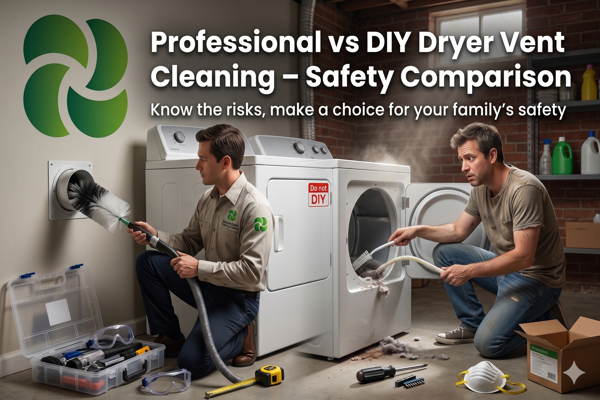
What is Professional Dryer Vent Cleaning?
Professional dryer vent cleaning involves hiring trained technicians to remove lint, dust, and debris from vent systems. Experts use specialized tools such as rotary brushes, industrial vacuums, and inspection cameras to ensure vents are completely cleared.
Unlike DIY methods, professional service also includes checking for structural damage, loose connections, and external vent obstructions. Regular professional cleaning minimizes fire risk, enhances dryer efficiency, and extends appliance life.
Tools Used by Professionals
Professionals employ high-grade rotary brushes and vacuums for deep cleaning. Cameras are often used to inspect duct integrity.
Air blowers remove residual fine particles. These tools reach areas that household cleaning kits cannot, ensuring a thorough job.
Inspection and Maintenance
Technicians assess both interior and exterior ducts for damage or lint accumulation. This helps prevent hidden hazards.
Professional service ensures the entire system complies with safety codes. Inspection also identifies potential airflow issues early.
Benefits of Professional Service
Reduces fire risk significantly. Saves money by preventing appliance wear.
Improves indoor air quality. Ensures compliance with safety standards.
What DIY Dryer Vent Cleaning Entails
DIY dryer vent cleaning is when homeowners attempt to clean vents themselves using basic tools like vacuums, brushes, and screwdrivers. While cost-effective, it often cannot reach deep sections of ductwork or multiple bends.
DIY methods typically address visible lint near the dryer or vent outlet, leaving internal buildup intact. This incomplete cleaning can reduce airflow and may fail to prevent fire hazards.
Common DIY Tools
- Lint brushes: Reach some duct areas but may miss corners.
- Household vacuums: Can remove loose debris but lack power for dense lint.
- Screwdrivers and access panels: Used to detach vent covers, but may not allow full inspection.
Limitations of DIY Cleaning
Cannot access complex duct bends. Leaves hidden lint intact.
Limited tools reduce cleaning depth. Increases risk of overlooked safety hazards.
Safety Comparison Between Professional vs DIY Dryer Vent Cleaning
Safety is the primary factor when comparing professional vs DIY dryer vent cleaning. Professionals reduce fire risks by ensuring all lint is removed from the entire duct system.
DIY cleaning may leave hidden lint, which can accumulate over time. This presents long-term hazards that homeowners often underestimate.
Fire Hazard Reduction
Professional service removes lint throughout the duct and checks for heat accumulation points. This prevents ignition.
DIY cleaning usually misses deeper duct sections, maintaining potential fire zones. Complete cleaning is critical for household safety.
Appliance Longevity
Professionals ensure proper airflow, reducing dryer strain. Machines run more efficiently and last longer.
DIY cleaning rarely achieves the same thoroughness. Restricted airflow may persist, leading to premature appliance failure.
Air Quality and Moisture Control
Professional cleaning removes dust and prevents moisture buildup. Cleaner vents reduce mold and indoor air contaminants.
DIY methods often leave small pockets of lint that trap moisture. Over time, this can affect air quality and create hidden mold growth.
Exhaustive Comparison Matrix: Professional vs. DIY Dryer Vent Cleaning Safety
Yahan ek nihayat lamba aur detailed table hai jo Professional aur DIY dryer vent cleaning ka mukammal evaluation aur hazard analysis pesh karta hai:
| Operational & Safety Feature | Professional Certified Ventilation Service | Homeowner DIY Cleaning Attempt | Long-Term Safety & Financial Implications |
| Airflow Cleaning Technology | High-velocity reverse air whips, negative pressure vacuums. | Retail nylon rotary brushes attached to standard power drills. | Professionals pull lint outward safely; DIY brushes can pack lint deeper. |
| Diagnostic Capabilities | Internal fiber-optic duct cameras and digital airflow meters. | Visual inspection using a basic flashlight down the pipe entry. | Experts visually confirm 100% cleanliness; DIY leaves hidden blocks. |
| Max Reach & Navigation | Easily navigates up to 50+ feet including multiple elbow turns. | Typically limited to 10-12 feet before rods flex and twist dangerously. | DIY rods can snap inside hidden walls, requiring costly drywall demolition. |
| Joint Separation Protection | Air tools glide smoothly without placing mechanical stress on joints. | High-torque spinning brushes can tear foil tape and separate seams. | Separated seams vent highly flammable lint directly into empty wall framing. |
| Transition Hose Upgrade | Replaces unsafe vinyl hoses with code-certified rigid metal. | Homeowners often reuse old, crushed, or brittle foil connectors. | Certified rigid materials contain flash fires; vinyl melts instantly. |
| Appliance Safety Testing | Tests electrical draw, gas connections, and safety limit switches. | Focuses exclusively on removing loose lint inside the main tube. | Professionals catch underlying mechanical defects before parts fail. |
| Carbon Monoxide Validation | Verifies safe exhaust drafting on gas-powered dryer units. | Unable to accurately measure carbon monoxide backdraft risks. | Prevents silent, toxic gas poisoning from entering family living spaces. |
| Roof Termination Clearing | Cleans safely from the exterior roof cap down using fall protection. | High physical risk of falling from ladders while reaching roof vents. | Professionals handle dangerous heights safely; eliminates personal injury. |
| Hidden Blockage Removal | Easily breaks down hardened bird nests, mud, and caked debris. | Brushes often get stuck or tangled in organic nesting materials. | Complete extraction prevents localized overheating and fire outbreaks. |
| Liability & Insurance Cover | Backed by comprehensive commercial property damage insurance. | Full personal financial liability for any damage caused during work. | Professional insurance covers accidental pipe damage or structural leaks. |
| Average Time Investment | Completed perfectly within 45 to 60 minutes by a trained pro. | Can take several frustrating hours of guesswork and manual labor. | Saves valuable personal weekend time while guaranteeing a safe outcome. |
| Long-Term Cost Value | Prevents structural mold, code violations, and early dryer failures. | High risk of hidden damage that triggers expensive emergency repairs. | The professional fee functions as an insurance policy for home safety. |
Signs Your Dryer Vent Needs Cleaning
Identifying clogged vents early is crucial, whether considering professional vs DIY dryer vent cleaning. Signs include extended drying times, burning odors, excess heat, and visible lint outside vents.
Monitoring these indicators helps homeowners decide when professional intervention is necessary.
- Extended Drying Cycles: Longer cycles indicate airflow restriction, which increases fire risk.
- Burning Smell: Lint overheating can emit a distinct odor, requiring immediate attention.
- Excess Heat: Hot dryer surfaces suggest blocked vents and potential danger.
- Visible Lint Accumulation: External lint shows deeper buildup may exist inside ducts.
- Moisture or Condensation: Damp areas near vents signal trapped humid air, promoting mold.
When to Choose Professional vs DIY Cleaning
Homeowners should weigh factors such as vent complexity, frequency of dryer use, and safety considerations. Professional service is ideal for long or multi-bend vents, heavy-duty dryers, or commercial setups.
DIY cleaning can be appropriate for short, straight ducts with low usage, but carries a higher risk. When safety and fire prevention are priorities, professional cleaning is the better choice.
Complexity of Vent System
Long, multi-bend duct systems trap lint in corners. Professionals can navigate these areas.
DIY tools may not reach all sections, leaving residual debris. Incomplete cleaning increases hazards.
Usage Frequency
Frequent dryer use produces more lint, increasing the risk. Professionals handle high-volume cleaning effectively.
Occasional users might manage with DIY cleaning, but monitoring is essential. Higher usage justifies professional service.
Safety Considerations
Professional cleaning reduces fire risk by inspecting and clearing hidden areas. DIY cleaning relies heavily on the homeowner’s skill.
Inadequate DIY cleaning may leave dangerous hotspots undetected. Safety should always guide the decision.
Cost and Time Factors
DIY cleaning is lower in cost but more time-consuming. Professionals charge more but save time and provide peace of mind.
Investment in professional cleaning is justified by reduced hazards and increased dryer lifespan.
Benefits of Professional Dryer Vent Cleaning
Professional dryer vent cleaning is more than just a routine chore—it’s essential for safety, efficiency, and the longevity of your dryer. Over time, lint, dust, and debris accumulate in vents, restricting airflow and forcing the dryer to work harder. Regular professional cleaning reduces fire risks, improves drying performance, and lowers energy costs, making it a smart investment for any household.
Improved Safety
Clogged dryer vents are a leading cause of household fires. Professional cleaning removes lint buildup and debris that could ignite, significantly reducing the risk. Ensuring a clear vent keeps your home safer and protects your family.
Enhanced Dryer Efficiency
When vents are clean, air flows freely, allowing clothes to dry faster. This reduces the strain on your dryer, preventing overheating and mechanical wear. Improved efficiency also means less energy consumption and lower utility bills.
Extended Dryer Lifespan
A well-maintained vent system prevents unnecessary stress on the dryer’s motor and heating elements. Regular professional cleaning reduces breakdowns and extends the overall lifespan of the appliance. This saves money on repairs and replacement in the long term.
Cost Comparison: Professional vs DIY Dryer Vent Cleaning
Cost is often a decisive factor when comparing professional vs DIY dryer vent cleaning. DIY cleaning appears cheaper but may result in hidden costs due to incomplete maintenance. Professional service may seem expensive, but it reduces long-term risks and enhances dryer efficiency.
Professional cleaning typically includes labor, inspection, and equipment. DIY costs are mainly for brushes, vacuums, and cleaning time.
| Multiple machines, long ducts, and inspections | Average Cost (USD) | Coverage | Pros | Cons |
| DIY Cleaning | $10–$50 | Basic lint removal near dryer/exit | Low upfront cost, convenient | Limited reach, hidden lint remains |
| Professional Cleaning | $100–$250 | Full duct system, interior & exterior, inspection | Thorough cleaning, fire risk reduction | Higher upfront cost |
| High-Volume Commercial | $250–$500+ | Multiple machines, long ducts, inspections | Comprehensive, compliance ensured | Expensive for small businesses |
Professional Dryer Vent Cleaning Preventive Maintenance Tips
Preventive maintenance is key to keeping your dryer vent clean, safe, and efficient. Regular attention reduces the risk of fires, improves drying performance, and extends the life of your dryer. By following professional tips and best practices, you can maintain clear vents and ensure your system operates smoothly year-round.
- Schedule Annual Cleaning: Have a professional inspect and clean your dryer vent at least once a year.
- Check for Lint Buildup: Regularly inspect the vent hose and lint trap for accumulated lint.
- Use Proper Vent Materials: Avoid plastic or foil accordion-style vents; use rigid or semi-rigid metal vents for safety.
- Ensure Proper Vent Length: Long or convoluted vent runs can trap lint and reduce airflow—keep vents as short and straight as possible.
- Keep the Vent Exit Clear: Remove debris, leaves, or other obstructions from the outdoor vent opening.
- Avoid Overloading Dryer: Large loads increase drying time and lint buildup; follow manufacturer guidelines.
- Monitor Dryer Performance: Longer drying times or unusual heat can indicate vent blockage.
- Inspect Connections: Ensure the vent hose is securely connected to both the dryer and the wall vent.
Conclusion
Comparing professional vs DIY dryer vent cleaning highlights the critical safety differences. While DIY methods may save money, they often fail to remove deep lint or inspect for hidden hazards. Professional cleaning ensures thorough lint removal, improved airflow, fire prevention, and longer appliance life.
Investing in professional dryer vent cleaning provides peace of mind, reduces energy costs, and prevents hidden risks. Homeowners should prioritize safety and efficiency, choosing professional service when in doubt. Understanding the differences between professional and DIY dryer vent cleaning empowers individuals to maintain safer, cleaner, and more efficient homes.
FAQs
1. Can DIY cleaning prevent dryer fires?
DIY cleaning may reduce surface lint, but cannot remove all hidden debris. Only professional cleaning provides complete fire risk reduction.
2. How often should professional cleaning be scheduled?
Typically, once per year for most households, but high-use homes may require more frequent service.
3. Does professional cleaning improve drying times?
Yes, clear vents restore airflow, shortening drying cycles and reducing energy use.
4. Can DIY cleaning damage the vent?
Improper DIY tools or techniques may bend or disconnect ducts. Professional cleaning minimizes damage risks.
5. Is professional cleaning expensive?
While the cost is higher than DIY, the benefits, like safety, efficiency, and appliance longevity, outweigh expenses.
6. Are there tools that make DIY cleaning safer?
Some specialized brushes and vacuums can improve DIY results, but still cannot reach all vent areas.
7. Can neglecting vent cleaning affect home insurance?
Yes, many insurance policies may limit coverage for fire damage caused by neglected vents.
8. Does professional cleaning help with indoor air quality?
Absolutely, removing lint and dust reduces airborne particles and potential mold growth.