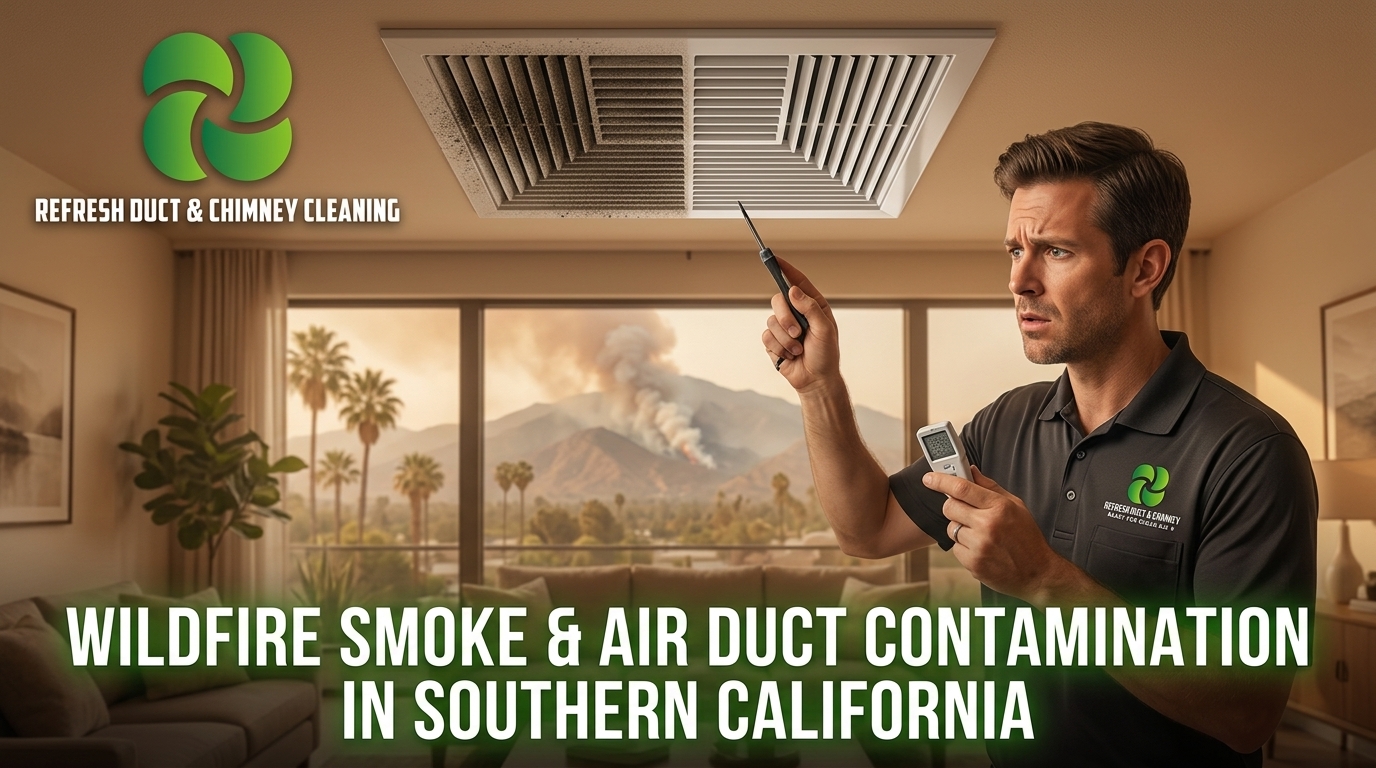
Southern California has faced increasing wildfire activity over the past decade, resulting in significant air quality challenges for residents. Wildfire smoke is not just an outdoor problem—it can infiltrate homes, settling in air ducts and circulating harmful particles throughout living spaces. Understanding how wildfire smoke interacts with HVAC systems is critical to maintaining indoor air quality and health.
Air duct contamination caused by wildfire smoke can lead to respiratory issues, lingering odors, and system inefficiency. Homes in affected areas need to consider professional cleaning and preventive measures to protect both the HVAC system and household members. This article explores the effects of wildfire smoke on air ducts, the signs of contamination, and the best mitigation strategies.
What Is Wildfire Smoke Contamination in Air Ducts?
Wildfire smoke contamination occurs when microscopic particles and gases from fires enter a home’s HVAC system. These particles can include ash, soot, chemicals, and volatile organic compounds (VOCs). When these contaminants accumulate in ductwork, they reduce air quality and can exacerbate respiratory problems.
Air ducts act as conduits for distributing heated or cooled air, meaning that contaminated ducts can spread smoke particles throughout the entire home. This contamination may not always be visible but can manifest as unpleasant odors, coughing, or allergy-like symptoms. Proper inspection and cleaning are essential after wildfire events to ensure safety and comfort.
How Wildfire Smoke Affects Indoor Air Quality
Wildfire smoke contains fine particulate matter (PM2.5) that easily penetrates homes through windows, doors, and HVAC systems. These particles can linger in air ducts for extended periods. Without proper cleaning, every cycle of the HVAC system reintroduces these pollutants into indoor air.
Particulate Matter Infiltration
Smoke particles are small enough to bypass standard filters in many HVAC systems. Once inside the ductwork, they settle on surfaces and are constantly recirculated. Long-term exposure to these particles can trigger asthma, allergies, and other respiratory issues.
Odor Retention
Soot and smoke particles cling to duct surfaces and insulation, leading to persistent smoke odors indoors. Even after the outdoor air clears, residents may continue to notice a smoky smell inside the home.
System Efficiency Impact
Accumulated smoke particles can reduce airflow and strain HVAC components. Dirty ducts increase energy usage and may shorten the lifespan of the system. Cleaning ducts helps restore efficiency and indoor comfort.
Why Southern California Homes Are Particularly Vulnerable
Southern California’s dry climate, high winds, and frequent wildfire activity make homes especially susceptible to smoke infiltration. Homes near fire-prone areas often experience higher levels of airborne particulates during wildfire season.
Additionally, older homes with outdated ductwork or poor sealing may allow more smoke particles to enter and settle. Residents who rely heavily on air conditioning during hot months may unknowingly circulate contaminated air throughout the home, increasing health risks.
Signs of Wildfire Smoke Contamination in Air Ducts
Identifying smoke contamination early can prevent prolonged exposure to harmful particles. Certain signs indicate that ducts may be harboring wildfire smoke contaminants.
Paragraph: Visible soot around vents, lingering smoky odors, and allergy-like symptoms are common indicators. Persistent dust and decreased airflow can also signal the need for professional duct cleaning.
Bullet Points (2 sentences each):
- Lingering smoke odor: Even after outdoor smoke dissipates, a smoky smell inside vents indicates contamination. This odor may affect comfort and indoor air quality.
- Visible soot or dust buildup: Soot may be noticeable around air registers or in HVAC components. Cleaning is necessary to prevent recirculation.
- Respiratory irritation: Coughing, wheezing, or allergy-like symptoms may worsen after smoke events. Contaminated ducts can exacerbate these issues.
- Reduced airflow: Blockages from soot or debris can decrease HVAC efficiency. Cleaning restores proper airflow.
- Frequent filter clogging: Filters may become saturated quickly after wildfire events. Professional cleaning ensures ducts are free from additional contaminants.
How Air Ducts Become Contaminated by Wildfire Smoke
Air ducts are designed to distribute air efficiently, but this same pathway allows wildfire smoke to penetrate deep into homes. Contaminants can enter through intake vents, windows, doors, and gaps in ductwork.
Professional restoration technicians utilize high-capacity HEPA-filtered vacuum systems that maintain powerful negative air pressure throughout your entire ventilation network during the cleaning process. They insert specialized pneumatic air whips and rotary brushes to safely dislodge the sticky, tar-like soot layers from flexible and rigid duct walls.
Professional Remediation Strategies to Restore Indoor Air Purity and Safety
Eliminating the deep chemical contamination caused by regional wildfire smoke requires specialized, heavy-duty HVAC source-removal cleaning methods that DIY attempts cannot match. Professional restoration technicians utilize high-capacity HEPA-filtered vacuum systems that maintain powerful negative air pressure throughout your entire ventilation network during the cleaning process. They insert specialized pneumatic air whips and rotary brushes to safely dislodge the sticky, tar-like soot layers from flexible and rigid duct walls.
HVAC Intake Vulnerability
The air intake for HVAC systems draws outdoor air inside, bringing smoke particles into the system. Without high-efficiency filters, these particles accumulate inside ducts.
Leaks and Poor Sealing
Cracks and gaps in ductwork allow smoke to bypass filters and settle on interior surfaces. Homes with older or poorly maintained ductwork are more vulnerable to contamination.
HVAC Components
Blowers, coils, and vents can trap smoke particles and distribute them throughout the home. Over time, this leads to reduced system efficiency and indoor air quality problems.
Wildfire Particulate Impact & HVAC Contamination Matrix
Yahan ek nihayat lamba aur detailed table hai jo wildfire smoke ke mukhtalif components aur unke HVAC systems par asraat ka mukammal breakdown pesh karta hai:
| Wildfire Smoke Component | Specific Duct Contamination Mechanism | Direct Impact on HVAC System Machinery | Health & Respiratory Risks for Residents | Required Professional Restoration Action |
|---|---|---|---|---|
| Fine Soot (PM2.5) | Forms a sticky, oily black layer along the internal duct walls. | Coats the evaporator coil fins, blocking efficient thermal transfer. | Triggers severe asthma attacks, coughing, and deep lung irritation. | Negative-pressure HEPA vacuuming and manual duct brush agitation. |
| Coarse Wood Ash | Settles in heavy, powdery gray deposits inside horizontal lines. | Clogs air filters completely, creating high system static pressure. | Causes throat dryness, sneezing, and acute sinus inflammation. | Air whip cleaning and immediate replacement of all filtration media. |
| Volatile Organic Ions | Chemical odors absorb deeply into porous fiberglass duct liners. | Corrosion of sensitive copper refrigerant lines and connections. | Chronic headaches, nausea, and persistent dizziness indoors. | Application of specialized molecular counteractant gaseous fogging. |
| Carbonized Tar Vapor | Condenses into a thick, tacky varnish inside the blower wheel. | Throws fan blades out of balance, causing motor bearing wear. | Long-term exposure to known environmental carcinogens. | Chemical degreasing of the blower assembly and fan housing. |
| Silica Micro-Particles | Acts as a highly abrasive grit circulating through the system. | Scores internal mechanical bearings and electrical contact points. | Causes severe eye irritation and micro-tears in respiratory tracts. | Source-removal duct cleaning and electronic system diagnostics. |
| Burned Plastic Toxins | Releases highly toxic dioxins that stick to supply air registers. | Accelerates the chemical yellowing and degradation of plastics. | High risk of long-term cellular damage and hormonal disruption. | Manual wiping of all registers with heavy-duty sanitizing agents. |
| Corrosive Smog Gases | Acidic vapor mixes with condensate water inside drain pans. | Pits aluminum coils, leading to expensive freon gas leaks. | Aggravates chronic bronchitis and cardiovascular conditions. | Flushing the drain system and applying anti-corrosive treatments. |
| Microscopic Char Fibers | Interlocks with ordinary household dust to create dense mats. | Restricts airflow velocities coming out of supply room vents. | Enhances seasonal allergy responses and skin irritation risks. | High-velocity air skipping and complete internal cabinet vacuuming. |
How to Mitigate Wildfire Smoke in Air Ducts
Proactive measures can reduce the impact of wildfire smoke on indoor air quality. While air duct cleaning is essential after heavy smoke exposure, other preventive steps help minimize contamination.
High-Efficiency Filtration
Upgrading to HEPA or MERV-13 filters captures more smoke particles before they reach ducts. This helps maintain cleaner ductwork during wildfire events.
Sealing and Insulation
Proper sealing of ducts and adding insulation where needed prevent smoke from entering through gaps. This also improves HVAC efficiency.
Professional Air Duct Cleaning
After significant smoke exposure, professional cleaning removes accumulated particles, soot, and odors. Technicians use negative pressure vacuums, brushes, and sometimes sanitizing treatments to restore duct cleanliness.
Ventilation Management
During wildfire events, keeping windows and doors closed and minimizing outdoor air intake reduces smoke infiltration. This limits the amount of smoke entering ducts.
Benefits of Cleaning Air Ducts After Wildfire Exposure
Cleaning ducts after wildfire smoke events provides multiple advantages for health, comfort, and system performance.
Paragraph: Removing smoke particles from ductwork improves indoor air quality, reduces respiratory irritation, and restores HVAC efficiency. Proper cleaning also eliminates odors and prevents long-term damage to system components.
Bullet Points (2 sentences each):
- Health protection: Eliminating smoke particles reduces exposure to PM2.5 and VOCs. This is especially important for children, seniors, and individuals with respiratory conditions.
- Odor removal: Professional cleaning eliminates lingering smoky odors. Homes feel fresher and more comfortable after treatment.
- System efficiency: Clearing ducts restores airflow and reduces strain on HVAC systems. This can lower energy bills and prevent costly repairs.
- Allergen reduction: Dust, soot, and pollen are removed along with smoke particles. Cleaner air supports allergy and asthma management.
- Preventative maintenance: Regular post-fire cleaning protects ducts from long-term buildup. This extends the lifespan of HVAC components.
When to Schedule Professional Air Duct Cleaning
After a wildfire, scheduling professional air duct cleaning depends on exposure level and contamination severity. Homes with visible soot, smoke odors, or respiratory symptoms should prioritize cleaning immediately.
For areas affected by nearby fires, routine inspections and filter replacements may suffice unless contamination is noticeable. Experts recommend consulting HVAC professionals for a tailored plan based on home size, duct layout, and smoke exposure history.
Cost of Air Duct Cleaning After Wildfire Smoke
Air duct cleaning cost after wildfire exposure varies depending on home size, contamination level, and complexity of ductwork. On average, residential cleaning ranges from $400 to $900, with larger or severely contaminated systems costing more.
| Home Size (Sq Ft) | Average Cost | Notes |
| Up to 1,000 | $350–$500 | Small single-story homes |
| 1,000–2,000 | $500–$700 | Standard residential homes |
| 2,000–3,500 | $700–$900 | Homes with complex duct layouts |
| 3,500+ | $900–$1,200 | Large multi-zone or older homes |
Conclusion
Wildfire smoke can significantly contaminate air ducts in Southern California, affecting both indoor air quality and HVAC efficiency. Understanding the signs of contamination and scheduling professional cleaning when needed ensures safety and comfort. Homes in smoke-prone areas should prioritize inspections, filtration upgrades, and proactive maintenance.
While air duct cleaning is necessary every year, only in extreme cases, it becomes critical after wildfire exposure to remove particles, odors, and contaminants. Proper cleaning, sealing, and filtration help protect residents from harmful pollutants while maintaining HVAC performance and indoor air quality.
FAQs
1. Can wildfire smoke damage HVAC systems?
Yes, accumulated soot and ash can strain HVAC components. Over time, this may reduce efficiency and increase repair costs.
2. How soon should ducts be cleaned after a wildfire?
Cleaning should occur as soon as soot or smoke odors are noticeable. Immediate action prevents prolonged exposure to harmful particles.
3. Can regular filters remove wildfire smoke effectively?
Standard filters capture some particles but often allow PM2.5 to pass. HEPA or MERV-13 filters are more effective for smoke.
4. Does duct cleaning remove all smoke odor?
Professional cleaning removes most soot and particles, causing odor. Additional treatments like ozone or activated carbon may help eliminate lingering smells.
5. Is DIY cleaning effective after wildfire smoke exposure?
DIY methods rarely reach deep into ducts or HVAC components. Professional cleaning ensures thorough removal of contaminants.
6. Can wildfire smoke worsen allergies long-term?
Yes, exposure to fine smoke particles may trigger or exacerbate respiratory conditions. Cleaning ducts minimizes repeated exposure indoors.
7. How often should homes in Southern California clean ducts during wildfire season?
Inspections every 1–2 years are recommended, with cleaning after heavy smoke events. Frequency depends on exposure and HVAC system condition.
8. Can sealing ducts prevent wildfire smoke contamination?
Sealing ducts reduces smoke infiltration but does not eliminate all particles. Combined with high-efficiency filters, it significantly improves protection.