
Dryer vents are one of the most overlooked yet critical components of a safe and efficient home. If you notice your appliance acting differently, it could be more than a minor inconvenience. Understanding the 5 warning signs your dryer vent is clogged in Anaheim can protect your home from costly damage and serious fire risks.
In a warm coastal city like this, dryer systems often work harder due to year-round laundry use and fluctuating humidity levels. Lint buildup, restricted airflow, and exterior vent blockages are common problems homeowners face. Recognizing the 5 warning signs your dryer vent is clogged in Anaheim early allows you to act quickly and prevent dangerous situations.
What Causes Dryer Vent Clogs in Anaheim Homes?
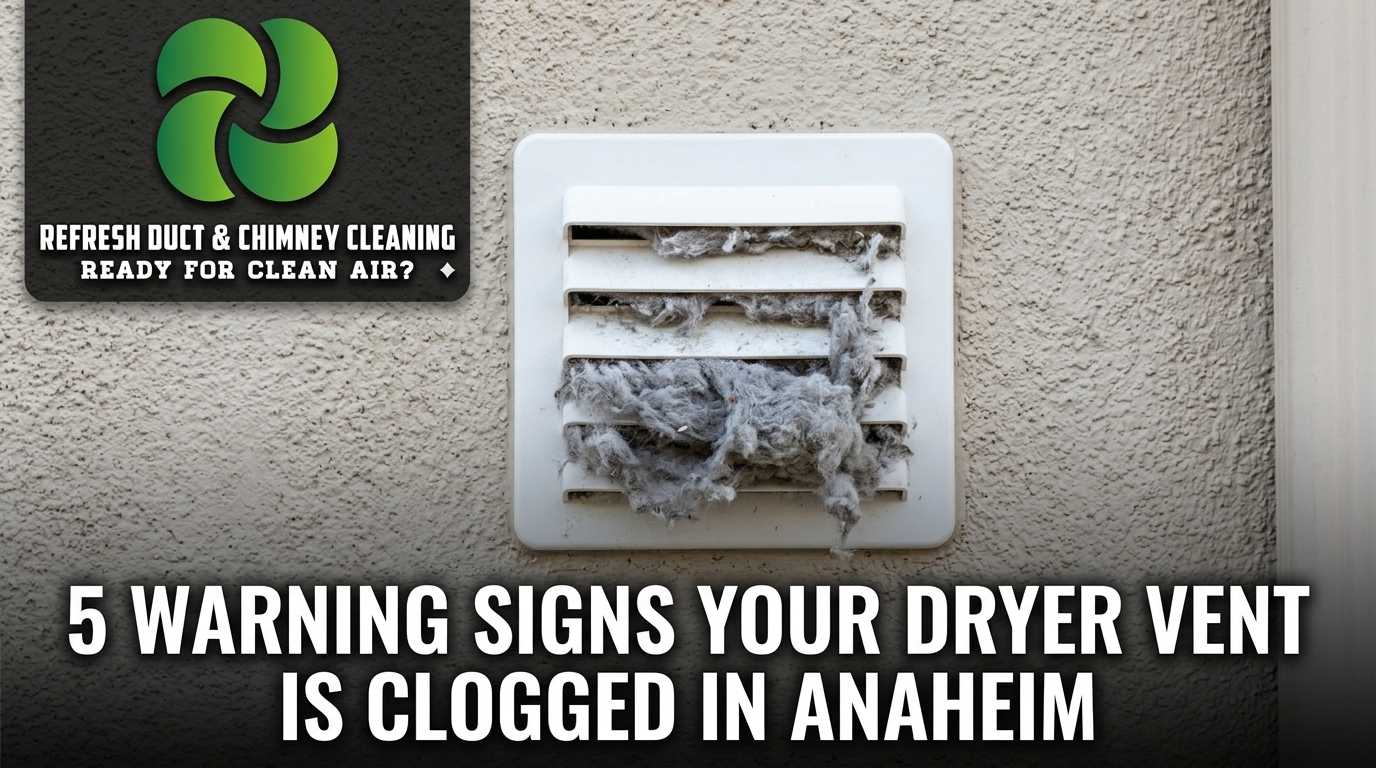
Dryer vent clogs develop gradually as lint, debris, and moisture accumulate inside the duct system. While the lint trap captures a portion of fibers, small particles pass through and settle in the vent line. Over time, this buildup restricts airflow and forces your dryer to operate inefficiently.
In Anaheim homes, environmental factors can accelerate this process. Outdoor vents may collect dust, pollen, and even nesting materials from birds or rodents. Combined with indoor lint accumulation, this creates a thick blockage that reduces performance and increases fire risk.
Another contributing factor is long or improperly installed vent ducts. Excessive bends, flexible plastic tubing, or extended vent runs can trap lint more easily. Routine inspection and maintenance are essential to avoid major obstructions.
Why Is a Clogged Dryer Vent Dangerous?
A clogged dryer vent is more than just an inconvenience; it is a serious safety hazard. When airflow becomes restricted, heat builds up inside the dryer drum and vent system. Excessive heat combined with dry lint creates ideal conditions for a fire.
According to fire safety authorities, thousands of house fires each year are linked to dryer vent neglect. Homes in Anaheim are not immune, especially in densely populated neighborhoods where homes are built closely together. Addressing the 5 warning signs your dryer vent is clogged in Anaheim promptly can significantly reduce these risks.
Beyond fire hazards, blocked vents can cause carbon monoxide buildup in gas dryers. Poor ventilation prevents exhaust gases from escaping properly. This invisible threat makes routine vent cleaning even more critical.
Warning Sign #1: Clothes Take Longer to Dry
When your dryer suddenly requires multiple cycles to dry a standard load, restricted airflow is often the culprit. Hot air cannot circulate properly, causing moisture to remain trapped in fabrics. This inefficiency leads to longer drying times and higher energy bills.
If you consistently notice damp clothing after a full cycle, it may be time to inspect your vent. Anaheim residents who do frequent laundry loads may experience this issue sooner due to higher usage. Recognizing this early symptom is essential when identifying the 5 warning signs your dryer vent is clogged in Anaheim.
Reduced Airflow Efficiency
Restricted ducts prevent moist air from exiting efficiently. The dryer works harder, increasing wear and tear on internal components. Prolonged strain shortens appliance lifespan.
Increased Utility Bills
Longer cycles consume more electricity or gas. Over time, this significantly raises monthly energy expenses. A simple vent cleaning can restore efficiency.
Fabric Wear and Tear
Repeated high-heat cycles damage clothing fibers. Delicate fabrics shrink or fade faster. This adds unnecessary replacement costs.
Warning Sign #2: Burning Smell During Operation
A noticeable burning odor while the dryer runs is a serious red flag. Lint is highly flammable and can ignite when exposed to excessive heat. If you smell something unusual, turn off the appliance immediately.
In Anaheim’s dry climate, accumulated lint can ignite quickly under intense heat. Ignoring this sign increases the risk of a household fire. This is one of the most urgent indicators among the 5 warning signs your dryer vent is clogged in Anaheim.
Overheated Lint Buildup
Lint trapped in the vent becomes extremely hot. Friction and high temperatures create ignition conditions. Immediate inspection is necessary.
Motor Overheating
Blocked airflow forces the dryer motor to overwork. This generates additional heat inside the unit. Continuous overheating leads to mechanical failure.
Fire Risk Escalation
A persistent burning smell should never be ignored. Even minor sparks can ignite accumulated debris. Professional service is strongly recommended.
Yahan is table ko mazeed lamba aur deeda-zeb (detailed) kar diya gaya hai taake aapke paas article ke liye ek nihayat comprehensive aur professional comparative content matrix tayyar ho jaye:
Expanded Indicator Matrix: Clogged vs. Clear Dryer Vent Diagnostics
| Operational Performance Metric | Healthy & Clear Ventilation Status | Clogged Vent Warning Indicators | Imminent Household Hazard Level | Technical Underlying Cause |
| 1. Average Laundry Drying Time | 35 to 45 minutes per standard load. | 75 to 120+ minutes per single load. | High Risk: Overworks the motor and heating elements. | Trapped moisture cannot escape, creating a continuous humid loop inside the drum. |
| 2. Appliance Surface Heat | Warm or cool to the touch during operation. | Scorchingly hot metal panels; radiates heat. | Severe Risk: Destroys internal wiring and control relays. | Backpressure forces superheated air to accumulate inside the chassis instead of venting. |
| 3. Ambient Air Odor Status | Fresh, clean scent of fabric softener. | Strong burning toast or smoky plastic smell. | Extreme Risk: Active scorching of highly flammable lint. | Stray lint fibers drop onto the electric heating coils or gas burner jets and glow. |
| 4. Outdoor Hood Performance | Louvers open wide; strong airflow felt. | Flaps stay closed; thick lint crust visible. | Severe Risk: Turns the internal pipe into a pressurized fire box. | Heavy lint matrix seals the exit grid, stopping the velocity of escaping exhaust air. |
| 5. Lint Screen Accumulation | Fine, thin layer of dust caught on mesh. | Excess lint spilling over into the housing. | Moderate Risk: Clogs internal fans and slows down air velocity. | Exhaust backpressure pushes debris sideways into the internal cabinet cavities. |
| Monthly Electrical Cost | Matches baseline factory specifications. | Sudden 30% to 50% spike in utility bills. | Financial Risk: Drains household budgets through energy waste. | The appliance is forced to run 2 to 3 times longer to complete a single standard load. |
| Appliance Structural Stability | Machine runs smoothly with minimal noise. | Excess vibration; safety fuses trip constantly. | High Risk: Triggers permanent mechanical appliance burnout. | High-limit thermal safety switches trip repeatedly due to extreme operating temperatures. |
| Laundry Room Humidity | Air remains dry, fresh, and comfortable. | Room feels sticky, humid, and like a sauna. | Moderate Risk: Encourages mold and mildew growth on drywall. | Moist exhaust air leaks out of connection seams directly into the indoor room air. |
| Transition Hose Integrity | Rigid metal pipe stays straight and secure. | Foil accordion hose is crushed or heavy with lint. | Severe Risk: Flimsy hoses melt instantly if a spark occurs. | Heavy, wet lint settles in the valleys of flexible foil, causing the hose to sag and pinch. |
| Internal Pipe Wall Texture | Mirror-smooth metal surfaces throughout. | Caked with a thick, felt-like layer of lint. | Extreme Risk: High volume of fuel ready to ignite from heat. | Over years of usage, static electricity locks fine clothing fibers to the duct walls. |
| Safety Thermostat Function | Cycles off naturally when clothes are dry. | Runs continuously without reaching cutoff temp. | High Risk: Safety switches wear out, leading to failure. | The internal moisture sensor stays wet, tricking the machine into running indefinitely. |
| Home Inspection Compliance | Meets modern mechanical building codes. | Flagged as a severe fire and safety violation. | Asset Risk: Delays property sales and lowers home value. | Non-compliant air restriction that violates standard residential safety protocols. |
| Blower Fan Performance | Spins freely, creating high cubic feet per minute (CFM). | Motor hums loudly or strains against resistance. | High Risk: Blower wheel can crack or motor windings can burn out. | Heavy accumulation of lint on the fan blades alters its dynamic mechanical balance. |
| Gas Line Safety (If Applicable) | Burns clean, clear gas with safe carbon monoxide output. | High risk of dangerous carbon monoxide backdrafts. | Extreme Risk: Toxic, odorless gases can pull back into the living space. | Blocked exhaust lines prevent fuel combustion byproducts from being pushed outside safely. |
Warning Sign #3: Excess Lint Around the Dryer
If you notice lint collecting behind the dryer or near the exterior vent opening, airflow may be compromised. Proper ventilation should direct lint outdoors without leakage. Accumulation around the appliance indicates blockage or duct damage.
In Anaheim neighborhoods with frequent outdoor dust and debris, exterior vents can become obstructed quickly. Routine visual inspections help identify this issue early.
Exterior Vent Flap Not Opening
The vent flap should open fully when the dryer operates. If it remains closed or partially blocked, airflow is restricted. This signals internal buildup.
Visible Debris at Exit Point
Bird nests or dirt may obstruct airflow. Clearing external blockages improves ventilation efficiency.
Dust Accumulation Indoors
Excess indoor lint reduces air quality. Cleaning and sealing ducts restore safety.
Warning Sign #4: Dryer Feels Extremely Hot
Your dryer should feel warm during operation but not excessively hot. Overheating indicates trapped hot air within the vent system. This condition stresses internal components and creates safety risks.
Anaheim’s warm climate can worsen overheating issues, especially during summer months. Recognizing temperature changes is crucial among the 5 warning signs your dryer vent is clogged in Anaheim.
Overheated Exterior Surfaces
If the top or sides of the dryer feel too hot to touch, airflow is restricted. This symptom requires immediate attention.
Laundry Room Temperature Rise
A noticeable increase in room temperature suggests heat is not venting properly. Proper airflow should regulate indoor heat levels.
Automatic Shut-Off Activation
Some dryers have safety features that shut down when overheated. Frequent automatic shutdowns signal ventilation problems.
Warning Sign #5: Musty Odors on Clothes
Clothes should smell fresh after drying. If they carry a musty or damp odor, moisture is likely trapped inside the drum. Poor ventilation prevents proper evaporation.
This problem is common in humid seasons or coastal areas near Anaheim. Identifying this symptom completes the list of the 5 warning signs your dryer vent is clogged in Anaheim.
Moisture Retention
Blocked vents trap humidity. Damp conditions promote mildew growth.
Mold Development Risk
Persistent moisture may encourage mold inside ducts. This affects indoor air quality.
Reduced Fabric Freshness
Even with detergent and softener, clothes may smell stale. Vent cleaning restores proper airflow.
When Should You Schedule Professional Dryer Vent Cleaning?
If you notice any combination of these warning signs, schedule a professional inspection immediately. Annual cleaning is recommended for average households, while larger families may require biannual service.
Professional technicians use specialized equipment to remove deep lint buildup. Regular maintenance prevents future occurrences of the 5 warning signs your dryer vent is clogged in Anaheim.
Key Factors That Increase Clogging Risk
Several factors accelerate lint buildup and obstruction.
- Large family households with frequent laundry cycles
- Long or flexible vent duct installations
- Outdoor debris accumulation
- Improper dryer installation
- Lack of annual maintenance
Addressing these key factors reduces fire risk and improves efficiency.
Final Safety Checklist
- Inspect exterior vent openings monthly.
- Clean lint traps after every load.
- Schedule professional vent cleaning annually.
- Monitor drying times and unusual odors.
- Replace damaged or outdated vent ducts.
Conclusion
Recognizing the 5 warning signs your dryer vent is clogged in Anaheim is essential for maintaining a safe and efficient home. Delayed drying times, burning smells, excessive heat, lint accumulation, and musty odors are clear indicators of ventilation problems. Ignoring these symptoms increases fire hazards, utility costs, and appliance wear.
By taking proactive steps and scheduling professional maintenance, homeowners can prevent dangerous situations and extend dryer’s lifespan. The 5 warning signs your dryer vent is clogged in Anaheim should never be overlooked, especially in a climate where dryers operate frequently year-round. Prioritizing vent care ensures safety, energy efficiency, and long-term savings.
Frequently Asked Questions
1. How often should dryer vents be cleaned in Anaheim?
Most homes require annual cleaning. Larger households may need service every six months.
2. Can a clogged vent damage the dryer permanently?
Yes, prolonged overheating can damage motors and heating elements. Early cleaning prevents costly repairs.
3. Is dryer vent cleaning messy?
Professional services use specialized vacuum systems. This minimizes dust and debris spread.
4. Do electric dryers also pose fire risks?
Yes, both gas and electric dryers can cause fires if vents are clogged. Lint is highly flammable regardless of power source.
5. Can birds cause dryer vent blockages?
Yes, birds may build nests inside exterior vents. This completely restricts airflow.
6. What tools do professionals use?
They use rotary brushes and high-powered vacuums. These tools remove deep lint deposits safely.
7. Are flexible foil ducts safe?
Flexible ducts trap lint more easily than rigid metal ducts. Replacing them improves safety.
8. Does homeowners’ insurance cover dryer fires?
Coverage depends on your specific policy. Neglect-related damages may not always be covered.