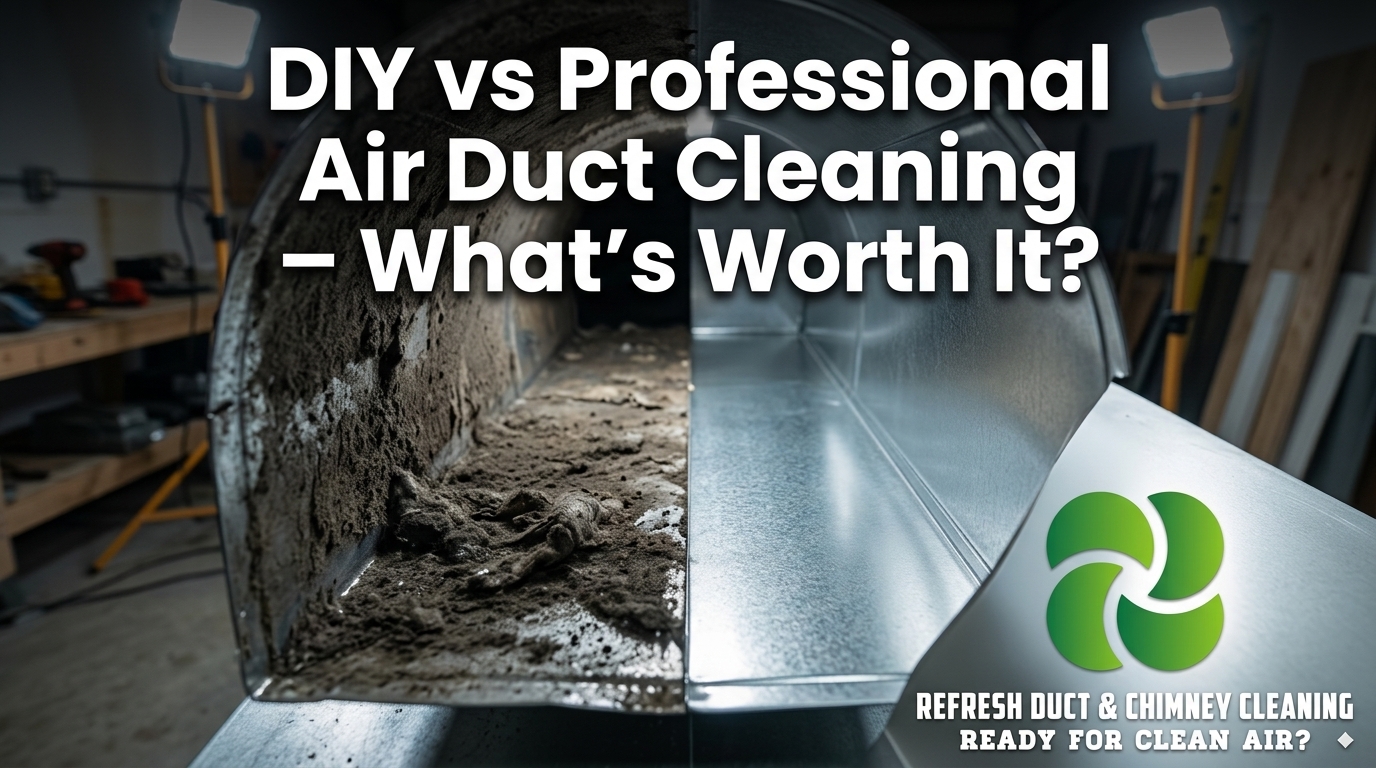
Indoor air quality directly affects comfort, health, and HVAC performance. Over time, dust, pet dander, pollen, and microscopic debris settle inside ductwork and circulate through your living space. That is why homeowners constantly ask: DIY vs Professional Air Duct Cleaning – What’s Worth It?
Choosing between DIY vs Professional Air Duct Cleaning is not just about cost; it is about results, safety, and long-term system efficiency. While DIY methods seem convenient and budget-friendly, professional air duct cleaning delivers comprehensive system care. This in-depth guide explores every angle of DIY vs Professional Air Duct Cleaning so you can make a confident and informed decision.
Why Air Duct Cleaning Matters for Modern Homes?
Air ducts function as the respiratory system of your home. Every time your HVAC system runs, air travels through ducts and redistributes particles that may be trapped inside. Over time, this buildup impacts airflow efficiency and indoor air quality.
When evaluating DIY vs Professional Air Duct Cleaning, it is essential to understand the consequences of neglecting your duct system. Accumulated debris forces HVAC components to work harder. That extra strain increases wear, reduces lifespan, and raises energy costs.
Professional air duct cleaning targets hidden contaminants deep within the duct network. DIY methods usually address only the visible portions near vent openings. The depth of cleaning makes a measurable difference in overall air quality and system performance.
What DIY Air Duct Cleaning Really Involves?
DIY air duct cleaning typically includes removing vent covers, vacuuming accessible areas, brushing visible duct interiors, and replacing air filters. Many homeowners purchase cleaning kits or rent small equipment from hardware stores. The goal is to reduce surface dust and improve airflow.
In the DIY vs Professional Air Duct Cleaning debate, DIY appeals to homeowners who want immediate savings. However, the effectiveness depends on duct accessibility, equipment strength, and cleaning technique. Most DIY efforts cannot reach deep into the supply and return lines.
DIY cleaning can be useful as part of regular maintenance. It encourages homeowners to inspect their HVAC system more closely. But it should not be confused with comprehensive system cleaning.
Common DIY Tools Used
Household Vacuum Systems
Standard vacuums remove loose dust near vent openings. They are limited by hose length and suction capacity. Deep contaminants remain untouched.
Flexible Brush Attachments
Brushes help dislodge visible debris. However, aggressive scrubbing can damage flexible ducts. These tools cannot navigate complex duct layouts effectively.
Basic Protective Gear
Gloves and masks provide minimal safety protection. They do not offer full containment against airborne particles. Dust may spread during cleaning.
What Professional Air Duct Cleaning Includes?
Professional air duct cleaning involves trained technicians using industrial-grade negative air machines and rotating brush systems. Many reputable companies follow standards set by the National Air Duct Cleaners Association to ensure thorough cleaning practices. The process typically includes inspection, agitation, containment, and debris extraction.
In the DIY vs Professional Air Duct Cleaning comparison, professionals address the entire HVAC system. This includes supply ducts, return ducts, registers, grilles, coils, and air handlers. The comprehensive approach ensures contaminants are fully removed rather than redistributed.
Professional air duct cleaning often includes visual verification. Cameras allow technicians to show before-and-after results. This transparency adds measurable value to the service.
Equipment Used by Professionals
Negative Air Machines
These high-powered vacuums create suction throughout the entire duct system. Debris is pulled directly into containment units. This prevents particles from spreading indoors.
Motorized Agitation Tools
Rotary brushes and compressed air tools break apart hardened buildup. They reach deep into long duct lines. This ensures thorough removal.
Inspection Cameras
Technicians inspect duct interiors before and after cleaning. Homeowners can verify cleanliness visually. This builds trust and accountability.
Professional Air Duct Cleaning: Benefits and When It’s Worth It
| Aspect | DIY Approach | Professional Service | Cost Comparison | Recommendation |
|---|---|---|---|---|
| Cleaning Thoroughness | Limited to visible areas and vents | Full system cleaning including main trunks | DIY: Low / Pro: Higher | Professional for best results |
| Equipment Quality | Household vacuum or basic rented tools | High-powered vacuums, rotary brushes, cameras | DIY: Minimal cost | Professional equipment justifies the price |
| Time & Effort | Takes 4–10 hours or more with manual labor | Completed in 2–5 hours by trained team | DIY: High time investment | Professional saves significant time |
| Safety & Risk | Risk of damaging ducts or spreading dust | Safe techniques with proper containment | DIY: Potential hidden damage | Professional is much safer |
| Air Quality Improvement | Moderate, temporary improvement | Significant and long-lasting results | DIY: Short-term | Professional for allergy/asthma sufferers |
| Energy Efficiency Gains | Minimal impact | Noticeable reduction in energy bills | DIY: Low savings | Professional offers better ROI |
| Mold, Bacteria & Allergens | Poor removal of deep contaminants | Thorough sanitization and disinfection | DIY: Ineffective | Professional recommended |
| System Longevity | May cause issues if done incorrectly | Extends HVAC lifespan | DIY: Risk of costly repairs | Professional protects your investment |
| Warranty & Guarantees | No professional guarantee | Service warranties and guarantees included | DIY: None | Professional provides peace of mind |
| Best For | Small homes, light dust, handy homeowners | Larger homes, heavy buildup, or health concerns | DIY: $50–$300 | Professional: $300–$800+ (worth it for most) |
Professional air duct cleaning is generally worth the investment for most households, especially if your system hasn’t been cleaned in several years or if residents have respiratory issues. Regular professional maintenance every 3–5 years is ideal for optimal performance.
Key Differences in DIY vs Professional Air Duct Cleaning
DIY vs Professional Air Duct Cleaning differs in cleaning depth, safety standards, time investment, and overall effectiveness. DIY solutions primarily clean visible sections. Professional services clean the entire system.
Professional air duct cleaning includes inspection and containment measures. DIY cleaning may unintentionally spread dust during the process. The risk of incomplete cleaning is higher with DIY methods.
Another difference is expertise. Certified technicians understand HVAC system design and airflow dynamics. DIY cleaning relies on general homeowner knowledge.
Benefits of DIY Air Duct Cleaning
Keeping your air ducts clean through a do-it-yourself approach can offer several practical advantages for homeowners. It helps maintain better indoor air quality, reduces dust buildup, and can even improve the overall efficiency of your HVAC system. DIY cleaning also gives you a better understanding of your home’s ventilation system and how it functions. However, it’s important to follow proper safety precautions and know your limits to avoid damaging the system.
- Improved Indoor Air Quality: Removing dust, allergens, and debris from ducts helps ensure cleaner air circulation throughout your home.
- Cost Savings: Doing the cleaning yourself eliminates the need to pay for professional duct cleaning services.
- Reduced Allergens: Helps minimize triggers for allergies and respiratory issues, especially for sensitive individuals.
- Better HVAC Efficiency: Clean ducts allow air to flow more freely, reducing strain on your system and potentially lowering energy bills.
- Prevents Dust Accumulation: Regular cleaning reduces the amount of dust settling on furniture and surfaces.
- Early Problem Detection: While cleaning, you may notice leaks, mold, or pests early and take timely action.
- Convenience and Flexibility: You can clean your ducts on your own schedule without waiting for service appointments.
- Extended System Lifespan: Keeping ducts clean reduces wear and tear on HVAC components, helping your system last longer.
DIY air duct cleaning is most effective when used as preventive care. It should complement, not replace, deeper system cleaning when needed.
Benefits of Professional Air Duct Cleaning
Professional air duct cleaning delivers comprehensive system restoration. It removes accumulated debris from deep inside ductwork and HVAC components. This significantly improves indoor air quality.
In the DIY vs Professional Air Duct Cleaning comparison, professional services provide long-term value. Clean ducts allow HVAC systems to operate more efficiently. Reduced strain leads to lower energy usage and extended equipment lifespan.
Professional cleaning also identifies hidden problems. Mold growth, pest infestations, or structural duct damage can be detected early. Addressing these issues prevents costly repairs.
Key Benefits of Professional Air Duct Cleaning
- Thorough removal of dust, allergens, and debris
- Improved airflow and HVAC efficiency
- Reduced energy consumption and utility costs
- Enhanced indoor air quality
- Longer HVAC system lifespan
- Identification of hidden mold or pest issues
- Proper containment prevents indoor contamination
Professional air duct cleaning offers measurable improvements in both comfort and system performance. While the initial cost is higher, the long-term benefits often outweigh DIY savings.
Signs You Need Air Duct Cleaning
Recognizing the warning signs helps determine whether DIY vs Professional Air Duct Cleaning is appropriate. Some signs indicate minor surface dust, while others suggest deep contamination requiring expert service.
If ignored, these issues can worsen over time. Prompt action protects both health and HVAC performance. Understanding these signs allows homeowners to make timely decisions.
Common Signs That Indicate Air Duct Cleaning Is Needed
- Visible dust blowing from vents
- Persistent musty or stale odors
- Increased allergy or respiratory symptoms
- Uneven airflow between rooms
- Recent home renovation or construction work
- Evidence of rodents or insects inside ducts
- Sudden spike in energy bills
Minor dust accumulation may respond to DIY cleaning. However, signs like mold odor, pest droppings, or airflow blockages strongly suggest professional air duct cleaning.
When comparing DIY vs Professional Air Duct Cleaning, the severity of these signs determines the best course of action.
Risks Associated with DIY vs Professional Air Duct Cleaning
DIY cleaning carries the risk of incomplete debris removal. Disturbed dust may circulate throughout the home. Improper handling can damage flexible duct materials.
Professional air duct cleaning reduces these risks when performed by certified technicians. However, hiring unqualified contractors can result in inadequate service. Always verify credentials before booking.
Evaluating risk is essential when deciding between DIY vs Professional Air Duct Cleaning. Safety, equipment protection, and air quality should be top priorities.
Cost Overview of DIY vs Professional Air Duct Cleaning
When comparing DIY and professional air duct cleaning, cost is one of the most important factors for homeowners. DIY cleaning is usually much cheaper because it only requires basic tools and personal effort. Professional cleaning services, however, charge more due to labor, expertise, and advanced equipment. While DIY saves money initially, professional services often provide deeper and more thorough cleaning results.
DIY Air Duct Cleaning Costs
DIY air duct cleaning has a low overall cost since it mainly involves simple tools like a vacuum, brushes, and cleaning cloths. Most homeowners already own some of these tools, which further reduces expenses. Even if you need to buy equipment, the cost is still relatively affordable. However, the effectiveness may be limited compared to professional services.
Professional Air Duct Cleaning Costs
Professional air duct cleaning is more expensive because it includes trained technicians and specialized equipment. The cost can vary depending on the size of your home and the complexity of the duct system. Despite the higher price, it ensures a more thorough cleaning and can improve air quality significantly. This makes it a preferred choice for deeper and long-term results.
DIY vs Professional Air Duct Cleaning
| Feature | DIY Air Duct Cleaning | Professional Air Duct Cleaning |
| Cleaning Depth | Surface-level | Full-system deep cleaning |
| Equipment Power | Standard household tools | Industrial-grade machines |
| Cost | Low upfront | Moderate investment |
| Time Required | Several hours of labor | 2–4 hours average |
| Risk Level | Moderate risk of damage | Low when certified |
| Indoor Containment | Limited | Advanced containment systems |
| Long-Term Efficiency | Minimal improvement | Significant efficiency gains |
When DIY Cleaning Is a Practical Option
DIY air duct cleaning works best when contamination is minor. It is suitable for regular maintenance between professional cleanings. Homes without pets or allergy concerns may benefit from periodic DIY care.
However, DIY cleaning should not replace professional inspections. It is a short-term maintenance solution rather than a comprehensive system reset.
When Professional Cleaning Is Worth the Investment
Professional air duct cleaning is recommended after renovations, pest infestations, or mold detection. Homes with allergy sufferers benefit greatly from deep cleaning. Older HVAC systems also perform better after professional service.
In the DIY vs Professional Air Duct Cleaning comparison, professional cleaning delivers stronger results for long-term indoor air improvement.
Conclusion
The debate around DIY vs Professional Air Duct Cleaning centers on value and effectiveness. While DIY solutions appear cost-effective, they address only surface-level dust. Professional services deliver measurable improvements in system efficiency and indoor comfort.
Understanding the differences empowers homeowners to make confident decisions. Clean air ducts support a healthier home and more efficient HVAC operation. Investing wisely ensures long-term benefits for both comfort and cost savings.
Frequently Asked Questions
1. Does air duct cleaning remove pet hair buildup?
Yes, professional air duct cleaning removes embedded pet hair. DIY cleaning may only remove visible strands near vents.
2. Can dirty ducts affect HVAC warranty coverage?
Improper maintenance may impact warranty terms. Regular professional cleaning can support warranty compliance.
3. Is air duct cleaning safe for older homes?
Yes, but fragile duct materials require careful handling. Professional technicians are trained for delicate systems.
4. How soon after renovation should ducts be cleaned?
Immediately after the construction dust settles. This prevents debris from circulating long-term.
5. Does duct cleaning eliminate odors permanently?
It removes odor sources inside ducts. However, moisture issues must also be addressed.
6. Can clogged ducts reduce heating performance?
Yes, airflow restrictions decrease heating efficiency. Cleaning restores consistent airflow.
7. Are antimicrobial treatments necessary?
Only when mold contamination is confirmed. Routine cleaning does not always require treatment.
8. Does professional cleaning improve AC cooling speed?
Yes, improved airflow allows faster temperature regulation. This enhances overall comfort.